Category
Manufacturer
Model
Bosch/Doboy
Bosch/Doboy specializes in packaging and product handling equipment, offering versatile machine solutions for food, pharmaceutical, and industrial products. Their portfolio includes flow wrappers, bag closers, and vertical baggers known for reliability and user-friendly operation. Bosch/Doboy machinery enhances packaging efficiency, ensuring that goods are securely packaged and ready for market distribution.
FAQ:
What types of used Bosch Doboy packaging equipment are commonly available on the secondary market?
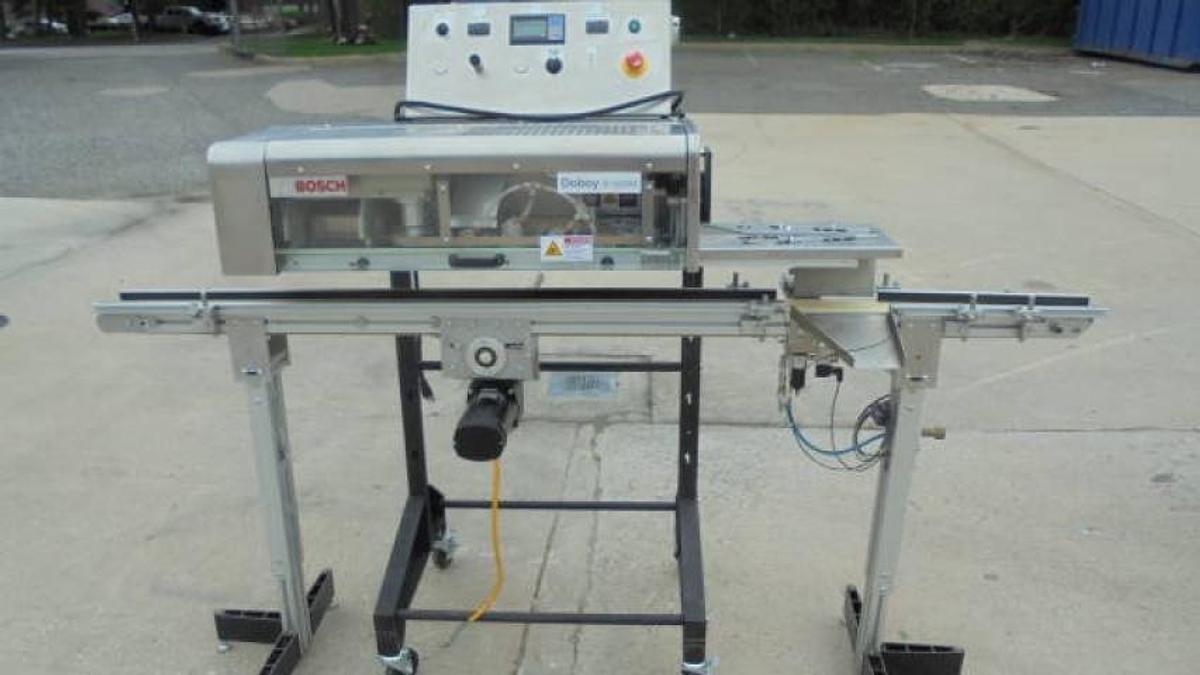
Bosch Doboy produced a wide range of packaging machinery across several categories, and many of these models circulate regularly on the used equipment market. The most commonly available types include horizontal flow wrappers such as the Doboy Linium and Doboy Mustang, vertical baggers, bag closers, continuous band sealers, tray sealers, and pouch packaging systems. The Doboy Strapper and Doboy Thermo-Shrink are also frequently sought after by buyers looking to add shrink or strapping capabilities to their lines. Medical-grade variants, such as the Bosch Doboy Model B-500M continuous band sealer, appear periodically as well, making the brand relevant to both food processors and pharmaceutical packagers.
The breadth of the Bosch Doboy catalog means buyers can often find equipment suited to a wide variety of product types and packaging formats, from individually wrapped confectionery and baked goods to medical devices and industrial components. Because these machines were built with German engineering standards and long service lives in mind, well-maintained used units remain highly functional decades after manufacture. Buyers shopping the secondary market should pay attention to the specific model generation and configuration, since Bosch Doboy updated many of its lines over the years and tooling, film specs, and control systems can vary meaningfully between generations.
What industries are Bosch Doboy packaging machines best suited for?
Bosch Doboy equipment was designed with versatility in mind, and the machines found wide adoption across food manufacturing, pharmaceutical production, and general industrial packaging. In the food sector, these machines handle everything from fresh bakery items and snack foods to candy, cheese, and frozen products. The hygienic design of many Doboy models made them a practical choice for environments requiring frequent washdowns and strict contamination controls. On the pharmaceutical and medical side, models like the B-500M band sealer were built to meet medical-grade requirements, making them relevant for packaging devices, pouches, and sterile products.
Beyond food and pharma, Bosch Doboy machines have been used in consumer goods, hardware, and personal care product packaging. Their relatively straightforward mechanical design means operators across different industries can be trained efficiently, and changeovers between product sizes or formats are generally manageable without extensive downtime. Buyers from any of these sectors shopping for used Doboy equipment should confirm that the specific model they are considering was configured for their application, since some machines were built with food-grade materials and others were not, and those distinctions matter for compliance and sanitation purposes.
What happened to the Bosch Doboy brand, and how does that affect parts and support for used machines?
In 2020, Robert Bosch GmbH sold its packaging machinery division to CVC Capital Partners, and the business was subsequently rebranded as Syntegon Technology. This transition means that post-sale support, documentation, and parts inquiries that previously went through Bosch Packaging Technology are now handled under the Syntegon name. For buyers of used Bosch Doboy equipment, this is a practical consideration worth investigating before purchase. Contacting Syntegon directly to ask about parts availability and technical support for a specific model and serial number range is a sensible step, since the level of support can vary based on the age and model of the machine in question.
For older Doboy models, some components may no longer be stocked by Syntegon and will need to be sourced through third-party parts suppliers or specialized brokers who focus on legacy packaging equipment. This is not unusual for machines of a certain age in any brand category, and the Doboy line's reputation for straightforward mechanical design actually works in buyers' favor here, since many components are standard enough to be fabricated or cross-referenced. Buyers should budget time and potentially cost for parts sourcing as part of their total acquisition planning, and consulting with a used equipment dealer who has direct experience with Doboy machinery can help identify which models have the most accessible parts ecosystems.
What should buyers look for when inspecting used Bosch Doboy flow wrappers before purchasing?
A thorough inspection of a used Bosch Doboy flow wrapper should cover both mechanical and electrical systems. On the mechanical side, buyers should examine the infeed conveyor and product spacing system for wear, check the sealing jaws and fin seal assembly for damage or uneven wear patterns, inspect the film drive and tension rollers, and look for any signs of corrosion or damage to the frame, particularly if the machine was used in a wet or high-humidity environment. The condition of the film path components directly affects seal quality, so any pitting, scoring, or misalignment in that area deserves close attention.
Electrically, buyers should ask whether the machine's controls and drives are still functional and whether any components have been replaced with non-standard parts over the machine's service life. Doboy machines from earlier generations may use older PLC platforms or proprietary control systems, and sourcing replacement control components can sometimes be more challenging than finding mechanical parts. Requesting a video inspection or arranging an in-person visit is strongly advisable before committing to a purchase. Keep in mind that most used equipment dealers are not set up to run actual production with packaging film and product, so testing will typically be limited to confirming that the machine powers up and cycles mechanically. Buyers should factor this limitation into their due diligence process and price negotiations accordingly.
What is the typical price range for used Bosch Doboy packaging machines?
Pricing for used Bosch Doboy equipment varies considerably depending on the machine type, model, age, condition, and the configuration of options included. Entry-level or older band sealers and bag closers can be found at relatively modest price points, sometimes in the low thousands of dollars. Mid-range models such as used horizontal flow wrappers in working condition typically fall somewhere between several thousand and tens of thousands of dollars, depending on the generation and throughput capability. Higher-specification models with advanced controls, servo drives, or specialized tooling for pharmaceutical or medical applications tend to command higher prices on the secondary market.
Because these are used machines sold as-is, the purchase price is only one component of the total cost of acquisition. Buyers should also account for inspection costs, shipping and rigging, any refurbishment or parts replacement needed to bring the machine to their required operating standard, and integration costs if the equipment needs to be connected to an existing line. Getting a clear picture of the machine's current condition through inspection before finalizing a price is the most reliable way to assess whether a given asking price represents fair value. Dealers with deep experience in packaging equipment can often provide useful context on what comparable machines have sold for recently.
How can buyers arrange an inspection of used Bosch Doboy equipment before buying?
Reputable used equipment dealers typically offer multiple inspection options to help buyers assess a machine's condition before committing to a purchase. In-person inspections are the most thorough option and are generally accommodated by dealers who have the equipment in their own facility. For machines that are still installed at a manufacturing plant awaiting decommissioning, the dealer can often coordinate an in-person visit between the buyer and the facility owner, though scheduling flexibility may be limited by the plant's operational requirements. In these cases, the machine may still be in active production, which can actually provide a useful opportunity to observe it running under real conditions.
For buyers who cannot travel, video inspections and detailed photo documentation are widely available alternatives. A good video inspection should cover the machine at rest and, where possible, cycling under power, with close attention to the areas most relevant to the buyer's application. Buyers should come prepared with a specific list of components and areas they want documented. It is worth noting that most equipment dealers do not have the permits or production infrastructure to run actual packaging trials with product and film, so functional testing is generally limited to confirming that the machine powers on and moves through its mechanical cycle. Buyers should treat this limitation as standard practice in the used machinery industry and plan their due diligence accordingly.
Can used Bosch Doboy machines be integrated into an existing packaging line?
Bosch Doboy equipment was designed with production line compatibility in mind, and many models were built to work alongside upstream and downstream equipment such as checkweighers, metal detectors, labelers, and case packers. That said, integrating a used machine into an existing line requires careful planning. Key factors include matching the machine's throughput speed to the rest of the line, ensuring that conveyor heights and product transfer points align, and confirming that the machine's electrical and control systems can communicate with or at least operate alongside existing line controls. Older Doboy machines with legacy PLCs may require interface work to connect with more modern line management systems.
Buyers planning an integration should share detailed specifications of their existing line with both the equipment dealer and a qualified packaging systems integrator before finalizing a purchase. This helps identify potential compatibility issues early, before the machine is shipped and on-site. Mechanical adaptations such as conveyor height adjustments or custom infeed guides are often straightforward for an experienced integrator, but control system compatibility can be more complex and costly to address. Having a clear scope of work for integration defined in advance makes it easier to budget accurately and avoid surprises during installation.
What are the speed and throughput capabilities of Bosch Doboy wrapping machines?
Bosch Doboy wrapping machines, particularly their horizontal flow wrapper lines, were built to cover a broad spectrum of throughput requirements. Depending on the model and configuration, Doboy flow wrappers are capable of handling anywhere from roughly 100 to over 1,000 packages per minute in high-speed production environments. The Doboy Mustang and Linium series, for example, were designed for mid-to-high speed food packaging applications and are capable of sustained output rates that made them competitive with other leading flow wrapper brands. Actual throughput in practice depends heavily on product size, film type, seal dwell time, and the consistency of product infeed.
For buyers evaluating a specific used machine, the nameplate speed or rated capacity from the manufacturer's documentation is a useful starting point, but the realistic throughput achievable on a used machine will depend on its current mechanical condition and whether it has been maintained to specification. Worn sealing jaws, inconsistent film tension, or infeed timing issues can all reduce effective output below rated capacity. Requesting the machine's original technical documentation from the dealer, if available, gives buyers a baseline for what the machine was designed to achieve, which can then be compared against the condition observed during inspection.
Does Bosch Doboy equipment meet food safety and FDA packaging requirements?
Many Bosch Doboy machines were originally designed and built to meet food safety standards applicable at the time of manufacture, including requirements related to food-contact materials, hygienic design, and cleanability. Models intended for food production were typically constructed with stainless steel frames and food-grade components, and certain pharmaceutical or medical-grade models were built to even more stringent standards. However, regulatory requirements evolve over time, and a machine that was compliant when manufactured may need to be evaluated against current standards before being placed into a regulated production environment.
Buyers planning to use a used Doboy machine in a food or pharmaceutical facility should have their quality and compliance teams review the machine's design documentation and assess it against current applicable regulations, including relevant FDA requirements and any industry-specific standards such as those from PMMI or 3-A Sanitary Standards. In some cases, modifications or additional documentation may be needed to satisfy current compliance requirements. Consulting with a food safety engineer or regulatory specialist familiar with packaging equipment is a practical step before commissioning a used machine in a regulated environment. The machine's original manuals and CE or UL documentation, if available from the dealer, provide a useful foundation for that review.
What are the typical payment and shipping expectations when purchasing used Bosch Doboy equipment?
Payment terms in the used equipment industry are generally straightforward: most dealers require payment in full before a machine is released for shipment. Some dealers extend credit terms to established customers with a purchase history, but buyers should expect to pay upfront as the default arrangement. Accepted payment methods typically include wire transfer, and buyers should confirm the dealer's accepted methods early in the process to avoid delays. Once payment is confirmed, the dealer will coordinate packaging and shipping logistics.
Shipping costs for packaging equipment like Doboy machines vary based on the size and weight of the unit, the level of packaging required (palletization versus full crating), and the destination. Larger flow wrappers and band sealers may require professional rigging for safe loading and unloading, which is an added cost that buyers should ask about explicitly. Getting a clear breakdown of all costs, including crating, rigging, freight, and any required insurance, gives buyers an accurate picture of the total landed cost before committing to a purchase. For international shipments, customs duties and import fees add another layer to consider. Buyers should request a complete shipping quote from the dealer as part of the purchasing conversation.