Category
Manufacturer
Model
Blue M
Blue M, a part of Thermal Product Solutions, is known for its industrial and laboratory ovens, providing precision-controlled thermal processing for various industries. Their ovens are utilized in applications ranging from electronics testing and pharmaceuticals to aerospace and automotive manufacturing. Blue M stands out for its customizable heating solutions that meet stringent regulatory requirements and operational challenges.
FAQ:
What industries and applications are Blue M industrial ovens best suited for?
Blue M industrial ovens have a strong track record across a wide range of demanding industries, including aerospace, electronics, pharmaceuticals, automotive manufacturing, and materials testing. Their precision temperature control makes them well-suited for processes like drying, curing, aging, burn-in testing, sterilization, and heat treating. Electronics manufacturers rely on them for component burn-in and thermal cycling, while pharmaceutical and biotech labs use them for stability testing and sterilization protocols. Aerospace and defense contractors often specify Blue M equipment because of its ability to hold tight temperature tolerances over extended run times.
The Stabil-Therm and Magni-Therm series are among the most recognized Blue M model lines and appear frequently in laboratory and production environments. Their customizable heating configurations allow facilities to match the oven to a specific process rather than adapting the process to the equipment. Because so many of these ovens were built to meet stringent regulatory and operational requirements, they tend to hold up well in demanding production settings even after years of use, which is part of why the used market for Blue M equipment remains active.
What sizes and temperature ranges are available for Blue M industrial ovens?
Blue M has produced ovens across a broad size spectrum, from compact bench-top units suitable for a lab bench to large walk-in or reach-in configurations designed for production-scale processing. Bench-top models are popular in R&D and quality control labs where space is limited, while floor-standing and cabinet-style ovens are common in manufacturing environments that need to process larger batches or oversized components.
Temperature ranges vary by model but typically span from near-ambient temperatures up to around 340 degrees Celsius, with some specialized models capable of going higher. This range covers the vast majority of industrial and laboratory thermal processing needs, including low-temperature incubation and drying on the lower end, and high-temperature curing, annealing, and accelerated aging on the upper end. When shopping for a used Blue M oven, it is worth confirming the specific model's rated temperature range and comparing that against the uniformity specifications, since both factors together determine whether the unit is appropriate for a given application.
What is the typical price range for a used Blue M industrial oven?
Pricing for used Blue M industrial ovens varies considerably depending on model size, age, condition, and the specific features included. Basic bench-top units in working condition can be found in the range of a few hundred dollars, making them accessible for small labs or startups. Mid-size cabinet ovens with programmable controls and better temperature uniformity typically fall in the range of one thousand to five thousand dollars. Large or high-performance models, including walk-in configurations or units with specialized features like inert atmosphere capability, can run significantly higher.
Condition plays a major role in pricing. A unit that has been recently inspected, cleaned, and verified to be in good working order will generally command a premium over one sold strictly as-is with no assessment. Buyers should factor in any costs associated with inspection, recalibration, shipping, and installation when calculating the total landed cost of a used Blue M oven. Getting a clear picture of those additional expenses upfront helps avoid surprises and allows for a more accurate comparison between available units.
How do I verify the calibration and accuracy of a used Blue M oven before purchasing?
Verifying calibration before committing to a purchase is one of the most important steps a buyer can take with any used thermal processing equipment. For a used Blue M oven, this typically involves requesting a temperature uniformity survey or calibration data from the seller, ideally one that was performed recently with a calibrated reference instrument. If that documentation is not available, buyers should ask whether a live inspection can be arranged, either in person or via video, where the oven is powered up and temperature readings are observed at set points relevant to the intended application.
It is worth noting that most used equipment dealers do not have the permitting or infrastructure to run actual production processes during an inspection, but they can demonstrate that the oven powers on, reaches temperature, and holds within a reasonable range. After purchase, independent recalibration by a qualified metrology service or the manufacturer's service network is the most reliable way to establish a documented baseline for compliance purposes. Buyers in regulated industries such as pharmaceuticals or aerospace should plan for this step as a standard part of commissioning any used oven, regardless of the seller's representations.
Are Blue M industrial ovens still being manufactured, or are they primarily available on the used market?
Blue M is part of Thermal Product Solutions, which continues to operate and produce thermal processing equipment under various brand names. However, many of the Blue M model lines that appear on the used market, including the Stabil-Therm and Magni-Therm series, represent equipment that was manufactured over a span of decades. As a result, a significant portion of available Blue M ovens are used units sourced from labs, universities, and manufacturing facilities that have decommissioned or upgraded their equipment.
For buyers who specifically need a used Blue M oven, the used market offers a practical path to acquiring proven, well-built equipment at a fraction of the cost of purchasing current-production alternatives. Before purchasing, it is advisable to contact Thermal Product Solutions directly to understand what level of parts availability and technical support exists for the specific model under consideration, since older units may have limited manufacturer support. This due diligence helps buyers avoid acquiring a unit for which replacement components or service documentation are difficult to obtain.
What should I look for when buying a used Blue M industrial oven from a dealer?
Selecting a reputable dealer is the single most important factor when buying used industrial oven equipment. Because used equipment is typically sold as-is without manufacturer warranties, the buyer's protection comes from the dealer's reputation, transparency, and willingness to facilitate a thorough inspection. Look for dealers who specialize in laboratory or industrial thermal processing equipment rather than general surplus resellers, as they are more likely to accurately assess and represent the condition of the equipment. A dealer with a long track record in the industry is generally a safer choice than one with limited history.
Beyond dealer reputation, buyers should ask for detailed photos, available service history, and the opportunity to inspect the unit either in person or via a live video walkthrough. Key things to assess include the condition of the heating elements, the integrity of door seals and gaskets, the functionality of the temperature controller, and whether any internal components show signs of corrosion or damage from prior use. Asking about the machine's most recent application can also provide useful context, since an oven used for clean laboratory work will typically be in better shape than one pulled from a heavy industrial production line.
Can a used Blue M oven be recalibrated or serviced after purchase?
Yes, used Blue M ovens can generally be recalibrated and serviced after purchase, though the level of support available depends on the age and model of the unit. Recalibration is typically performed by independent metrology and calibration service providers who can survey the oven's temperature uniformity, adjust the controller offset if needed, and issue a calibration certificate traceable to NIST standards. This is a common and straightforward process for most Blue M models, and many industrial calibration labs are familiar with this equipment.
For more involved repairs or component replacements, buyers should reach out to Thermal Product Solutions to understand parts availability for the specific model. Older or discontinued models may have limited manufacturer support, which means sourcing parts through third-party suppliers or finding a service technician with hands-on experience with the equipment. Before purchasing, it is worth asking the dealer whether the unit has any known issues and whether they can recommend service resources. Planning for a post-purchase inspection and calibration is a sound practice for any used oven going into a regulated or precision-critical application.
Do Blue M industrial ovens meet NIST traceability and industry compliance standards?
Blue M ovens were designed and built to meet the requirements of industries with strict process control and documentation standards, including pharmaceuticals, aerospace, and electronics. Many models were manufactured to support NIST-traceable temperature calibration, meaning their controllers and temperature sensors can be verified against reference standards and documented in a calibration certificate. Whether a specific used unit currently meets those standards depends on its condition and when it was last calibrated, not simply on the fact that it is a Blue M product.
For industries governed by standards such as AMS 2750 (aerospace pyrometry), FDA 21 CFR Part 11 (pharmaceuticals), or ISTA and MIL-SPEC testing protocols, buyers should plan to have a used oven independently recalibrated and surveyed before placing it into a validated process. The oven's design may be fully capable of meeting the required specifications, but compliance in a regulated environment requires documented proof of current performance, not just historical reputation. Working with a calibration service that understands the relevant industry standard is the most reliable way to establish that documentation after acquiring used equipment.
What are the most common Blue M oven model lines found on the used market?
The Stabil-Therm and Magni-Therm series are among the Blue M model lines most frequently encountered on the used equipment market. Stabil-Therm ovens are well regarded for their temperature stability and uniformity, making them a go-to choice for laboratory and quality control applications. Magni-Therm models are generally associated with higher-capacity or higher-temperature applications. Both series have been produced over many years, which means there is a reasonably broad selection of used units available at any given time across different sizes and configurations.
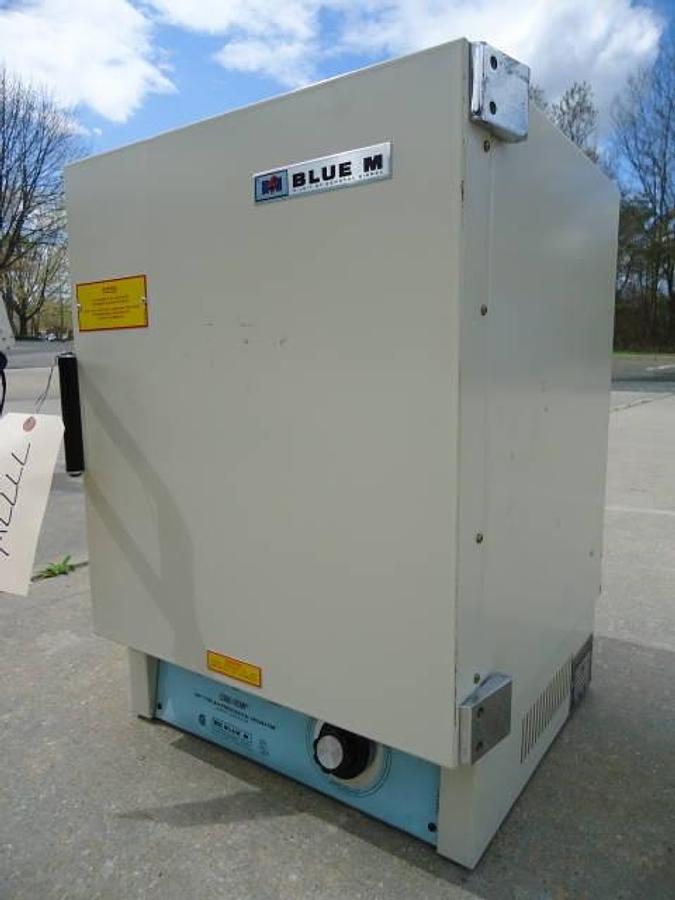
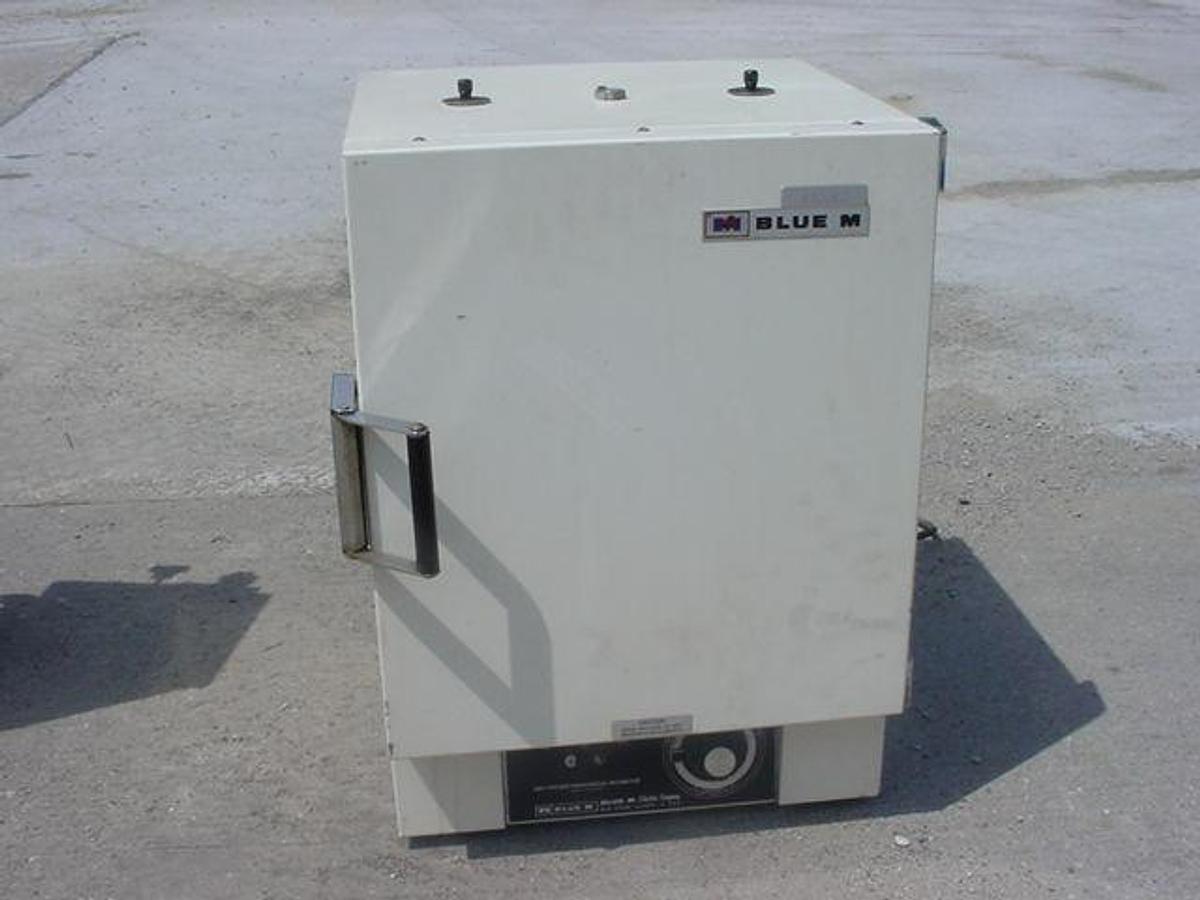
Blue M also produced bacteriological incubators under the Stabil-Therm name, which are distinct from their industrial drying and curing ovens but share the same reputation for precise temperature control. Bench-top models like the Model 100a are compact units often found in lab settings, while larger floor-standing cabinets served production and testing environments. When evaluating a used Blue M oven, identifying the exact model number is important because specifications, temperature ranges, and controller types vary significantly across the product line, and that information directly affects whether the unit is appropriate for a given application.
What should buyers understand about shipping and inspection logistics for used industrial ovens?
Shipping a used industrial oven involves more logistical complexity than standard freight, and buyers should get a clear picture of all associated costs before finalizing a purchase. Smaller bench-top units can often be palletized and shipped via standard LTL freight, but larger cabinet or floor-standing ovens may require custom crating to prevent damage in transit. The level of packaging required directly affects shipping costs, and buyers should ask dealers specifically about how the unit will be prepared for shipment and what those charges will be. Larger or heavier units may also require specialized rigging equipment for loading and unloading, which adds to the total landed cost.
For inspections, most reputable dealers will accommodate either an in-person visit or a virtual inspection via live video or recorded footage of the equipment. The goal is to get an accurate, honest picture of the machine's current condition before committing to the purchase. Some units may still be installed and operating at a facility, in which case the dealer can often arrange an inspection at the site. Keep in mind that dealers typically cannot run actual production processes during an inspection due to permitting constraints, but they can demonstrate basic functionality, power-up, and temperature response. Understanding both the inspection options and the full shipping cost structure upfront helps buyers make well-informed decisions and avoid unexpected expenses after the sale.