Category
Manufacturer
Model
FAQ:
What types of Blodgett commercial ovens are available on the used market?
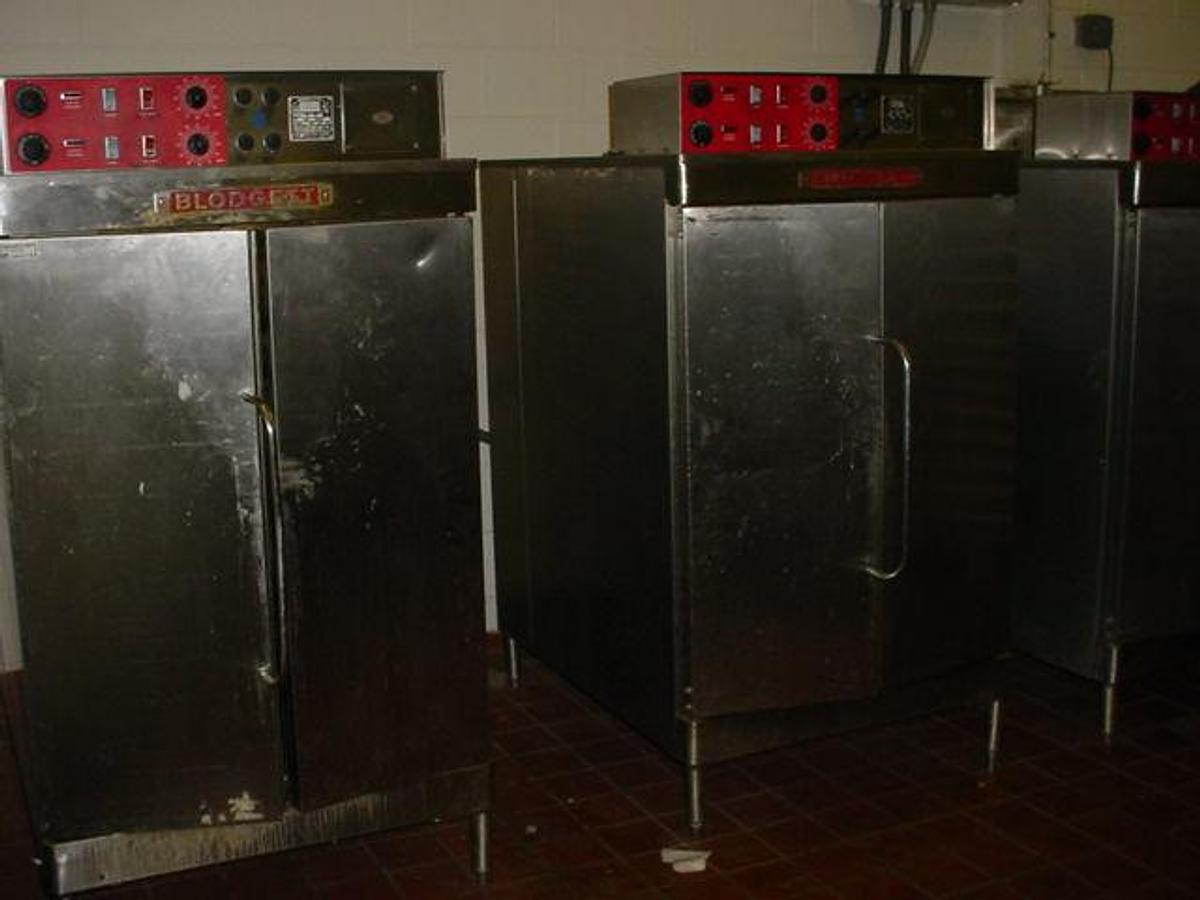
Blodgett has one of the broadest product lineups in commercial baking equipment, and that variety carries over into the used market. Buyers can typically find deck ovens, convection ovens, combination ovens, and rack ovens depending on what's currently available from used equipment dealers. Each type serves a different kitchen profile. Deck ovens are a staple for pizzerias and artisan bakeries because of the direct radiant heat they produce. Convection ovens circulate hot air for faster, more even cooking and are common in high-volume restaurants and hotels. Combination ovens handle both steam and dry heat, making them flexible for a wider range of menu items. Rack ovens are built for large-scale baking operations where throughput is the priority.
One specific model that appears frequently in the used equipment market is the Blodgett RE-42, a stainless steel electric oven that has been widely used in commercial kitchens. The Blodgett 1000 series deck ovens are also among the most sought-after used units, particularly for pizza and bread baking, because of their reputation for consistent, reliable performance. When shopping for a used Blodgett, it helps to have a clear sense of your production volume and the type of food you're baking, since the right oven type will make a significant difference in output quality and operational efficiency.
Are used Blodgett commercial ovens available in both gas and electric configurations?
Yes, Blodgett has manufactured both gas and electric versions of most of their major oven lines over the decades, so both configurations show up regularly in the used equipment market. The right choice depends on your kitchen's existing utility infrastructure, local energy costs, and the type of cooking you do. Electric models like the RE-42 are popular in kitchens where gas lines aren't available or where precise temperature control is a priority. Gas models tend to heat up faster and can be more cost-effective to operate in regions where natural gas rates are lower than electricity rates.
When purchasing a used Blodgett, it's worth confirming the exact fuel type and voltage requirements before buying, since retrofitting an oven from gas to electric or vice versa is generally not practical or cost-effective. Electric commercial ovens typically require a specific voltage and amperage draw, often 208V or 240V three-phase power, so checking your kitchen's electrical capacity before purchasing is an important step. A reputable used equipment dealer should be able to provide the full model specifications, including fuel type and electrical requirements, so you can verify compatibility with your facility before committing to a purchase.
How long do Blodgett commercial ovens typically last?
Blodgett ovens have a well-established reputation for durability, and with proper maintenance, many units remain in service for 20 years or more. This longevity is one of the main reasons Blodgett equipment holds its value in the used market and why buyers actively seek out used Blodgett units even when they're several years old. The heavy-duty stainless steel construction used on both the interior and exterior of most Blodgett models is a major contributor to this lifespan. Stainless steel resists corrosion, handles the thermal stress of daily heating and cooling cycles, and is far easier to clean and maintain than lesser materials.
The actual lifespan of any specific used unit will depend on how well it was maintained in its previous operation, the intensity of use it saw, and whether any components were repaired or replaced along the way. A deck oven that spent years in a high-volume pizzeria will have more wear than one used in a smaller catering operation. This is why inspecting a used Blodgett before purchasing is so important. Reputable dealers will typically accommodate in-person or video inspections so buyers can assess the current condition of the equipment, including the state of the interior, heating elements or burners, door seals, and controls.
What should I inspect before buying a used Blodgett commercial oven?
Buying used commercial equipment requires more due diligence than buying factory-fresh equipment, and a Blodgett oven is no exception. The most critical areas to evaluate are the condition of the interior cavity, the heating elements or burners, the door gaskets and hinges, and the control panel. Interior surfaces should be free of heavy scaling, warping, or corrosion. Damaged door seals are a common issue on older ovens and can cause significant heat loss, which affects both cooking performance and energy consumption. Controls should respond correctly and hold temperature accurately.
Reputable used equipment dealers will typically offer in-person inspections, virtual walkthroughs, or video documentation of the machine so buyers can assess its condition before committing. Keep in mind that most dealers do not have the permitting or setup to run full production tests, so the inspection will focus on the mechanical and physical condition of the unit rather than baking actual product. If a machine is still installed at a food production facility, it may be possible to observe it in operation, which gives a more complete picture of its working condition. Buyers should also contact Blodgett directly to ask about parts availability for the specific model they're considering, since older or discontinued models may have more limited support.
What is the history and reputation of Blodgett as a commercial oven manufacturer?
Blodgett was founded in 1848, making it one of the oldest commercial oven manufacturers in the United States. That kind of longevity in a competitive industry is a meaningful signal of product quality and brand reliability. Over more than 175 years, Blodgett has built a reputation for heavy-duty construction and consistent baking performance, which is why the brand is found in professional kitchens ranging from independent pizzerias to large hotel banquet operations. The brand is particularly well-regarded among bakers and pizza operators, where consistent deck temperatures and even heat distribution are critical to product quality.
This long track record also has practical implications for buyers of used equipment. Because Blodgett has been manufacturing commercial ovens for so long and at such scale, parts and technical documentation tend to be more accessible than they would be for a smaller or newer brand. That said, parts availability does vary by model and age, so buyers considering an older used unit should verify with Blodgett or a qualified service technician what level of support is still available for that specific model before purchasing. The brand's reputation for durability is one of the reasons used Blodgett ovens remain in high demand and often hold their value well compared to lesser-known alternatives.
What industries and kitchen types commonly use Blodgett commercial ovens?
Blodgett ovens are used across a wide range of foodservice operations, largely because the brand offers multiple oven types that suit different production needs. Pizzerias are among the most common users of Blodgett deck ovens, particularly the 1000 series, which produces the consistent radiant heat that pizza baking demands. Artisan bakeries also favor deck ovens for similar reasons. Convection models are standard in full-service restaurants, hotel kitchens, catering operations, and institutional foodservice settings like hospitals and schools, where speed and even cooking across multiple racks is the priority.
Combination ovens and rack ovens tend to appear in higher-volume operations like large catering companies, commissary kitchens, and industrial food production facilities. The fact that Blodgett has models suited to each of these environments is part of why the brand has maintained such a broad presence in the commercial kitchen industry. For buyers shopping used equipment, this diversity of applications means there's a good chance a used Blodgett oven will fit the needs of a wide variety of kitchen setups, and that the equipment has likely been proven in real-world production environments before reaching the used market.
How does buying a used Blodgett oven compare to buying a new one?
The most obvious advantage of buying a used Blodgett oven is cost. Used commercial ovens are typically sold at a significant discount compared to buying factory-fresh equipment, and given Blodgett's reputation for longevity, a well-maintained used unit can deliver years of reliable service at a fraction of the price. For operations that are budget-conscious or just starting out, this cost difference can free up capital for other equipment, build-out costs, or working capital. Used equipment also tends to be available for faster delivery than equipment ordered through a manufacturer's supply chain, which can be a real advantage if you're opening a kitchen on a timeline.
The trade-off is that used equipment is sold as-is, meaning the buyer takes on the responsibility of assessing the machine's condition before purchase. Unlike factory-fresh equipment, used ovens do not come with manufacturer warranties, so buyers need to do their homework upfront. Choosing a dealer with a strong track record in restaurant and foodservice equipment, requesting an inspection before buying, and consulting with a qualified service technician about the unit's condition are all steps that help manage that risk. For many buyers, the cost savings and availability of used Blodgett equipment make it a practical and financially sound choice when approached with proper due diligence.
What replacement parts and maintenance support are available for used Blodgett ovens?
Blodgett's longevity as a manufacturer means that parts support tends to be stronger for their equipment than for many other brands in the used market. Commonly replaced components like door gaskets, heating elements, thermostats, control boards, and deck stones are generally available through Blodgett's authorized service network and through third-party restaurant equipment parts suppliers. That said, parts availability is not uniform across all models. Older or discontinued models may have limited factory support, and some parts may only be available through aftermarket suppliers or salvage from other units.
Before purchasing a used Blodgett oven, it's worth reaching out to Blodgett directly or consulting a qualified commercial kitchen equipment technician to confirm what parts and service support exist for the specific model you're considering. The age of the unit matters here. A model that's 10 to 15 years old may still have full parts support, while a unit that's 25 or 30 years old may require more creative sourcing. Regular maintenance, including cleaning burners or heating elements, inspecting door seals, and calibrating thermostats, is the most effective way to extend the life of any used commercial oven and avoid costly repairs down the line.
What are typical shipping and rigging considerations when buying a used Blodgett commercial oven?
Commercial ovens are heavy, bulky pieces of equipment, and shipping them requires more planning than standard freight. The cost and complexity of shipping a used Blodgett oven will depend on the size and weight of the specific model, the distance it needs to travel, and the level of packaging or crating required to protect it in transit. Smaller countertop or single-deck units are more straightforward to ship, while larger multi-deck ovens or rack ovens may require custom crating and heavy-duty rigging equipment for both loading and unloading. Buyers should ask dealers for a detailed breakdown of packaging, rigging, and freight costs upfront to understand the full landed cost of the equipment before agreeing to a purchase.
For large or heavy units, a liftgate on the delivery truck and a forklift or pallet jack at the receiving location are often necessary. If the buyer's facility doesn't have loading dock access or material handling equipment, those logistics need to be arranged in advance. Some dealers will coordinate rigging and freight on behalf of the buyer, while others will require the buyer to arrange their own freight. Either way, getting clarity on these costs and logistics before finalizing the purchase avoids surprises and helps ensure the equipment arrives safely and without damage.
What payment terms should buyers expect when purchasing a used Blodgett oven from a dealer?
Most used equipment dealers require full payment before a machine is released for shipping or pickup. This is standard practice in the industry and applies to the majority of transactions, particularly for buyers who are purchasing from a dealer for the first time. The reasoning is straightforward: used equipment is often a one-of-a-kind item, and dealers need payment secured before investing in packaging, rigging, and freight coordination. Accepted payment methods vary by dealer but commonly include wire transfer, credit card, and occasionally financing through third-party lenders for larger purchases.
Some dealers do offer extended terms or net payment arrangements to repeat customers with an established purchasing history, but this is typically not available to first-time buyers. If financing is a consideration, it's worth asking the dealer whether they work with any equipment financing partners, since third-party lenders that specialize in restaurant and commercial kitchen equipment can sometimes offer competitive terms for qualified buyers. Regardless of the payment structure, buyers should ensure they receive a clear invoice that details the equipment being purchased, the condition as described, and all associated costs including shipping and rigging, before sending any payment.