Category
Manufacturer
Model
FAQ:
What kind of equipment does BH Hubbert & Sons manufacture?
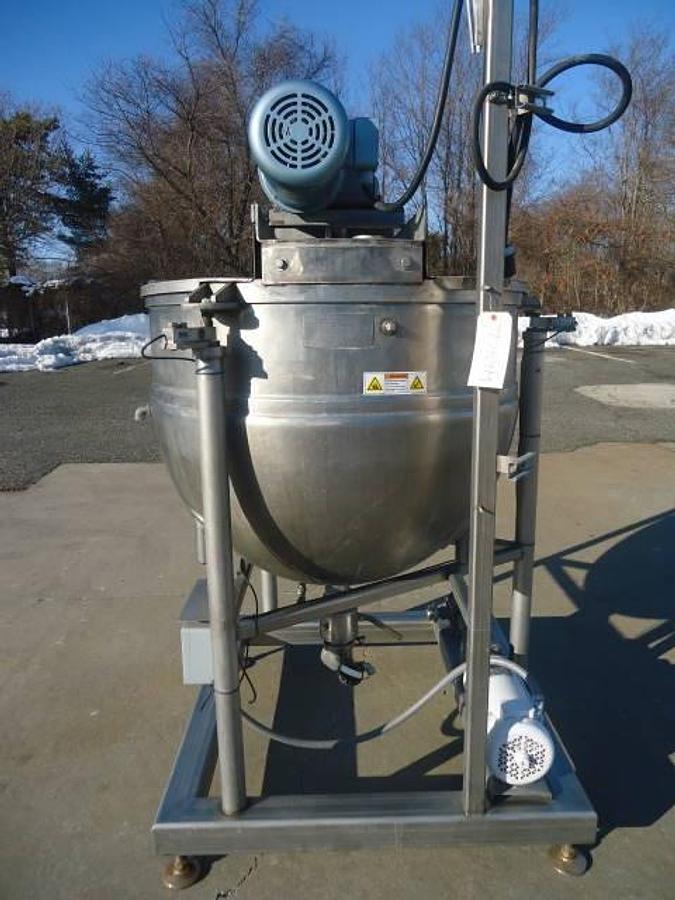
BH Hubbert & Sons is known for producing industrial processing equipment, with agitated kettles being among their recognized product lines. A representative example is their 150-gallon scraper agitated kettle rated at 100 PSI, which is the type of specialized vessel used in food processing, chemical manufacturing, pharmaceutical production, and similar industries that require heated or temperature-controlled mixing under pressure.
Scraper agitated kettles from manufacturers like BH Hubbert & Sons are designed to handle viscous materials that would otherwise stick to vessel walls during heating or cooling cycles. The scraper mechanism keeps product moving and prevents scorching or uneven processing. Equipment of this type tends to have a long service life when properly maintained, which is why units from this manufacturer continue to appear on the used industrial equipment market years after initial installation.
What is a scraper agitated kettle and what is it used for?
A scraper agitated kettle is a jacketed mixing vessel equipped with an internal agitator fitted with scraper blades that continuously wipe the interior walls of the kettle during operation. The jacket surrounding the vessel allows steam, hot water, or a cooling medium to circulate, giving operators precise control over the temperature of the product inside. This combination of agitation and temperature control makes these kettles essential in industries that process thick, heat-sensitive, or adhesive materials.
Common applications include cooking jams, jellies, confections, sauces, and dairy products in food processing plants, as well as blending adhesives, resins, waxes, and coatings in chemical manufacturing. Pharmaceutical and cosmetic manufacturers also use scraper agitated kettles for creams, ointments, and similar formulations. The PSI rating on a kettle, such as the 100 PSI specification found on BH Hubbert & Sons units, indicates the maximum allowable working pressure for the jacket, which determines the temperature range the vessel can safely achieve during steam-heated operation.
What should I inspect when buying a used agitated kettle?
Inspecting a used agitated kettle thoroughly before purchase is critical because these vessels operate under pressure and handle materials that often have strict hygiene or safety requirements. The most important areas to examine are the jacket integrity, the condition of the agitator shaft and scraper blades, the mechanical seal or packing gland, and any valves or fittings. Pitting, corrosion, or weld repairs inside the vessel can indicate years of harsh chemical exposure or inadequate cleaning, and surface finish matters significantly in food-grade and pharmaceutical applications.
Buyers should also request the vessel's pressure vessel certification history and any documentation related to prior repairs or re-rating. Reputable used equipment dealers will typically accommodate in-person inspections or arrange video walkthroughs so buyers can assess the machine's current condition before committing to a purchase. If the kettle is still installed at a production facility, some dealers can arrange access to view it in its working environment. Keep in mind that most equipment dealers are not set up to run actual production tests, so buyers should focus on a thorough visual and mechanical inspection and factor in any refurbishment costs when evaluating the purchase price.
Are there warranties available on used industrial processing equipment?
Warranties on used industrial equipment are generally not offered the same way they are on equipment sold directly from a manufacturer. Used equipment dealers typically sell machinery on an as-is basis, meaning the buyer accepts the equipment in its current condition at the time of sale. This is standard practice across the used equipment industry and reflects the fact that the dealer often has limited knowledge of the machine's full operating history before it came into their inventory.
Because of this, buyers carry the responsibility of performing due diligence before finalizing a purchase. Choosing a dealer with a long track record in the industry and one that specializes in the relevant equipment category reduces the risk considerably. Buyers should also contact the original manufacturer of the equipment directly to understand what level of technical support, spare parts availability, and documentation they can still provide for a given model and age of machine. Older or discontinued models may have limited manufacturer support, which is an important factor to weigh when evaluating total cost of ownership.
How is used industrial equipment typically shipped, and what costs should buyers expect?
Shipping used industrial equipment involves several cost components that buyers should understand before finalizing a purchase. The base freight charge covers transportation from the dealer's location to the destination, but additional costs often include packaging, palletization or custom crating, and rigging fees for loading the machine onto the carrier. Heavier or more fragile equipment requires more substantial packaging to prevent damage in transit, and the cost of that preparation varies depending on the machine's size, weight, and fragility.
For larger processing vessels like agitated kettles, specialized rigging equipment such as forklifts or cranes may be needed for both loading at the origin and unloading at the destination. If the buyer's facility is not equipped for heavy unloading, arranging third-party rigging services adds to the total landed cost. Buyers should ask dealers for a full breakdown of all shipping-related charges before agreeing to a purchase so there are no surprises. Getting a clear picture of the total delivered cost, including freight, crating, and any destination rigging, is just as important as negotiating the equipment price itself.
What payment terms do used equipment dealers typically offer?
Most used equipment dealers require full payment before a machine is released for shipment. This is standard practice in the industry and protects the dealer given that used equipment transactions often involve buyers and sellers in different geographic locations who may not have an established business relationship. Payment is typically accepted by wire transfer, and some dealers may accept credit cards or other forms of payment depending on the transaction size and their internal policies.
Financing options through the dealer itself are less common with smaller or regional used equipment dealers, though some buyers arrange their own financing through equipment lending institutions or their existing banking relationships. Dealers may occasionally offer payment terms to established repeat customers with a history of successful transactions, but first-time buyers should generally plan for full payment upfront. Buyers who need financing should explore options with specialty lenders that focus on industrial equipment loans before beginning their search, so they have a clear budget and can move quickly when the right machine becomes available.
How can I verify the operating history of a used processing vessel before buying?
Verifying the history of a used processing vessel takes some effort but is worth doing carefully, especially for pressure-rated equipment. Start by asking the dealer for any documentation that came with the machine, including prior inspection certificates, repair records, pressure vessel stamps or certifications, and any maintenance logs. Jacketed vessels rated for pressure operation are subject to regulatory inspection requirements in many jurisdictions, and a history of documented inspections is a positive indicator of how well the equipment was maintained.
Beyond paperwork, a direct inspection of the vessel is the most reliable way to assess its condition. Dealers will typically arrange in-person visits or provide detailed video documentation showing the interior of the vessel, the agitator components, the jacket connections, and the drive assembly. If the equipment is still located at the facility where it was last used, there may be an opportunity to see it in its original installed context, which can provide additional insight into how it was operated and maintained. Buyers should approach the inspection with a specific checklist and ask pointed questions about anything that looks worn, repaired, or unclear.
What factors affect the price of used agitated kettles on the secondary market?
Several variables drive the price of used agitated kettles, and understanding them helps buyers evaluate whether a listed price represents fair market value. Vessel capacity is one of the most direct factors, with larger kettles generally commanding higher prices. The pressure rating of the jacket, the material of construction (stainless steel grades vary significantly in value), and the condition of the interior surface finish all play a role. A kettle with a polished sanitary interior suitable for food or pharmaceutical use is worth more than an equivalent vessel with a rough or corroded interior that would need refurbishment.
The condition and completeness of the drive assembly, agitator, scrapers, and associated controls also affect pricing. A unit that arrives with all components intact and in working order is more valuable than one that is missing parts or has a damaged gearbox. Brand reputation matters too, as equipment from recognized manufacturers tends to hold value better and offers buyers more confidence in build quality and parts availability. Market timing, regional demand, and the urgency of the seller can also move prices up or down, which is why similar equipment can sometimes be found at notably different price points depending on where and when it is listed.
Are replacement parts available for older used processing equipment?
Parts availability for older processing equipment varies considerably depending on the manufacturer, the age of the machine, and whether the model is still in active production. For well-established industrial equipment manufacturers, many wear components such as seals, gaskets, agitator blades, and drive components can often be sourced through the manufacturer's service network, authorized distributors, or aftermarket suppliers. Contacting the manufacturer directly with the model and serial number is the most reliable way to get a clear picture of what is still available and at what cost.
For older or less common equipment, buyers may need to work with machine shops to fabricate replacement parts from engineering drawings or by reverse-engineering worn components. This is a common practice in industries that rely on long-lived capital equipment, and many experienced maintenance teams are comfortable with this approach. Before purchasing any used processing vessel or industrial machine, it is worth doing a preliminary parts availability check so that potential maintenance costs are factored into the total acquisition decision. A machine available at an attractive price can become expensive to own if critical components are no longer manufactured and difficult to replicate.
What should buyers look for when choosing a used industrial equipment dealer?
Selecting the right dealer is one of the most important decisions in a used equipment purchase, particularly for specialized industrial machinery like pressure vessels and processing equipment. A dealer's track record is the most telling indicator of reliability. Dealers who have been operating in the industry for many years and specialize in a particular category of equipment tend to have deeper product knowledge, better-curated inventory, and more established processes for inspection, documentation, and shipping. A long history in the market also means there is a body of past transactions that buyers can reference or inquire about.
Specialization matters as much as longevity. A dealer focused on food processing and chemical manufacturing equipment will have a better understanding of what to look for when evaluating a scraper kettle or mixing vessel than a general industrial auction house that handles all types of machinery. Buyers should also pay attention to how transparent a dealer is about the condition of their equipment, whether they provide detailed photos and descriptions, and how readily they accommodate inspection requests. Dealers who are forthcoming with information and willing to support thorough buyer due diligence are generally more trustworthy partners in a transaction than those who are vague about condition details or resistant to inspections.