Category
Manufacturer
Model
FAQ:
What is a jacketed kettle mixer and how does it work?
A jacketed kettle mixer is a double-walled vessel designed for batch processing applications that require precise temperature control combined with mechanical agitation. The space between the inner vessel wall and the outer jacket is filled with a heating or cooling medium, such as steam, hot water, or glycol, which transfers heat uniformly across the entire surface area of the inner vessel. This uniform heat distribution is one of the key advantages over single-wall heated tanks, which tend to create hot spots that can scorch or unevenly process sensitive materials.
The mixer component, typically mounted at the top or bottom of the vessel, keeps product in constant motion during processing. This serves two purposes: it promotes even heat transfer by continuously bringing product into contact with the heated walls, and it performs the actual blending, emulsifying, or homogenizing work depending on the agitator type installed. The combination of controlled temperature and mechanical mixing makes these units well-suited for sauces, confections, creams, lotions, pharmaceutical compounds, and a wide range of other batch products that require both heat and agitation to process correctly.
What is a homogenizing mixer, and how does it differ from a standard agitator?
A homogenizing mixer is a high-shear mixing device designed to reduce particle size and create stable, uniform emulsions or dispersions within a product. Unlike a standard paddle or anchor agitator, which primarily circulates material around the vessel, a homogenizer generates intense mechanical forces that break down droplets, particles, or clumps to a very fine and consistent size. This is particularly important in food production, cosmetics, and pharmaceutical manufacturing where product texture, stability, and shelf life depend on a uniform blend of ingredients that might not naturally mix well together, such as oil and water phases.
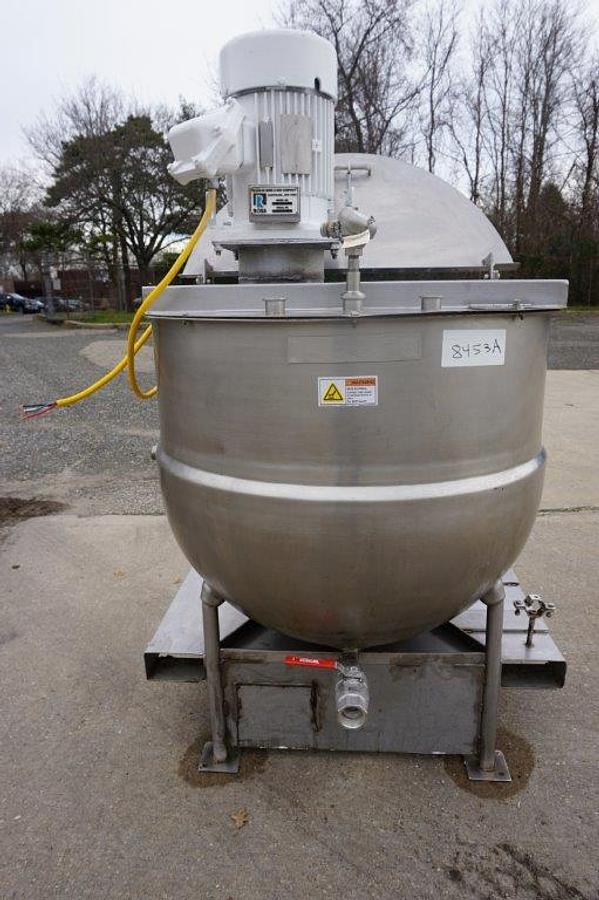
The BH Hubbert 100-gallon jacketed kettle available on the used market is equipped with a 5 HP homogenizing mixer, which indicates it was built for processing products requiring more than simple stirring. A 5 HP drive provides substantial torque and shear capability, making the unit capable of handling viscous or emulsion-based formulations. Buyers evaluating this type of equipment should consider whether their specific product requires high-shear homogenization or whether a lower-shear agitator would be more appropriate, as the agitator type directly affects product outcome and the level of wear on the mixer components over time.
What industries commonly use BH Hubbert jacketed kettle mixers?
Jacketed kettle mixers from manufacturers like BH Hubbert are used across a broad range of industries wherever batch processing requires controlled heat and mechanical mixing in a single vessel. Food and beverage processing is one of the most common applications, covering products like sauces, soups, jams, confections, fillings, and dairy-based items. Cosmetics and personal care manufacturers use them for lotions, creams, and emulsified products. Pharmaceutical producers rely on jacketed kettles for ointments, topical preparations, and certain liquid formulations. Chemical and specialty coating manufacturers also use them for adhesives, waxes, and other temperature-sensitive compounds.
The versatility of the jacketed kettle design is what drives its adoption across so many sectors. The same basic equipment configuration can be adapted for different industries primarily through material specifications, surface finishes, and the type of agitator installed. For sanitary applications in food or pharma, the interior surfaces are typically polished stainless steel to prevent product buildup and allow thorough cleaning. When evaluating a used BH Hubbert unit, buyers should confirm the existing surface finish and any certifications the vessel may carry, such as 3-A Sanitary Standards compliance or USDA acceptance, to ensure the equipment meets the regulatory requirements of their specific industry.
What should buyers look for when inspecting a used jacketed kettle mixer?
Inspecting a used jacketed kettle mixer requires attention to both the vessel itself and the mechanical components. On the vessel side, buyers should examine the interior surface finish for pitting, scratches, or corrosion, as any surface damage can harbor bacteria in sanitary applications or indicate past chemical exposure that may have compromised the stainless steel. The jacket should be pressure-tested or have documented pressure ratings, and buyers should ask about any history of leaks or repairs to the jacket welds. Fittings, valves, and the agitator shaft seal are also common wear points worth inspecting closely.
For the mixer drive and agitator, check the motor for signs of overheating, listen for unusual bearing noise during operation if the unit can be powered up, and inspect the agitator blades or homogenizer head for wear, pitting, or damage. Reputable used equipment dealers will typically accommodate in-person or video inspections so buyers can get an accurate picture of the machine's current condition. Keep in mind that most dealers are not set up to run actual production tests with product, since that requires different facility permitting, but they can often demonstrate that the motor runs and the agitator turns freely. Buyers should also contact BH Hubbert or the current manufacturer representative to understand what parts and technical support are available for the specific model and age of the unit being considered.
What heating media can be used with a jacketed kettle mixer?
Jacketed kettle mixers are designed to work with several different heating and cooling media depending on the temperature requirements of the application and the infrastructure available at the facility. Steam is the most common heating medium in food and pharmaceutical plants because it transfers heat efficiently and can reach high temperatures quickly, making it well-suited for cooking, sterilizing, or processing products that require temperatures above what hot water can practically achieve. Hot water or pressurized hot water systems are also widely used, particularly where precise temperature control is more important than rapid heating, since water systems tend to be more controllable than steam.
For applications requiring cooling as well as heating, glycol or chilled water can be circulated through the same jacket, making the vessel functional for both heating and cooling cycles within a single batch process. Some specialty applications use thermal oil as the heat transfer medium, particularly where very high temperatures are needed without the pressure requirements of high-temperature steam. When evaluating a used jacketed kettle, buyers should confirm the jacket's rated working pressure and temperature limits, as these specifications determine which heating media the vessel is certified to handle safely. The existing fittings and connections on the jacket will also give a clear indication of what the unit was designed and previously used for.
What does 100-gallon capacity mean in practical terms for batch processing?
A 100-gallon jacketed kettle refers to the total interior volume of the vessel, but the actual working or usable capacity in production is typically somewhat less, often in the range of 70 to 85 gallons depending on the product and process. Processors generally do not fill a kettle to its maximum volume because adequate headspace is needed to prevent boilover, accommodate expansion during heating, and allow the agitator to work effectively without splashing. The actual batch size a facility can run will depend on the product's density, its behavior during heating, and any foaming or expansion characteristics.
For context, a 100-gallon batch kettle is considered a mid-range production vessel. It is large enough for meaningful commercial output but compact enough to fit in smaller processing facilities or to serve as a secondary or specialty batch unit in larger plants. Facilities running multiple product SKUs or shorter production runs often prefer this size because it allows flexibility without the commitment of a much larger vessel. Buyers considering a used 100-gallon BH Hubbert unit should map their expected batch volumes against this capacity, accounting for fill level limitations, to confirm the equipment fits their production model before purchasing.
What material construction and surface finish standards apply to sanitary jacketed kettles?
Jacketed kettle mixers intended for food, beverage, dairy, or pharmaceutical use are almost universally constructed from 304 or 316L stainless steel. Type 316L is preferred in applications involving higher chloride concentrations, acidic products, or pharmaceutical processing because it offers better corrosion resistance than 304. The interior surface finish is equally important in sanitary applications. A mechanically polished finish, typically expressed as a Ra (roughness average) value, reduces the microscopic surface irregularities where bacteria and product residue can accumulate. Many sanitary standards specify a minimum interior finish of 32 Ra microinches or better, with some pharmaceutical applications requiring even finer finishes.
For food and dairy processors, compliance with 3-A Sanitary Standards is a widely recognized benchmark. Equipment meeting 3-A standards has been designed and verified to meet specific criteria for cleanability, material compatibility, and surface finish. USDA acceptance is another designation relevant to certain food processing environments. When buying a used jacketed kettle, buyers should ask for any documentation the seller has regarding the vessel's material certifications, original surface finish specifications, and any sanitary compliance markings on the unit itself. Age and use history can affect surface condition, so a physical inspection of the interior is an important step in evaluating whether a used vessel still meets the sanitary requirements of the intended application.
How is a jacketed kettle mixer typically shipped, and what should buyers expect for freight costs?
Jacketed kettle mixers are heavy, often awkward pieces of industrial equipment that require careful preparation before shipping to prevent damage in transit. A 100-gallon unit with its mixer drive, motor, and support stand can weigh several hundred to over a thousand pounds depending on construction, which typically puts it beyond standard LTL freight handling and into the category of machinery that requires proper crating or heavy-duty palletization. The seller is responsible for ensuring the equipment is adequately secured and protected, and buyers should ask specifically what packaging method will be used and whether the cost of crating or custom packaging is included in the quoted price or billed separately.
For larger or heavier equipment, professional rigging may be required for both loading at the seller's facility and unloading at the buyer's location. Rigging costs are generally an added expense and can vary significantly based on the equipment's weight, the complexity of the move, and local labor rates. Buyers should request a fully itemized landed cost from the seller before committing to a purchase, covering the equipment price, packaging, rigging, freight, and any applicable fuel surcharges. Most used equipment dealers require full payment prior to releasing equipment for shipment, so understanding the complete cost upfront avoids surprises at the time of payment.
What are the typical applications for a 5 HP mixer drive on a jacketed kettle?
A 5 HP mixer drive on a 100-gallon jacketed kettle indicates the unit was built to handle moderately to highly viscous products or applications requiring significant shear force. In practical terms, 5 HP provides enough power to process thick sauces, pastes, creams, and emulsified products that would stall or strain a lower-horsepower agitator. For comparison, a simple stirring application on a thin liquid might only require 1 to 2 HP at the same vessel size, so the 5 HP specification on this BH Hubbert unit points toward more demanding processing work, consistent with its homogenizing mixer configuration.
The horsepower rating also affects how the unit handles increasing viscosity as a batch cooks down or as ingredients are added. Products like confections, thick tomato-based sauces, or cosmetic creams can change dramatically in viscosity during processing, and having adequate motor power ensures the agitator can maintain consistent speed and shear throughout the batch cycle without overloading. Buyers should consider their product's viscosity profile across the full batch process, not just at the start, to confirm that the existing drive is appropriate. If the application requires variable speed control, buyers should verify whether the unit includes a variable frequency drive (VFD) or speed control mechanism, as this significantly expands the range of products the kettle can handle.
What questions should buyers ask a used equipment dealer before purchasing a BH Hubbert jacketed kettle?
Before purchasing a used jacketed kettle mixer, buyers should gather as much information as possible about the machine's history, current condition, and the dealer's ability to support the transaction. Key questions include: What was the unit previously used to process, and what cleaning and maintenance procedures were followed? Has the jacket ever been repaired or re-welded? What is the jacket's rated working pressure? Is the motor and mixer drive in working condition, and can it be demonstrated? Are there any known issues with the agitator shaft seal, bearings, or gearbox? Does the dealer have any original documentation, manuals, or specifications for the unit?
Beyond the equipment itself, buyers should ask about inspection options. Reputable dealers will offer in-person inspections, video walkthroughs, or photo documentation so buyers can assess the machine's condition before committing. If the equipment is still installed at a production facility, the dealer may be able to arrange an inspection at the site. Buyers should also contact BH Hubbert or the current manufacturer representative directly to understand what technical support, replacement parts, and documentation are available for the specific model, since parts availability can vary considerably based on the age of the unit. Taking these steps reduces the risk inherent in purchasing used processing equipment and helps ensure the machine is a good fit for the intended application.