Category
Manufacturer
Model
Berkel
Berkel is a prominent name in the food processing industry, especially known for their slicers and food preparation equipment. Their machines are designed to offer reliability and precision in cutting, making them vital in kitchens and food processing facilities. Berkel’s expertly crafted equipment ensures uniformity and efficiency, contributing to improved food preparation and presentation.
FAQ:
What types of used Berkel food equipment are commonly available for sale?
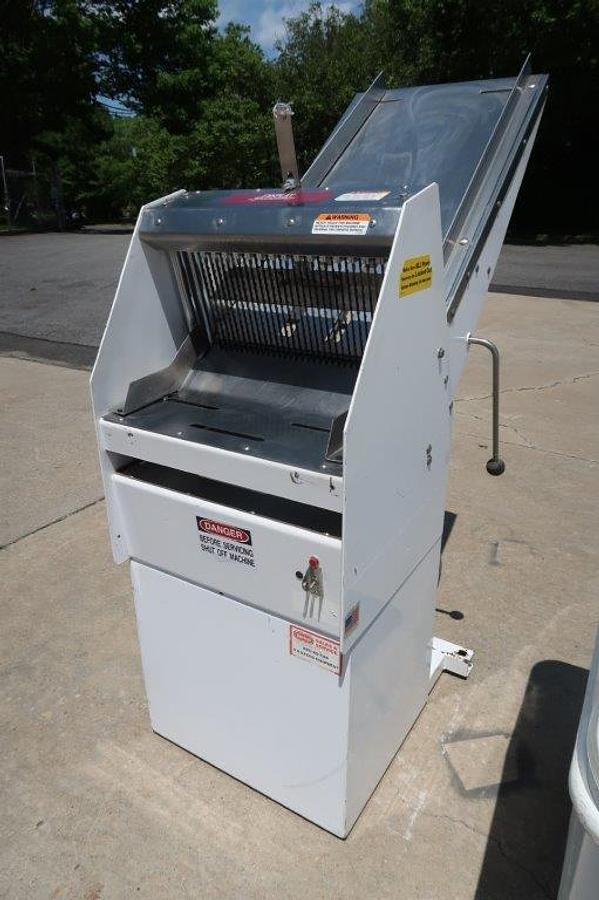
Berkel has built its reputation across several categories of food preparation equipment, and the used market reflects that range. The most sought-after machines include meat slicers, flywheel slicers, bread slicers, mixers, and food processors. Berkel's slicers are particularly prominent in the secondary market because of how long they hold up in commercial environments. A machine like the Berkel GMB .5 Bread Slicer, for example, is a single-phase unit that turns up regularly among used equipment dealers who specialize in food processing machinery.
Beyond slicers, buyers also encounter used Berkel mixers and food prep attachments, which are popular in bakeries, delis, and restaurant kitchens. The variety available at any given time depends on what commercial operations are decommissioning or upgrading. Because Berkel equipment is built to last, used units often still have significant productive life remaining, which is a large part of why they retain strong resale value and consistent buyer demand in the secondary market.
What is Berkel's reputation in the food processing industry?
Berkel is widely regarded as one of the most recognized names in commercial food preparation equipment, with a history that spans well over a century. The brand is particularly associated with precision slicing, and its flywheel slicers are considered iconic pieces of equipment in professional kitchens, butcher shops, and delicatessens. Berkel machines are engineered to deliver consistent slice thickness and reliable performance under the demands of daily commercial use, which is why they appear so frequently in high-volume food service environments.
The construction quality is a defining characteristic of the brand. Many Berkel machines are built with cast iron and stainless steel components, which contributes to their longevity and their ability to hold calibration over time. This durability is also why used Berkel equipment remains a serious option for buyers. A well-maintained Berkel slicer or mixer purchased through the secondary market can perform at a high level for years, making the brand a practical choice even when buying outside of retail channels.
What should buyers expect when purchasing used Berkel equipment rather than buying retail?
Buying used Berkel food equipment is a fundamentally different process from purchasing through a retail or distribution channel. Used machines are sold as-is, which means the condition, age, and operational history of each unit vary. There are no manufacturer warranties attached to used equipment transactions. The responsibility for evaluating the machine falls on the buyer, which makes working with a reputable used equipment dealer with a verifiable track record in food processing machinery especially important.
A trustworthy dealer will typically offer inspection options, either in person, via video call, or through detailed video footage of the machine in its current state. Some equipment may still be installed and running at a production facility, allowing for a more realistic assessment of its working condition. Buyers should ask specific questions about hours of use, any repairs or part replacements, and the physical condition of blades, motors, and safety components. Consulting with Berkel directly about parts availability and support for a specific model and age is also a smart step before committing to a purchase.
How should buyers inspect used Berkel slicers and food processing equipment before purchasing?
Inspection is one of the most critical steps in any used equipment purchase, and Berkel machines are no exception. Reputable dealers will accommodate in-person visits, live video walkthroughs, or recorded video inspections so buyers can assess the machine's current condition before any money changes hands. During an inspection, buyers should pay close attention to the condition of the blade or blades, the sharpness and integrity of the cutting edge, the smoothness of the carriage mechanism, and whether the motor runs without unusual noise or vibration.
It is worth noting that most used equipment dealers do not have the permitting or production infrastructure to run actual food through a machine during an inspection. What they can demonstrate is whether the machine powers on, whether mechanical components move freely, and whether there are visible signs of damage, corrosion, or heavy wear. If the equipment is still installed at a production facility, the dealer may be able to arrange an inspection there, where the machine could potentially be observed in active use. Buyers should document everything they observe and ask the dealer for any available service or maintenance records.
What is the typical price range for used Berkel food equipment?
Berkel occupies the premium segment of the food equipment market, and that positioning carries over into the secondary market as well. Retail prices for commercial Berkel slicers can range from roughly $1,000 on the lower end to well over $10,000 for high-capacity or specialty models. Used units typically sell at a discount to those retail figures, but the exact price depends heavily on the model, age, condition, and how much service life remains in the machine. Iconic models like Berkel flywheel slicers can command higher prices even used because of their collectible status and mechanical durability.
Buyers should also factor in costs beyond the purchase price. Shipping, crating, and rigging for larger or heavier machines can add meaningfully to the total landed cost. Some Berkel equipment is substantial in size and weight, requiring professional rigging for loading and unloading, which is an additional expense. Getting a clear picture of all costs involved, including packaging, freight, and any rigging fees, before finalizing a purchase helps avoid surprises and allows for an accurate comparison between available units.
Is used Berkel equipment suitable for commercial kitchen use?
Berkel equipment was designed specifically for commercial food service environments, and used machines that have been properly maintained can absolutely continue to serve in those settings. Delis, restaurants, catering operations, butcher shops, and food processing facilities have relied on Berkel slicers and mixers for decades, and the brand's construction standards reflect the demands of those environments. The cast iron and stainless steel builds that define many Berkel models are precisely what makes them viable as used purchases, since the materials resist wear and hold up well over extended service lives.
The key consideration for commercial buyers is ensuring the specific model meets current operational needs in terms of capacity, slice thickness range, and motor power. A used Berkel slicer that was originally spec'd for a high-volume deli will likely still be well-suited to similar use after changing hands. Buyers should verify that safety features are intact and functioning, since commercial kitchens are subject to health and safety inspections. Consulting with a technician familiar with Berkel equipment before putting a used machine into production service is a practical precaution.
Can used Berkel food equipment work for serious home cooks or small-scale operations?
Berkel has a following among serious home cooks and small food businesses precisely because the machines are built to a standard that far exceeds what most consumer-grade equipment can offer. A used Berkel slicer, for instance, gives a home charcuterie enthusiast or small sandwich shop the kind of blade precision and consistent thickness control that is otherwise only accessible at commercial price points. The used market makes that level of quality more financially accessible than buying through retail channels.
That said, buyers should be realistic about scale and space. Many Berkel commercial machines are heavy, require dedicated counter or floor space, and are designed for frequent use. For someone running a small catering operation or a home kitchen with serious production needs, a used Berkel unit can be an excellent fit. For someone who plans to use a slicer only occasionally, the size and weight of a full commercial Berkel machine may be more than the application warrants. Matching the machine's specifications to actual usage patterns is the practical starting point for any buyer evaluating used equipment.
How long do Berkel slicers and mixers typically last?
Berkel equipment has a well-documented reputation for longevity, which is one of the primary reasons the brand maintains strong demand in the used market. Commercial Berkel slicers built with cast iron frames and precision-ground blades are known to remain in service for decades when properly maintained. It is not unusual to find Berkel machines that are 20 or 30 years old still performing reliably in food service settings, which speaks to both the quality of the materials and the mechanical simplicity of the core designs.
The actual service life of any individual machine depends on how heavily it was used, how consistently it was cleaned and maintained, and whether worn components were replaced as needed. Blades, gaskets, and drive belts are the parts most likely to need attention over time. Buyers of used Berkel equipment should ask about the maintenance history of a specific machine and check whether parts for that model are still available from Berkel or aftermarket suppliers. The manufacturer can often provide guidance on parts availability for older models, which is a useful data point when evaluating whether a particular used unit represents a sound long-term investment.
What are the shipping and logistics considerations for buying used Berkel equipment?
Berkel commercial equipment varies considerably in size and weight, and those factors have a direct impact on shipping costs and logistics. Smaller countertop slicers can often be palletized and shipped via freight carriers with standard packaging, while larger floor-standing units or flywheel slicers may require custom crating to prevent damage in transit. The level of packaging required is one of the main variables that affects shipping costs, and buyers should ask dealers specifically what packaging method will be used and what that adds to the total cost.
For heavier machines, professional rigging may be needed to safely load the equipment at the dealer's facility and unload it at the destination. Rigging is typically an added cost that buyers should account for when calculating the full landed price of the equipment. Buyers should request a complete breakdown of freight, crating, and rigging charges before finalizing any purchase, since the difference between a palletized shipment and a fully rigged, custom-crated delivery can be significant. Clarifying these details upfront prevents unexpected costs and helps ensure the machine arrives without damage.
What payment terms are typical when buying used Berkel food equipment from a dealer?
The standard practice among used equipment dealers is to require full payment before a machine is shipped or released. This applies broadly across the industry and is not specific to any one dealer or brand. The reasoning is straightforward: once a machine leaves a dealer's facility, the transaction is effectively complete, and collecting payment after the fact introduces risk that most dealers are not willing to accept. Buyers should plan for this requirement and confirm accepted payment methods before proceeding.
Some dealers may offer payment terms to established customers with a history of prior transactions, but this is the exception rather than the rule for first-time buyers. Credit card payments, wire transfers, and ACH transactions are the most common methods accepted. Buyers who are purchasing higher-value Berkel equipment should also consider whether the dealer offers any form of escrow or staged payment arrangement tied to inspection milestones. Asking about payment logistics early in the process, alongside questions about shipping and inspection, helps ensure there are no surprises when it comes time to close the deal.