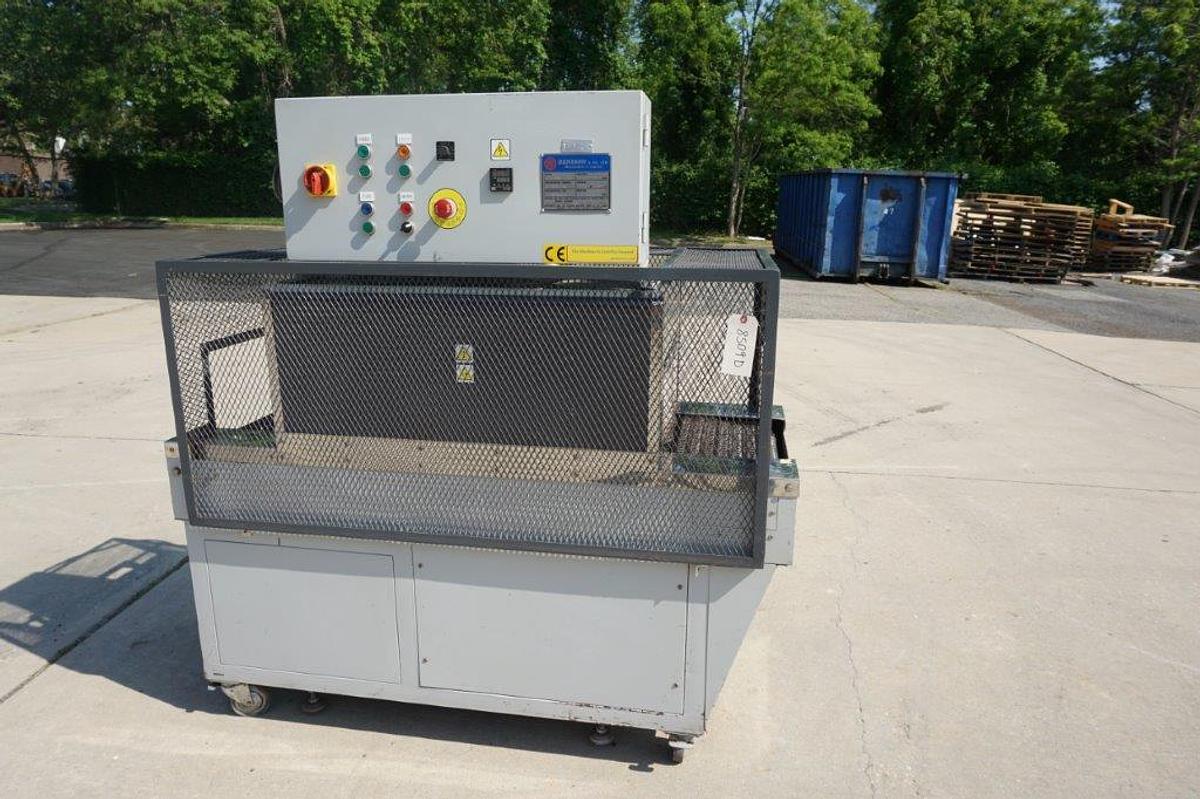
Category
Manufacturer
Model
Benison & Co.
Benison & Co. is well-known in the packaging industry for their sealers and film packaging solutions. Serving a diverse range of industries, their equipment provides exceptional flexibility and reliability in sealing applications. Benison & Co’s technology plays an essential role in enabling efficient packaging processes, contributing to enhanced product protection and presentation.
FAQ:
What types of sealing equipment does Benison & Co. manufacture?
Benison & Co. is a recognized name in the packaging industry, known primarily for producing sealers and film packaging solutions. Their equipment spans a range of sealing applications, including conveyorized shrink tunnels and other packaging machinery designed to handle various film types and product formats. The brand has built a reputation for flexibility and reliability across different production environments, making their machines a common choice for businesses that need consistent sealing performance.
Their product line is designed to serve a diverse set of industries, from food processing and consumer goods to industrial packaging. Shrink tunnels, for example, are used to apply heat-shrink film around products, creating a tight, professional-looking package. Benison & Co. equipment is generally regarded as practical and adaptable, which is why their machines continue to circulate in the used equipment market long after their initial deployment in production facilities.
What should I know before buying a used Benison & Co. sealer?
Buying a used Benison & Co. sealer requires a bit more due diligence than purchasing brand-new packaging equipment. Since used machines are sold as-is, the responsibility for evaluating condition falls entirely on the buyer. That makes the reputation and specialization of the dealer you choose critically important. Look for dealers with a long track record in the packaging machinery space, as they are more likely to have accurate knowledge of the equipment and be transparent about its condition.
Before committing to a purchase, ask the dealer about inspection options. Most reputable used equipment dealers will offer in-person visits, virtual walkthroughs, or detailed video documentation of the machine running or at rest. It is also worth contacting Benison & Co. directly to understand what level of manufacturer support, parts availability, and technical documentation exists for the specific model you are considering. Older models may have limited parts availability, which can affect long-term serviceability and should factor into your buying decision.
How can I inspect a used Benison & Co. sealer before purchasing?
Inspection is one of the most important steps in buying used packaging equipment. For Benison & Co. sealers, buyers typically have a few options: an in-person visit to the dealer's facility or the plant where the machine is currently located, a live video call walkthrough, or a recorded video showing the machine's condition and, where possible, its operation. The goal of any inspection is to get an accurate, honest picture of the machine's current working state, including visible wear, missing components, and any signs of prior repairs or modifications.
Keep in mind that used equipment dealers generally do not have the production permits or infrastructure needed to run a full sealing or shrink-wrapping cycle with actual product. So while a dealer can power on a machine and demonstrate mechanical function, a full production test may not be possible outside of an active manufacturing environment. If the machine is still in use at a production facility, some dealers can coordinate an in-person inspection at the plant itself, which gives buyers the closest possible look at real-world performance before the equipment is decommissioned and shipped.
What industries commonly use Benison & Co. sealing equipment?
Benison & Co. sealing equipment is used across a wide range of industries where consistent, reliable packaging is a priority. Food and beverage operations frequently rely on shrink tunnels and film sealers to wrap individual products or multipack units. Consumer goods manufacturers use similar equipment for retail-ready packaging that needs to look clean and professional on store shelves. The flexibility of Benison & Co. machinery also makes it suitable for pharmaceutical packaging, hardware, and specialty goods where product protection during transit is critical.
The adaptability of their equipment to different film types and product dimensions is one reason the brand has maintained a presence in so many sectors. Shrink tunnels in particular are versatile enough to handle irregularly shaped products, which broadens their appeal beyond standard box or tray formats. This cross-industry demand also means that used Benison & Co. equipment tends to be available in a variety of configurations, giving buyers options that match their specific production requirements without needing to invest in a custom solution.
What is a conveyorized shrink tunnel and how does it work?
A conveyorized shrink tunnel is a piece of packaging equipment that uses controlled heat to shrink a plastic film tightly around a product as it moves through the machine on a conveyor belt. The product, already wrapped in shrink film, enters one end of the tunnel and passes through a heated chamber where hot air circulates evenly around it. The heat causes the film to contract and conform closely to the shape of the product, creating a secure, tamper-evident, and visually clean package. The speed of the conveyor and the temperature inside the tunnel are adjustable, allowing operators to tune the process for different film types, product sizes, and throughput requirements.
Conveyorized designs are preferred in production environments because they allow for continuous operation rather than batch processing, which significantly increases output. Portable versions, like those associated with Benison & Co., offer additional flexibility by allowing the equipment to be repositioned within a facility or moved between locations as production needs change. This makes them a practical choice for smaller operations or businesses that run multiple packaging lines and need equipment that can serve different areas without being permanently fixed in one spot.
How does a used Benison & Co. sealer compare to buying new packaging equipment?
Used Benison & Co. sealers offer a meaningful cost advantage over purchasing equivalent packaging equipment at full list price. For businesses that need reliable sealing capacity without the capital outlay of a new machine, the used market provides access to proven equipment at a fraction of the cost. Benison & Co. machines have a track record in the packaging industry, so buyers are not taking a chance on an unknown brand. The trade-off is that used equipment comes without the assurances that accompany a new purchase, such as manufacturer warranties, and the machine will have some degree of wear depending on how it was used and maintained by previous owners.
The practical decision often comes down to budget, production volume, and how quickly the equipment needs to be operational. A used machine that is already configured for a specific film type or product size can sometimes be put into service faster than a new machine that requires a lengthy lead time for manufacturing and delivery. Buyers should factor in any refurbishment or servicing costs when comparing total acquisition price, and should get a clear picture of the machine's condition through a thorough inspection before finalizing any purchase.
What are typical shipping considerations for used packaging sealers?
Shipping used packaging equipment like sealers and shrink tunnels involves more complexity than standard freight because these machines are heavy, often have delicate mechanical or electrical components, and can be damaged if not properly secured for transit. Packaging requirements vary based on the size and weight of the machine. Smaller portable units may need only palletization with appropriate blocking and bracing, while larger conveyorized systems may require custom crating to prevent movement and protect exposed parts during handling. The level of packaging directly affects shipping costs, so buyers should ask dealers for a detailed breakdown before agreeing to a purchase.
For heavier equipment, loading and unloading may require specialized rigging, which adds to the overall landed cost. Buyers should confirm whether the dealer handles rigging in-house or subcontracts it, and whether the quoted price includes loading at origin and unloading at destination. Getting clarity on all of these variables upfront, including freight carrier selection, transit insurance options, and delivery timeline, helps avoid surprises and ensures the machine arrives in the same condition it left the dealer's facility.
What payment terms should buyers expect when purchasing used sealing equipment?
Most used equipment dealers require full payment before a machine is released for shipping. This is standard practice in the industry and applies to most transactions, particularly for buyers who are purchasing from a dealer for the first time. The reasoning is straightforward: once a machine leaves the dealer's facility, their ability to recover it in the event of a payment dispute is extremely limited. Buyers should be prepared to wire funds or arrange another accepted form of payment prior to scheduling pickup or delivery.
Some dealers extend payment terms to repeat customers or established business relationships, but this is the exception rather than the rule and is typically negotiated on a case-by-case basis. If flexible payment arrangements are important to your purchase, it is worth raising the conversation with the dealer early in the process rather than after a price has been agreed upon. Buyers should also account for the full landed cost of the equipment, including shipping, rigging, and any applicable taxes or import duties, when planning their total budget for the acquisition.
How do I determine if a used Benison & Co. sealer is the right fit for my production line?
Matching a used sealer to your production requirements starts with understanding the key specifications of the machine and comparing them against what your operation actually needs. For a conveyorized shrink tunnel, the critical parameters include tunnel opening dimensions (height and width), conveyor belt speed range, temperature control range, power requirements, and the types of shrink film the machine is designed to handle. If your products vary significantly in size or shape, you will want to confirm that the machine's adjustable settings can accommodate that range without requiring major modifications.
Beyond specs, it is worth thinking about throughput. A portable or smaller-format machine may be perfectly suited for a low-to-medium volume line but could become a bottleneck in a high-speed production environment. Ask the dealer about the machine's production history, including the types of products it was used for and the volume it was running, if that information is available. Consulting with a packaging engineer or an experienced equipment dealer who specializes in this category can also help you avoid buying a machine that is technically functional but not well-suited to your specific application.
What level of manufacturer support can buyers expect for used Benison & Co. equipment?
The level of support available from Benison & Co. for used equipment depends largely on the age and model of the machine in question. Manufacturers generally prioritize support for current or recently discontinued models, which means older machines may have limited access to technical documentation, replacement parts, or direct assistance from the manufacturer's service team. Before purchasing a used Benison & Co. sealer, it is a smart step to contact the manufacturer directly and ask specifically about parts availability and technical support for that model. This gives buyers a realistic picture of what post-purchase support looks like rather than discovering gaps after the machine is already in their facility.
For models that are no longer actively supported by the manufacturer, buyers may need to rely on third-party service technicians who specialize in packaging equipment, or source replacement components through aftermarket suppliers. This is a common reality in the used equipment market and is not necessarily a dealbreaker, but it does require some advance planning. Buyers who are less experienced with equipment maintenance should factor potential service costs and availability into their overall evaluation before committing to a purchase.