Category
Manufacturer
Model
Bellat Rx
Bellat Rx focuses on manufacturing packaging equipment tailored to the pharmaceutical industry. They are known for their robust and precise blister packaging machines that ensure product safety and compliance with industry standards. Bellat Rx’s equipment integrates seamlessly into existing production lines, offering flexibility and enhancing overall packaging efficiency.
FAQ:
What types of pharmaceutical packaging equipment does Bellat Rx manufacture?
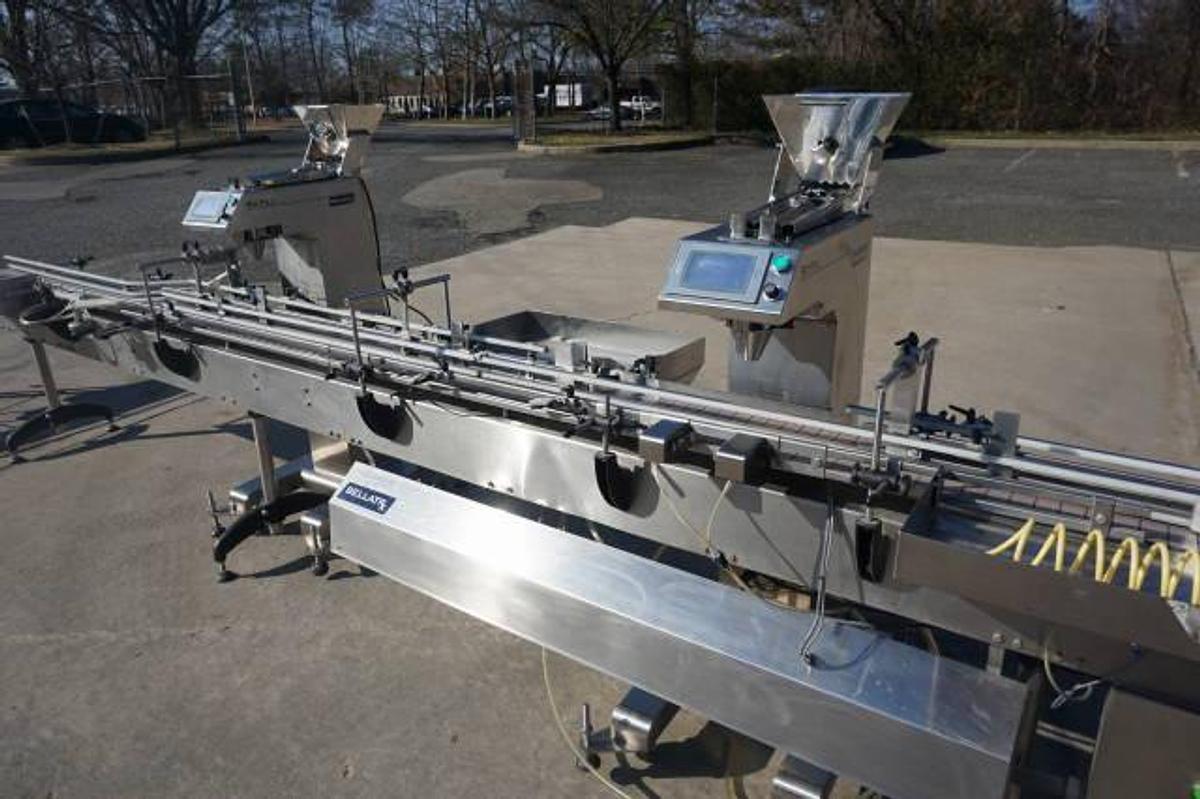
Bellat Rx focuses on packaging equipment designed specifically for the pharmaceutical industry. The company is particularly known for blister packaging machines, which are built to meet the precision and safety requirements that pharmaceutical production demands. One specific example of their equipment is the Bellat RX "Rx-Fill" Dual Head Tablet/Capsule Counter, which features a 21-foot conveyor and is designed for counting and filling solid oral dosage forms like tablets and capsules.
Beyond counting and filling equipment, Bellat Rx machines are built with the integration flexibility needed to fit into existing pharmaceutical production lines. Their equipment is designed to handle the compliance and accuracy requirements that come with packaging regulated drug products, making them a relevant option for manufacturers, contract packagers, and compounding facilities looking for specialized pharmaceutical packaging solutions.
What should buyers know about purchasing used Bellat Rx packaging equipment?
Buying used pharmaceutical packaging equipment requires a different level of diligence than purchasing other types of industrial machinery. Because these machines are sold in used condition, they are typically offered as-is, meaning the buyer takes on responsibility for verifying the machine's condition, functionality, and suitability for their intended application. This makes selecting a reputable dealer with a long track record in pharmaceutical equipment sales especially important. Buyers should look for dealers who specialize in the pharma packaging space and can speak knowledgeably about the specific machine being sold.
One practical step buyers should take before completing a purchase is requesting an inspection, either in person or via video. Many dealers can arrange live or recorded demonstrations of the equipment. Additionally, buyers should contact Bellat Rx directly or consult with the manufacturer to understand what level of technical support, spare parts availability, and documentation is accessible for the specific model and age of the machine they are considering. Older models may have more limited support, which is a meaningful factor in total cost of ownership.
Is used Bellat Rx packaging equipment compliant with FDA and GMP regulations?
Pharmaceutical packaging equipment used in regulated environments must meet applicable standards, including FDA current Good Manufacturing Practice (cGMP) requirements under 21 CFR, and in some cases EU GMP Annex 11 if the equipment is used in markets subject to European regulations. Bellat Rx equipment is designed with pharmaceutical compliance in mind, but when purchasing used machinery, buyers must independently verify that the specific unit they are acquiring still meets the regulatory requirements for their facility and intended use.
For used equipment, compliance is not guaranteed simply because the machine was originally designed to pharmaceutical standards. Buyers should request any available documentation, including Factory Acceptance Testing (FAT) reports, calibration certificates, and maintenance or service history records. These documents help establish whether the machine has been properly maintained and whether it can be requalified for use in a regulated production environment. Facilities should also consult with their own quality and validation teams before putting any used pharmaceutical packaging equipment into production.
What production speeds can a Bellat Rx tablet and capsule counting machine achieve?
The production output of a Bellat Rx tablet or capsule counter depends on the specific model, the product being counted, and the configuration of the machine. Dual-head counting machines, like the Bellat RX "Rx-Fill" Dual Head Tablet/Capsule Counter, are designed to increase throughput compared to single-head units by running two counting channels simultaneously. This type of configuration is well-suited for mid-to-high volume packaging operations where consistent count accuracy and speed are both priorities.
For used equipment specifically, actual achievable output speeds may differ from the machine's rated specifications depending on the age of the unit, wear on mechanical components, and how it has been maintained. Buyers should ask dealers for any available production data or request a video inspection that includes a demonstration of the machine running at speed. If the machine is still in production at its current location, a live inspection can provide the most accurate picture of real-world throughput.
How does a dual-head tablet and capsule counter work in a pharmaceutical packaging line?
A dual-head tablet and capsule counter uses two independent counting channels, typically equipped with electronic sensors or optical detection systems, to count solid oral dosage forms as they move through the machine. Each head counts product simultaneously, which effectively doubles the output compared to a single-head unit without requiring a proportional increase in floor space or operator involvement. The counted product is then directed into bottles, pouches, or other containers that move along the integrated conveyor system.
In the case of machines like the Bellat RX "Rx-Fill," the 21-foot conveyor is a significant design feature because it allows for a longer in-line process, accommodating upstream and downstream integration with capping, labeling, or inspection equipment. This type of layout is common in pharmaceutical packaging lines where multiple operations are linked together to reduce manual handling and improve traceability. The length of the conveyor also provides buffer capacity, which helps maintain consistent line speed even when minor interruptions occur at individual stations.
Can Bellat Rx packaging machines be integrated into existing pharmaceutical production lines?
Bellat Rx equipment is designed with integration flexibility in mind, which is a practical requirement for pharmaceutical manufacturers who are adding capacity to an existing line rather than building from scratch. Machines like the dual-head tablet counter with a 21-foot conveyor are built to connect with upstream and downstream equipment, including fillers, cappers, labelers, and inspection systems. The conveyor length itself is part of what makes integration more manageable, since it provides physical space for transitions between processes.
For buyers purchasing used Bellat Rx equipment, integration compatibility should be verified before purchase. This includes checking the machine's electrical specifications, communication interfaces, and physical dimensions against the existing line layout. Some older machines may require modifications or updated control systems to communicate with modern serialization or track-and-trace platforms, which are increasingly required under regulations like the U.S. Drug Supply Chain Security Act (DSCSA). Discussing integration requirements with the dealer and potentially with a systems integrator before finalizing a purchase is a reasonable step to avoid unexpected retrofit costs.
What documentation should buyers request when purchasing used pharmaceutical packaging equipment?
Documentation is one of the most important considerations in any used pharmaceutical equipment purchase, and it is often what separates a straightforward requalification process from a costly and time-consuming one. Buyers should request all available records, including Factory Acceptance Testing (FAT) reports, Installation Qualification (IQ) and Operational Qualification (OQ) records, calibration certificates, maintenance logs, and any change control documentation that reflects modifications made during the machine's operational life. This paperwork provides the foundation for revalidating the equipment in a new facility.
In practice, the completeness of documentation varies significantly from one used equipment transaction to another. Some machines come with full documentation packages, particularly when they are sourced from well-managed pharmaceutical manufacturing facilities. Others may have limited records, especially if the equipment changed hands multiple times or was stored for an extended period. Buyers should factor the documentation gap into their total acquisition cost, since incomplete records typically mean more extensive qualification work will be required before the equipment can be placed into regulated production.
What are the typical costs associated with buying used pharmaceutical packaging equipment?
The purchase price of used pharmaceutical packaging equipment is only one component of the total cost buyers need to plan for. Depending on the machine's size, weight, and location, rigging, crating, and freight can add meaningful costs on top of the equipment price. Larger machines like conveyorized tablet counters require careful palletization or custom crating to prevent damage in transit, and loading and unloading may require specialized rigging equipment, which is typically charged separately. Buyers should ask dealers for a full breakdown of packaging, rigging, and shipping costs before committing to a purchase so they understand the actual landed cost.
Beyond logistics, buyers should budget for installation, any necessary refurbishment or parts replacement, and the cost of requalification and validation if the equipment will be used in a regulated environment. Parts availability for a specific make and model can also affect long-term operating costs, so it is worth contacting the manufacturer directly to understand what components are available and at what price. Payment terms for used equipment typically require full payment prior to shipment, though some dealers may offer different arrangements for established customers.
How should buyers inspect used Bellat Rx equipment before purchasing?
Inspecting used pharmaceutical packaging equipment before purchase is a critical step that buyers should not skip. Dealers typically offer several options: an in-person visit to the dealer's facility or the location where the machine is currently stored or in production, a live video call walkthrough, or a recorded video of the machine in operation. Each option has trade-offs. An in-person inspection allows a buyer or their technician to physically examine components, check for wear, and observe the machine running. A video inspection is more accessible but requires the buyer to ask specific, detailed questions to get a complete picture.
One important caveat with used equipment inspections is that most dealers are not set up to run actual pharmaceutical product through the machine during a demonstration. Equipment dealers generally do not hold the permits required for pharmaceutical production, so testing is typically limited to dry runs or mechanical operation checks rather than a full production simulation. Buyers should account for this limitation and plan for their own internal testing and qualification process after the equipment is installed. If the machine is still in active production at a pharmaceutical facility, the dealer may be able to arrange an inspection at that site, which can provide a more realistic view of the machine's performance.
Are replacement parts and technical support available for used Bellat Rx packaging machines?
Parts and support availability is a practical concern for any used pharmaceutical packaging equipment purchase, and it is worth investigating before committing to a specific machine. The best starting point is to contact Bellat Rx directly to ask about parts availability for the model and approximate manufacture date of the machine being considered. Manufacturers vary in how long they support older equipment, and some models may have limited or discontinued parts support depending on their age.
Beyond the manufacturer, buyers should also explore whether third-party parts suppliers or independent service engineers familiar with the equipment are available in their region. For machines with standard components like sensors, motors, or conveyor belts, replacement parts may be sourced from multiple suppliers even if the manufacturer no longer stocks them. Buyers purchasing used equipment should plan for the possibility that some components will need to be replaced or refurbished as part of bringing the machine back to reliable operating condition, and factor that into their budget accordingly.