Category
Manufacturer
Model
Bectochem
Bectochem is a significant player in the pharmaceutical machinery market, with solutions focused on Granulation, Pellet Coating, and Tableting. Their equipment is designed to meet stringent health and safety regulations while ensuring efficient production processes. Bectochem’s cutting-edge technology helps manufacturers enhance productivity and product quality across various pharmaceutical applications.
FAQ:
What types of pharmaceutical equipment does Bectochem manufacture?
Bectochem specializes in industrial-grade pharmaceutical processing equipment, with a product range centered on three core areas: granulation, pellet coating, and tableting. Within those categories, the company produces equipment such as high-shear granulators, fluid bed dryers, paddle mixers, and ploughshare mixers. These machines are used across a wide range of pharmaceutical manufacturing workflows, from raw material blending through to finished dosage form production. Bectochem is a joint venture connected to Loedige Industries GmbH of Germany, which gives its equipment a German-engineered design heritage that appeals to buyers seeking European-standard precision at competitive pricing.
The equipment is designed for mid-to-large scale pharmaceutical manufacturers, API producers, nutraceutical companies, and chemical processors. Fluid bed dryers, in particular, are among the most commonly sought Bectochem machines on the used equipment market, as they play a critical role in drying granulated material to the moisture specifications required for tablet or capsule production. Buyers looking at used Bectochem equipment will typically find lab-scale and production-scale models available, with GMP-compliant construction being a consistent feature across the product line.
What does GMP compliance mean for Bectochem pharmaceutical equipment?
GMP stands for Good Manufacturing Practice, a set of regulations enforced by agencies such as the U.S. FDA, the European Medicines Agency (EMA), and India's Central Drugs Standard Control Organisation (CDSCO). For pharmaceutical equipment, GMP compliance means the machine is designed and built to minimize contamination risk, support cleanability, allow for accurate process monitoring, and meet documentation requirements for regulated manufacturing environments. Bectochem equipment is built with these standards as a core design requirement, which is why it is widely used by pharmaceutical manufacturers operating under regulatory oversight.
For buyers purchasing used Bectochem equipment, GMP compliance remains relevant because the underlying construction materials, surface finishes, and design geometry do not change with age. However, buyers should inspect used machines carefully to confirm that contact surfaces, seals, and any wear components still meet the condition standards their facility requires. A thorough inspection, either in person or via video, is the most reliable way to assess whether a specific used unit is suitable for a GMP-regulated production environment. Consulting with the manufacturer about parts availability for older models is also advisable, since the ability to replace worn components directly affects a machine's long-term compliance viability.
What should buyers inspect when purchasing used Bectochem equipment?
Buying used pharmaceutical equipment requires a more hands-on evaluation process than purchasing from a manufacturer, because the condition of the machine reflects its history of use, maintenance, and storage. For Bectochem equipment specifically, buyers should focus on the condition of contact surfaces, particularly any product-contact stainless steel components, gaskets, seals, and filter media in fluid bed dryers. Wear on these parts can affect both product quality and GMP compliance. The mechanical condition of drive systems, motors, and control panels should also be assessed, along with any documentation the seller has on the machine's service history.
Reputable used equipment dealers will typically offer in-person inspections, virtual walkthroughs, or video captures of the machine to give buyers an accurate picture of its current condition. Some machines may still be installed and operational at a production facility, which can allow for a more complete assessment of how the equipment runs. Keep in mind that most used equipment dealers do not have the permitting required to run actual pharmaceutical product through a machine during a demonstration, so functional testing is generally limited to mechanical operation rather than full production trials. Buyers should ask specific questions about the machine's last use, any known issues, and the availability of replacement parts from Bectochem before committing to a purchase.
What is a Bectochem fluid bed dryer and how is it used in pharmaceutical manufacturing?
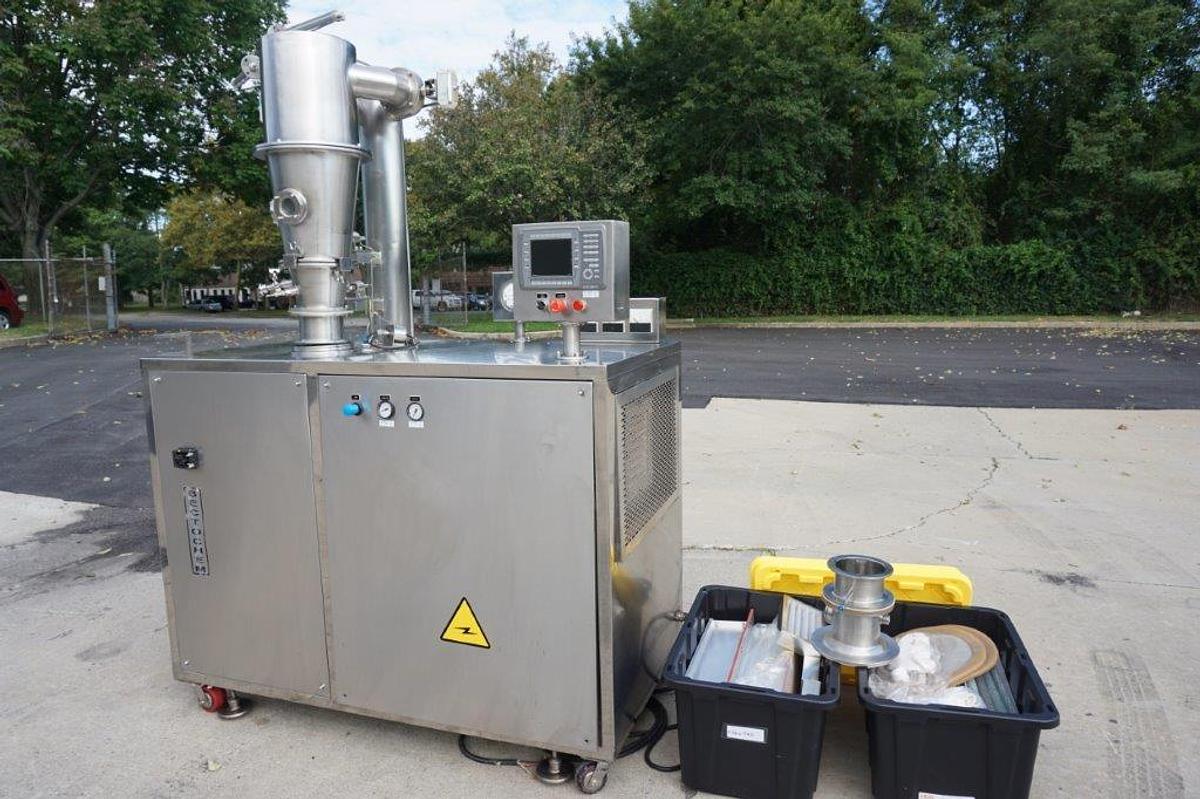
A fluid bed dryer is a piece of process equipment used to remove moisture from granulated or powdered pharmaceutical materials by suspending the particles in a controlled stream of heated air. The fluidization effect creates a large surface area exposure between the particles and the drying air, which makes the process significantly faster and more uniform than tray or oven drying methods. In pharmaceutical manufacturing, fluid bed dryers are most commonly used after wet granulation to bring granule moisture content down to the specification required for tableting or encapsulation. They are also used for coating, agglomeration, and drying of active pharmaceutical ingredients.
Bectochem fluid bed dryers are built to GMP standards, with stainless steel product contact parts, contained product handling to minimize cross-contamination risk, and process controls that support reproducible drying cycles. Lab-scale models are used for formulation development and small batch production, while larger production-scale units handle commercial manufacturing volumes. On the used equipment market, Bectochem fluid bed dryers are among the more commonly available models, and buyers can find both lab and production configurations. When evaluating a used unit, particular attention should be paid to the condition of the filter bags or cartridges, the integrity of the product bowl, and the functionality of the inlet air heating and control systems.
How does Bectochem's connection to Loedige Industries affect the quality of its equipment?
Bectochem Loedige Industries Pvt. Ltd. is an Indian pharmaceutical equipment manufacturer based in Mumbai, operating as a joint venture associated with Loedige Industries GmbH of Germany. Loedige is a well-established German engineering firm with decades of experience in mixing and processing equipment for pharmaceutical, chemical, and food industries. This association means Bectochem equipment incorporates German engineering design principles, which are generally associated with precision manufacturing, durability, and process reliability. For pharmaceutical buyers, the German engineering heritage is a meaningful quality signal, particularly for buyers who require equipment that performs consistently within validated processes.
The practical implication for buyers of used Bectochem equipment is that the machines were built to a standard that supports long service life when properly maintained. German-influenced engineering design tends to favor robust mechanical construction and conservative engineering tolerances, which can translate to equipment that remains serviceable well past its initial production deployment. Buyers should still conduct thorough inspections of any used unit, but the underlying build quality of Bectochem equipment gives it a reputation for longevity that makes it a reasonable choice in the used pharmaceutical equipment market. Consulting directly with Bectochem or Loedige about parts availability and technical support for a specific model is a practical step before finalizing any purchase.
What is the typical price range for used Bectochem pharmaceutical equipment?
Pricing for used Bectochem pharmaceutical equipment varies considerably depending on the type of machine, its size, age, condition, and current market availability. Lab-scale fluid bed dryers and smaller granulation units will generally be priced lower than full production-scale systems, and machines that have been recently decommissioned from a well-maintained facility will typically command higher prices than older units with more wear. As a general reference point, used pharmaceutical processing equipment of this type from reputable manufacturers can range from a few thousand dollars for smaller lab units to tens of thousands or more for larger production-scale machines in good condition.
Buyers should approach pricing by factoring in the total landed cost of the equipment, not just the listed sale price. Shipping, rigging, crating, and any refurbishment or parts replacement needed after delivery can add meaningfully to the final cost. Getting a detailed quote from the seller that breaks out packaging, loading, and freight charges is an important step before committing. It is also worth comparing the cost of a used Bectochem unit against the cost of sourcing a comparable machine from other manufacturers, keeping in mind that Bectochem's engineering quality and GMP compliance make it a competitive option even at the higher end of the used equipment price range.
How does the used pharmaceutical equipment buying process work?
Purchasing used pharmaceutical equipment typically begins with identifying the specific machine type, size, and configuration needed for the intended process. Buyers should have a clear understanding of their batch size requirements, process parameters, and any regulatory constraints before evaluating available inventory. Once a candidate machine is identified, the next step is requesting detailed specifications, photos, and ideally an inspection, either in person or via a video walkthrough conducted by the dealer. This inspection phase is critical because used equipment is sold as-is, meaning the buyer takes on responsibility for assessing the machine's condition rather than relying on a manufacturer's quality assurance process.
After inspection, buyers should ask about the machine's service history, the reason for decommissioning, and the availability of spare parts and technical documentation. Payment for used equipment is typically required in full prior to shipping, which is standard practice in the industry. Once payment is confirmed, the seller arranges packaging, rigging, and freight, all of which should be discussed in advance to understand the full landed cost. Buyers should also plan for any installation, recommissioning, or requalification work that may be needed once the machine arrives at their facility. Selecting a dealer who specializes in pharmaceutical equipment, rather than a generalist machinery broker, tends to result in a smoother process and better access to relevant technical knowledge about the equipment being purchased.
What should buyers know about shipping used Bectochem pharmaceutical equipment?
Shipping pharmaceutical processing equipment requires careful planning, particularly for larger machines with precision components, stainless steel contact parts, or sensitive control systems. Proper packaging is essential to prevent damage in transit, and the level of protection required will vary based on the size and fragility of the equipment. Smaller lab-scale units may be palletized and shrink-wrapped, while larger production machines typically require custom crating or skidding to prevent movement and impact damage during transport. Buyers should ask the seller specifically about how the equipment will be packaged and what that packaging cost includes.
For larger Bectochem equipment such as full-scale fluid bed dryers or granulation systems, specialized rigging equipment may be required for loading at the origin facility and unloading at the destination. Rigging costs are typically separate from freight charges and should be factored into the total landed cost calculation. International shipments add additional considerations including customs documentation, import duties, and compliance with the destination country's import regulations for pharmaceutical equipment. Buyers should request a complete breakdown of all shipping-related costs before finalizing a purchase, and confirm whether the seller's quoted price is ex-works (buyer arranges all freight) or includes delivery to a specified location.
Can used Bectochem equipment be requalified for GMP pharmaceutical production?
Requalification of used pharmaceutical equipment for GMP production is a standard practice in the industry and is entirely feasible for well-maintained Bectochem machines. The requalification process typically involves installation qualification (IQ), operational qualification (OQ), and performance qualification (PQ), which collectively confirm that the equipment is installed correctly, operates within its specified parameters, and consistently produces results that meet process requirements. The depth of requalification needed will depend on the regulatory requirements of the buyer's facility and the extent to which the equipment has been modified or refurbished since its last qualified use.
The key factors that affect requalification feasibility are the availability of the original design documentation, the physical condition of the machine, and the ability to source replacement parts for any components that need to be restored to specification. Bectochem's connection to Loedige Industries and its established presence in the pharmaceutical equipment market means that technical documentation and spare parts are generally more accessible than they would be for equipment from smaller or defunct manufacturers. Buyers should contact Bectochem directly to confirm what documentation and support are available for the specific model they are considering, as the level of manufacturer support can vary depending on the age of the machine. A qualified validation consultant or the buyer's internal quality team should be involved early in the process to scope the requalification effort accurately.
How does buying used Bectochem equipment compare to buying from the manufacturer?
Purchasing used Bectochem equipment offers a meaningful cost advantage over sourcing equivalent equipment directly from the manufacturer, often at a fraction of the price for machines that are mechanically sound and well-maintained. For pharmaceutical manufacturers operating under budget constraints, or for companies that need to bring a process online quickly without waiting for manufacturing and delivery lead times, the used equipment market can be a practical and cost-effective path. Bectochem equipment in particular holds its value reasonably well because of its GMP-compliant construction and German-engineered design, which means buyers can often acquire capable machines that have years of productive life remaining.
The tradeoffs are real and worth understanding clearly. Used equipment is sold as-is, without the quality assurance processes that accompany a purchase from the manufacturer. There are no warranties on used machines, and the buyer assumes full responsibility for assessing condition, arranging requalification, and addressing any maintenance needs after delivery. Buyers also take on the risk that parts or technical support may be harder to obtain for older models. These risks can be managed effectively by working with a reputable dealer who specializes in pharmaceutical equipment, conducting a thorough pre-purchase inspection, and consulting with Bectochem about the support available for the specific model and age of machine being considered. For many buyers, the cost savings justify the additional due diligence required.