Category
Manufacturer
Model
Beckman
FAQ:
What types of used Beckman lab equipment are typically available for sale?
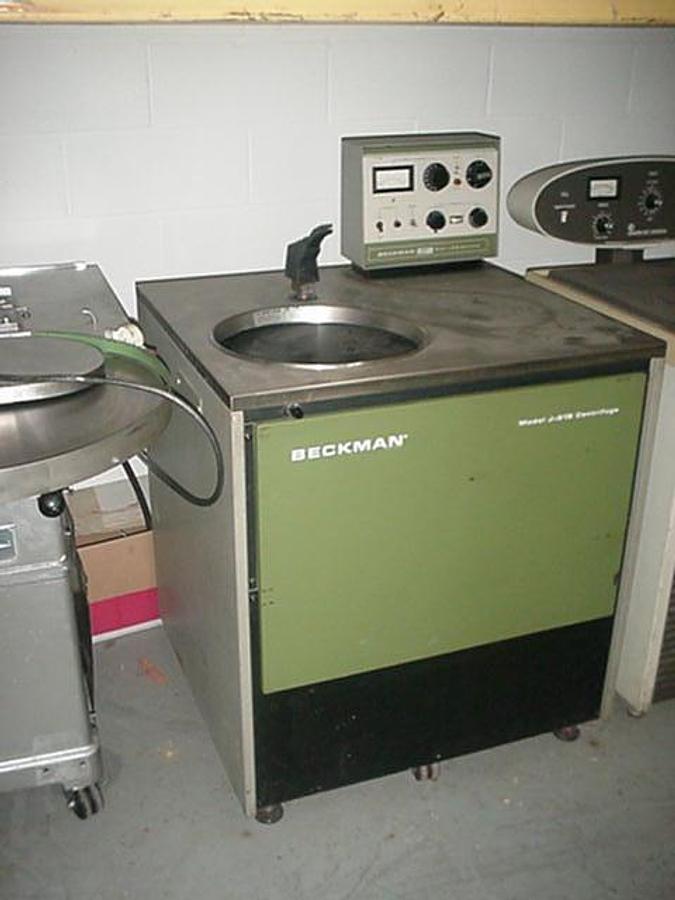
Beckman Coulter produces a wide range of laboratory instruments across several product categories, and the used market reflects that breadth. Buyers commonly find ultracentrifuges, floor-model centrifuges, benchtop centrifuges, clinical chemistry analyzers, flow cytometers, liquid handling systems, and particle counters listed through used equipment dealers. Specific models like the Beckman J-21b lab centrifuge appear regularly, as do various Avanti and Optima series ultracentrifuges that have long track records in research settings. The availability of any particular model depends on what research facilities, hospitals, and production labs have decommissioned or upgraded away from.
Because Beckman Coulter has been manufacturing instruments for decades across both life sciences and clinical diagnostics, the used inventory at any given time can span a fairly wide age range. Buyers should keep this in mind when searching, since older models may have different parts availability and manufacturer support compared to more recent production runs. Browsing specialized used equipment dealers that focus on laboratory instruments is generally the most efficient way to locate specific Beckman models, as general auction sites tend to offer less context about condition and configuration.
Is used Beckman lab equipment reliable enough for active research or clinical use?
Beckman Coulter has a strong reputation for building instruments with long service lives, which is a large part of why their equipment holds value on the secondary market. Many research labs and hospitals routinely purchase used Beckman instruments to extend budgets without sacrificing performance quality. A centrifuge or analyzer that was well-maintained in a professional setting can continue operating at spec for years after its first installation, provided it receives proper care after the sale.
That said, reliability on the used market is not uniform. It depends heavily on the maintenance history of the specific unit, how it was stored or decommissioned, and whether critical components like rotors, seals, or drive systems are in good condition. Buyers should treat each machine individually rather than assuming a model name alone guarantees a certain performance level. Requesting documentation of service history, arranging an inspection before purchase, and consulting with a qualified service technician after delivery are all practical steps that help ensure the instrument performs as expected in its next application.
How do I verify the condition of a used Beckman centrifuge or analyzer before buying?
Reputable used equipment dealers typically offer multiple inspection options to help buyers assess condition before committing to a purchase. In-person inspections are the most thorough approach, allowing a buyer or their technician to physically examine the instrument, check for cosmetic damage, inspect rotors and mechanical components, and in some cases observe the machine running. Virtual inspections via video call are a practical alternative when travel is not feasible, and many dealers can also provide detailed video recordings of the equipment so buyers can review footage on their own schedule.
It is worth understanding that most used equipment dealers do not have the permitting or infrastructure to run actual production-level tests with reagents or samples, so functional testing is generally limited to powering the machine on and demonstrating basic operation. For clinical analyzers in particular, full reagent-based testing is rarely possible in a dealer's facility. Because of this, buyers should ask detailed questions about where the machine came from, whether it was in active use before decommissioning, and what the dealer observed during their own assessment. For high-value instruments, hiring an independent service engineer to accompany an in-person inspection is a reasonable investment.
Does used Beckman lab equipment come with a warranty?
Warranties on lab instruments are typically provided by the original manufacturer, and those manufacturer warranties are tied to the first sale of the equipment. Once a machine enters the secondary market, it generally changes hands on an as-is basis, meaning the buyer accepts the equipment in its current condition without a formal warranty backing the purchase. This is standard practice across the used equipment industry and is not specific to Beckman Coulter instruments.
Because of this, the burden of due diligence falls squarely on the buyer. Selecting a dealer with a long track record in laboratory equipment, taking advantage of inspection options before purchase, and consulting with Beckman Coulter directly about the support available for a specific model and serial number are all steps that reduce risk. Beckman Coulter's level of support for older instruments can vary by model age, so it is worth contacting the manufacturer before finalizing a purchase to understand what service contracts, parts, and technical assistance may still be available for the unit in question.
Are replacement parts and rotors still available for older Beckman Coulter centrifuge models?
Parts availability is one of the most important factors to research before buying any used centrifuge, and Beckman Coulter models are no exception. For many of the more widely used centrifuge lines, a healthy aftermarket exists for rotors, seals, brushes, and other wear components. Third-party suppliers often carry parts for popular models long after the manufacturer has discontinued them, which extends the practical service life of these instruments considerably. However, availability varies significantly by model, and some older or less common configurations may have very limited parts support.
Buyers should research the specific model they are considering before purchasing. Contacting Beckman Coulter directly to ask about parts and service support for a given model number is a useful starting point. Online communities of laboratory technicians and independent centrifuge service companies can also provide candid information about which models have strong aftermarket support and which ones present sourcing challenges. Rotors in particular deserve close attention, since they are safety-critical components and should be inspected for cracks, corrosion, or derating before use regardless of the rotor's apparent age.
What should I look for when evaluating a used Beckman Coulter centrifuge?
The rotor is the first thing to scrutinize on any used centrifuge. Rotors are subject to fatigue stress over their service life, and Beckman Coulter, like other manufacturers, assigns maximum run cycles or age limits to their rotors for safety reasons. Ask the seller for the rotor's run log if one is available, and verify whether the rotor has been derated or retired by the manufacturer. A centrifuge body in excellent condition paired with a rotor that has exceeded its rated life is not a safe purchase, regardless of how good the rest of the machine looks.
Beyond the rotor, pay attention to the drive system, the vacuum system on ultracentrifuge models, and the condition of the chamber and lid seals. Noise during operation, vibration at speed, and error codes are all red flags worth investigating. Ask the dealer whether the machine was in active use before being listed for sale or whether it has been sitting in storage, since extended storage without proper maintenance can affect lubrication, seals, and electronic components. Getting the model and serial number ahead of time allows you to research the service history with Beckman Coulter and confirm whether any safety bulletins or recalls apply to that specific unit.
Can I get technical support or calibration services for used Beckman lab equipment after purchase?
Beckman Coulter offers service contracts and technical support for many of their instruments, but the availability of that support for a specific used machine depends on the model's age and whether the manufacturer still actively services that product line. Contacting Beckman Coulter with the model number and serial number before purchasing is the most reliable way to understand what level of manufacturer support to expect. For instruments that fall outside current service programs, independent laboratory service companies often fill the gap, particularly for widely used centrifuge and analyzer models.
Calibration is a separate consideration. Many instruments require periodic calibration to maintain accuracy, and for regulated laboratory environments this is often a formal requirement tied to accreditation. Independent service engineers with Beckman Coulter experience can typically perform calibration and preventive maintenance on common models. When budgeting for a used instrument purchase, it is worth factoring in the cost of an initial inspection, any necessary calibration, and ongoing service to get a realistic picture of the total cost of ownership compared to other acquisition options.
How does buying used Beckman lab equipment compare to purchasing through a manufacturer or authorized reseller?
Purchasing through the secondary market typically offers significant cost savings compared to buying directly from a manufacturer or authorized channel, which is the primary reason research institutions, clinical labs, and production facilities turn to used equipment dealers. For instruments like Beckman Coulter centrifuges and analyzers, which are built to high standards and have long useful lives, the performance gap between a well-maintained used unit and a current-production instrument is often minimal for many applications. Labs operating under tight capital budgets can frequently acquire instruments that would otherwise be out of reach.
The trade-offs are real, though. Buying used means accepting that the machine has a history you may only partially know, that manufacturer support may be more limited, and that the process of verifying condition requires more active effort from the buyer. Authorized channels offer more predictability in terms of documentation, support, and configuration, but at a substantially higher price. For buyers who do their homework, choose dealers with solid reputations in the laboratory equipment space, and take advantage of available inspection options, used Beckman equipment can represent excellent value relative to the performance delivered.
What are typical shipping and logistics considerations when buying used Beckman lab equipment?
Laboratory instruments like centrifuges and analyzers require careful handling during transit to prevent damage to sensitive mechanical and electronic components. Packaging requirements vary by instrument size and weight. Smaller benchtop units may ship on standard pallets with foam protection, while larger floor-model centrifuges or ultracentrifuges often require custom crating to protect the drive system, chamber, and external surfaces. Buyers should ask the dealer specifically what packaging will be used and whether the cost of crating is included in the quoted shipping price or billed separately.
Larger instruments may also require professional rigging for loading at the dealer's facility and unloading at the destination. Rigging services add to the total landed cost of the equipment and should be factored into the budget before committing to a purchase. For installations in upper-floor labs or spaces with limited access, the buyer should assess whether a freight elevator or other equipment will be needed on the receiving end. Getting a clear breakdown of packaging, freight, rigging, and any destination charges before finalizing the deal avoids surprises and helps buyers make accurate cost comparisons between different equipment options.
What payment terms should buyers expect when purchasing used Beckman lab equipment?
The standard practice among used equipment dealers is to require full payment before the equipment ships. This applies broadly across the industry and is not specific to any one dealer or equipment type. For buyers accustomed to net-30 or net-60 terms from supply vendors, this can require some adjustment in how capital purchases are planned and approved internally. Wire transfer is the most common payment method for larger transactions, though some dealers accept credit cards for smaller purchases.
Some dealers extend payment terms to repeat customers with whom they have an established relationship, but this is the exception rather than the rule for first-time buyers. Institutional buyers such as universities or hospital systems sometimes negotiate terms based on their procurement processes, but this depends entirely on the dealer's policies. Buyers should clarify payment expectations early in the conversation, particularly if their organization's purchasing process involves purchase orders, approval chains, or specific payment timelines, so that both parties can plan accordingly.