Category
Manufacturer
Model
B.H. Hubbert
B.H. Hubbert is a respected provider of industrial machinery, particularly known for their comprehensive solutions in the metalworking and fabrication sectors. Their equipment is designed for high precision and efficient production, catering to the needs of clients who demand durability and accuracy. B.H. Hubbert’s machines are integral to operations that require meticulous attention to detail in metal processing.
FAQ:
What types of industrial machinery does B.H. Hubbert manufacture?
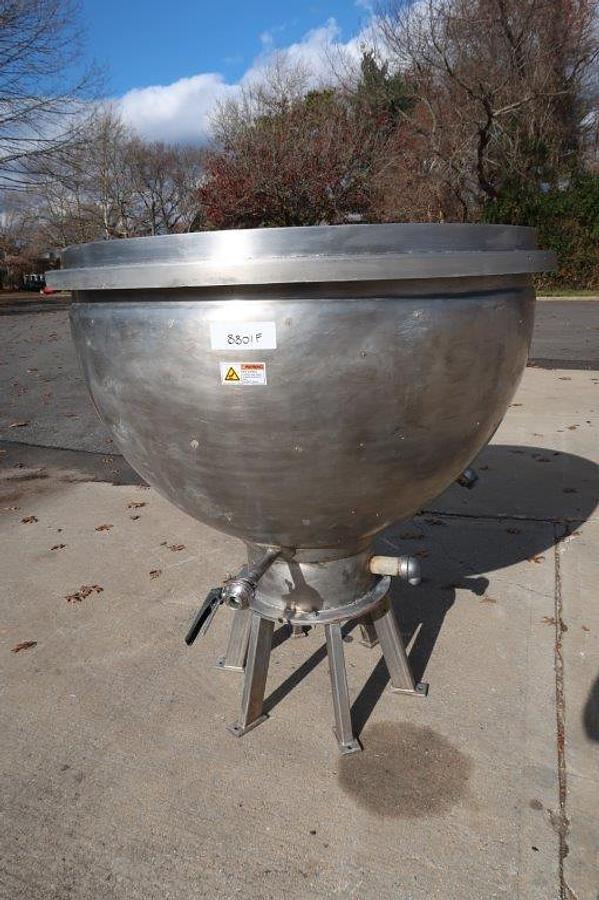
B.H. Hubbert is known for producing industrial machinery focused on metalworking, fabrication, and food or chemical processing applications. Their equipment spans a range of production needs, with a particular emphasis on precision and durability in metal processing environments. One well-documented example is their stainless jacketed hemispherical kettles, which are used in industries that require controlled heating or mixing of materials under sanitary conditions. These kettles are built with stainless steel construction and jacketed walls that allow for steam or hot water circulation, making them suitable for food production, pharmaceutical processing, and specialty chemical manufacturing.
Beyond processing vessels, B.H. Hubbert's broader catalog has historically served clients who need equipment capable of meticulous, repeatable performance in fabrication and metalworking settings. Buyers looking at this brand should expect machinery designed for high-output industrial environments where accuracy and long service life are priorities. Because most available units are used machines rather than current production models, the specific inventory on hand at any given time will vary, and buyers are encouraged to review current listings carefully to match equipment specifications to their production requirements.
What should I know before buying used industrial machinery?
Buying used industrial machinery requires more due diligence than purchasing consumer goods, largely because the stakes are higher and the variables more complex. The most important starting point is understanding the machine's service history, including operational hours, any known repairs, and whether critical components have been replaced or are showing wear. Buyers should also verify that the machine's electrical specifications (voltage, phase, amperage) match their facility's infrastructure, and that physical dimensions and weight are compatible with their floor space and loading capacity. Consulting the original manufacturer's documentation, if available, can help buyers understand what a machine in good condition should look like and what parts may be difficult to source for older models.
Beyond the machine itself, buyers should factor in total landed cost, which includes the purchase price, rigging, freight, any required reconditioning, and installation. Used equipment is typically sold as-is, meaning the responsibility for thorough inspection falls on the buyer. Choosing a dealer with a long track record in the specific equipment category you need adds a meaningful layer of protection, since experienced specialists are more likely to accurately represent a machine's condition and help you avoid costly surprises after delivery. Requesting an in-person or video inspection before committing to a purchase is standard practice and any reputable dealer should accommodate this.
Can I inspect a used B.H. Hubbert machine before purchasing?
Inspections are a standard part of the used industrial machinery buying process and are strongly encouraged before any purchase commitment. Dealers typically offer several options: an in-person visit to the dealer's facility, a live video walkthrough conducted via video call, or pre-recorded video footage of the machine in its current state. The goal in any of these formats is to give the buyer an accurate picture of the machine's physical condition, including visible wear, structural integrity, and the state of key components. In some cases, equipment may still be installed at the facility where it was originally used, and dealers can sometimes arrange for the buyer to visit that location directly.
One important limitation to keep in mind is that most used equipment dealers are not set up to run full production tests, since operating machinery for actual output requires different permitting and infrastructure than a standard dealer facility maintains. What an inspection can reasonably confirm is the machine's physical condition, whether it powers on, and the general operational state of its components. Buyers with specific performance requirements should factor this into their evaluation and may want to involve a qualified machinery technician in the inspection process to assess condition more precisely. Asking for any available maintenance records or service logs before or during the inspection will also help build a clearer picture of the machine's history.
Are warranties available on used industrial machinery?
Warranties on used industrial machinery are not standard practice in the industry. Equipment manufacturers typically only extend warranty coverage on units they sell directly as part of a current production run, and that coverage does not transfer to subsequent owners or apply to machines that have been in service for years. Used equipment dealers almost universally sell machinery on an as-is basis, which means the buyer accepts the machine in its current condition without a formal guarantee of performance. This is a well-established norm in the industry, not a shortcoming of any particular dealer, and it reflects the reality that a dealer cannot fully control the service history or internal condition of every machine they acquire.
Because there is no warranty buffer, the quality of the inspection process becomes even more critical. Buyers should take the time to thoroughly evaluate any machine before purchasing, ideally with the help of a technician familiar with that equipment type. It is also worth contacting the original manufacturer directly to ask about parts availability and technical support for the specific model you are considering, since older or discontinued models may have limited support resources. Selecting a dealer with a strong reputation and a long history of specializing in the relevant equipment category is one of the best ways to reduce risk when buying used machinery without warranty protection.
What industries use stainless jacketed hemispherical kettles like those made by B.H. Hubbert?
Stainless jacketed hemispherical kettles are used across a range of industries that require precise, controlled heating or cooking of liquid and semi-liquid materials in a sanitary environment. Food and beverage production is one of the most common applications, where these kettles are used for cooking sauces, soups, confections, dairy products, and similar items. The hemispherical shape promotes even heat distribution and makes it easier to agitate or stir contents without dead zones, which is important for consistent product quality. The stainless steel construction meets food-grade sanitation standards and resists corrosion from acidic or high-moisture products.
Beyond food processing, jacketed kettles are also used in pharmaceutical manufacturing, nutraceutical production, cosmetics, and specialty chemical processing. In these contexts, the jacketed design allows operators to heat contents indirectly using steam or hot water circulated through the outer jacket, which gives precise temperature control without direct flame or element contact. Capacity ratings vary widely, from small batch units of a few gallons to large production vessels of several hundred gallons. The 250-gallon range, such as the Hubbert stainless jacketed hemispherical kettle that appears in used equipment listings, is typical for mid-scale production operations that need meaningful batch output without the footprint of a full industrial vessel.
How is shipping and freight handled for large used industrial machinery?
Shipping large industrial machinery is a specialized process that goes well beyond standard freight. Most heavy equipment requires professional rigging for loading and unloading, which involves cranes, forklifts, or other lifting equipment rated for the machine's weight. This rigging work is typically arranged and priced separately from the freight itself, and buyers should ask for a clear breakdown of all associated costs before finalizing a purchase. Packaging requirements also vary significantly: smaller machines may ship on pallets with protective wrapping, while larger or more fragile equipment may need custom crating to prevent damage in transit. The level of packaging required will directly affect the shipping cost.
Buyers should request a full landed cost estimate from the dealer before purchasing, covering the machine price, rigging at origin, freight to destination, and any unloading or rigging required at the receiving facility. Failing to account for these costs upfront is one of the more common mistakes buyers make with used industrial equipment, and the total can sometimes add a meaningful percentage to the purchase price depending on machine size, weight, and distance. It is also worth confirming that the receiving facility has adequate access for the delivery vehicle and the necessary equipment to unload the machine safely upon arrival. Coordinating these logistics in advance prevents delays and additional costs at the point of delivery.
What payment terms are typical when buying used industrial equipment?
The standard practice among used industrial equipment dealers is to require full payment before a machine is released for shipping. This applies to most transactions regardless of purchase size, and it reflects the practical reality that used equipment cannot be easily restocked or resold if a buyer defaults after shipment. Payment is commonly accepted via wire transfer, and some dealers may accept certified funds or other secure payment methods. Credit card payments are less common for large equipment transactions due to processing fees and the transaction size, though some dealers accommodate them for smaller purchases. Buyers should always confirm accepted payment methods with the dealer early in the negotiation process.
Some dealers extend payment terms or financing arrangements to established customers with a prior purchase history, but this is not a standard offering for first-time buyers. Third-party equipment financing is another option worth exploring, particularly for higher-value machinery purchases. Several specialty lenders focus specifically on industrial equipment and can structure loans or lease arrangements around used machinery. If financing is important to your purchasing decision, it is worth arranging that independently before approaching a dealer, so you can move quickly when the right machine becomes available. Used equipment inventories turn over unpredictably, and having financing in place puts you in a stronger position to act.
How do I evaluate the condition of used metalworking or fabrication equipment?
Evaluating used metalworking or fabrication equipment starts with the physical inspection, but goes deeper than just looking for obvious damage. Key areas to examine include the condition of ways, slides, and bearing surfaces on machine tools, since wear in these areas directly affects precision and cannot always be corrected without expensive reconditioning. On fabrication equipment, check for frame straightness, the condition of tooling and dies, and the integrity of hydraulic or pneumatic systems. Electrical panels and control systems deserve close attention as well, since outdated controls can be expensive to repair or replace, and some older systems may no longer have available support from the manufacturer.
Beyond the physical inspection, ask the dealer or seller for any available documentation: maintenance logs, service records, or a record of what work has been done on the machine. Knowing whether a machine has had regular maintenance or has been run hard without service changes the risk profile significantly. If the machine is still installed at a production facility, there may be an opportunity to see it running, which is the most informative scenario possible. For high-value purchases, hiring an independent machinery appraiser or a technician with specific experience on that equipment type is a worthwhile investment. Their assessment can either confirm that a machine is fairly priced or flag issues that would change the purchase decision entirely.
Are replacement parts available for older B.H. Hubbert machinery?
Parts availability for any used industrial machine depends heavily on the age of the equipment, the manufacturer's current production status, and whether the machine uses proprietary or standardized components. For older machinery, it is always worth contacting the manufacturer directly to ask which parts are still stocked, what the typical lead times are, and whether technical support is available for that specific model. Some manufacturers maintain parts inventory for legacy equipment for many years, while others discontinue support once a model is out of production. Getting a clear answer on this before purchasing can prevent significant downtime costs later if a critical component fails.
For machines that use standardized components such as motors, bearings, seals, pumps, or valves, parts are often available through industrial supply distributors even if the original manufacturer no longer supports the specific machine. This is particularly common with processing vessels and kettles, where many components are sourced from third-party suppliers during manufacturing. A qualified maintenance technician or millwright familiar with the equipment type can often identify equivalent replacement parts from current suppliers. Buyers of older used equipment should build a basic understanding of the machine's parts requirements before purchase, and factor potential reconditioning or parts sourcing costs into the overall budget for the acquisition.
What technical specifications should I review before purchasing used industrial processing equipment?
Before committing to a used industrial processing machine, there are several technical specifications that directly affect whether the equipment will work in your facility and for your application. Capacity is usually the starting point, measured in gallons for vessels and kettles, or in tonnage, stroke, or feed rate for fabrication and metalworking equipment. Beyond capacity, electrical requirements are critical: confirm the voltage (typically 208V, 230V, or 460V in North American industrial settings), the phase (single or three-phase), and the amperage draw, then verify that your facility's electrical infrastructure can support the machine without costly upgrades. Physical dimensions and weight matter as well, since floor load ratings, ceiling height, and doorway clearances all affect whether a machine can be installed where you intend to use it.
For processing vessels like jacketed kettles, additional specifications to review include the jacket pressure rating (which determines what heating media can be used and at what pressure), the material grade of the stainless steel, the agitator type and motor horsepower if the vessel is equipped with one, and the configuration of inlet, outlet, and drain connections. These details determine compatibility with your existing piping, utilities, and production process. Asking the dealer for any available documentation such as data plates, original spec sheets, or prior inspection reports will help fill in gaps where specifications are not immediately visible. The more complete your technical picture before purchase, the less likely you are to encounter expensive surprises during installation or commissioning.