Category
Manufacturer
Model
Axomatic
Axomatic is a leading supplier in the cosmetics and pharmaceuticals sectors, known for its innovative filling and capping machines. They cater primarily to companies looking for reliable and precise equipment that can handle a variety of product sizes and viscosities. Axomatic is especially acclaimed for its user-friendly design and robust engineering, ensuring that clients receive equipment that enhances productivity and maintains stringent quality standards.
FAQ:
What types of tubes can Axomatic tube filling machines handle?
Axomatic tube filling machines are designed to handle a wide variety of tube materials, including plastic (polyethylene and polypropylene), aluminum, and laminate tubes. This flexibility makes them well-suited for industries where packaging formats vary significantly from one product line to the next. Tube diameters and lengths can typically be accommodated across a broad range through tooling changes, which is why Axomatic machines are found in facilities producing everything from small cosmetic sample tubes to larger pharmaceutical or food-grade containers.
The ability to process multiple tube types on a single machine is one of the reasons Axomatic equipment holds its value well on the used machinery market. Buyers sourcing a used Axomatic should confirm which tube formats the specific machine was configured for and whether the associated tooling is included in the sale, as changeover parts are often machine-specific and can represent a meaningful portion of the total setup cost.
What is the production speed of Axomatic tube filling and sealing machines?
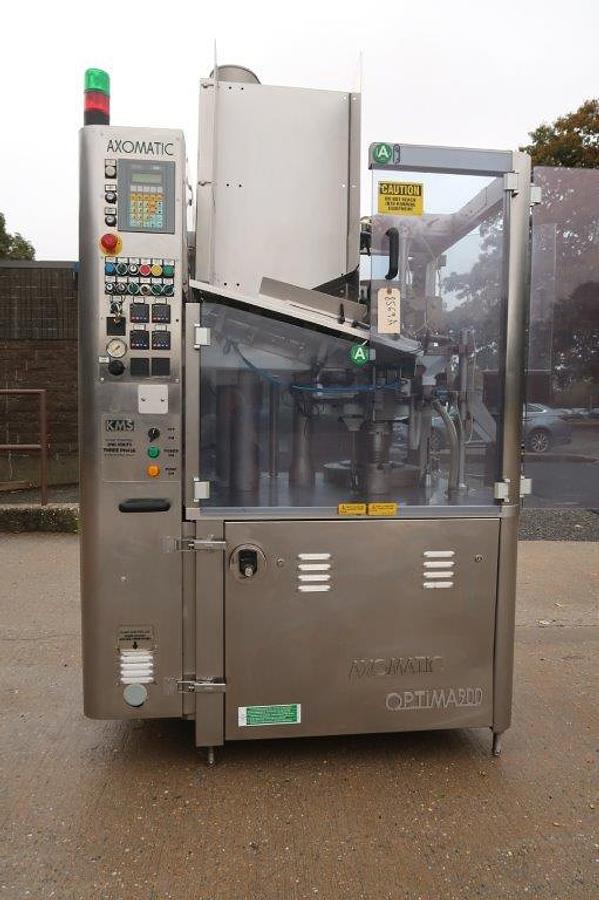
Production output varies considerably across the Axomatic line depending on the model and configuration. Entry-level or semi-automatic models may process anywhere from a few hundred tubes per hour, while fully automatic machines reach significantly higher throughputs. As a reference point, the Axomatic Optima 900, one of the more capable models available on the used market, is rated at approximately 4,500 tubes per hour, which translates to roughly 75 tubes per minute. That level of output is well within the range required for mid-to-large-scale production environments.
For buyers evaluating a specific used Axomatic machine, it is worth confirming the rated speed against the actual production conditions the machine was used in, since real-world throughput can be affected by product viscosity, tube size, and the sealing method in use. Requesting a video inspection or, where possible, an in-person visit to see the machine running can give a more accurate picture of its current operating condition and realistic output.
What industries use Axomatic tube filling machines?
Axomatic tube filling and sealing machines are used across several industries, with the strongest concentration in cosmetics, personal care, pharmaceuticals, and food. In cosmetics and personal care, these machines fill products like creams, lotions, gels, toothpaste, and hair treatments. In pharmaceuticals, Axomatic equipment is frequently chosen because many of its models are built to comply with Good Manufacturing Practice (GMP) standards, which are a regulatory requirement for drug manufacturing in most markets. Food applications include condiments, sauces, and similar viscous products that are packaged in tubes.
The cross-industry versatility of Axomatic machinery is one reason used models retain demand. A machine previously used in a cosmetics facility, for example, may be a strong fit for a personal care or over-the-counter pharmaceutical operation with relatively minor adjustments. Buyers should verify the machine's prior use and sanitary condition, particularly if moving it into a regulated production environment, and consult with the manufacturer to understand what level of technical support and parts availability exists for the specific model and age of the machine they are considering.
Do Axomatic tube filling machines meet GMP and other regulatory standards?
Many Axomatic models are engineered with GMP compliance in mind, which is a significant factor for pharmaceutical manufacturers and other regulated industries. GMP-compliant design typically includes features like stainless steel product contact surfaces, cleanroom-compatible construction, minimal dead zones in the filling path to reduce contamination risk, and documentation-friendly controls. These characteristics make Axomatic machines a practical choice for facilities that operate under FDA, EMA, or equivalent regulatory oversight.
For buyers considering a used Axomatic machine for a regulated application, it is important to understand that the machine's compliance status as originally built does not automatically guarantee it meets current regulatory requirements after years of use. A thorough inspection and, in some cases, requalification or revalidation may be required before the machine is placed into GMP production. Consulting with the manufacturer directly is advisable to confirm what documentation, spare parts, and technical support are available for the specific model, since older machines may have limited manufacturer support.
What is the typical price range for used Axomatic tube filling machines?
Pricing for used Axomatic tube filling machines varies based on model, age, condition, included tooling, and the level of automation. Semi-automatic or older models in fair condition can be found at lower price points, while fully automatic, high-speed machines like the Optima series in good working condition command considerably more. As a general frame of reference, used tube filling machines in this category from reputable manufacturers tend to range from the low tens of thousands of dollars for basic configurations up to $100,000 or more for high-output, fully automatic models with extensive tooling packages.
Buyers should factor in more than just the listed machine price. Tooling for different tube formats, rigging and freight costs, any refurbishment or parts needed after inspection, and the cost of installation and commissioning all contribute to the total landed cost. Requesting a detailed breakdown of what is included in the sale, along with shipping and crating estimates, before committing to a purchase is a practical step that experienced buyers routinely take when sourcing used packaging equipment.
Are spare parts and technical support available for used Axomatic machines?
Axomatic, as an established Italian manufacturer with a long presence in the packaging machinery industry, generally maintains parts and technical support for its equipment, though availability can vary depending on the age and model of the machine. Buyers of used Axomatic equipment are strongly encouraged to contact the manufacturer directly before purchasing to ask specifically about parts availability, service documentation, and whether the model in question is still supported. This step can prevent costly surprises, particularly for older machines where certain components may be discontinued or require custom fabrication.
Beyond manufacturer support, sourcing a used Axomatic from a dealer who specializes in packaging or pharmaceutical machinery is an advantage because experienced dealers often have familiarity with common maintenance needs and may be able to identify existing wear or missing components during the inspection process. The condition of wear parts such as filling nozzles, sealing jaws, and tube holders should be assessed carefully, as these are the components most subject to regular replacement and can represent ongoing operational costs after the initial purchase.
What should buyers inspect when purchasing a used Axomatic tube filling machine?
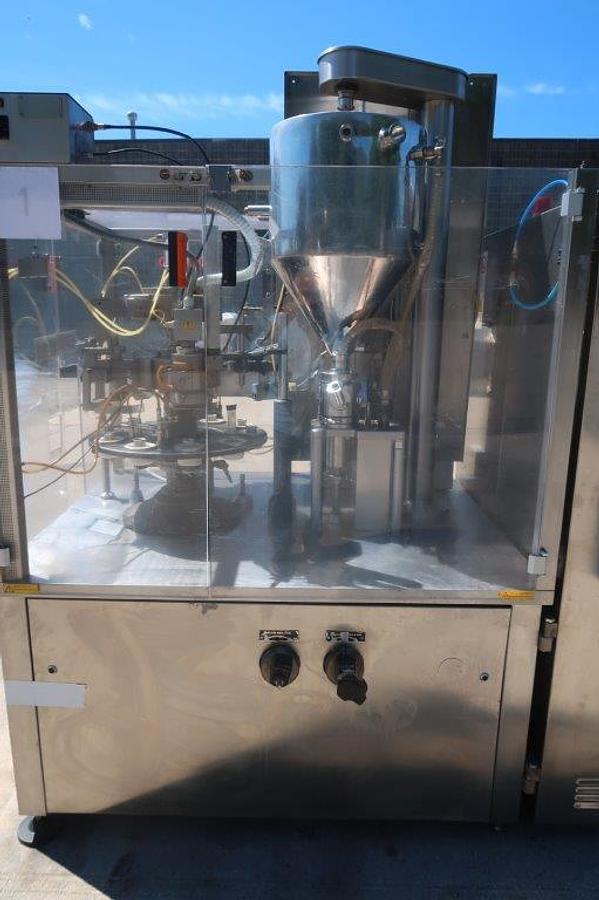
A thorough inspection of a used Axomatic tube filling machine should cover both mechanical and operational aspects of the equipment. Key areas to evaluate include the condition of the filling system (nozzles, pumps, and dosing components), the sealing station (jaw condition, heating elements, and alignment), the tube transport and indexing mechanism, and the control system or HMI. Any signs of product buildup, corrosion, or improvised repairs are worth noting and discussing with the seller before finalizing a purchase. Confirming that all included tooling is present and in usable condition is equally important, since replacement tooling can be a significant added expense.
Inspections can typically be arranged in person, via live video call, or through detailed video recordings provided by the seller. Some machines may still be installed in an active production facility, in which case an in-person or video inspection can show the machine running under real conditions. Keep in mind that most used equipment dealers do not have the permits or infrastructure to run actual product through a machine in a dealer setting, so functional demonstrations at a dealer's facility will generally be limited to dry cycling or mechanical operation checks rather than a full production run.
What is the difference between semi-automatic and fully automatic Axomatic tube fillers?
Semi-automatic Axomatic tube filling machines require an operator to load tubes manually into the machine before the filling and sealing cycle runs automatically. This configuration is common in lower-volume production environments or for manufacturers running frequent changeovers across many different tube sizes and formulations. The lower capital cost and simpler mechanical design of semi-automatic machines can make them a practical choice for contract fillers or smaller operations that do not need continuous high-speed output.
Fully automatic Axomatic machines handle the entire process from tube loading through filling, sealing, coding, and discharge with minimal operator intervention. These machines are designed for sustained high-volume production and typically offer higher filling accuracy and faster throughput than semi-automatic configurations. On the used market, fully automatic models tend to carry higher price tags but can deliver a faster return on investment for operations running extended production shifts. Buyers should match the machine's automation level to their actual production requirements rather than defaulting to the highest-capacity option available.
Can Axomatic tube filling machines handle products with different viscosities?
Axomatic tube filling machines are designed to accommodate a range of product viscosities, which is one of the reasons they are found across industries as different as cosmetics, pharmaceuticals, and food. Thin, free-flowing gels behave very differently from thick creams or dense ointments, and the filling system on an Axomatic machine (typically a piston or peristaltic pump arrangement) can generally be configured or adjusted to handle these differences. Some models are better suited to high-viscosity products than others, so buyers should verify that the specific machine they are evaluating is appropriate for their formulation type.
For highly viscous products, features like heated hoppers or jacketed filling paths can be important to maintain consistent product flow and filling accuracy. When inspecting a used machine, buyers should ask about the product types and viscosities the machine was used with in its previous application, as this context helps assess whether the machine's wear patterns and component condition are consistent with the intended new use. Consulting with Axomatic's technical team about a specific model's viscosity range is also a useful step before committing to a purchase.
What are the typical payment and shipping terms when buying a used Axomatic machine?
Most used equipment dealers require full payment prior to shipping the machine. Some dealers extend payment terms to established repeat customers, but buyers purchasing from a dealer for the first time should generally expect to pay in full before the equipment is released. It is worth clarifying payment method options early in the process, as wire transfer is the most common method for machinery transactions of this size.
Shipping costs for tube filling machines depend on the machine's size and weight, the origin and destination, and the level of packaging required to protect the equipment in transit. Smaller machines may ship palletized, while larger fully automatic models often require custom crating. Heavy machines may also require professional rigging for loading at the seller's location and unloading at the buyer's facility, which adds to the total cost. Buyers should request a detailed freight and crating estimate from the dealer before finalizing the purchase to get an accurate picture of the full landed cost of the equipment.