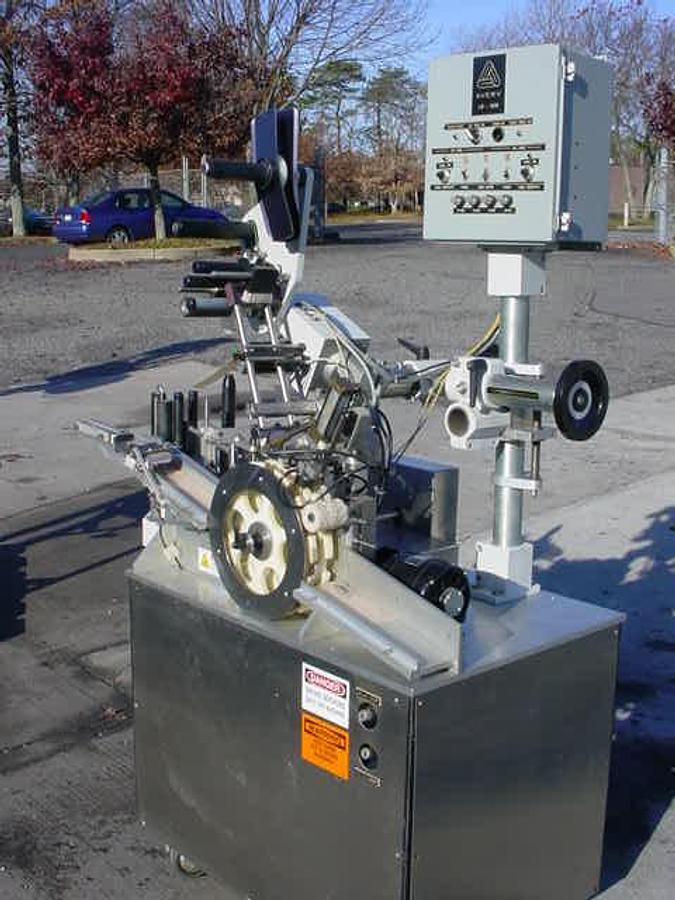
Category
Manufacturer
Model
Avery
Avery is known for its precision labeling machines widely used in consumer goods, pharmaceuticals, and logistics sectors. Their focus on accuracy and speed supports high-volume packaging lines, ensuring compliance and enhanced brand presentation. Avery’s equipment is central to manufacturers seeking reliable and innovative labeling solutions.
FAQ:
What types of Avery labeling machines are available on the used market?
Avery produces a range of labeling equipment designed for different production environments and industries. On the used market, buyers commonly encounter pressure sensitive labelers, automatic labeling systems, and machines configured for small containers such as vials, bottles, and jars. Avery's equipment has historically served high-volume packaging lines in consumer goods, pharmaceuticals, and logistics, so used machines from these sectors tend to be built for durability and speed. Automatic pressure sensitive labelers are among the most sought-after models, as they apply labels consistently at production-line rates without manual intervention.
The specific models available at any given time depend on what has come off production lines or been decommissioned by manufacturers. Used equipment inventories change frequently, so buyers looking for a particular configuration, such as a machine suited for small pharmaceutical vials or a high-speed wrap labeler for round containers, should check with dealers regularly. It helps to know your label dimensions, container geometry, and required throughput before reaching out, since those specs will quickly narrow down which Avery models are a practical fit for your operation.
What industries commonly use Avery labeling machines?
Avery labeling equipment has a strong presence in three main sectors: consumer goods, pharmaceuticals, and logistics. In consumer goods manufacturing, Avery machines are used to apply product labels, pricing stickers, and promotional tags at high speeds with consistent placement accuracy. In pharmaceutical production, precise label application is critical for regulatory compliance, and Avery's pressure sensitive labelers are well suited to small containers like vials and ampoules where placement tolerances are tight. Logistics and distribution operations use labeling equipment for shipping labels, barcode application, and inventory tracking.
Beyond those core industries, food and beverage producers, cosmetics manufacturers, and contract packagers also rely on Avery labeling equipment. The machines are designed around accuracy and throughput, making them practical wherever labeling is a bottleneck or a compliance requirement. Buyers shopping the used market from outside these industries should pay close attention to the machine's original configuration, since a labeler built for cylindrical pharmaceutical vials may need adjustment or retooling to handle flat-sided retail packaging or larger containers.
What should I look for when buying a used Avery labeling machine?
Condition assessment is the most important step when purchasing any used labeling machine. Key components to evaluate include the label dispensing head, drive belts, sensors, and any mechanical guides or rails that control container positioning. Worn belts or misaligned sensors are common issues on high-cycle machines and can affect label placement accuracy. Ask the dealer about the machine's production history, including the approximate number of cycles run and whether it was maintained on a regular schedule. If maintenance records are available, that's a strong indicator the machine was properly cared for.
Buyers should also verify parts availability with the manufacturer before committing to a purchase, since Avery's support for a specific model can vary depending on its age. Older machines may have limited parts availability, which affects long-term serviceability. Request an in-person or video inspection so you can see the machine operate, check for unusual noise or vibration, and assess the overall mechanical condition. Reputable used equipment dealers will accommodate these inspections, and some machines may still be installed at the original production facility, allowing you to observe them running under actual production conditions.
How does the inspection process work when buying a used Avery labeling machine?
Most reputable used equipment dealers offer buyers the option to inspect machinery before purchase, either in person, through a live video call, or via recorded video footage of the machine in its current state. The goal of any inspection is to get an accurate picture of the machine's working condition, including mechanical wear, electrical functionality, and the state of consumable components like belts, rollers, and sensors. For machines that are still installed at a production facility, it may be possible to arrange an inspection at the plant itself, where you can see the equipment running on an actual line.
One practical limitation worth knowing: used equipment dealers typically do not have the permitting or production infrastructure to run actual product through a machine during a demonstration. What you can realistically expect is a mechanical run of the machine to confirm it powers on, moves correctly, and shows no obvious faults. Buyers should prepare a list of specific questions and ask the dealer to demonstrate particular functions during the inspection. If a machine is already decommissioned and in storage, a thorough visual and mechanical check combined with its service history is usually the best available evidence of condition.
What is the typical price range for used Avery labeling machines?
Pricing on used Avery labeling equipment varies considerably based on the machine's model, age, configuration, and condition. Entry-level or older automatic pressure sensitive labelers can be found in the range of a few thousand dollars, while more sophisticated systems designed for high-speed pharmaceutical or consumer goods lines can run significantly higher. Machines with specialized features, such as those configured for small vials or equipped with vision inspection systems, tend to command a premium even on the used market because their original cost was high and demand from niche industries remains steady.
Beyond the machine price itself, buyers should factor in additional costs before comparing options. Shipping, crating, and rigging can add a meaningful amount to the total, especially for larger or heavier machines that require specialized loading equipment. If the machine needs reconditioning, electrical upgrades, or retooling for a different container format, those costs should be estimated before purchase. Getting a clear picture of the total landed cost, including freight, any required modifications, and installation, is the only reliable way to evaluate whether a particular used Avery machine represents good value for your application.
What label sizes and formats are compatible with Avery labeling machines?
Avery labeling machines are generally designed to work with pressure sensitive label stock wound on rolls, and compatibility with specific label dimensions depends heavily on the individual machine model and its adjustable guide settings. Industrial Avery labelers used in pharmaceutical and consumer goods applications are typically configurable for a range of label heights and widths within a defined mechanical envelope. The machine's specifications will list the minimum and maximum label dimensions it can handle, along with the acceptable core size and outer diameter of the label roll.
When sourcing labels for a used Avery machine, it's worth consulting the machine's technical documentation or contacting the manufacturer to confirm which label stock specifications are appropriate. Label material, liner thickness, and adhesive type can all affect how the machine dispenses and applies labels, particularly on high-speed lines where inconsistent feeding causes downtime. Buyers who plan to use non-Avery label stock should verify compatibility with the dispensing mechanism before committing to a large label inventory, since some machines are calibrated around specific liner and face stock combinations.
How are used Avery labeling machines typically shipped, and what should buyers expect in terms of freight costs?
Shipping a used labeling machine involves more logistics than standard freight because industrial equipment requires careful packaging to prevent damage in transit. Smaller machines are typically palletized and shrink-wrapped, while larger or more complex systems may need custom wooden crating to protect sensitive components like dispensing heads, sensors, and drive assemblies. The level of packaging required directly affects shipping costs, so buyers should ask the dealer specifically what packaging method will be used and whether crating is included in the quoted price or billed separately.
For heavier machines, loading and unloading may require a forklift or crane, which adds rigging costs at both ends of the shipment. Buyers who do not have a loading dock or lifting equipment at their facility should arrange for that in advance. Freight rates also vary based on distance, carrier, and whether the shipment moves as LTL (less-than-truckload) or requires a dedicated flatbed. The safest approach is to ask the dealer for a fully itemized breakdown of packaging, rigging, and freight costs before agreeing to a purchase, so there are no surprises when the machine arrives.
What are the payment terms for purchasing used labeling equipment?
Used equipment dealers generally require full payment before a machine is released for shipping. This is standard practice across the industry and reflects the nature of used machinery transactions, where the dealer needs to confirm cleared funds before committing to the logistics of preparing and shipping a piece of equipment. Payment is typically made by wire transfer, though some dealers accept other forms depending on the transaction size and the buyer's relationship with the dealer.
Buyers who have an established history with a particular dealer may occasionally be offered extended terms, but this is not the norm for first-time transactions. If financing is needed, buyers should arrange it independently through an equipment financing company before approaching a dealer, since most used equipment sellers do not offer in-house financing programs. Having financing pre-arranged also puts a buyer in a stronger negotiating position, since it signals to the seller that the transaction can close quickly once terms are agreed upon.
How do used Avery labeling machines compare to buying new labeling equipment?
The primary advantage of purchasing used Avery labeling equipment is cost. A used machine in good working condition can be acquired for a fraction of what comparable equipment costs when purchased through a manufacturer's distribution channel. For businesses that need to add labeling capacity quickly or are working within a tight capital budget, the used market offers access to proven industrial equipment that would otherwise be out of reach. Avery machines in particular have a reputation for precision and durability, which means well-maintained used units can deliver reliable performance for years after their initial deployment.
The trade-offs are real and worth understanding clearly. Used machines come without manufacturer backing, so the buyer takes on responsibility for verifying condition, sourcing any needed parts, and arranging service. Parts availability is a key variable, and buyers should check with Avery directly about support for a specific model before purchasing. Older machines may also lack connectivity features or software integrations that newer equipment offers. For high-volume operations where uptime is critical, the cost savings of buying used need to be weighed against the risk of unplanned downtime and the potential difficulty of finding qualified service technicians familiar with older Avery models.
How should I choose a reputable dealer when buying a used Avery labeling machine?
Selecting the right dealer matters as much as selecting the right machine. A dealer with a long track record in packaging and labeling equipment will have the industry knowledge to accurately represent a machine's condition, application suitability, and limitations. Look for dealers who specialize in packaging machinery rather than general industrial equipment, since specialization typically means better technical knowledge of the specific equipment categories they carry. It's also worth researching how long a dealer has been operating, whether they have verifiable customer references, and whether they are transparent about a machine's history and condition.
A trustworthy dealer will accommodate inspection requests without hesitation, provide whatever documentation is available on the machine, and give straightforward answers about what is and is not known about its service history. Be cautious of dealers who are vague about condition details or unwilling to facilitate an inspection. Also ask about their process for preparing machines for sale, since some dealers clean and test equipment before listing it while others sell strictly as-is with no evaluation. Understanding exactly what you are getting, and from whom, is the foundation of a sound used equipment purchase.