Category
Manufacturer
Model
FAQ:
What is an Ausere 20 Head Monoblock Rotary Piston Filler and Capper?
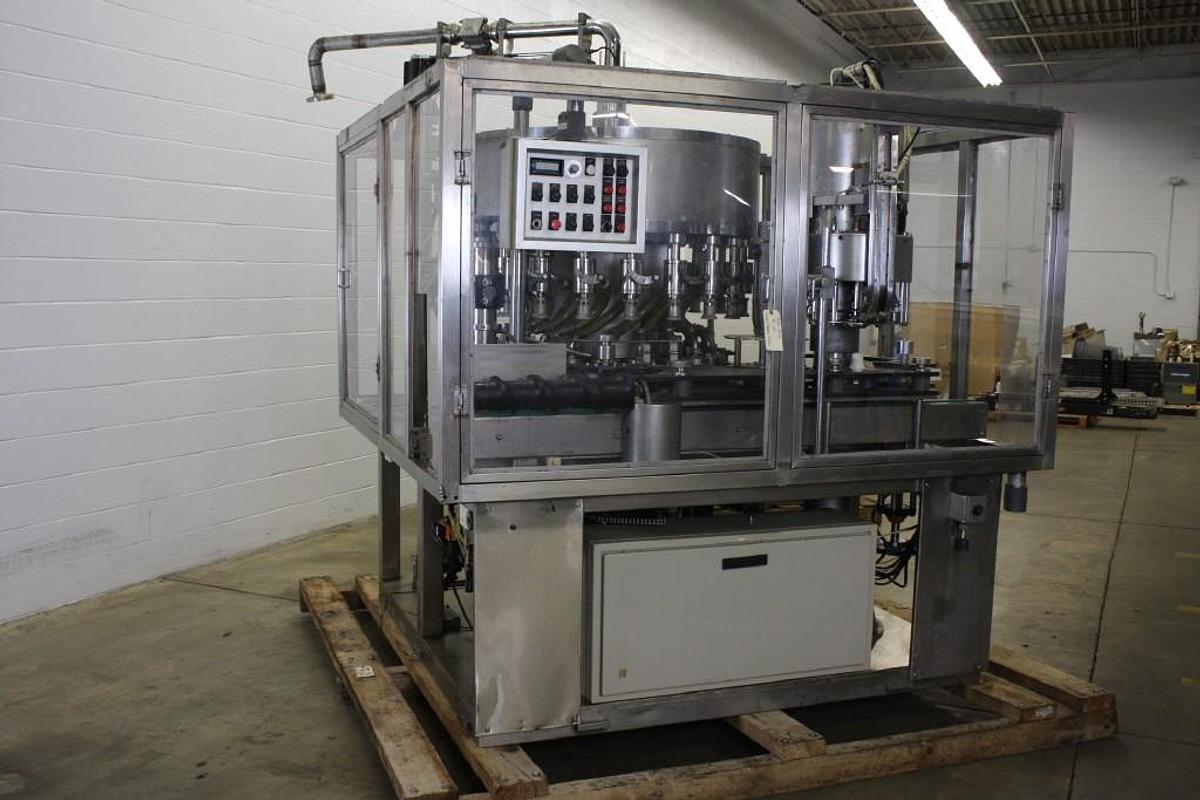
An Ausere 20 Head Monoblock Rotary Piston Filler and Capper is an integrated filling and capping machine that combines both operations into a single rotary unit. The monoblock design means the filling and capping stations are housed together on one frame, which reduces the machine footprint, simplifies line integration, and improves throughput consistency compared to running separate filling and capping machines in sequence. The 20-head configuration refers to the number of filling nozzles operating simultaneously, which allows for high-volume production cycles. Rotary piston technology is well-suited for handling a wide range of liquid viscosities, from thin, free-flowing liquids like water or juice to thicker products like syrups, oils, and certain cosmetic formulations.
This type of machine is commonly found in beverage, food, pharmaceutical, cosmetic, and chemical production environments where consistent fill volumes and secure cap application are critical to product quality and regulatory compliance. The piston filling mechanism works by drawing a measured volume of liquid into a cylinder and then dispensing it into each container, which delivers a high degree of volumetric accuracy across all 20 heads. When evaluating a used Ausere monoblock like this one, buyers should pay close attention to the condition of the piston seals, filling valves, and capping heads, as these are the components most subject to wear over time in continuous production environments.
What types of liquids can Ausere filling machines handle?
Ausere filling machines, particularly those using rotary piston technology, are capable of handling a broad spectrum of liquid products. Thin, free-flowing liquids such as water, juices, spirits, and light oils are straightforward applications for piston fillers. These machines can also process medium-viscosity products like sauces, lotions, shampoos, and edible oils, as well as thicker formulations including gels, creams, and certain chemical compounds. The key variable is the viscosity of the product and whether it contains particulates, as both factors influence which filling valve configuration and piston size are appropriate for a given application.
For food, beverage, and pharmaceutical applications, machines built with stainless steel 304 or 316 contact parts are standard, since these grades resist corrosion from acidic or saline products and are easier to sanitize to meet food safety and GMP requirements. Chemical and industrial liquid applications may have different material requirements depending on the specific product being filled. Buyers sourcing a used Ausere filling machine should confirm the material specifications of all product-contact components and verify that the machine's configuration aligns with the viscosity range and any regulatory requirements of their intended product. Consulting with a machinery specialist familiar with Ausere equipment can help clarify whether a specific used unit is a practical fit for a particular liquid type.
What capping styles do Ausere monoblock filling and capping machines support?
Ausere monoblock filling and capping machines are typically configured to apply a specific cap type, and the capping mechanism built into the unit determines which closure styles are compatible. Common cap types supported by machines in this category include screw caps, snap-on caps, press-on caps, and in some configurations ROPP (Roll-On Pilfer Proof) caps. The capping head design, torque settings, and chuck tooling are all matched to the cap geometry and the container neck finish, so understanding exactly how a used machine was originally configured is important before purchase.
Because these are used machines, buyers should verify which cap type the unit was set up to run and whether any tooling changes or adjustments would be needed to match their specific container and closure combination. Some monoblock cappers can be retooled for different cap sizes within the same cap style, but switching between fundamentally different capping mechanisms (for example, from a screw capper to an ROPP capper) typically requires more significant modifications or a different machine entirely. Requesting a detailed inspection, including photos or video of the capping station, is a practical step to confirm the current condition of the capping heads and chucks before committing to a purchase.
What production speeds can be expected from a used Ausere 20-head rotary filling machine?
Production speed on a rotary filling and capping machine like the Ausere 20-head monoblock is influenced by several factors, including the fill volume per container, the viscosity of the liquid being filled, the container size and neck diameter, and the speed at which the rotary turret is set to run. In general, 20-head rotary fillers in this class are designed for medium-to-high volume production and can achieve speeds ranging from several dozen to well over one hundred containers per minute under optimal conditions. Actual throughput in practice depends heavily on the product and container combination, as well as the condition of the machine.
For a used machine specifically, production speed may differ from the rated capacity if components have worn over time or if the machine has been reconfigured from its original setup. Buyers should ask the selling dealer for any available documentation on the machine's rated speed range and request a video inspection showing the machine running if possible. Keep in mind that most used equipment dealers do not have the permitting or facilities to run actual product through the machine during an inspection, so speed assessments are often based on the machine running dry or with water. Factoring in realistic efficiency rates and any potential refurbishment costs is a sound approach when projecting actual production output from a used rotary filler.
Are Ausere filling and capping machines suitable for small-scale production operations?
Ausere produces filling and capping equipment across a range of configurations, including semi-automatic models that are accessible to smaller production operations, as well as fully automatic systems designed for high-volume manufacturing. A 20-head monoblock rotary filler, however, sits toward the higher end of the capacity spectrum and is generally better suited to operations with meaningful production volumes. Running a large-format rotary monoblock at very low volumes can be inefficient from both an operational and a cost standpoint, since the changeover time, cleaning requirements, and setup complexity of these machines are more easily justified when line utilization is high.
That said, a used 20-head monoblock purchased at a significantly lower price than a comparable machine purchased elsewhere could still make economic sense for a growing operation that anticipates scaling production. Smaller businesses should carefully assess their current and near-term volume requirements against the machine's throughput capabilities before purchasing. A machinery dealer specializing in liquid filling equipment can help evaluate whether a particular used Ausere unit is a practical fit for a given production scale, and whether the machine's configuration aligns with the containers and products involved.
What container types and sizes are compatible with Ausere rotary filling and capping machines?
Ausere rotary monoblock filling and capping machines are typically designed to handle rigid containers, most commonly round bottles made from glass, PET, HDPE, or other plastics. The rotary turret design works best with containers that have a consistent round profile, since the starwheels and guides that move containers through the machine are configured for specific diameter ranges. Container height and neck finish dimensions are equally important, as the filling nozzles and capping heads must be matched to the specific container geometry to achieve accurate fills and proper cap application.
On a used machine, the current tooling and guide configuration reflects the container sizes the machine was most recently set up to run. Changeover to different container sizes is possible on most rotary fillers but requires format parts such as starwheels, guides, and capping chucks that correspond to the new container dimensions. Buyers should ask the dealer which container sizes and formats are included with the machine and what additional tooling, if any, would be needed to run their specific bottles. Knowing the exact bottle diameter, height, and neck finish before evaluating a used machine makes it much easier to determine compatibility and estimate any additional investment required for changeover parts.
What should buyers inspect when evaluating a used Ausere filling and capping machine?
Evaluating a used filling and capping machine requires a methodical look at both the mechanical condition and the completeness of the unit. Key areas to inspect include the condition of the piston seals and filling valves, the state of the capping heads and chuck tooling, the integrity of the stainless steel product contact surfaces, and the condition of the drive components including motors, gearboxes, and belts. Electrical panels and control systems should also be reviewed, particularly if the machine uses a PLC-based control system, since sourcing replacement components for older controls can sometimes be challenging. Any signs of corrosion, cracking, or heavy wear on product-contact parts are worth noting carefully.
Reputable used equipment dealers will typically accommodate in-person inspections at their facility, or can provide detailed video walkthroughs and photos of the machine. Some machines may still be located at the facility where they were last in production, in which case the dealer can often arrange an inspection at that site. Keep in mind that most dealers do not run actual product during inspections due to permitting constraints, so inspections typically involve observing the machine running dry or with water. Buyers may also want to contact Ausere directly to understand parts availability and technical support options for the specific model and age of machine being considered, since this can vary depending on how long a particular model has been out of active production.
How does the piston filling mechanism work on a rotary monoblock machine?
Piston filling works by using a cylinder-and-piston assembly to draw a precisely measured volume of liquid from a supply tank and then dispense that exact volume into a container. As the rotary turret turns, each filling head cycles through the draw and dispense strokes in sequence, which allows multiple containers to be filled simultaneously at different points in the rotation. The fill volume is controlled by adjusting the stroke length of the piston, and because the volume is determined mechanically rather than by timing or flow rate, piston fillers deliver consistent volumetric accuracy across a wide range of fill sizes. This makes them a popular choice for products sold by volume where overfill or underfill would create compliance or cost issues.
One practical consideration with piston fillers is that the seals and valves that control liquid flow are subject to wear, particularly when running abrasive, acidic, or particulate-laden products. On a used machine, the condition of these components is one of the most important factors to assess during inspection. Worn piston seals can cause fill volume drift, dripping, or cross-contamination between fills. Replacement seals and valve components are generally available from the manufacturer or aftermarket suppliers for well-established machine designs, but buyers should confirm parts availability for the specific Ausere model in question before finalizing a purchase, particularly for older machines.
What are the typical shipping and logistics considerations when purchasing a used Ausere filling machine?
Used filling and capping machines, particularly rotary monoblocks, are substantial pieces of industrial equipment that require careful handling during transit. Proper packaging is critical to preventing damage, and the level of crating or palletization required will vary based on the machine's size, weight, and the distance it needs to travel. Smaller machines may ship adequately on a heavy-duty pallet with protective wrapping, while larger, heavier monoblocks typically require custom wooden crating to protect the machine's components and prevent shifting in transit. Buyers should ask the selling dealer specifically what packaging method will be used and whether crating costs are included in the quoted price or billed separately.
For larger rotary monoblock machines, rigging equipment such as forklifts or cranes may be required for loading at the origin and unloading at the destination. Rigging services carry additional costs that buyers should factor into the total landed price of the machine. Freight costs will depend on the machine's dimensions and weight, the origin and destination locations, and the mode of transport (domestic truck freight versus international ocean or air freight). Buyers should request a full breakdown of packaging, rigging, and freight costs from the dealer before finalizing a purchase to avoid surprises and accurately calculate the total cost of acquiring the equipment.
What payment terms are typical when buying used filling and capping equipment?
Payment practices in the used industrial machinery market are fairly consistent across dealers. The standard expectation is full payment prior to the machine being released for shipping. This applies to most transactions regardless of the buyer's size or location, and it reflects the nature of used equipment sales where machines are sold as-is and dealers need to confirm cleared funds before arranging logistics. Buyers should be prepared for this requirement and factor payment timing into their procurement planning, particularly if internal purchase approval processes take time.
Some dealers extend payment terms to established customers with a prior transaction history, but this is generally the exception rather than the rule for first-time buyers. For larger purchases, buyers may want to discuss payment structure with the dealer directly to understand what options exist. Using a secure, traceable payment method is advisable in any used equipment transaction. Buyers should also confirm all details of the sale in writing before submitting payment, including the machine's description, included tooling and accessories, packaging method, and shipping timeline, to ensure there is a clear record of what was agreed upon.