Category
Manufacturer
Model
Atlantic Coast Crushers
Atlantic Coast Crushers develops industrial crushers and lump breakers used in processing large materials into smaller granules for industries such as mining, chemicals, and pharmaceuticals. Their equipment is known for robust construction and reliable performance, supporting efficient material handling and preparation. Atlantic Coast Crushers’ machinery reduces material size to meet production specifications critical to various applications.
FAQ:
What is an Atlantic Coast Crusher and what industries use this equipment?
Atlantic Coast Crushers manufactures industrial crushing and size-reduction equipment designed to break down large materials into smaller, more manageable granules. Their machines are built for demanding production environments where consistent particle size and reliable throughput are critical. The equipment line includes lump breakers and roll crushers engineered for processing a wide range of bulk materials across multiple sectors.
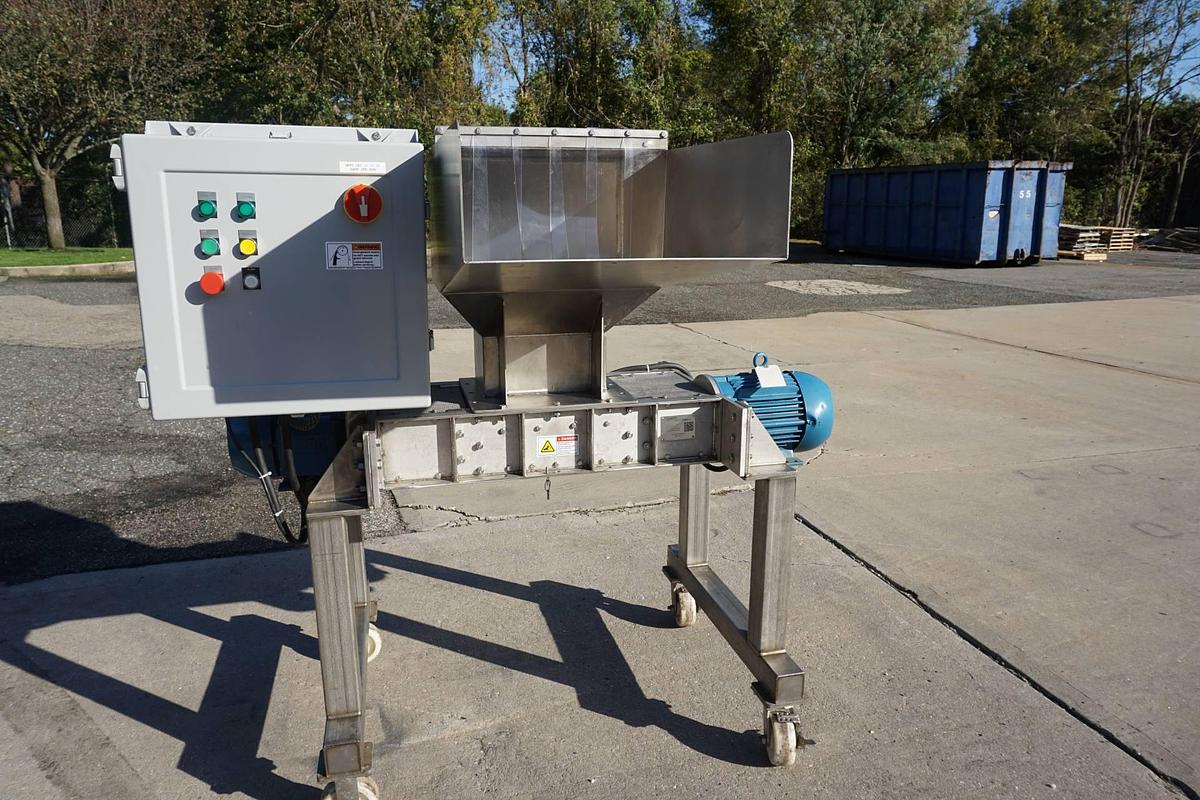
The industries that rely on Atlantic Coast Crusher equipment include mining, chemical processing, pharmaceuticals, food production, and general bulk material handling. In pharmaceutical and food applications, stainless steel construction is often specified to meet sanitary requirements, as seen in models like their two-roll mustard seed crusher. In mining and aggregate applications, the focus shifts to durability and high-volume throughput. The machines are valued for their solid construction and dependable performance in continuous-duty production settings, making them a practical choice for facilities that need consistent size reduction without frequent downtime.
What types of materials can Atlantic Coast Crushers process?
Atlantic Coast Crushers equipment is designed to handle a broad range of materials, from soft granular substances to harder industrial feedstocks. In the food and pharmaceutical industries, these machines process seeds, grains, dried chemicals, and similar friable materials that require precise size reduction without contamination. Stainless steel configurations are available specifically for these sensitive applications where hygiene and material purity are non-negotiable.
On the industrial side, Atlantic Coast Crusher lump breakers and roll crushers are used to process chemical compounds, fertilizers, minerals, and other bulk solids that tend to clump or form large masses during storage or transport. The two-roll design is particularly well suited for materials that need to be reduced to a uniform granule size without excessive fines generation. Before purchasing any used machine, buyers should confirm that the specific model and its roller configuration match the hardness, moisture content, and particle size requirements of their target material, since not every crusher configuration is appropriate for every feedstock.
What should buyers know about purchasing a used Atlantic Coast Crusher?
Buying a used Atlantic Coast Crusher can deliver significant cost savings compared to sourcing equivalent size-reduction equipment elsewhere, but the process requires careful due diligence. Since used machines are sold as-is, the responsibility for evaluating condition falls entirely on the buyer. This makes it essential to work with dealers who specialize in industrial processing equipment and have a verifiable track record in the industry. A dealer with deep familiarity with crushing and lump-breaking equipment will be better positioned to accurately represent a machine's condition and help buyers identify the right model for their application.
Buyers should request a thorough inspection before committing to a purchase. Most reputable dealers offer in-person inspections, virtual walkthroughs, or detailed video documentation of the equipment. If the machine is still installed at a production facility, some dealers can arrange direct access to the site so buyers can observe the equipment firsthand. Keep in mind that most equipment dealers are not permitted to run full production tests, so inspections focus on physical condition, roll wear, drive components, and overall mechanical integrity. Reviewing the machine's history and consulting with the manufacturer about parts availability for the specific model and age of the unit is also a smart step before finalizing any purchase.
How much does a used Atlantic Coast Crusher cost?
Pricing for used Atlantic Coast Crusher equipment varies considerably depending on the model, size, configuration, age, and overall condition of the machine. Smaller bench-scale or pilot-line lump breakers may be available at a fraction of the cost of larger, continuous-duty production units. Specialty configurations, such as stainless steel food-grade or pharmaceutical-grade models, often command higher prices on the used market because the base material cost is higher and demand from sanitary processing facilities remains steady.
Total cost of ownership goes beyond the purchase price. Buyers should factor in shipping and rigging expenses, any reconditioning or parts replacement needed before the machine goes back into service, installation costs, and ongoing power consumption. Older machines may also require more attention to parts sourcing, so it is worth contacting the manufacturer directly to confirm what replacement components are still available for the specific model being considered. Getting a complete picture of landed and operational costs before purchasing helps avoid surprises and ensures the used machine delivers the expected value.
What is a two-roll crusher and how does it differ from other crusher types?
A two-roll crusher, sometimes called a roll crusher or double-roll crusher, works by feeding material into the nip point between two counter-rotating cylindrical rolls. As material passes through the gap between the rolls, it is compressed and fractured into smaller particles. The gap between the rolls is adjustable, which gives operators control over the output particle size. This design produces relatively uniform granules with minimal fines, making it a preferred choice for applications where particle size consistency matters, such as pharmaceutical processing, specialty chemical production, and food ingredient preparation.
Compared to jaw crushers or hammer mills, roll crushers operate at lower speeds and apply compressive rather than impact force. This makes them gentler on friable or heat-sensitive materials and generally results in lower noise and dust generation. Hammer mills, by contrast, use high-speed rotating hammers to impact and shatter material, which is better suited for harder or more fibrous feedstocks but tends to produce a wider particle size distribution. Atlantic Coast Crushers is particularly well known for their roll-type lump breakers, and buyers evaluating used equipment should match the crushing mechanism to their specific material and particle size requirements before purchasing.
How do you inspect a used industrial crusher before buying?
Inspecting a used industrial crusher thoroughly is one of the most important steps in the purchasing process. Because used equipment is sold as-is, buyers carry the full burden of assessing condition. A good inspection starts with the physical structure: checking for cracks, excessive wear on crushing surfaces, roll or jaw condition, bearing play, and the state of seals and housing. Drive components including motors, belts, gearboxes, and couplings should also be examined carefully, as these are common wear points that can add significant cost to get a machine back into service.
Dealers typically offer several inspection options. In-person visits allow the most thorough evaluation and are the preferred approach for higher-value machines. When travel is not practical, many dealers provide detailed video walkthroughs or virtual inspections conducted in real time. Some equipment is still installed at the facility where it was last used, and dealers can sometimes arrange access to those sites so buyers can see the machine in its operational context. One thing to keep in mind is that most equipment dealers do not have the permits or infrastructure to run full production tests, so the inspection will focus on mechanical condition rather than live throughput verification. Buyers with specific technical requirements should consider bringing in a qualified millwright or equipment engineer to assist with the evaluation.
What are the typical shipping and delivery considerations for a used industrial crusher?
Shipping a used industrial crusher involves logistics that go well beyond standard freight. These machines are heavy, often awkwardly shaped, and require proper preparation to prevent damage in transit. Depending on the size and configuration of the equipment, it may need to be palletized, crated, or skid-mounted before loading. The level of packaging required directly affects shipping costs, and buyers should ask dealers upfront for a clear breakdown of what preparation is included in the quoted price versus what will be charged separately.
Larger crushers often require specialized rigging equipment for loading at the origin and unloading at the destination. Fork trucks may be sufficient for smaller units, but heavier machines may need cranes or specialized rigging crews, and those costs are typically passed on to the buyer. Freight rates will vary based on weight, dimensions, origin, destination, and the carrier used. Buyers should request a full landed cost estimate that includes packaging, rigging, freight, and any applicable fuel surcharges before finalizing a purchase decision. Planning the receiving end of the shipment in advance, including confirming that adequate unloading equipment is available at the destination facility, helps avoid costly delays.
Do used Atlantic Coast Crushers come with a warranty?
Used industrial equipment, including Atlantic Coast Crushers sold through equipment dealers, is typically offered on an as-is basis without a warranty. Manufacturer warranties are generally tied to the sale of equipment directly from the manufacturer and do not transfer through subsequent resales. This is standard practice in the used machinery market and is one of the key reasons that thorough pre-purchase inspection is so important.
Because there is no warranty safety net, buyers should focus their risk management efforts on selecting a reputable dealer with a long history in the industrial equipment space and a demonstrated specialization in crushing and processing machinery. A knowledgeable dealer can provide accurate condition assessments and help buyers understand what, if any, reconditioning has been done to a machine before it was listed for sale. It is also worth reaching out to Atlantic Coast Crushers directly to ask about parts availability and technical support for the specific model and production era of the machine being considered, since the level of manufacturer support available can vary based on the age of the equipment.
What payment terms should buyers expect when purchasing used industrial crushing equipment?
Payment practices in the used industrial equipment market are fairly consistent across reputable dealers. In most cases, full payment is required before the equipment is released for shipping. This protects the dealer from the logistical and financial complications of reversing a transaction once a large machine has been packaged and loaded. Buyers should plan their financing or capital expenditure approvals accordingly so that payment can be made promptly once inspection is complete and a purchase decision is confirmed.
Some dealers extend credit terms or deferred payment arrangements to established customers with a prior purchasing history, but this is not standard for first-time transactions. Buyers who need financing for larger equipment purchases may want to explore third-party equipment financing options in advance of the buying process. Having financing pre-arranged speeds up the transaction and can be an advantage in competitive situations where multiple buyers are interested in the same machine. As with any significant capital purchase, buyers should review all invoicing and payment documentation carefully and confirm that title transfer and release of the equipment are clearly outlined in the purchase agreement.
How do you determine the right crusher model for a specific application?
Matching a crusher to an application requires evaluating several factors in combination. The physical and chemical properties of the material being processed are the starting point: hardness, moisture content, abrasiveness, temperature sensitivity, and whether the material is prone to sticking or bridging all influence which crushing mechanism will perform best. For fragile or heat-sensitive materials in food or pharmaceutical production, a low-speed roll crusher is often the right choice. For harder minerals or chemical agglomerates, a more aggressive mechanism may be needed.
Throughput requirements are equally important. Buyers should calculate the tons per hour or pounds per hour that the machine needs to handle at peak production and confirm that the used unit being considered is rated for that capacity. Particle size targets also matter: roll crushers allow for precise gap adjustment and produce consistent output, while impact-style machines offer higher throughput but less control over particle distribution. If the used machine will be integrated into an existing production line, compatibility with upstream and downstream equipment, including feed systems, conveyors, and dust collection, should be verified before purchase. Consulting with a dealer who has hands-on experience with the specific type of equipment and application can prevent costly mismatches.