Category
Manufacturer
Model
FAQ:
What is an As.Co monoblock filling and capping machine?
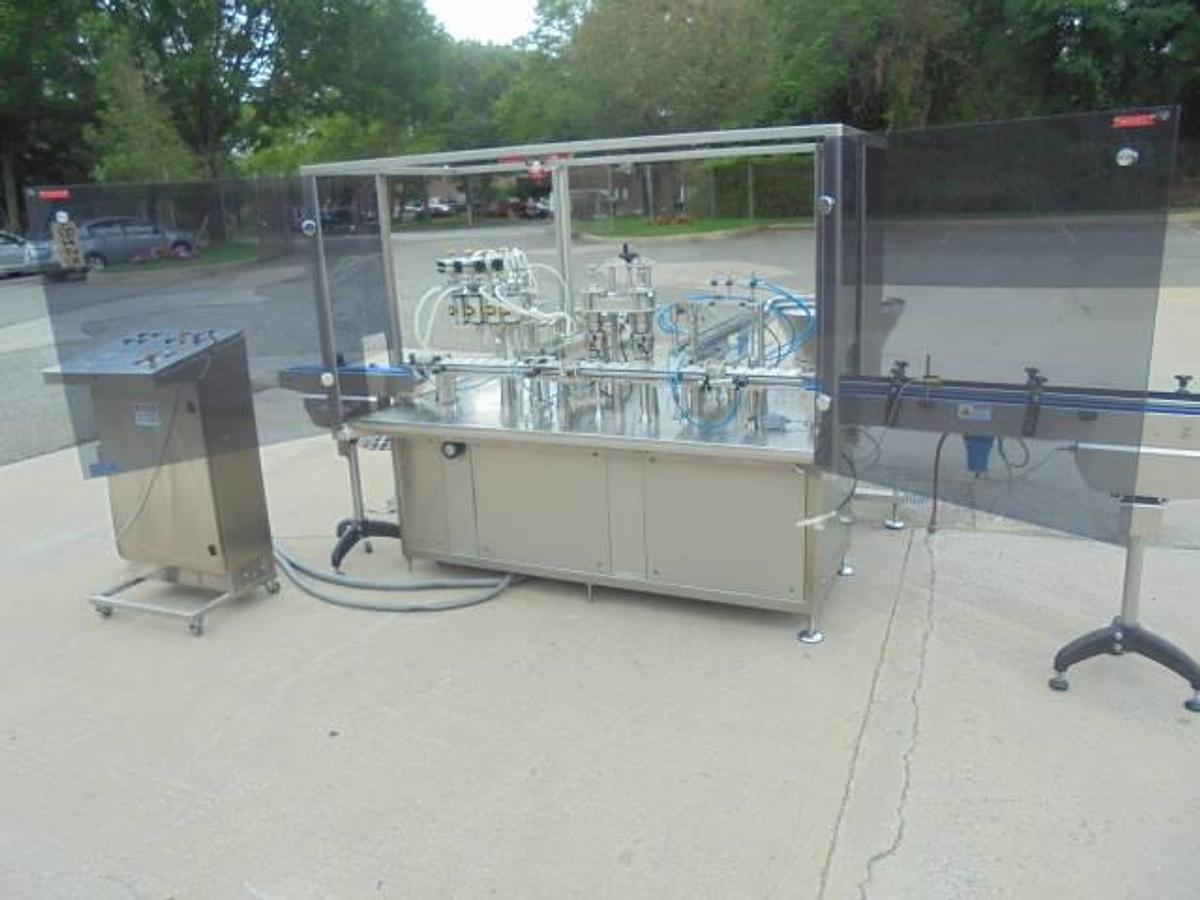
An As.Co monoblock is a combined filling and capping unit built as a single integrated machine rather than two separate pieces of equipment. This design means the container moves through the filling station and then directly into the capping station without being transferred between machines, which reduces the footprint on the production floor and minimizes the risk of contamination or misalignment between the two processes. As.Co is an Italian manufacturer with a long history of producing this type of equipment for regulated and semi-regulated industries.
The monoblock configuration is particularly well-suited for small to medium-scale production environments where floor space is limited but consistent output quality is still a priority. Because the filling and capping functions are mechanically synchronized within one frame, operators generally find it easier to maintain consistent fill levels and cap torque across a production run. Used As.Co monoblocks appear regularly on the secondary market and are sought after by buyers who want reliable, European-built machinery at a fraction of the cost of purchasing equivalent equipment through a manufacturer.
What industries use As.Co filling and capping machines?
As.Co filling and capping equipment was designed with regulated and semi-regulated production environments in mind. The machines are most commonly associated with the cosmetic and personal care industry, where they are used to fill and cap products like lotions, serums, shampoos, and liquid soaps. Pharmaceutical and nutraceutical producers also use As.Co equipment for filling bottles, vials, and tubes with liquid or semi-liquid formulations. The food and beverage sector, particularly producers of sauces, oils, and similar products, represents another common application area.
Chemical and specialty chemical producers round out the primary user base, particularly for products that require careful volumetric control during filling. The stainless steel construction found on many As.Co models is a key reason these machines cross industry lines so effectively, since stainless steel resists corrosion from a wide range of product chemistries and supports the cleaning and sanitation protocols required in food, pharmaceutical, and cosmetic manufacturing. Buyers sourcing used As.Co equipment should confirm that the specific model they are considering is appropriate for their product type, container format, and any applicable regulatory requirements.
What types of containers can As.Co filling and capping machines handle?
As.Co machines are designed to work with a range of container formats, and the specific capabilities depend on the model. Bottles are the most common container type associated with As.Co equipment, including round, oval, and square profiles in glass or plastic. Depending on the model and any change parts included, the machine may also accommodate jars, tubes, and vials. Container size ranges vary by model, so buyers should review the specifications for any particular machine to confirm it covers the diameter and height range they need.
Cap compatibility is equally important to evaluate. As.Co capping heads are typically configured for a specific cap type, such as screw caps, pump dispensers, or trigger sprayers, and some models can be adapted with different tooling to handle more than one cap style. When purchasing a used As.Co machine, it is worth asking the seller which change parts are included with the machine, since additional format parts for different bottle sizes or cap types may or may not be part of the sale. Confirming this upfront helps buyers accurately assess the total cost and readiness of the equipment for their specific production requirements.
Are As.Co filling and capping machines suitable for viscous products?
Many As.Co filling machines are capable of handling viscous products, but the filling mechanism used on a particular model determines how well it performs with thick or high-viscosity formulations. Volumetric piston filling systems, which are common in As.Co equipment, are generally well-suited for viscous products like gels, creams, pastes, and thick sauces because the piston mechanism can push dense materials through the fill nozzle with consistent accuracy. Peristaltic or gravity-fed systems, by contrast, are better matched to free-flowing liquids.
Buyers evaluating a used As.Co machine for viscous product applications should identify the filling system type and check whether the nozzle diameter and pump sizing are appropriate for their specific product viscosity. If the machine was previously used for a different product type, there may be residual wear on seals, nozzles, or pump components that affects performance with thicker materials. Requesting a detailed inspection, either in person or via video, is the most reliable way to assess the current condition of the filling components before committing to a purchase.
What is the typical production speed of an As.Co filling and capping machine?
Production speed on As.Co filling and capping machines varies considerably depending on the model, the container size, the product being filled, and whether the machine is configured for automatic or semi-automatic operation. Smaller semi-automatic As.Co units are generally designed for lower-volume production and may process anywhere from a few hundred to around 1,000 to 1,500 containers per hour. Fully automatic monoblock models are capable of higher throughputs, with some configurations reaching several thousand containers per hour under optimal conditions.
Actual throughput in a real production environment often differs from the theoretical maximum listed in specifications, since factors like operator experience, product characteristics, container handling, and cap feed reliability all affect cycle times. When evaluating a used As.Co machine, it is reasonable to ask the seller about the production environment the machine came from and what speeds were achieved in practice. This gives a more grounded expectation than relying solely on nameplate specifications, which reflect ideal conditions that may not match every buyer's setup.
What should buyers look for when inspecting a used As.Co filling and capping machine?
A thorough inspection of a used As.Co machine should cover both mechanical and cosmetic condition. On the mechanical side, the key areas to examine include the filling pump or piston assembly, the nozzle condition, the capping head and torque mechanism, the conveyor or indexing system, and the drive components such as motors, belts, and gearboxes. Wear on seals and gaskets is common in used filling equipment and is worth noting, since these parts affect fill accuracy and can be a source of leaks or contamination. The electrical panel and control system should also be checked for any obvious damage, missing components, or outdated safety features.
Inspections can be arranged in person, through live video, or via detailed video captures provided by the seller. Some machines may still be installed at a production facility where they can be observed running, while others will have been decommissioned and may not be available for a live run test. Keep in mind that most used equipment dealers are not set up to run actual product through a machine during an inspection, since that would require production-level permitting and materials. The goal of the inspection is to get an accurate picture of the machine's current mechanical condition and identify any components that may need attention before it is put back into service.
Are replacement parts available for used As.Co filling and capping machines?
Parts availability for used As.Co equipment depends on the age and model of the machine. As.Co is an established Italian manufacturer, and for machines that are not too dated, the manufacturer or authorized service agents may still be able to supply replacement parts. It is worth contacting As.Co directly before purchasing a used machine to ask about parts support for the specific model and serial number you are considering. The manufacturer can give a realistic picture of what is stocked, what can be made to order, and what may no longer be supported due to the machine's age.
For older models where manufacturer support may be limited, many wear parts such as seals, O-rings, nozzles, and belts can often be sourced from third-party industrial suppliers using the original specifications. Stainless steel contact parts are also commonly fabricated by machine shops if drawings or samples are available. Buyers should factor potential parts sourcing challenges into their decision, particularly for machines that are more than 15 to 20 years old. Asking the seller whether any spare parts or change parts are included with the machine is also a practical step that can reduce downtime after installation.
What is the typical price range for used As.Co filling and capping machines?
Pricing for used As.Co filling and capping equipment varies based on the model type, age, condition, configuration, and what change parts or accessories are included. Semi-automatic or smaller-format As.Co machines tend to be priced lower, often in the range of a few thousand to around ten thousand dollars depending on condition. Fully automatic monoblock systems with higher throughput capacity and more sophisticated controls generally command higher prices, sometimes ranging from the mid-five figures upward for machines in good working condition.
The value of any specific used machine is also influenced by how recently it was last serviced, whether it has been refurbished, and the reputation of the seller. Buyers should request detailed condition reports and inspection access before finalizing a price, since the cost of any required repairs or replacement parts should be factored into the total acquisition cost. Getting a clear understanding of shipping, rigging, and crating costs is equally important, as these can add meaningfully to the landed cost of a heavy industrial machine, particularly for buyers located far from the seller.
How does shipping work for used As.Co filling and capping machines?
Shipping a used filling and capping machine requires careful preparation to prevent damage in transit. Machines are typically palletized or crated before shipment, and the level of packaging required depends on the size and weight of the equipment. Smaller As.Co units may ship adequately on a standard pallet with proper banding and corner protection, while larger monoblock systems often require a custom wooden crate to protect components during loading, transport, and unloading. The cost of crating is usually separate from the freight charge and should be clarified with the seller upfront.
Heavier machines may also require professional rigging for loading at the seller's facility and unloading at the buyer's location. Rigging involves specialized equipment like forklifts, cranes, or pallet jacks rated for the machine's weight, and the cost of this service is typically an added expense beyond the base freight rate. Buyers should ask the seller for a complete breakdown of packaging, rigging, and freight costs so they have a clear picture of the total landed cost before finalizing the purchase. International shipments involve additional considerations including customs documentation, import duties, and compliance with any applicable import regulations for industrial machinery.
What are the advantages of buying a used As.Co filling and capping machine over purchasing new equipment?
The most straightforward advantage of purchasing used As.Co equipment is cost. A used machine in good working condition can be acquired for significantly less than the cost of comparable equipment purchased through a manufacturer, often at a fraction of the price. For small to medium-sized producers or companies scaling up production for the first time, this cost difference can free up capital for other parts of the operation such as raw materials, facility improvements, or additional staffing. As.Co machines are built with stainless steel construction and European engineering standards, which means a well-maintained used unit can still offer many years of reliable service.
Lead time is another practical advantage. Purchasing through a manufacturer often involves production queues and delivery timelines that can stretch from several weeks to several months. A used machine that is already in inventory can typically be inspected, purchased, and shipped within a much shorter timeframe, which matters when a production deadline is driving the decision. The trade-off is that used equipment comes without the support structure that accompanies a manufacturer purchase, so buyers need to invest more effort in the inspection process and parts planning to make sure they are acquiring a machine that is genuinely ready for production.