Category
Manufacturer
Model
FAQ:
What is an Arpac shrink bundling machine and how does it work?
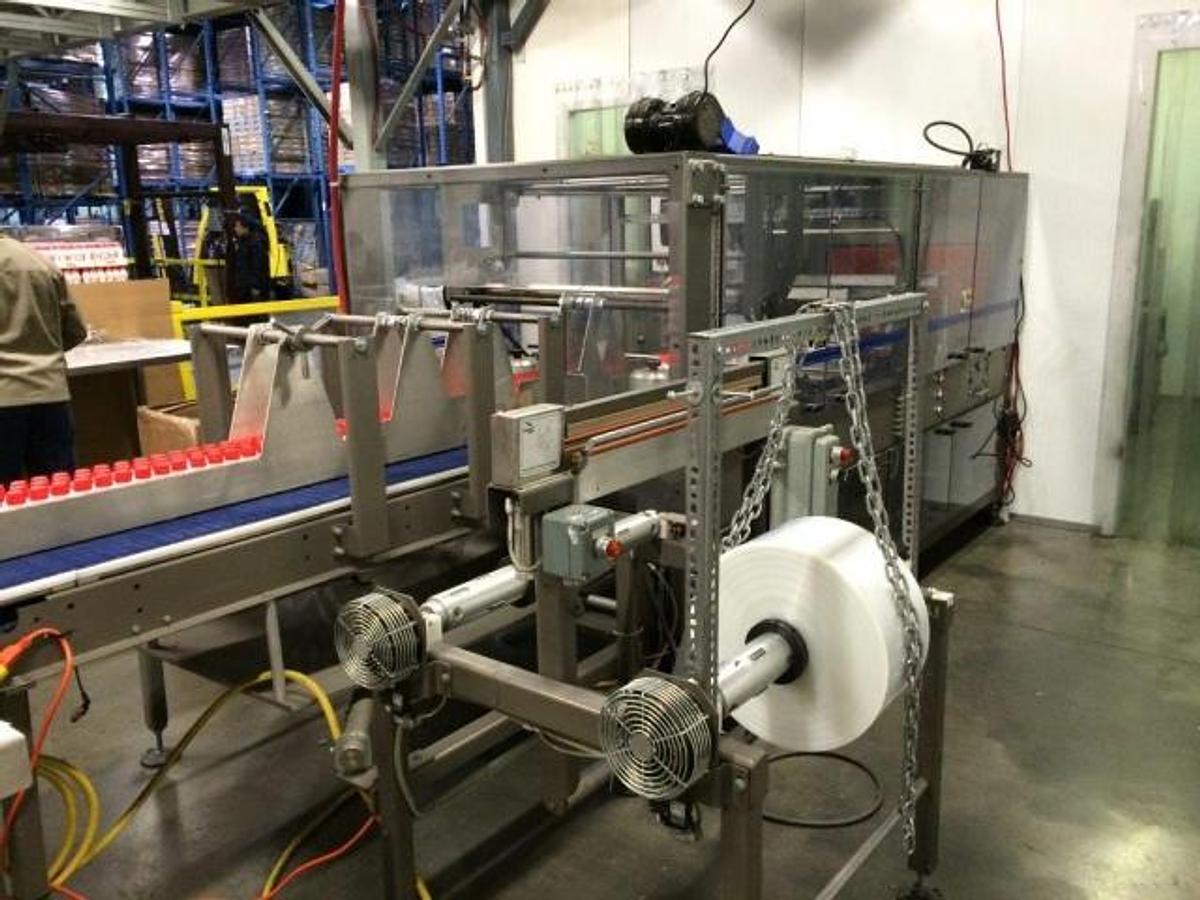
An Arpac shrink bundling machine is a type of packaging equipment designed to group multiple containers or products together using shrink film, without the need for a tray or pad. The machine feeds products into a film wrapping station, where a measured length of shrink film is wrapped around the bundle. The wrapped bundle then passes through a heat tunnel, where the film contracts tightly around the products to create a firm, retail-ready package. This tray-free bundling method is sometimes called pad bundling or tray-optional bundling, and it reduces material costs compared to tray-based packaging.
Arpac built a strong reputation in the packaging industry for producing machines that handle this process reliably at production speeds. Their bundling equipment is widely used in food and beverage, pharmaceutical, and consumer goods manufacturing. The machines are engineered to handle a variety of container shapes, including cans, bottles, cartons, and cups. On the used equipment market, Arpac bundlers remain popular because the brand's machines are known for durability, and many units from the 1990s and 2000s continue to operate effectively in production environments today.
What types of products can Arpac shrink bundling machines handle?
Arpac shrink bundling machines are built to handle a broad range of product types, making them a versatile choice across multiple industries. Common applications include bundling canned goods, glass and plastic bottles, beverage cartons, dairy cups, aerosol containers, and various consumer product containers. The machines are particularly common in food and beverage production, where bundling six-packs, twelve-packs, or custom multi-pack configurations is a daily requirement. Pharmaceutical and personal care product manufacturers also use Arpac bundlers to create retail-ready multi-unit packages.
The specific product compatibility of any individual machine depends on its model, the width and height of the film wrapping station, and the configuration of the infeed conveyor and lane guides. Buyers shopping for a used Arpac bundler should confirm the machine's maximum and minimum bundle dimensions, as well as the lane width adjustability, to ensure it matches their product specifications. Some Arpac models are designed for high-speed lines handling uniform containers, while others offer more flexibility for varying product sizes. Reviewing the machine's original specification sheet alongside its current mechanical condition is a practical step before purchasing.
What are the most commonly available Arpac shrink bundling models on the used equipment market?
Several Arpac shrink bundling models appear frequently on the used packaging equipment market. The Arpac 105BW and 55BW are among the most recognized, with each model suited to different throughput requirements and bundle size ranges. The BPMP-5342 is another model that surfaces in used equipment listings, designed for bundling operations that require a compact footprint with reliable film handling. Arpac also produced various tray and pad bundler configurations under different model designations, and buyers will sometimes find these listed alongside the more common bundler-only models.
When evaluating which model fits a specific application, buyers should consider the machine's rated speed in packages per minute, the heat tunnel dimensions, and the film roll capacity. Older Arpac models, including those manufactured in the 1990s and early 2000s, are still actively traded because the machines were built with heavy-gauge steel frames and straightforward mechanical systems that hold up well over time. It is worth researching the specific model number against Arpac's historical documentation or contacting the manufacturer directly to understand what parts and technical support may still be available for that particular unit.
What is the difference between a shrink bundling machine and a shrink wrapping machine?
The terms are related but refer to different packaging functions. A shrink wrapping machine is a broader category that includes any equipment using heat-shrink film to enclose a product, which can mean fully enclosing a single item or a group of items in a sealed film package. Shrink bundlers, by contrast, are specifically designed to wrap a group of products together as a multi-unit bundle, typically without fully sealing all sides of the film. The film wraps around the cluster of containers and shrinks to hold them together, leaving the ends of the bundle open or loosely gathered rather than hermetically sealed.
This distinction matters for buyers because shrink bundlers are optimized for speed and multi-pack efficiency on production lines, while shrink wrappers configured for individual product sealing prioritize a complete, tamper-evident enclosure. Arpac manufactured equipment in both categories, so it is important to confirm that a listed machine is specifically a bundler if that is the intended application. A shrink bundler is generally the right choice for beverage multi-packs, can clusters, and retail-ready grouped products, while a full shrink wrapper is more appropriate for individually packaged goods that need complete film coverage.
What shrink film types are compatible with Arpac bundling machines?
Arpac shrink bundling machines are generally compatible with polyolefin (POF) and polyethylene (PE) shrink films, with some older models also configured for PVC film. Polyolefin film has become the dominant choice in food-contact and retail packaging because it is FDA-compliant, produces minimal odor during shrinking, and offers good clarity and strength at relatively thin gauges. Polyethylene film is commonly used in heavier-duty bundling applications, such as beverage cases, where strength and cost efficiency matter more than optical clarity.
PVC film was more widely used in older packaging lines but has fallen out of favor in many applications due to the fumes it produces during heat shrinking and restrictions in certain markets. Buyers purchasing a used Arpac bundler should confirm which film type the machine was originally set up to run, since heat tunnel temperatures, conveyor speeds, and sealing bar configurations are calibrated around a specific film type. Switching film types on a used machine may require adjustments to the tunnel temperature profile and conveyor dwell time. Confirming film compatibility upfront helps avoid production issues after installation and ensures the machine's operating costs align with current film pricing and availability.
What is the typical throughput speed of Arpac shrink bundling machines?
Arpac shrink bundling machines cover a range of production speeds depending on the model and configuration. Entry-level or older models may be rated for 15 to 25 bundles per minute, while higher-capacity Arpac bundlers designed for beverage or consumer goods production lines can reach 40 to 60 or more bundles per minute under optimal conditions. The actual throughput in a production environment depends on several factors, including bundle size, film type, heat tunnel efficiency, and the condition of the machine's drive and sealing components.
For buyers evaluating a used Arpac bundler, it is important to distinguish between the machine's rated speed and its realistic production speed given its age and current mechanical condition. A machine that was rated at 40 bundles per minute when it left the factory may perform at a lower rate if components like the sealing bar, conveyor belts, or heat tunnel elements have worn over time. Asking the seller about the machine's most recent production environment, including the line speed it was running at, gives a more realistic baseline than relying solely on the nameplate specification. Inspection, whether in person or via video, is the most reliable way to assess current operating condition.
Are replacement parts and technical support still available for older Arpac shrink bundling machines?
Arpac has gone through ownership changes over the years and is currently part of a larger packaging machinery group. Parts availability for older Arpac models varies depending on how long ago the machine was manufactured and which model it is. For machines from the late 1990s and 2000s, many mechanical components such as conveyor chains, belts, sealing bars, and heating elements are either still available through the manufacturer's parts network or can be sourced from third-party suppliers who specialize in packaging machinery components. Electronic and control system parts for older machines can be harder to find, particularly if the machine uses a discontinued PLC or proprietary control board.
Buyers considering a used Arpac bundler are strongly encouraged to contact Arpac's current service organization before purchasing to ask specifically about parts availability and technical support for the model and serial number in question. The manufacturer can often indicate whether a machine falls within a supported range or has been discontinued from parts supply. This step is especially important for machines that are more than 20 years old. A reputable used equipment dealer specializing in packaging machinery can also be a valuable resource, as they may stock common wear parts or have established supplier relationships that help buyers keep older machines running.
What electrical and utility requirements do Arpac shrink bundling machines typically need?
Arpac shrink bundling machines are industrial packaging equipment and typically require three-phase electrical power. Most models operate on 208V to 480V three-phase power, with amperage requirements that vary based on the size of the heat tunnel and the machine's overall power draw. The heat tunnel is the largest power consumer on a shrink bundler, and larger tunnels with multiple heating zones will draw significantly more current than compact models. Buyers should review the machine's electrical nameplate data and confirm that their facility's electrical panel can supply the required voltage, phase, and amperage before committing to a purchase.
Beyond electrical requirements, some Arpac bundling machines may also require compressed air for pneumatic actuators used in the sealing or product handling systems. Air pressure requirements are typically in the 80 to 100 PSI range, but this varies by model. Facility planning should account for both the electrical service and any compressed air lines needed at the machine's installation point. For buyers purchasing a used machine, it is worth confirming whether the original electrical enclosure and wiring are intact and in good condition, since electrical components are among the more costly items to repair or replace on older equipment. A qualified electrician or packaging machinery technician should review the machine's electrical system as part of any pre-purchase inspection.
What should buyers expect when inspecting a used Arpac shrink bundling machine before purchase?
Inspecting a used Arpac shrink bundling machine before purchase is one of the most important steps a buyer can take to avoid unexpected repair costs after delivery. Reputable used equipment dealers will typically accommodate in-person inspections at their facility, or they can provide detailed video walkthroughs and photo documentation of the machine's current condition. In some cases, the machine may still be installed at the original production facility where it was used, and the dealer can arrange an inspection there. Buyers should look closely at the condition of the sealing bar and sealing wire, the heat tunnel interior and heating elements, the conveyor belts and drive components, and the condition of the electrical enclosure and control panel.
It is worth noting that most used equipment dealers do not have the permits or production infrastructure to run actual product through a machine during an inspection, so functional testing is typically limited to running the machine empty or observing individual mechanical systems in motion. Buyers should ask the dealer to power up the machine and demonstrate that the conveyor runs, the heat tunnel reaches temperature, and the sealing system cycles properly. Any signs of heat damage inside the tunnel, worn or cracked sealing components, or unusual noises from the drive system are worth investigating further before purchase. Consulting with a packaging machinery technician who is familiar with Arpac equipment can help buyers interpret what they observe during the inspection and estimate any reconditioning costs.
What does the buying process typically look like for a used Arpac shrink bundling machine, including payment and shipping?
Purchasing a used Arpac shrink bundling machine generally follows a straightforward process, but there are several practical details buyers should clarify with the seller before finalizing a transaction. Most used equipment dealers require full payment prior to releasing a machine for shipment. Payment terms for first-time buyers are typically prepayment in full, while some dealers may extend terms to established customers with a purchase history. Buyers should confirm accepted payment methods and get a clear invoice that itemizes the machine price separately from any additional costs.
Shipping a machine of this size requires careful planning. Arpac shrink bundlers are heavy industrial equipment, and proper crating or palletization is essential to prevent damage in transit. Rigging costs for loading at the origin and unloading at the destination are typically separate from freight charges and should be factored into the total landed cost. Buyers should ask the dealer specifically about how the machine will be packaged, what rigging equipment will be used for loading, and whether the buyer is responsible for arranging unloading at their facility. For larger machines, a forklift or crane may be required on the receiving end. Getting a complete breakdown of packaging, rigging, and freight costs before purchase helps avoid surprises and allows for accurate budgeting of the total acquisition cost.