Category
Manufacturer
Model
Arde Barinco
Arde Barinco manufactures high-shear mixers and chemical processing equipment, primarily for the chemical and food industries. Their expertise in producing equipment that is capable of mixing, emulsifying, and dispersing materials has established them as an authority in application-specific mixing solutions. Arde Barinco’s machines support high-performance standards and energy efficiency in processing.
FAQ:
What is an Arde Barinco homogenizing mixer and what does it do?
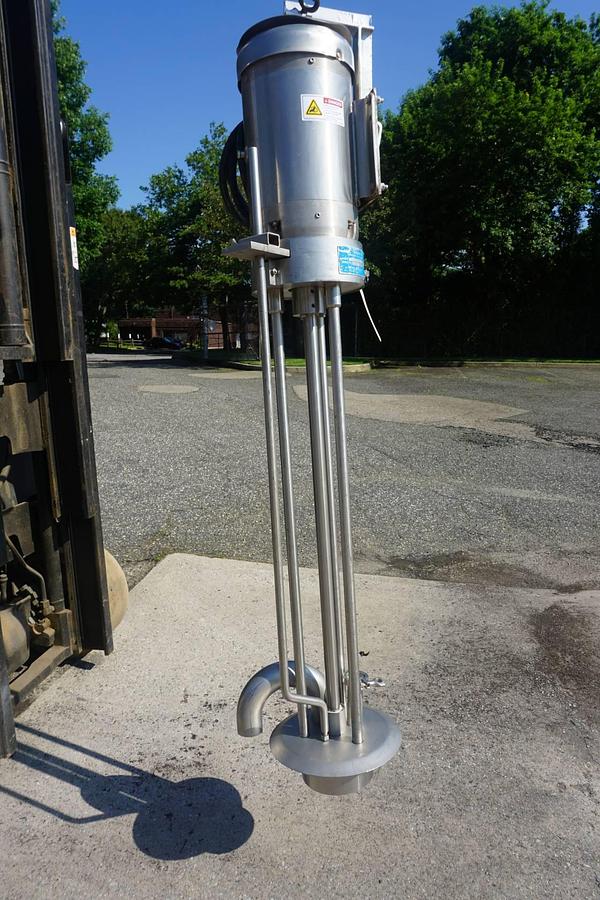
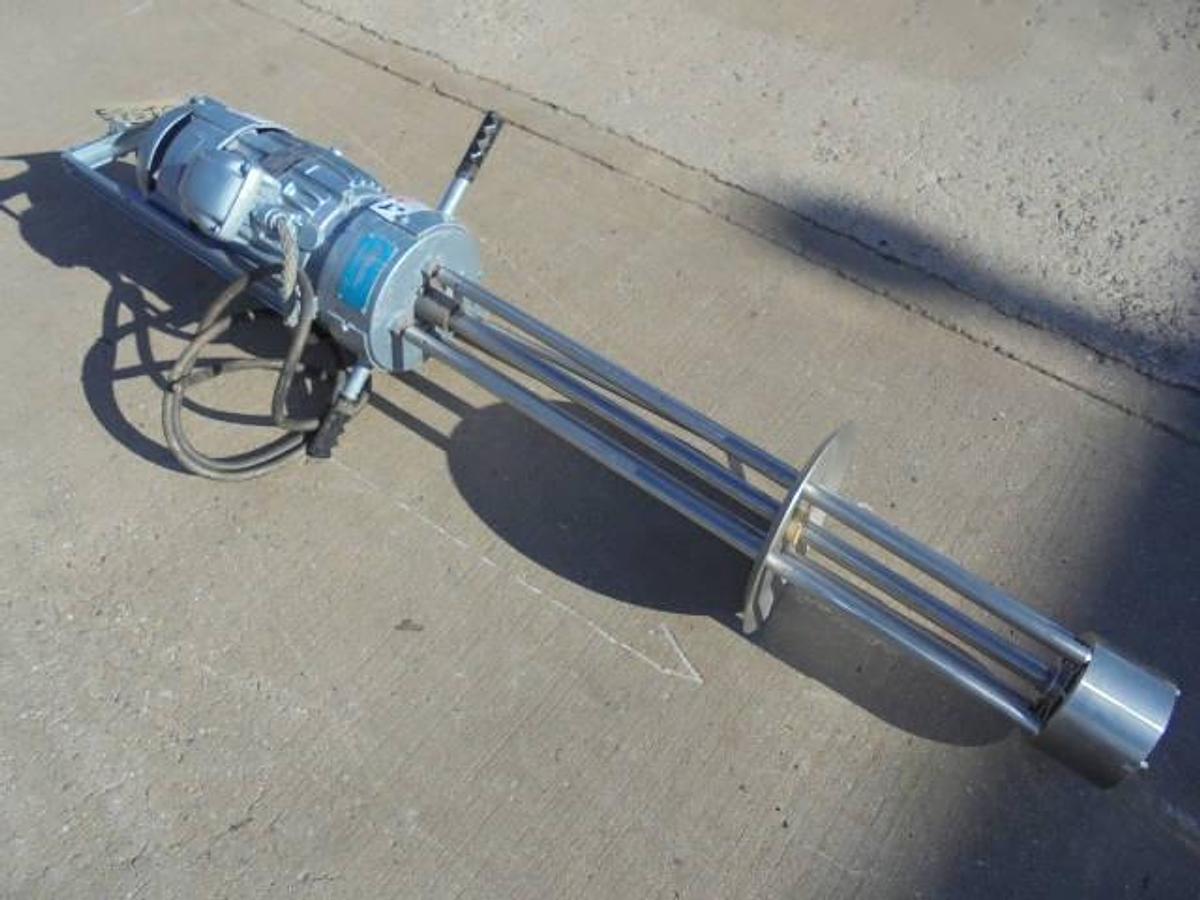
Arde Barinco homogenizing mixers are high-shear rotor-stator machines designed to mix, emulsify, disperse, and homogenize materials in a single processing pass. The rotor-stator mechanism works by drawing material into a high-velocity zone where intense mechanical shear forces break down particle sizes, reduce agglomerates, and create stable emulsions. This makes them fundamentally different from conventional paddle or ribbon mixers, which rely on bulk movement rather than shear energy to blend materials.
The practical result is that Arde Barinco mixers can accomplish in minutes what slower mixing equipment might take hours to achieve, and they can produce a level of particle size reduction and homogeneity that conventional mixers simply cannot match. They are built for demanding processing environments in the chemical, food, pharmaceutical, and cosmetics industries, where product consistency and repeatability are critical. Their reputation in application-specific mixing solutions has made them a well-recognized name among process engineers who need reliable high-shear performance.
What sizes and horsepower ratings are available for used Arde Barinco homogenizing mixers?
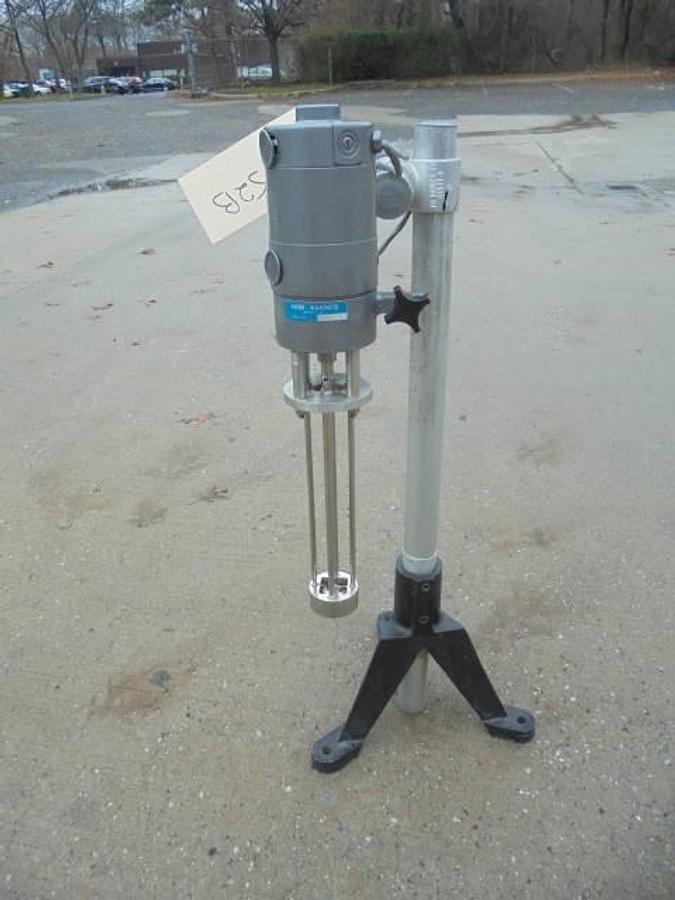
Used Arde Barinco homogenizing mixers appear on the market in a wide range of sizes, spanning from small fractional-horsepower tabletop units up to industrial production machines rated at 15 HP and beyond. Common horsepower ratings seen in the used equipment market include fractional HP tabletop models, 2 HP units, 5 HP models, 7.5 HP drop-in configurations, 10 HP washdown-rated machines, and 15 HP stainless steel production mixers. This range reflects the fact that Arde Barinco designed their product line to serve both small-batch laboratory or pilot-scale operations and full-scale continuous production environments.
When evaluating which size is appropriate, buyers generally consider the volume of material being processed per batch or per hour, the viscosity of the product, and the level of shear energy required to achieve the target particle size or emulsion stability. A 2 HP unit might be perfectly suited for a cosmetics lab producing small test batches, while a 10 or 15 HP machine would be more appropriate for a chemical plant running large-volume production. Because these are used machines, available inventory changes frequently, so buyers looking for a specific horsepower range should check current listings and inquire with the dealer directly about what is in stock.
What industries commonly use Arde Barinco homogenizing mixers?
Arde Barinco homogenizing mixers are found across a broad range of industries that require precise emulsification, dispersion, or particle size reduction as part of their manufacturing process. The most common sectors include pharmaceuticals, cosmetics and personal care, food and beverage processing, specialty chemicals, adhesives and sealants, and coatings and inks. In each of these industries, product quality depends heavily on the uniformity of the final mixture, and high-shear rotor-stator equipment like Arde Barinco's machines is often the preferred technology for achieving that consistency at scale.
In the pharmaceutical and cosmetics industries, for example, stable emulsions and suspensions are critical to product efficacy and shelf life, and Arde Barinco mixers are well suited to producing creams, lotions, gels, and liquid suspensions with tight particle size distributions. In the chemical and coatings industries, these mixers are used to disperse pigments, incorporate fillers, and blend reactive components efficiently. The food processing sector uses them for applications like homogenizing dairy products, creating stable dressings and sauces, and blending flavor concentrates. This cross-industry versatility is one reason used Arde Barinco equipment holds its value and remains in demand on the secondary market.
What is the difference between a high-shear mixer and a homogenizing mixer?
The terms are often used interchangeably in industrial settings, but there are some meaningful distinctions. A high-shear mixer is a broad category that describes any mixer using mechanical shear forces, typically generated by a rotor spinning at high speed inside a close-tolerance stator, to break down and blend materials. Homogenizing mixers are a subset of high-shear mixers specifically optimized to produce uniform, stable mixtures by reducing particle or droplet size to the point where separation is minimized or eliminated over time. Arde Barinco machines are accurately described by both terms because their rotor-stator design delivers the shear intensity needed for true homogenization.
In practical terms, the distinction matters most when specifying equipment for a particular process. A general high-shear mixer might be used for dispersion or dissolution where some variation in particle size is acceptable. A homogenizing mixer is specified when the end product requires a consistent, stable emulsion or suspension, such as a pharmaceutical suspension, a cosmetic cream, or a homogenized food product. Arde Barinco's machines are designed to meet the more demanding homogenization standard, which is why they are used in industries where product uniformity directly affects quality, safety, or regulatory compliance.
Do Arde Barinco homogenizing mixers support variable speed control?
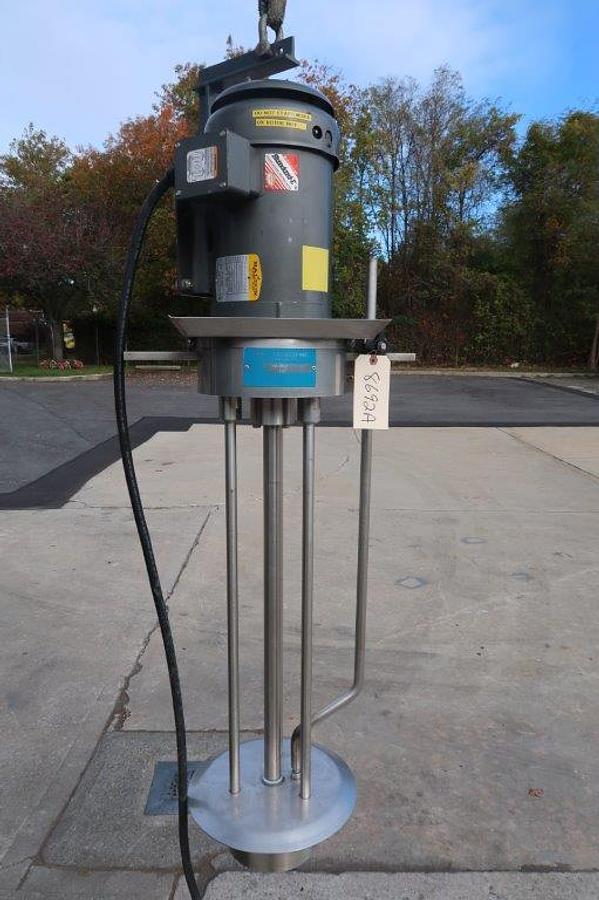
Several Arde Barinco mixer models are equipped with variable speed control, which gives operators the ability to adjust rotor speed to match the specific requirements of different products or processing stages. The Arde Barinco CJ-50-1 stainless drop-in homogenizing mixer, for example, is a 5 HP model listed with variable speed capability. Variable speed control is particularly valuable in applications where different products require different shear intensities, or where a process involves multiple stages, such as a low-speed pre-mix phase followed by a high-speed homogenization pass.
For buyers evaluating used Arde Barinco equipment, it is worth confirming whether the variable speed drive on a specific unit is functioning properly at the time of inspection. Drive components, including variable frequency drives (VFDs) and mechanical speed controllers, can wear over time and may require service or replacement. Asking the dealer to demonstrate the full speed range during an inspection, whether in person or via video, is a reasonable step to take before committing to a purchase. The ability to inspect the machine's operation across its speed range gives buyers a much clearer picture of the unit's current condition.
What configurations are available for Arde Barinco mixers, such as drop-in versus inline?
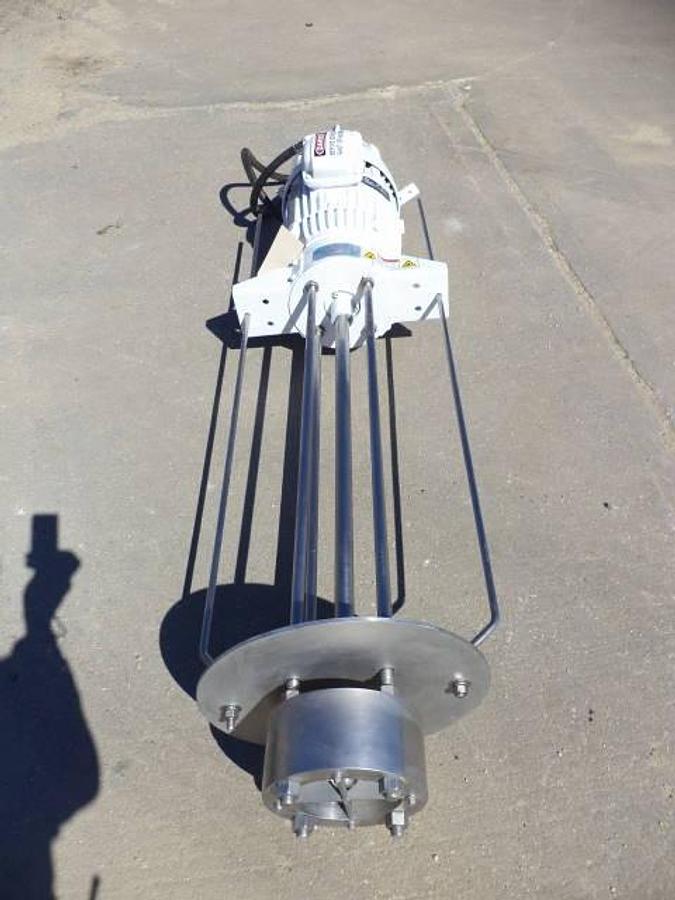
Arde Barinco homogenizing mixers are produced in several configurations to fit different production workflows. Drop-in models, sometimes called batch mixers, are designed to be lowered directly into an open tank or vessel, where the rotor-stator head processes the material in place. This configuration is common in batch production environments where a single vessel is used for mixing and the mixer is moved between tanks as needed. Inline configurations, by contrast, are installed directly in a pipeline and process material continuously as it flows through the mixer head, making them better suited for high-volume continuous production.
Used Arde Barinco drop-in models appear regularly in the secondary market, including 5 HP and 7.5 HP units designed for tank mounting. When choosing between configurations, the key factors are production volume, the nature of the process (batch versus continuous), and the physical layout of the production area. Drop-in mixers offer more flexibility in a batch environment, while inline units reduce processing time and labor in continuous operations. Buyers should also consider the tank dimensions and mixer mounting requirements when selecting a drop-in unit to ensure the equipment is compatible with existing vessels.
What materials can Arde Barinco homogenizing mixers process?
Arde Barinco homogenizing mixers are capable of processing a wide range of materials, from low-viscosity liquids to moderately viscous pastes and slurries. Common applications include emulsifying oil-and-water systems, dispersing solid particles into liquid carriers, dissolving powders into liquids, and reducing the particle size of pigments, fillers, or active ingredients. The high-shear rotor-stator mechanism is particularly effective on materials that resist blending through conventional agitation, including immiscible liquid pairs that tend to separate without sufficient mechanical energy input.
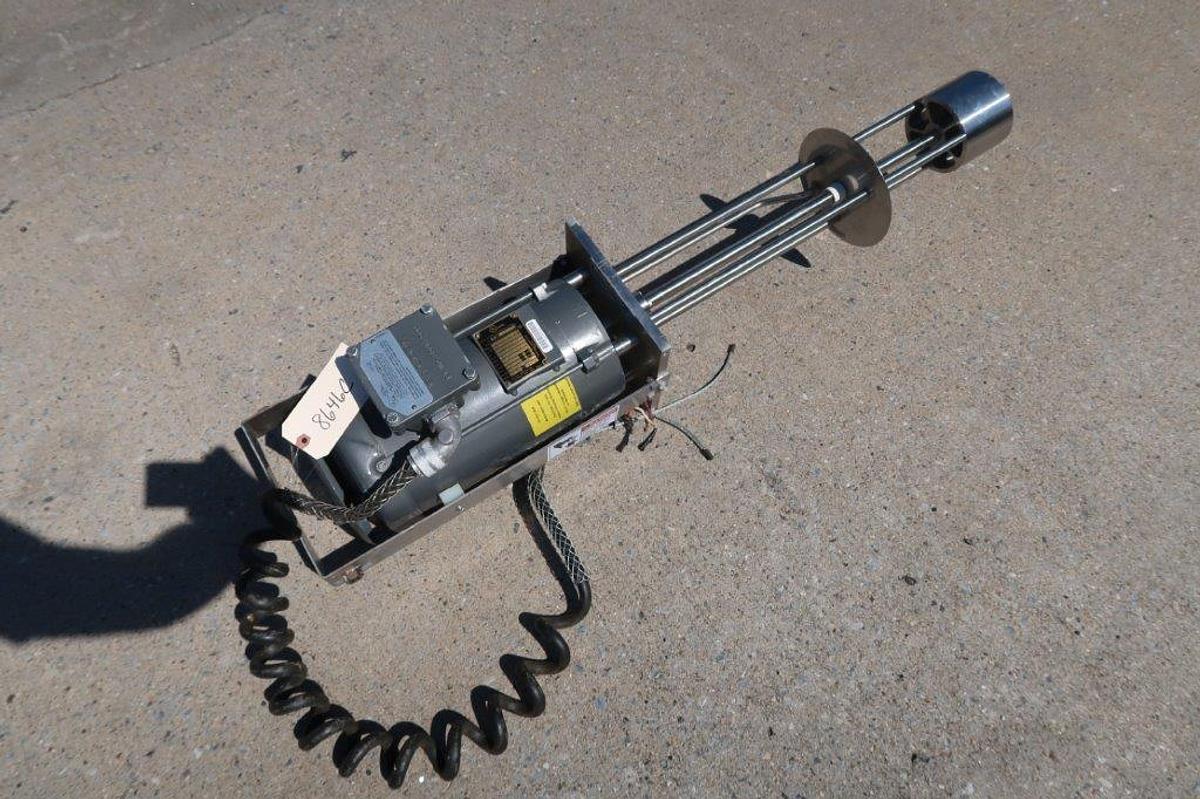
Material compatibility with the mixer's wetted parts is an important consideration when selecting a unit. Many Arde Barinco mixers are constructed with stainless steel contact surfaces, which makes them suitable for food-grade, pharmaceutical, and corrosive chemical applications. For more aggressive chemical environments, buyers should verify the specific alloys and seal materials used in a given unit before purchasing. Some models are also rated for explosion-proof (XP) environments, which is a requirement when processing flammable solvents or in facilities classified as hazardous locations under electrical safety codes. Checking the motor rating and certifications on a used unit is an important part of the pre-purchase inspection process.
What should buyers inspect when purchasing a used Arde Barinco homogenizing mixer?
Buying used industrial mixing equipment requires a more thorough evaluation than buying new machinery, since the condition of the unit depends entirely on how it was used and maintained by the previous owner. Key areas to inspect on a used Arde Barinco homogenizing mixer include the condition of the rotor and stator (looking for wear, erosion, or damage to the mixing head), the integrity of the seals and bearings, the condition of the motor and any associated drive components, and the overall state of the stainless steel surfaces, including any pitting, cracking, or contamination that might affect suitability for food or pharmaceutical use.
Reputable used equipment dealers will typically accommodate in-person inspections or provide detailed video walkthroughs of the machine. For units that are still installed at a production facility, it may be possible to arrange an inspection where the equipment is observed in actual operation, which gives a much clearer picture of mechanical condition than a static inspection alone. Buyers should also contact Arde Barinco directly to ask about parts availability and technical support for the specific model they are considering, since the level of manufacturer support can vary depending on the age and model of the machine. Understanding parts availability before purchasing is especially important for rotor-stator components, which are subject to wear and will eventually need replacement.
What are the typical shipping and rigging considerations for used Arde Barinco mixers?
Shipping costs and logistics for used Arde Barinco homogenizing mixers vary considerably depending on the size and weight of the unit. Smaller tabletop or fractional HP models can often be palletized and shipped via standard freight carriers at relatively modest cost. Larger units, such as 10 HP or 15 HP production mixers, may require heavier-duty crating and could involve rigging equipment for loading and unloading, which adds to the overall cost. Buyers should ask the dealer for a detailed breakdown of packaging, rigging, and freight charges before finalizing a purchase so they have a clear picture of the total landed cost.
Proper packaging is critical to preventing damage in transit, particularly for the mixing head and motor assembly, which can be sensitive to impact. Dealers experienced in selling industrial mixing equipment will typically know how to package these machines appropriately, but buyers should not assume this and should ask specifically how the unit will be prepared for shipment. For international shipments, additional considerations around customs documentation, import duties, and compliance with destination-country electrical standards (voltage, frequency, and motor certifications) should be addressed before the purchase is completed.
What payment terms should buyers expect when purchasing used Arde Barinco equipment?
Payment practices in the used industrial equipment market are fairly consistent across reputable dealers. Most require payment in full before the machine is released for shipping, which is standard practice given the nature of the transaction and the difficulty of recovering equipment once it has been shipped. Some dealers may offer extended terms or financing arrangements to established customers with whom they have a prior relationship, but first-time buyers should generally plan for full upfront payment. Accepted payment methods typically include wire transfer, which is the most common for transactions of this size, though some dealers also accept credit cards or other forms of electronic payment.
Buyers who are unfamiliar with a particular dealer should take time to research the dealer's reputation and track record before sending payment. Indicators of a trustworthy dealer include years of experience in the industry, a verifiable history of transactions, a physical business location, and a willingness to accommodate inspections before payment is required. Asking for references from previous buyers or verifying the dealer's standing with industry associations can also provide useful reassurance. Because used equipment is typically sold as-is, the reputation and transparency of the dealer are among the most important factors in a successful purchase.