Category
Manufacturer
Model
Apv Crepaco
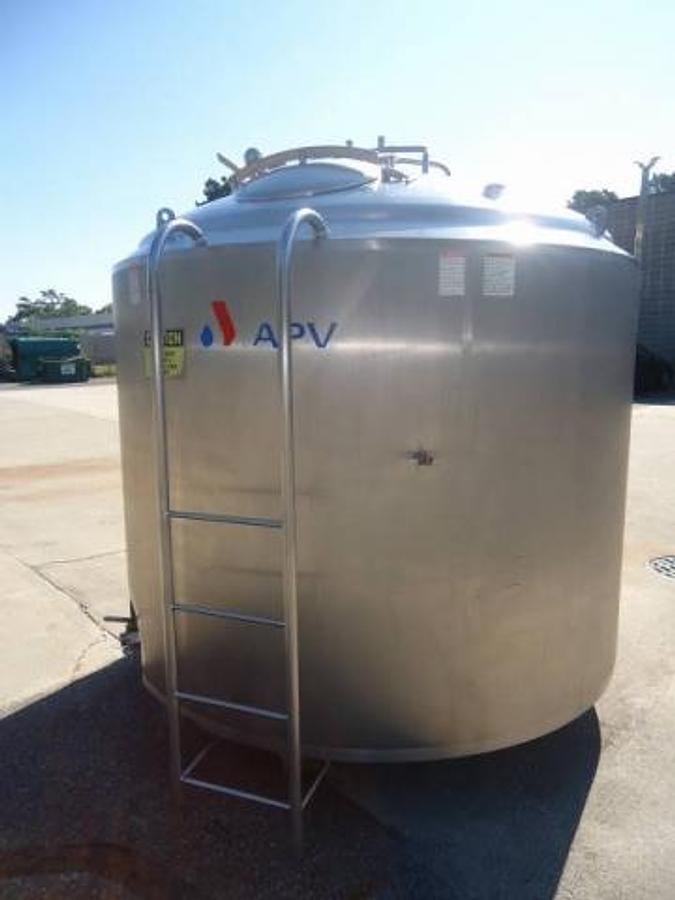
APV Crepaco is distinguished for their stainless steel processing vessels and sanitary equipment, supporting industries like dairy and food processing. They are well-regarded for their custom-engineered solutions that offer safety and operational efficiency. APV Crepaco’s machinery is designed to meet stringent hygiene standards, essential for food grade processing.
FAQ:
What types of used APV Crepaco equipment are typically available on the secondary market?
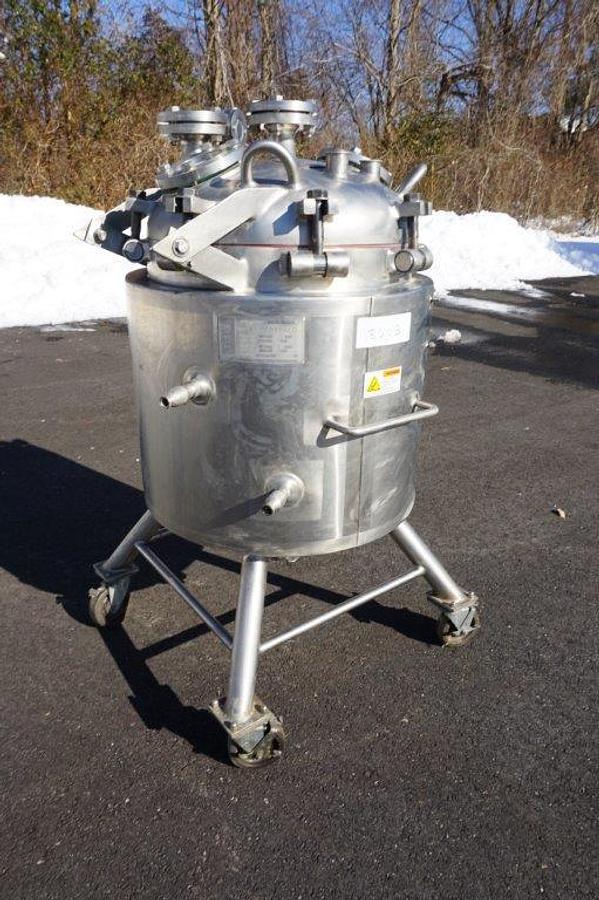
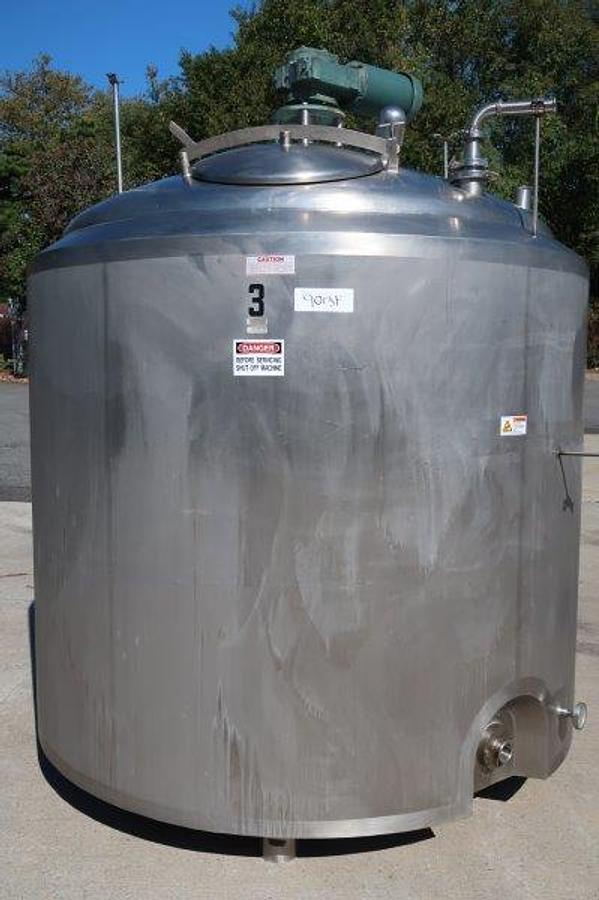
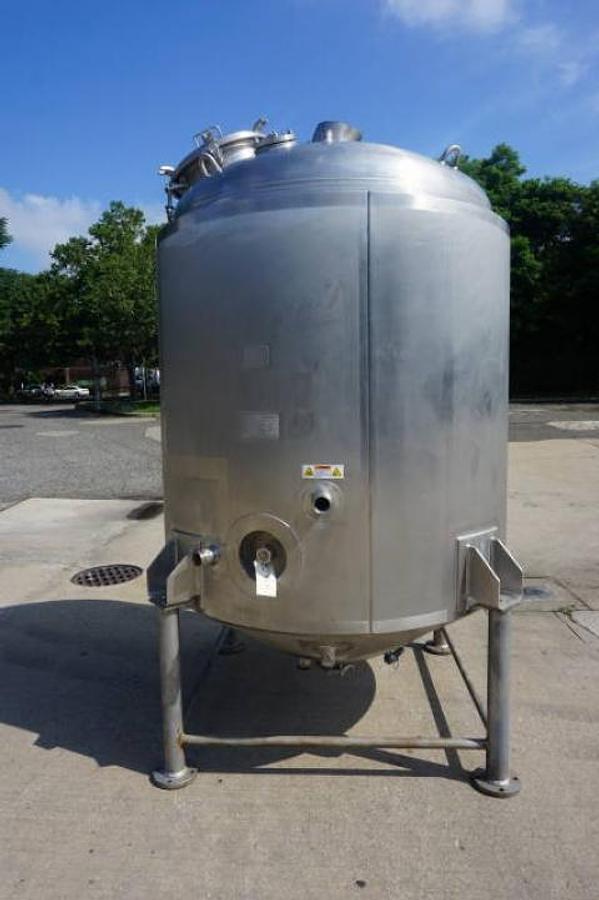
Used APV Crepaco equipment spans a fairly wide range of food and dairy processing machinery, though certain categories appear most frequently. Scraped surface heat exchangers, jacketed mixing tanks, jacketed pressure kettles, agitated processors, sanitary paddle blenders, and twin-tube heat exchanger configurations are among the most commonly traded units. Specific examples that surface in the used market include 800-gallon stainless steel mixing tanks with jacketed pressure ratings around 94 PSIG, 900-gallon cone-bottom jacketed pressure tanks, 1,500-gallon jacketed agitated processors, and horizontal paddle blenders with 70 PSI jacket ratings in the 40+ cubic foot range. Scraped surface cooling heat exchangers in configurations like 8-inch by 84-inch tubes also appear with some regularity.
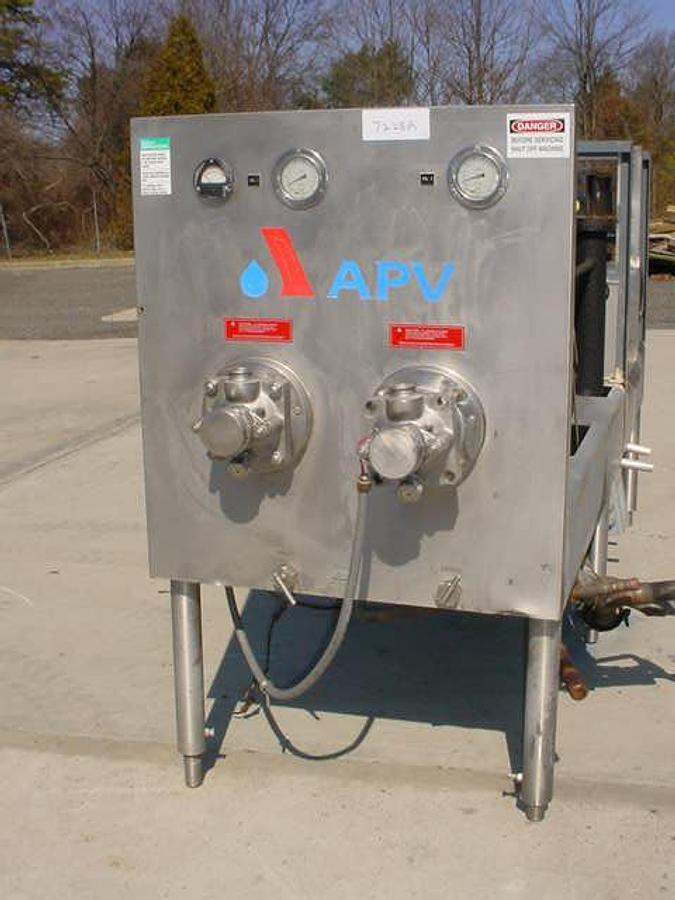
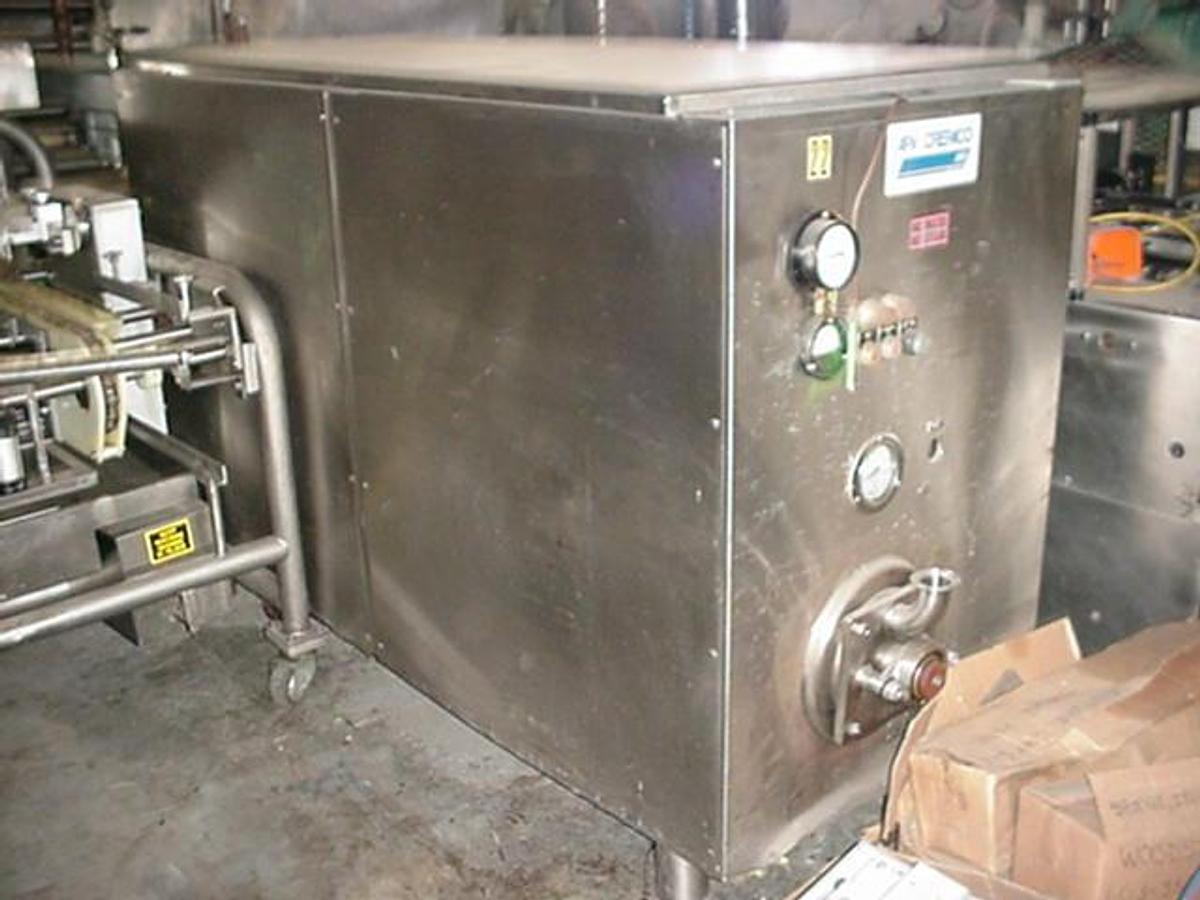
Beyond these vessel and heat transfer categories, buyers also seek out APV Crepaco homogenizers and HTST pasteurization systems, which were core product lines during the brand's peak production years. Because APV Crepaco is no longer independently manufactured (the brand now falls under the SPX Flow umbrella), the secondary market has become the primary channel for acquiring this equipment. That scarcity relative to demand means well-maintained units tend to move quickly, and buyers with specific capacity or pressure requirements are often advised to act decisively when a matching unit becomes available.
What industries is APV Crepaco equipment best suited for?
APV Crepaco built its reputation primarily in dairy and food processing, and that remains the core application base for its equipment today. Dairy operations use APV Crepaco machinery for pasteurization, homogenization, mixing, and heat treatment of milk, cream, cheese, and related products. Food manufacturers processing sauces, soups, dressings, confections, and viscous or particulate-laden products rely heavily on scraped surface heat exchangers and jacketed agitated vessels, both of which APV Crepaco produced in significant volume. The equipment was engineered to meet strict sanitary and hygienic standards, making it appropriate for any food-grade processing environment where cleanability and product integrity are non-negotiable.
Beyond food and dairy, APV Crepaco equipment has found application in beverage processing, pharmaceutical manufacturing, and personal care product production, particularly where stainless steel construction, pressure-rated jacketing, and sanitary design are required. The custom-engineered nature of many APV Crepaco units means they were often built to handle specific viscosities, temperatures, or pressure parameters, which makes them well-suited for specialty or high-value product lines. Buyers from these industries specifically seek out APV Crepaco on the used market because the build quality and hygienic design standards the brand maintained are difficult to replicate at equivalent price points with newer equipment.
How do I verify the condition of used APV Crepaco equipment before purchasing?
Inspecting used APV Crepaco equipment before committing to a purchase is one of the most important steps a buyer can take, and reputable dealers will generally accommodate multiple inspection formats. In-person inspections are the most thorough option and allow a buyer or their technician to physically examine welds, gaskets, seals, jacket integrity, agitator or rotor condition, and any visible wear on internal surfaces. Some units may still be installed and operating at a production facility, in which case the dealer can often arrange an inspection at the plant itself, giving the buyer a chance to see the equipment running under real conditions. If travel is not practical, many dealers offer video inspections or recorded walkthroughs that capture the machine's current state in detail.
Beyond visual inspection, buyers should request whatever service and maintenance documentation is available. APV Crepaco equipment was built for long operational lifespans, and units that were properly maintained over the years will often show it in the condition of internal components and pressure-rated surfaces. Asking for maintenance logs, any prior repair records, and information about how the unit was last used (product type, cleaning protocols, operating pressures) gives a much clearer picture than visual inspection alone. It is also worth contacting SPX Flow directly, since they now support the APV Crepaco line, to understand what technical documentation or parts support may be available for the specific model and age of the unit being considered.
Are replacement parts still available for older APV Crepaco models?
Parts availability for APV Crepaco equipment varies considerably depending on the model, age, and component type. Since APV Crepaco is no longer an independent manufacturer, support for the line has transitioned to SPX Flow, which acquired the brand. SPX Flow does maintain some level of parts and technical support for legacy APV Crepaco equipment, but the depth of that support depends on how old the unit is and how widely it was produced. Buyers considering a used APV Crepaco purchase are strongly advised to contact SPX Flow before completing the transaction to get a realistic assessment of what parts are available, what lead times look like, and whether the specific model in question still has active engineering support.
For certain component categories, the used and aftermarket parts ecosystem can fill gaps where the manufacturer's supply chain has thinned out. Gaskets, seals, scraped surface mutator blades, and standard fittings for sanitary equipment are often available through third-party suppliers who specialize in food processing machinery components. Dealers who have been in the used equipment business for many years and specialize in food and dairy processing machinery will often have insight into which APV Crepaco models have strong parts ecosystems and which ones present sourcing challenges. Factoring parts availability into the purchase decision is particularly important for equipment that will be running in a high-throughput production environment where downtime is costly.
Does used APV Crepaco equipment come with a warranty?
Used APV Crepaco equipment sold through the secondary market is typically sold as-is, which is standard practice across the used industrial machinery industry. Warranties are generally the domain of original manufacturers selling new equipment, and used equipment dealers do not typically extend them. This places the responsibility for evaluating condition squarely on the buyer, which is why thorough pre-purchase inspection is so important. The as-is nature of used machinery transactions is not a red flag in itself; it is simply the standard commercial framework for this market, and experienced buyers plan accordingly.
Because there is no warranty backstop, the reputation and track record of the dealer becomes a critical factor in the buying decision. Buyers should look for dealers who have been in business for a substantial period of time, who specialize in food and dairy processing equipment rather than generalist machinery, and who are transparent about the condition of what they are selling. A dealer willing to facilitate thorough inspections, provide whatever documentation exists, and answer detailed technical questions is demonstrating a level of accountability that matters in the absence of formal warranty coverage. Consulting with SPX Flow about the support level available for a specific APV Crepaco model is also a practical step that helps buyers understand the realistic risk profile of the purchase.
What should buyers know about shipping and logistics for used APV Crepaco equipment?
APV Crepaco processing vessels and heat exchangers are industrial-grade stainless steel units, and many are substantial in size and weight. Proper packaging is essential to prevent damage in transit, and the cost of crating or palletizing will vary based on the size of the unit and the level of protection required. Smaller portable units like jacketed pressure kettles may ship on a standard pallet with appropriate bracing, while larger tanks in the 800 to 1,500 gallon range typically require custom crating and heavier rigging for both loading and unloading. Buyers should ask the dealer for a detailed breakdown of packaging, rigging, and freight costs before finalizing a purchase so they have an accurate picture of the total landed cost.
For large or heavy equipment, specialized rigging services are often needed at both the origin and destination points, which adds to the overall logistics cost. Buyers who have a loading dock and appropriate material handling equipment at their facility will generally face lower unloading costs than those who need a rigging crew to place the equipment in a specific location within a production space. Discussing these details with the dealer early in the process avoids surprises. Some dealers have established relationships with freight carriers who handle industrial machinery regularly, which can simplify the coordination, but the buyer should still verify that the carrier has experience with sanitary processing equipment to ensure it arrives in the condition it was inspected.
What are typical payment terms for purchasing used APV Crepaco equipment?
Payment terms in the used industrial equipment market are fairly standardized. Most dealers require payment in full before the equipment ships, which protects both parties and is the accepted norm for transactions involving machinery of this value. Wire transfer is the most common payment method for larger purchases, though some dealers may accept other forms of payment depending on the transaction size and the buyer's relationship with the dealer. Buyers should confirm the accepted payment methods and the exact payment timeline expected before signing any purchase agreement.
Some dealers extend more flexible terms to repeat customers or buyers with an established purchase history, but this is not the default arrangement for first-time transactions. Buyers who are new to a particular dealer should expect to operate on a full-payment-before-shipment basis and plan their procurement timelines accordingly. For larger capital purchases, having financing arranged in advance through an equipment lender or internal capital budget approval process will prevent delays once a suitable unit is identified. Given that desirable APV Crepaco units can sell quickly due to the brand's strong secondary market demand, having payment logistics sorted out ahead of time puts a buyer in a position to move without unnecessary delays.
Why does used APV Crepaco equipment hold strong residual value in the secondary market?
Several factors combine to give used APV Crepaco equipment above-average staying power in the secondary market. The brand built processing vessels and sanitary equipment to demanding specifications, using heavy-gauge stainless steel construction with pressure-rated jacketing and hygienic design features that were engineered for decades of service life. When units are properly maintained, they can remain fully functional and production-ready for a very long time, which means a well-maintained used unit represents genuine value rather than just a discounted alternative to buying new. Food and dairy processors who have worked with APV Crepaco equipment over the years are familiar with its performance characteristics and reliability, which drives continued demand.
The fact that APV Crepaco is no longer independently manufactured adds a scarcity dynamic that supports pricing. Buyers cannot simply order a comparable unit through a current manufacturer's catalog; the secondary market is the only source. This is particularly true for specialized configurations like scraped surface heat exchangers, custom-engineered agitated processors, and HTST pasteurization systems that were built to precise operational parameters. For facilities running established processes built around APV Crepaco equipment, finding a matching or compatible used unit is often more practical and cost-effective than redesigning a process around a different equipment platform, which further sustains demand and residual value.
What is a scraped surface heat exchanger and what is it used for in food processing?
A scraped surface heat exchanger is a type of heat transfer equipment designed specifically for viscous, sticky, or particulate-containing products that would foul or clog conventional plate or shell-and-tube heat exchangers. The core mechanism involves a rotating shaft fitted with scraper blades that continuously wipe the internal heat transfer surface, preventing product buildup and ensuring consistent thermal contact between the product and the heated or cooled surface. This makes scraped surface heat exchangers particularly effective for products like fruit purees, tomato paste, puddings, ice cream mix, margarine, and other high-viscosity or fibrous food products that need to be heated, cooled, or maintained at a precise temperature during processing.
APV Crepaco was a well-regarded manufacturer of scraped surface heat exchangers, producing units in a range of tube diameters and lengths to accommodate different throughput and viscosity requirements. Configurations like 8-inch by 84-inch single tubes and 6-inch by 72-inch twin-tube arrangements were among the product variants the brand produced. In the used market, these units are sought after by food processors who need reliable, sanitary heat treatment for challenging products. Because the scraped surface design involves rotating internal components, buyers inspecting used units should pay particular attention to the condition of the mutator blades, the rotor shaft, and the mechanical seals, as these are the wear components most likely to need attention after extended service.
What is a jacketed pressure vessel and why is it common in food and dairy processing?
A jacketed pressure vessel is a tank or kettle that has a second outer wall surrounding part or all of the vessel body, creating an enclosed space between the two walls. That space, called the jacket, is used to circulate steam, hot water, chilled water, or glycol to heat or cool the product inside the vessel without direct contact between the heat transfer medium and the product. This indirect heating and cooling approach gives processors precise temperature control, which is critical for applications like pasteurization, cooking, tempering, and cooling of food products. Pressure ratings on the jacket (commonly expressed in PSIG) indicate the maximum operating pressure the jacket can safely handle, which determines the temperature range achievable with steam heating.
In dairy and food processing, jacketed vessels are standard equipment because so many processes require controlled thermal treatment at specific temperatures for specific durations. APV Crepaco produced jacketed pressure vessels across a wide range of capacities, from smaller portable kettles in the 35-gallon range up to large processors exceeding 1,500 gallons, with options for agitation, cone-bottom discharge, and various pressure ratings depending on the application. On the used market, buyers evaluate jacketed vessels carefully for jacket integrity, since any compromise in the jacket walls or welds can create safety and performance issues. Inspection should include a review of the vessel's pressure history and any documentation related to prior pressure testing or repairs to the jacket.