Category
Manufacturer
Model
FAQ:
What types of APV Baker equipment are commonly available on the used market?
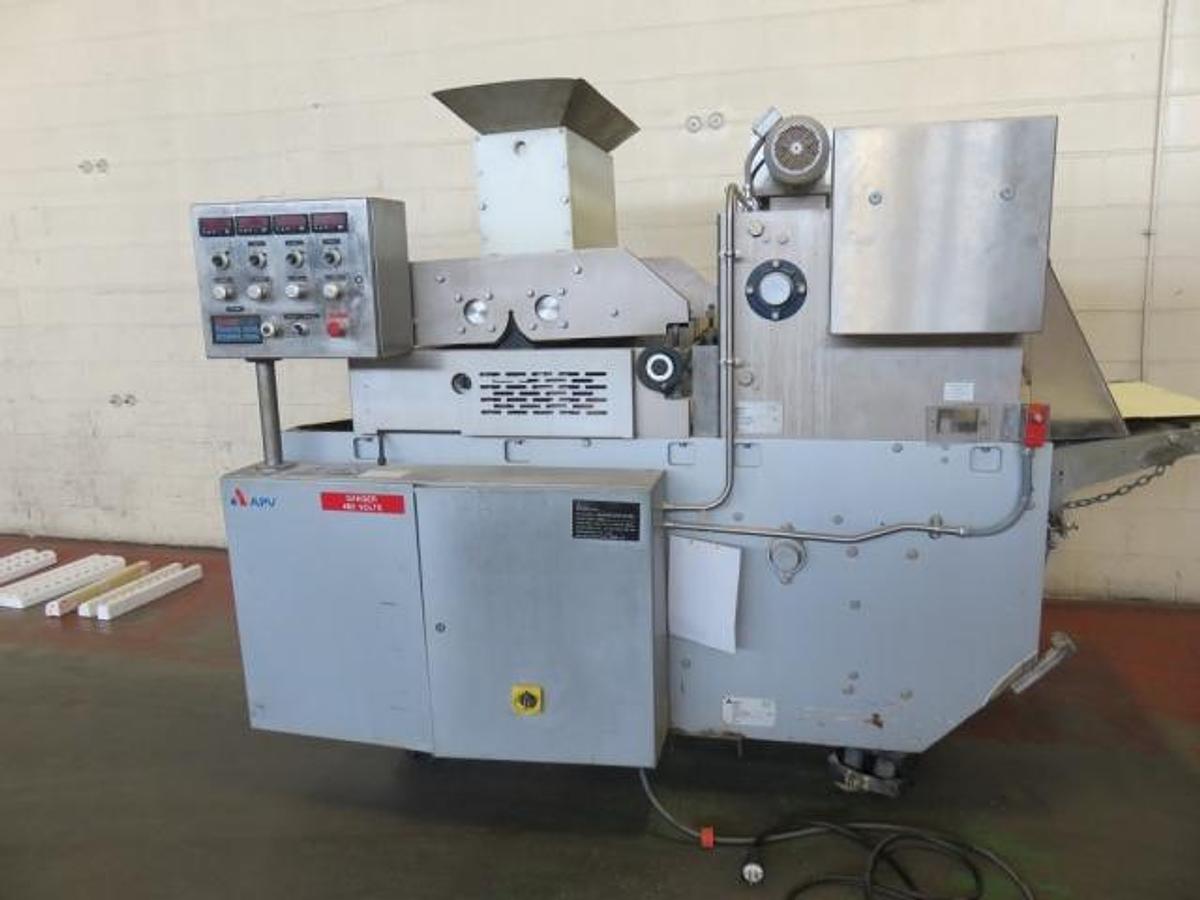
APV Baker produced a wide range of industrial baking and food processing machinery, and many of these units continue to circulate on the secondary market decades after manufacture. Common equipment types include tunnel ovens, band ovens, spiral mixers, dough dividers, proofers, depositors, granola bar guillotine extruders, and complete bread or biscuit production lines. Because the brand built its reputation on heavy-duty stainless steel construction and precision engineering, buyers often seek out specific models to replace or expand existing production capacity.
Availability on the used market fluctuates based on plant closures, production line upgrades, and equipment consolidations across the commercial baking industry. Buyers looking for a specific machine type or model should work with used equipment dealers who specialize in food processing and baking machinery, as they are more likely to have relevant inventory or connections to locate hard-to-find units. Checking with multiple specialist dealers rather than general industrial auction sites tends to yield better results for niche APV Baker configurations.
How do I verify the condition of used APV Baker equipment before buying?
Verifying condition is one of the most important steps in purchasing any used industrial equipment, and APV Baker machines are no exception. Reputable used equipment dealers typically offer in-person inspections, virtual walkthroughs, or detailed video captures of the machine so buyers can assess its current state before committing. Some equipment may still be installed and running at a production facility, which can allow for a more thorough evaluation of mechanical function. Keep in mind that most dealers do not have the permitting or infrastructure to run actual production tests, so inspections focus on mechanical condition, visible wear, and component completeness rather than finished product output.
Buyers should come to an inspection with a checklist that covers drive components, heating elements, belt condition, control panels, and any hydraulic or pneumatic systems. Requesting photos or video of the nameplate, motor ratings, and any visible wear points is a reasonable ask. If the machine is decommissioned and no longer in production, pay extra attention to signs of corrosion, missing parts, or damage from improper storage. Consulting with a qualified engineer or technician familiar with APV Baker equipment before finalizing a purchase can also help identify potential restoration costs that should factor into the overall budget.
Are replacement parts still available for older APV Baker machines?
Sourcing spare parts for APV Baker equipment can be a real challenge, particularly for older models, since the brand is no longer actively manufactured. That said, the situation is not hopeless. Third-party parts suppliers and specialist engineering firms often stock compatible components, and in some cases they can fabricate custom parts to match discontinued specifications. Bearings, belts, heating elements, and other wear items that conform to standard industrial dimensions are generally easier to source than proprietary control boards or custom-formed structural components.
Before purchasing a used APV Baker machine, it is worth consulting directly with the manufacturer's successor organization or authorized service networks to understand what level of parts and technical support is realistically available for that specific model and age. Buyers should also factor in whether a local engineering shop has the capability to reverse-engineer or fabricate critical components if commercial sourcing proves difficult. Machines that are more common on the used market, such as tunnel ovens or spiral mixers, tend to have better third-party parts ecosystems than highly specialized or low-volume models. Building a small inventory of wear parts at the time of purchase is a practical strategy many operators use to reduce downtime risk.
What industries and applications is APV Baker equipment suited for beyond commercial bread production?
While APV Baker built much of its legacy around large-scale bread and biscuit manufacturing, the equipment has found application across a broader range of food processing environments. Tunnel ovens and band ovens are used in cracker, cookie, and snack production. Depositors and extruders, including granola bar guillotine extruders, are well suited to confectionery, cereal bar, and energy bar manufacturing. Dough handling and mixing equipment has been adapted for pizza dough, flatbread, and specialty grain product lines. The modular nature of many APV Baker production systems makes them adaptable to different throughput requirements and product formats.
Beyond traditional baking, some APV Baker thermal processing and conveying equipment has been used in pet food manufacturing, where continuous-belt cooking and drying processes mirror those in human food production. Certain mixing and forming equipment has also been applied to non-food industrial processes, though food-grade stainless steel construction is the primary draw for buyers in the food and beverage sector. Buyers from adjacent industries should carefully review the mechanical specifications and sanitary design features of any specific unit to confirm it meets their regulatory and operational requirements before purchasing.
What is the typical price range for used APV Baker equipment?
Pricing for used APV Baker equipment varies considerably depending on the machine type, age, condition, and current market demand. Smaller standalone units like depositors, dough dividers, or extruders can range from a few thousand dollars up to $30,000 or more depending on configuration and condition. Larger systems such as full tunnel ovens, complete proofing lines, or integrated production systems can run well into six figures, particularly when they include associated conveyors, controls, and ancillary equipment. Granola bar and snack bar production lines with guillotine extruders and forming equipment tend to attract strong buyer interest given the growth of the snack food category.
Beyond the purchase price, buyers should account for rigging, crating, freight, electrical modifications, and any refurbishment work needed before the machine goes back into production. These ancillary costs can add 10 to 30 percent or more to the total acquisition cost depending on machine size and the distance it needs to travel. Getting a detailed quote that breaks out all of these line items before finalizing a deal is the best way to understand the true landed cost of any APV Baker unit.
What are the electrical and installation requirements for used APV Baker industrial equipment?
APV Baker produced equipment for global markets over several decades, which means electrical specifications across the used inventory can vary significantly. Many older units were built to European voltage and frequency standards (380-415V, 50Hz) or to older North American configurations that may not match current facility power supplies. Buyers should carefully review the motor nameplates, control panel specifications, and any documentation available for a machine before purchase to determine whether rewiring, transformer installation, or motor replacement will be required. These modifications can range from a straightforward panel upgrade to a more involved re-engineering effort depending on the machine's complexity.
Installation requirements beyond electrical also include structural floor load capacity, ventilation and exhaust provisions for ovens, steam or water connections for proofers and mixers, and adequate clearance for operation and maintenance access. Larger tunnel ovens in particular may require significant facility preparation before installation can begin. Engaging a qualified industrial electrician and a mechanical contractor familiar with food processing equipment during the planning phase helps avoid costly surprises after the machine arrives on site. Requesting any available engineering drawings or installation manuals from the dealer before purchase gives the installation team a significant head start.
How do I find the model number and serial number on APV Baker equipment to confirm specifications?
The model number and serial number on APV Baker equipment are typically found on a metal nameplate affixed to the main frame or control cabinet of the machine. On ovens and large conveyor systems, the nameplate is often located near the main electrical panel or at the operator end of the equipment. On mixers, extruders, and smaller standalone units, it is commonly found on the side of the main housing or base frame. The nameplate usually lists the model designation, serial number, manufacture date, electrical ratings, and sometimes the country of manufacture.
When purchasing used APV Baker equipment, confirming the model and serial number before completing a transaction is important for several reasons. It allows buyers to cross-reference specifications against any available documentation, verify compatibility with existing production lines, and assess parts availability for that specific configuration. Dealers should be able to provide clear photos of the nameplate as part of a standard inspection package. If the nameplate is damaged or missing, a specialist familiar with APV Baker equipment may be able to identify the model through physical characteristics, but this adds uncertainty to the process and should be factored into any purchase decision.
Does a used equipment dealer typically provide manuals or technical documentation with an APV Baker machine?
Documentation availability for used APV Baker equipment depends heavily on the machine's history and how well records were maintained by previous owners. Some units come with original operator manuals, wiring diagrams, parts lists, and maintenance records, which significantly simplifies installation and ongoing operation. Other machines arrive with little to no paperwork, particularly if they have changed hands multiple times or were removed from a facility during a rapid decommissioning. Buyers should ask dealers directly what documentation is available and request copies before completing a purchase.
When original manuals are not available, there are a few avenues worth exploring. APV Baker successor organizations and some specialist service firms have retained libraries of technical documentation for common models. Online communities of baking equipment engineers and technicians can also be a useful resource for tracking down schematics or parts breakdowns. In some cases, third-party technical writers or engineers have reconstructed documentation for widely used models based on physical inspection of the equipment. Factoring in the potential cost of sourcing or recreating documentation is a reasonable part of the due diligence process for any used industrial equipment purchase.
What should buyers understand about shipping and rigging costs for used APV Baker equipment?
Shipping costs for used APV Baker equipment can vary widely based on machine size, weight, the level of packaging required, and the distance between seller and buyer. Smaller units like depositors or extruders may be palletized and shipped via standard freight carriers at relatively modest cost. Larger machines such as tunnel ovens or full production lines require heavy-duty rigging for loading and unloading, custom crating or skidding to prevent damage in transit, and often specialized flatbed or oversized freight arrangements. These logistics costs can represent a significant portion of the total acquisition budget and should be understood upfront.
Buyers should ask the dealer for a detailed breakdown of packaging, rigging, and freight costs before finalizing a deal. Understanding whether the quoted price is ex-works (buyer arranges all shipping) or includes delivery to a specific point helps avoid misunderstandings. For international purchases, customs duties, import fees, and compliance with destination-country electrical and safety standards add further complexity. Working with a freight forwarder experienced in industrial machinery is advisable for large or cross-border shipments. Most reputable dealers will provide guidance on what to expect and can recommend logistics partners with relevant experience.
What payment terms do used equipment dealers typically offer for APV Baker machinery purchases?
Most used equipment dealers require full payment prior to shipping, which is standard practice across the industry. This policy reflects the nature of used equipment transactions, where machines are often one-of-a-kind items that cannot be easily restocked if a deal falls through after the machine has been held or prepared for shipment. Payment is commonly accepted via wire transfer, though some dealers also accept other business payment methods depending on transaction size and buyer relationship. Buyers should confirm accepted payment methods and any associated processing requirements early in the negotiation process.
For buyers with an established purchasing history with a particular dealer, some flexibility on payment terms may be available, but this is the exception rather than the rule for first-time transactions. Buyers making large purchases should also consider whether escrow arrangements or other protective mechanisms make sense for their situation, particularly for high-value equipment where inspection and verification take additional time. Clarifying payment expectations, including any deposit requirements to hold a machine while inspection is arranged, helps both parties move through the transaction efficiently.