Category
Manufacturer
Model
Apex
Apex focuses on providing comprehensive packaging machinery solutions for the food and beverage industry. Known for their innovative conveyor systems and automated packaging elements, Apex offers robust solutions that enhance productivity and efficiency. Their equipment is designed for seamless integration into existing production environments, supporting high-speed and high-volume manufacturing.
FAQ:
What types of packaging machinery does Apex manufacture?
Apex builds packaging machinery with a strong focus on the food and beverage industry, though their equipment sees use across pharmaceuticals, cosmetics, e-commerce fulfillment, and industrial manufacturing as well. Their product line covers a broad range of packaging functions including conveyor systems, filling, sealing, labeling, wrapping, and case packing. This makes Apex equipment relevant for both inline operations and end-of-line packaging applications.
Apex is particularly recognized for automated packaging solutions designed to handle high-speed, high-volume production environments. Their conveyor systems are engineered to integrate into existing production lines without requiring a complete facility overhaul, which is one reason their equipment holds its appeal on the used machinery market. Buyers evaluating Apex machines will typically find options suited to a variety of product formats and packaging styles, making the brand a practical choice for manufacturers with diverse product lines.
What should I know before buying used Apex packaging machinery?
Purchasing used packaging machinery requires more due diligence than buying directly from a manufacturer. Because used equipment is sold as-is, the responsibility for evaluating the machine's condition falls squarely on the buyer. This means verifying the machine's operational history, inspecting its mechanical and electrical components, and confirming that the model is still supported by the manufacturer in terms of parts and technical documentation. Selecting a used equipment dealer with a long track record and specific experience in packaging machinery is one of the most important steps a buyer can take to reduce risk.
Buyers should also contact Apex directly to understand what level of support is available for the specific model they are considering. Older machines or discontinued models may have limited parts availability, which directly affects long-term total cost of ownership. Factoring in maintenance costs, spare parts sourcing, and any refurbishment needed before putting the machine into production will give a more accurate picture of the true landed cost beyond the purchase price alone.
How do I inspect a used Apex packaging machine before purchasing?
Reputable used equipment dealers typically offer buyers several inspection options: in-person visits to the dealer's facility, virtual walkthroughs via video call, or recorded video captures of the machine that can be reviewed at any time. If the machine is still installed and running at a manufacturing facility, some dealers can arrange a plant visit where the buyer can observe the equipment in its current production environment. This is one of the most valuable inspection scenarios, since it allows a buyer to see the machine operating under real conditions.
Keep in mind that most used equipment dealers are not set up to run actual production tests with a buyer's specific product. Running product through a machine requires different permitting and operational infrastructure than a dealership typically maintains. The practical goal of any inspection is to get an honest, detailed picture of the machine's current mechanical condition, including wear on key components, the state of electrical systems, and any visible signs of damage or deferred maintenance. Buyers with limited technical expertise may want to bring in an independent machinery technician to assist with the evaluation.
What is the typical price range for used Apex packaging machinery?
Pricing for used Apex packaging equipment varies considerably depending on the machine type, its age, condition, throughput capacity, and the complexity of its automation features. Entry-level or older single-function machines such as labelers or basic conveyors can often be found at lower price points, while fully automated high-speed systems designed for large-scale food and beverage production will command significantly higher prices. The used market generally offers meaningful savings compared to purchasing equivalent equipment through a manufacturer's current catalog.
Beyond the sticker price, buyers should account for the full landed cost of the machine. This includes shipping, rigging, any required refurbishment or replacement parts, installation, and operator training. A machine priced attractively may require substantial investment to bring it to production-ready condition, so getting a clear picture of those downstream costs before committing to a purchase is essential. Requesting a detailed quote from the dealer that breaks out all associated costs is a reasonable and standard practice.
What industries commonly use Apex packaging machinery?
Apex packaging machinery has a particularly strong presence in the food and beverage sector, where the demand for high-speed, reliable automated packaging is constant. Their conveyor systems and automated packaging equipment are well-suited to the throughput requirements of food processing plants, bottling operations, and beverage production lines. Beyond food and beverage, Apex machines are used in pharmaceutical manufacturing, cosmetics production, e-commerce fulfillment centers, and general industrial manufacturing.
The versatility of Apex equipment across these industries comes from the range of functions their machines cover, including filling, sealing, labeling, wrapping, and case packing. Manufacturers with diverse product lines also value Apex equipment for its ability to handle changeovers between different product sizes or packaging formats without requiring a complete machine swap. This adaptability makes used Apex machinery attractive to buyers across multiple sectors, not just the food and beverage industry the brand is most closely associated with.
Are spare parts available for used Apex packaging machines?
Parts availability for used packaging machinery depends heavily on the age of the machine and whether the manufacturer still actively supports that model. For relatively recent Apex equipment, parts are generally obtainable either directly through Apex or through third-party industrial parts suppliers who stock components for common packaging machinery brands. For older or discontinued models, sourcing parts can become more challenging and may require working with specialty suppliers or fabricating custom components.
Before finalizing a purchase, buyers are strongly encouraged to contact Apex directly and provide the model number and serial number of the machine they are considering. The manufacturer can advise on parts availability, whether technical support is still offered for that model, and any known service considerations specific to that equipment generation. This step is especially important for machines that will be running in high-volume production, where unplanned downtime due to unavailable parts carries significant cost.
How is used Apex packaging machinery typically shipped, and what does it cost?
Shipping costs for used packaging machinery are not a flat rate and depend on several variables including the machine's size and weight, the origin and destination, and the level of packaging or crating required to protect the equipment in transit. Smaller machines may ship on standard pallets, while larger or more complex Apex systems often require custom wooden crating to prevent damage. Some machines are heavy enough to require specialized rigging equipment for both loading at the dealer's facility and unloading at the buyer's location, which adds to the total shipping cost.
Buyers should ask the dealer for a detailed breakdown of all shipping-related costs before agreeing to a purchase. This should include palletization or crating fees, freight charges, and any rigging costs at either end of the shipment. Understanding the full landed cost of the machine, not just the purchase price, is essential for accurate budgeting. For very large machines, it may also be worth consulting with an independent freight or rigging company to get a competitive quote.
What are the payment terms for purchasing used packaging machinery?
Used equipment dealers generally require payment in full before a machine is released for shipment. This is standard practice across the industry and reflects the nature of used equipment transactions, where machines are often sourced from multiple locations and held in inventory at cost to the dealer. Buyers who are unfamiliar with this practice should plan their purchasing timeline accordingly, as wire transfers or other payment methods may take several business days to clear before shipping is scheduled.
Some dealers extend payment terms to repeat customers or established buyers with a proven purchasing history, but this is not a standard offering for first-time transactions. Buyers should ask the dealer directly about available payment options early in the process. For larger purchases, some buyers also explore financing through third-party equipment lenders who specialize in industrial machinery, which can help spread the cost without requiring the dealer to carry the financing risk.
How important is machine throughput speed when evaluating used Apex packaging equipment?
Throughput speed is one of the most critical specifications buyers evaluate when sourcing used packaging machinery. For Apex equipment, throughput is typically measured in units per minute or units per hour, and matching that figure to the buyer's actual production requirements is essential. A machine that runs faster than needed may carry unnecessary cost, while one that cannot meet production targets will create bottlenecks regardless of how well it is maintained.
Beyond the rated throughput speed, buyers should consider whether the machine's speed is consistent across different packaging formats or product sizes, particularly if changeovers are a regular part of their operation. High-speed packaging systems also place greater demands on upstream and downstream equipment, so confirming that the rest of the production line can support the Apex machine's output is part of a thorough evaluation. Reviewing the machine's specifications alongside its actual condition during inspection will give the most accurate read on what throughput is realistically achievable.
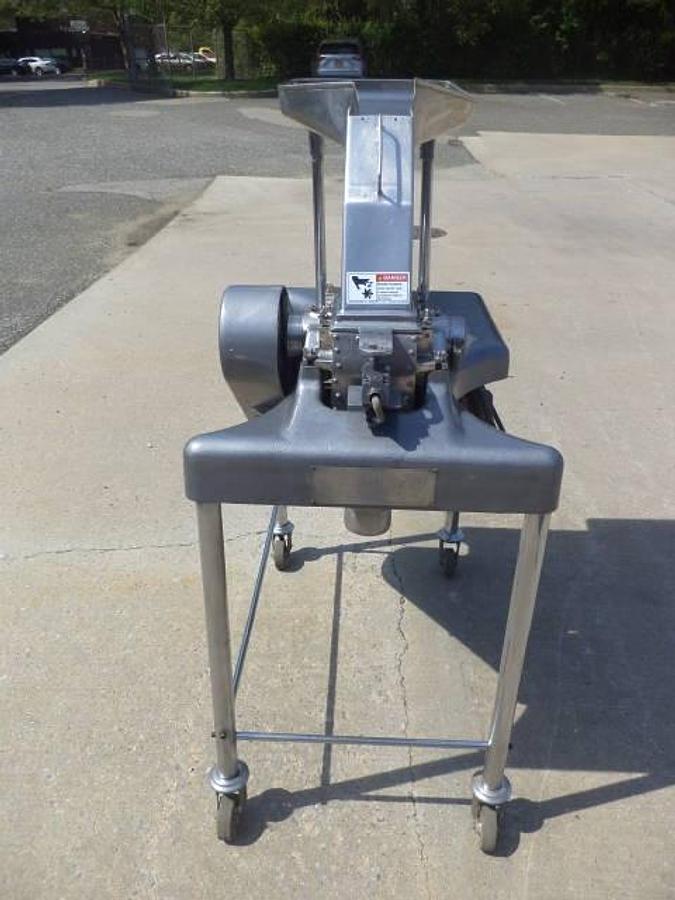
What is an Apex Portable Comminuting Mill and what is it used for?
A portable comminuting mill is a size-reduction machine used to grind, mill, or break down solid materials into smaller, more uniform particles. In packaging and food processing environments, these mills are used to process ingredients or finished products that need to meet specific particle size requirements before they are packaged. The portable design makes them easier to integrate into different points on a production floor without requiring a fixed installation, which adds flexibility for manufacturers who need to move equipment between production areas.
Apex's Portable Comminuting Mill with pan feed is one of the used machines that appears on the market through dealers who specialize in food and beverage processing equipment. Pan-feed configurations allow material to be fed into the mill from a collection pan, which suits batch processing workflows. Buyers considering this type of equipment should evaluate the mill's condition, including the state of the grinding elements and any wear components, and confirm parts availability with the manufacturer before purchase.