Category
Manufacturer
Model
FAQ:
What types of conveyor equipment does American Conveyor Corporation manufacture?
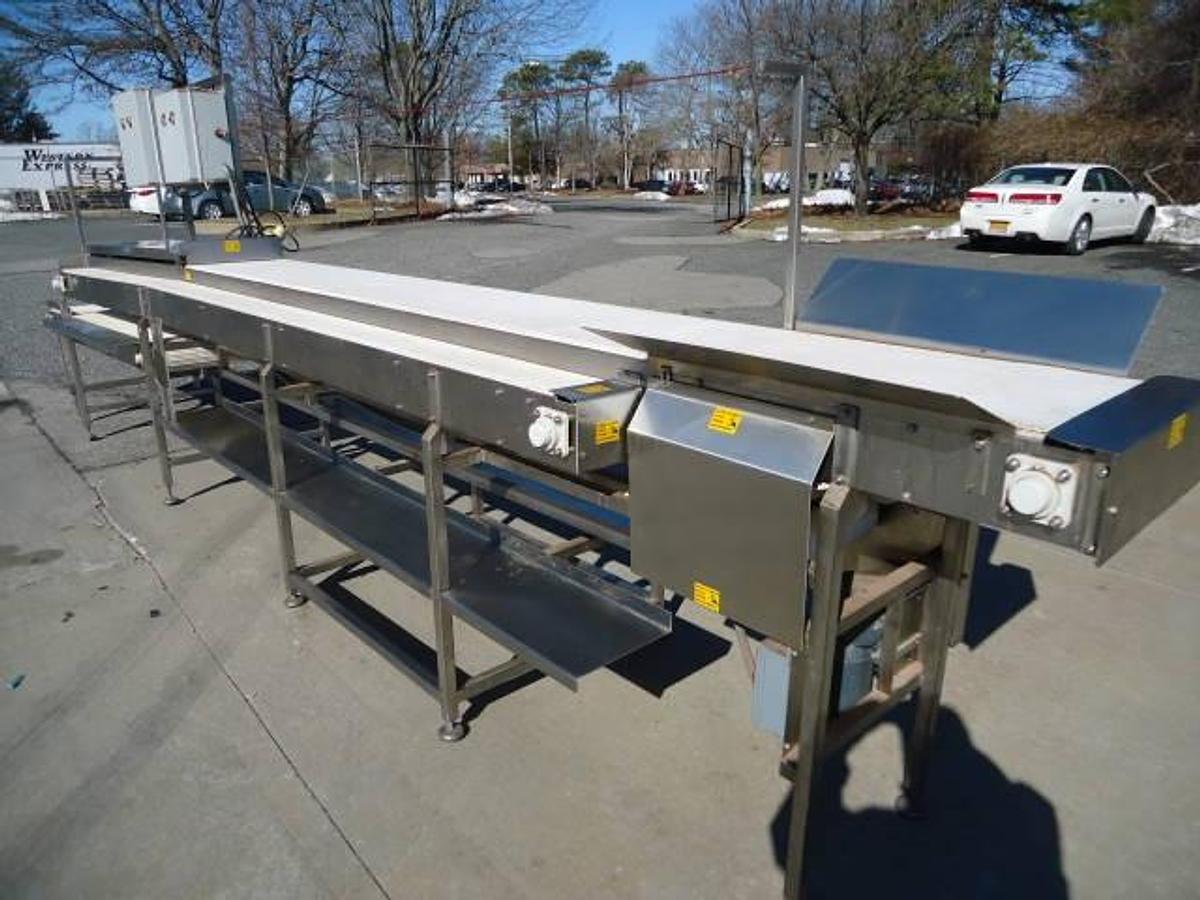
American Conveyor Corporation has produced a range of industrial conveyor systems designed for heavy-duty material handling applications. Their product lineup typically includes belt conveyors, screw conveyors, roller conveyors, incline conveyors, and modular multi-section conveyor systems. One notable product category is their stainless steel multi-section conveyors, which are built for environments where sanitation and corrosion resistance are priorities, such as food processing or pharmaceutical production facilities.
The company's equipment is generally associated with bulk material handling and industrial throughput applications, meaning their machines are built to move large volumes of product reliably over extended periods. This durability is one reason their equipment retains value on the used market long after the machines leave active production lines. Buyers sourcing used American Conveyor Corporation equipment will typically find belt and multi-section configurations listed most frequently, though availability depends on what has come off production floors at any given time.
What industries commonly use American Conveyor Corporation conveyor systems?
American Conveyor Corporation conveyor systems are found across a wide range of industries, reflecting the versatility of their equipment designs. Common sectors include food processing, manufacturing, distribution and warehousing, agriculture, and mining. Their stainless steel conveyor models are particularly well-suited to food and beverage processing environments, where equipment must withstand frequent washdowns and meet hygiene standards. Belt and incline conveyors from this manufacturer also appear regularly in packaging and assembly line settings.
On the heavier end of the spectrum, American Conveyor Corporation equipment has been used in bulk material handling operations, including aggregate processing and agricultural grain handling. Distribution centers and fulfillment operations have also made use of their roller and modular conveyor systems for sortation and product movement. Because the equipment is built for industrial-grade use, it tends to hold up well across demanding applications, which is part of why used units remain in demand among buyers looking to equip or expand a facility without the cost of purchasing brand-new machinery.
What should buyers know before purchasing used conveyor equipment?
Buying used conveyor equipment requires a different level of due diligence than purchasing new machinery. The most important step is getting an accurate picture of the machine's current condition, including its operational history, how many hours it has run, what materials it handled, and whether it has been decommissioned or is still running in an active facility. Buyers should always request an inspection, either in person, via video call, or through detailed video footage captured by the seller. Some machines may still be installed on a production floor, which can actually work in the buyer's favor since it allows for a live operational review.
It is also worth consulting with the manufacturer directly to understand what level of parts and technical support is available for the specific model and age of the machine being considered. Older models may have limited parts availability, which can affect long-term maintenance costs. Choosing a used equipment dealer who specializes in industrial conveyor systems and has a long track record in the industry is one of the most reliable ways to reduce risk. Reputable dealers will be transparent about a machine's condition and will accommodate inspection requests before any purchase is finalized.
What is stainless steel conveyor equipment typically used for, and why does it matter?
Stainless steel conveyor equipment is specifically designed for environments where cleanliness, corrosion resistance, and compliance with sanitation standards are non-negotiable. Food and beverage processing is the most common application, as stainless steel surfaces can be cleaned and sanitized repeatedly without degrading. Pharmaceutical manufacturing, cosmetics production, and certain chemical processing operations also rely on stainless steel conveyors for similar reasons. The material resists rust, does not absorb odors or bacteria, and holds up under the caustic cleaning agents used in regulated production environments.
For buyers sourcing used stainless steel conveyor systems, the key inspection points include checking for surface pitting, weld integrity, belt or chain condition, and the state of any sanitary fittings or guards. A used stainless steel conveyor that has been well-maintained can offer significant cost savings over a comparable new unit while still meeting the functional and hygienic requirements of the application. Multi-section stainless steel configurations, like those produced by American Conveyor Corporation, are particularly useful when a production line requires product to move through multiple stages or elevations within a single connected system.
How is used conveyor equipment typically priced compared to new machinery?
Used conveyor equipment is generally priced at a significant discount compared to purchasing equivalent machinery from a manufacturer at current market rates. The actual discount varies based on the age of the equipment, its condition, the complexity of the system, and how specialized the configuration is. Simple roller or belt conveyors in good working condition might sell for 30 to 60 percent less than a comparable new unit, while more complex multi-section or stainless steel systems in excellent condition may retain more of their value due to higher demand and limited availability.
Pricing on used industrial conveyor equipment also reflects factors like the cost of disassembly, cleaning, and preparation for resale, as well as the seller's overhead and expertise. Buyers should factor in shipping, rigging, and any reconditioning work that may be needed after delivery when calculating the true landed cost of a used machine. A lower purchase price does not always mean a lower total cost if significant refurbishment is required. Getting a clear picture of the machine's current working order before committing to a purchase is the best way to avoid unexpected expenses after the sale.
What does a multi-section conveyor system do, and when is one needed?
A multi-section conveyor system is a conveyor configuration made up of two or more connected conveyor segments that work together to move product through a production or handling process. Rather than a single straight run, multi-section systems can include changes in elevation, direction, or speed between segments, allowing them to serve more complex material flow requirements within a facility. They are commonly used in food processing lines, packaging operations, and distribution centers where product needs to travel through several stages of a process before reaching its final destination.
The main advantage of a multi-section design is flexibility. A facility can route product around obstacles, between floors, or through sequential processing steps without requiring separate standalone conveyors for each task. Used multi-section conveyor systems can be particularly cost-effective for facilities that need to set up or expand a production line quickly, since the infrastructure is already built and configured. Buyers should verify that all sections of a used multi-section system are present and accounted for before purchase, and confirm that the sections are compatible with each other and with the facility's existing layout and power supply.
How does shipping and delivery work for used conveyor equipment?
Shipping used conveyor equipment involves more complexity than shipping standard freight because of the size, weight, and fragility of the machinery involved. Proper packaging is critical to preventing damage in transit. Depending on the size of the conveyor, this can range from standard palletization to custom crating. Larger or heavier conveyor systems may require specialized rigging for both loading at the seller's facility and unloading at the buyer's location. These rigging services are typically an added cost on top of the base freight charge, and buyers should ask for a full breakdown of packaging, rigging, and shipping costs before finalizing a purchase.
The total landed cost of used conveyor equipment includes the purchase price plus all of these logistics expenses, and it can vary considerably depending on the distance being shipped, the weight and dimensions of the equipment, and the level of packaging required. Buyers should also consider whether they have the equipment and personnel on-site to safely receive and position a large conveyor system once it arrives. Coordinating with the seller early in the process about logistics requirements helps avoid surprises and ensures the machine arrives in the condition expected.
What payment terms should buyers expect when purchasing used industrial conveyor equipment?
Most used equipment dealers require payment in full before a machine is shipped. This is standard practice in the industry and reflects the nature of used machinery transactions, where the dealer needs to confirm funds before releasing equipment. Payment is typically accepted by wire transfer, though some dealers may accept other forms depending on the transaction. Buyers who have an established relationship with a particular dealer may occasionally be offered extended terms, but this is generally reserved for repeat customers with a demonstrated purchase history.
For buyers who are new to purchasing used industrial equipment, it is worth asking the dealer about their payment process early in the conversation so there are no delays once a purchase decision is made. Understanding the payment timeline also helps with logistics planning, since shipping is typically not arranged until payment clears. Buyers should also confirm whether the quoted price is inclusive of any preparation, palletization, or loading fees, or whether those are billed separately at the time of shipment.
Are replacement parts available for older American Conveyor Corporation conveyor equipment?
Parts availability for used conveyor equipment depends heavily on the age of the machine and the specific model in question. For older American Conveyor Corporation equipment, it is advisable to contact the manufacturer directly before purchasing to understand what components are currently supported and whether replacement parts can still be sourced. Some older models may have limited manufacturer support, which means buyers would need to rely on third-party parts suppliers, custom fabrication, or compatible aftermarket components to keep the equipment running over time.
This is an important consideration that should factor into the purchase decision, particularly for critical components like drive motors, belting, bearings, and control systems. A machine that is priced attractively but requires hard-to-find parts could end up being more expensive to maintain than a newer used unit with better parts availability. Buyers should ask the seller what they know about the machine's service history and whether any components have been recently replaced. Consulting with an industrial conveyor maintenance specialist before purchasing an older unit can also help identify potential maintenance costs upfront.
How can buyers inspect used conveyor equipment before making a purchase?
Reputable used equipment dealers typically offer multiple inspection options to help buyers assess the condition of a machine before committing to a purchase. In-person inspections are the most thorough option and allow the buyer or their technician to physically examine the conveyor, check for wear, test mechanical components, and review the overall condition of the frame, drive system, and conveyor surface. For buyers who cannot travel to the equipment's location, video inspections and detailed video captures of the machine are commonly offered as an alternative. These can cover the same key areas and provide a reliable representation of the machine's current state.
In some cases, the equipment being sold may still be installed and operating at the facility where it was used, which allows for a live operational review as part of the inspection process. Keep in mind that even in these situations, most dealers are not set up to run actual production tests, since operating production equipment requires permitting and facility resources that a dealer does not typically have. The goal of any inspection is to get an honest, detailed picture of the machine's condition so the buyer can make an informed decision. Buyers should not skip this step, particularly for larger or more complex conveyor systems where the cost of unexpected repairs after delivery could be substantial.