Category
Manufacturer
Model
Als Packaging Solutions
Als Packaging Solutions designs state-of-the-art packaging machinery used across industries like food and beverage and pharmaceuticals. They are known for innovative modular designs that easily adapt to production needs, offering flexibility and improved packaging efficiency.
FAQ:
What types of packaging machinery does Als Packaging Solutions manufacture?
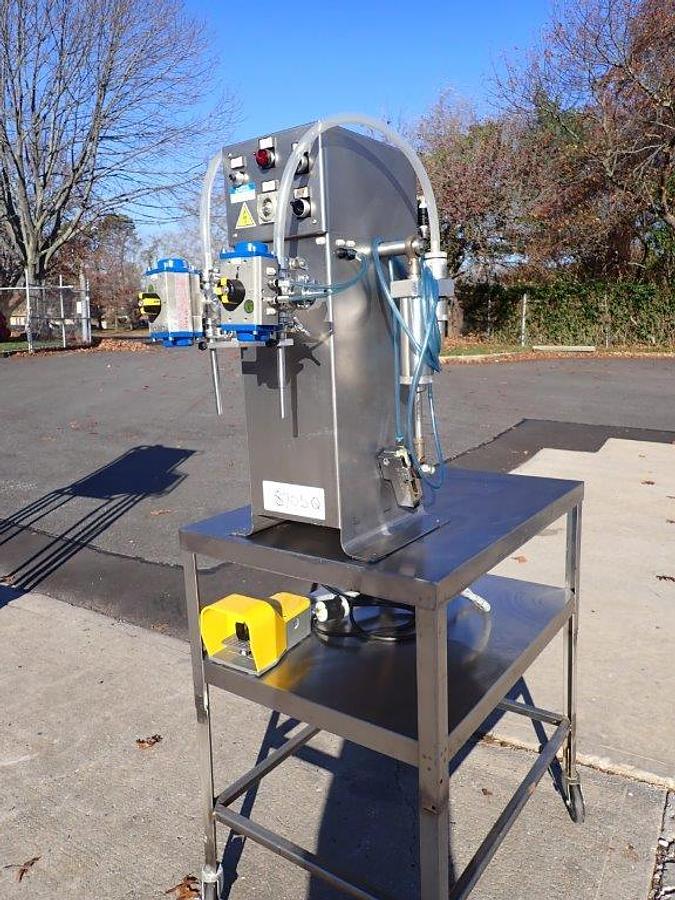
Als Packaging Solutions produces a range of packaging machinery designed for industrial and commercial production environments. Their equipment lineup includes filling machines, sealing machines, labeling equipment, shrink wrapping machines, and strapping equipment. One well-known example is their tabletop twin piston filling machine, built entirely from stainless steel, which is a common choice for food, beverage, and pharmaceutical applications where hygiene and durability are priorities.
The company is recognized for modular machine designs, meaning individual components or sections can be reconfigured or upgraded without replacing the entire unit. This approach gives production facilities more flexibility as their output requirements change over time. Buyers looking at used Als Packaging Solutions equipment should pay close attention to the specific model and configuration, since modular machines can vary significantly in capability depending on how they were originally set up at the previous facility.
What industries use Als Packaging Solutions equipment?
Als Packaging Solutions machinery is used across a fairly broad range of industries, with food and beverage and pharmaceuticals being the most common. The stainless steel construction on many of their machines makes them a natural fit for environments with strict hygiene requirements, such as liquid filling lines for sauces, oils, cleaning products, and personal care items. Pharmaceutical manufacturers also rely on precision filling and sealing equipment to meet dosing accuracy standards.
Beyond food and pharma, their equipment turns up in cosmetics, chemical manufacturing, and general consumer goods packaging. The modular design philosophy that Als Packaging Solutions built their machines around means a single machine can sometimes be adapted for different product types by swapping out filling heads, nozzles, or conveyor components. When evaluating a used Als Packaging Solutions machine, buyers should confirm which industry it was previously used in, since machines coming out of pharmaceutical or food production may have different maintenance histories and cleanliness standards than those from general industrial use.
What should buyers know about purchasing used packaging machinery instead of buying direct from a manufacturer?
Buying used packaging machinery from a reputable dealer is a well-established practice across manufacturing industries, and it carries some distinct advantages. The most obvious is cost. Used equipment is typically available at a fraction of the price of a comparable machine purchased through a manufacturer's sales channel, which makes it attractive for startups, smaller production facilities, or businesses looking to expand capacity without a large capital outlay. Machines from established brands like Als Packaging Solutions hold up well over time, and a well-maintained unit can deliver years of additional service life.
The tradeoffs are worth understanding clearly. Used machines are sold as-is, meaning there is no manufacturer warranty attached to the transaction. The responsibility for evaluating the machine's condition falls on the buyer. This is why choosing a dealer with a long track record in packaging and industrial equipment matters so much. Buyers should request detailed photos, inspection reports, and ideally arrange a video or in-person inspection before committing. It also pays to contact the manufacturer directly to ask about parts availability and technical support for the specific model being considered, since older or discontinued models may have more limited support.
How does the inspection process work when buying used packaging machinery?
Most reputable used equipment dealers offer buyers at least one form of inspection before purchase. The options typically include an in-person visit to the dealer's facility, a live video walkthrough conducted over a video call, or a recorded video inspection that the dealer prepares and sends to the buyer. The goal in all cases is to give the buyer an accurate, honest picture of the machine's current physical and mechanical condition, including any visible wear, missing components, or signs of prior repairs.
Some machines being sold through dealers are still in active production at a manufacturing facility, in which case the dealer can often coordinate a plant visit between the buyer and the current equipment owner. This gives the buyer a chance to see the machine running under real production conditions, which is one of the most reliable ways to assess its working order. One important caveat is that dealers generally cannot run full production tests themselves, since operating food, pharmaceutical, or chemical filling equipment requires facility permits and compliance infrastructure that a used equipment dealer does not maintain. Buyers should factor this into their evaluation process and ask as many specific questions as possible about the machine's recent operating history.
Are spare parts available for Als Packaging Solutions machines?
Parts availability is one of the most practical questions to answer before purchasing any used packaging machine, and it varies depending on the model and its age. Als Packaging Solutions has been active in the packaging machinery market long enough that many of their machine designs have an established installed base, which generally supports a reasonable supply of spare parts through the manufacturer and third-party component suppliers. Wear items like seals, nozzles, filling pistons, and conveyor belts are often available from multiple sources, which reduces dependency on a single supplier.
For older or discontinued models, the picture can be more complicated. Some components may no longer be stocked by the manufacturer, and buyers may need to source parts through specialty machining shops or refurbishment services. Before finalizing a purchase, it is worth contacting Als Packaging Solutions directly to ask specifically about parts support for the model in question. A good dealer will also be upfront about any known parts challenges with a particular machine. Buyers who skip this step sometimes find themselves with a machine that runs well initially but becomes difficult to maintain after the first major service interval.
What are the typical payment terms when purchasing used packaging equipment from a dealer?
Used equipment dealers generally require full payment before a machine is released for shipping. This is standard practice across the industry and reflects the nature of used equipment transactions, where the dealer has already acquired and is holding the asset. Some dealers will extend payment terms to repeat customers or established buyers with a documented purchasing history, but buyers approaching a dealer for the first time should plan for full payment upfront.
Payment methods vary by dealer, but wire transfers are the most common for transactions involving industrial machinery due to the transaction sizes involved. Buyers should clarify accepted payment methods early in the negotiation, and should also confirm exactly what the payment covers. In most cases, the quoted price covers the machine itself, and shipping, rigging, crating, and freight are calculated and invoiced separately. Getting a clear breakdown of all costs before paying ensures there are no surprises in the total landed cost of the equipment.
How is used packaging machinery typically shipped, and what does it cost?
Shipping costs for used packaging machinery depend on several factors including the size and weight of the machine, the distance it needs to travel, and the level of packaging required to protect it in transit. Smaller tabletop machines like a twin piston filling unit can often be palletized and shipped via standard freight carriers at a relatively modest cost. Larger, heavier machines require industrial rigging for loading and unloading, which adds to the overall expense.
Prior to shipping, machines should be properly secured, padded, and either palletized or crated depending on their fragility and the shipping method. Buyers should ask the dealer specifically what packaging method will be used and whether crating is included in the quoted price or billed separately. For international shipments, customs documentation, import duties, and compliance with destination country regulations add another layer of complexity and cost. Getting a full landed cost estimate, including freight, rigging, crating, and any applicable duties, before finalizing a purchase is the only reliable way to understand the true total investment.
What makes Als Packaging Solutions machines recognizable compared to other packaging equipment brands?
Als Packaging Solutions built a reputation around modular machine architecture, which sets their equipment apart from brands that produce more fixed, single-purpose designs. Modular construction means that a single machine frame can support multiple configurations, and individual modules can be added, removed, or replaced without requiring a full machine replacement. For production facilities that run multiple product types or anticipate changes in their packaging line, this design approach translates directly into longer useful machine life and lower long-term capital costs.
Their use of stainless steel construction across a significant portion of their product range is another distinguishing characteristic. Stainless steel is the material of choice for food-grade and pharmaceutical applications because it resists corrosion, is easy to sanitize, and holds up well under repeated washdown cycles. Buyers evaluating used Als Packaging Solutions equipment should look for evidence of how well the stainless components have been maintained, since surface pitting or improper cleaning practices can compromise both hygiene and structural integrity over time.
What questions should a buyer ask a used packaging machinery dealer before making a purchase?
The most important questions center on the machine's history and current condition. Buyers should ask how old the machine is, what it was used to package, how many operating hours it has logged if that data is available, and whether it has undergone any significant repairs or modifications. Asking for documentation like maintenance logs, service records, or prior inspection reports can reveal a lot about how well the machine was cared for. It is also worth asking why the machine is being sold, since equipment coming out of a plant closure or line upgrade is often in better condition than machinery that was decommissioned due to persistent problems.
Beyond condition, buyers should ask about inspection options, shipping logistics, and parts availability for the specific model. Confirming whether the machine is still in production at a facility or sitting in a dealer's warehouse affects what kind of inspection is possible. For compliance-sensitive industries, asking whether the machine carries any relevant certifications, such as CE marking for European markets or other regional standards, is also important. A dealer who answers these questions clearly and thoroughly is generally a more reliable partner than one who is vague or evasive about the machine's background.
What is the typical price range for used Als Packaging Solutions filling machines?
Pricing for used Als Packaging Solutions machinery varies considerably based on the machine type, its age, configuration, and overall condition. A tabletop twin piston filling machine in good working condition, for example, will generally fall in a different price bracket than a larger, fully automated inline filling system. Tabletop and semi-automatic units tend to be more accessible price-wise and are often attractive to smaller production operations or businesses setting up a packaging line for the first time.
Because these are used machines, pricing is also influenced by market demand and how recently comparable units have changed hands. Buyers should research what similar models have sold for through reputable industrial equipment dealers to establish a reasonable baseline. It is worth noting that the machine price alone does not represent the full cost. Shipping, rigging, any necessary reconditioning, and operator training all factor into the real cost of getting a used machine into production. Buyers who budget for these additional expenses tend to have a smoother purchasing experience than those who focus only on the sticker price.