Category
Manufacturer
Model
FAQ:
What is Allfab Bardeau and what types of equipment does the company manufacture?
Allfab Bardeau is a Canadian-based manufacturer with a history in producing industrial equipment for asphalt shingle and roofing material production. Their machines are designed for commercial and industrial-scale manufacturing operations, not residential or light-duty applications. The equipment category is considered niche within the broader industrial machinery market, which means buyers tend to be roofing material producers, building products manufacturers, and specialty fabricators.
The product line has historically included processing and production machinery used at various stages of roofing material manufacturing. Because this is a specialized segment, Allfab Bardeau equipment does not circulate as frequently on the used market as more common industrial machinery, which can make sourcing specific models more challenging. Buyers looking for used units should work with dealers who have direct experience in this category and can accurately describe machine condition, configuration, and production history.
What should I know before buying used Allfab Bardeau equipment?
Buying used industrial equipment in a specialized category like roofing material manufacturing requires more due diligence than purchasing common machinery. Roofing production equipment operates under demanding continuous-cycle conditions, which means wear on mechanical components, seals, heating elements, and drive systems can be significant depending on how hard the machine was run and how well it was maintained. Before committing to a purchase, buyers should ask for the year of manufacture, estimated hours or cycles of operation, and any available maintenance records.
Because used equipment is sold as-is, the burden of confirming condition falls on the buyer. Requesting an in-person or video inspection is strongly advisable. A reputable dealer will facilitate access to the machine, either at their facility or at the plant where it was last in production. Buyers should also contact the manufacturer directly to understand what level of parts availability and technical support exists for the specific model and age of machine they are considering, since older or discontinued models may have limited support options.
Where can I find used Allfab Bardeau equipment for sale?
Used Allfab Bardeau machinery surfaces through a handful of channels given the specialized nature of the product. Industrial used equipment dealers who focus on food processing, chemical processing, or industrial manufacturing sometimes carry jacketed kettles and related equipment from this manufacturer. Specialized dealers with experience in processing or fabrication equipment are often the most reliable source because they can provide accurate condition assessments and facilitate inspections.
Auction platforms that handle industrial and manufacturing equipment, such as Ritchie Bros. or IronPlanet, occasionally list Allfab Bardeau units when facilities are decommissioned or upgraded. However, auction purchases carry additional risk since inspection opportunities may be limited and machines are typically sold without any recourse after the sale. Working with an established used equipment dealer who specializes in this category generally provides more transparency about machine condition, configuration, and history than a blind auction purchase.
What is a stainless steel jacketed tilt kettle and what is it used for?
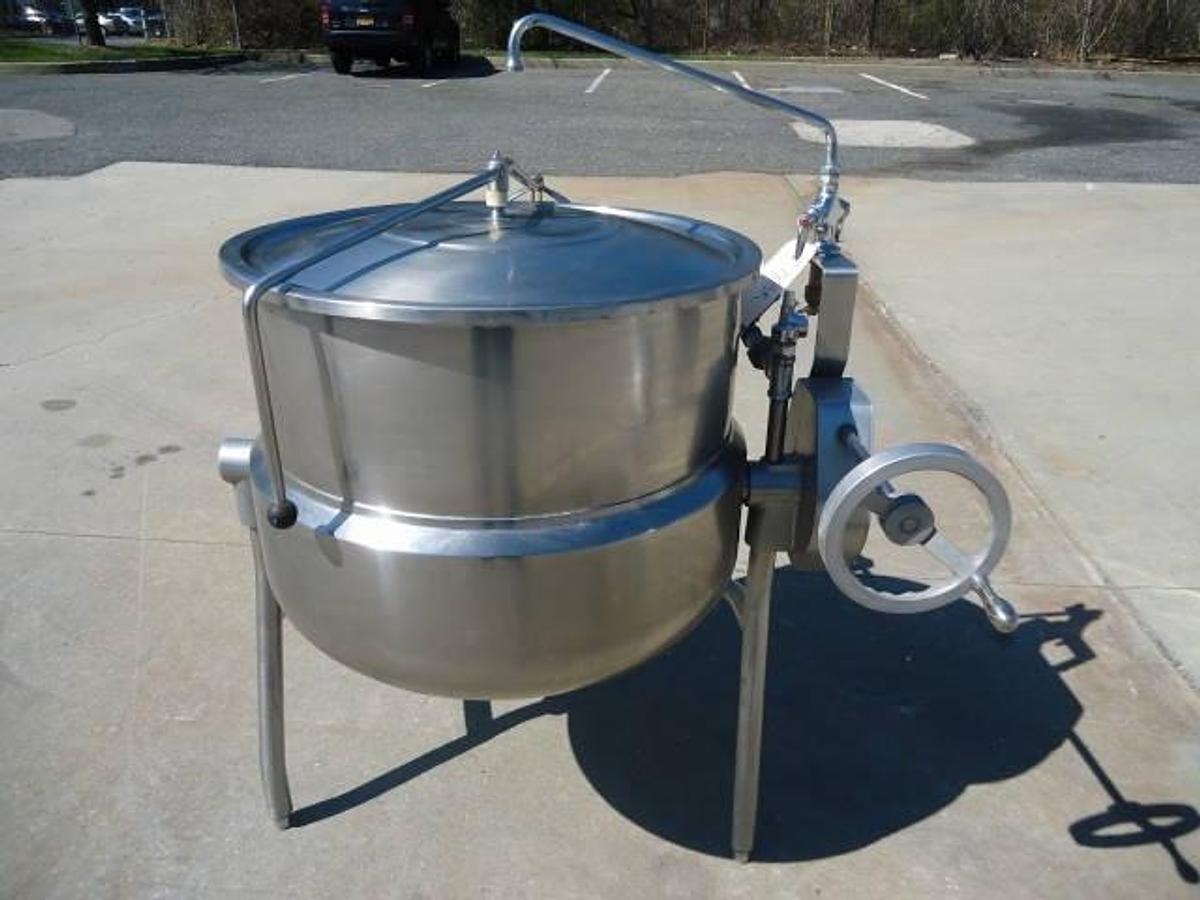
A stainless steel jacketed tilt kettle is an industrial vessel used for heating, mixing, cooking, or processing materials that require precise temperature control. The jacketed design means there is a second outer wall surrounding the main vessel, and a heating or cooling medium, typically steam or hot water, circulates through that jacket to transfer heat evenly to the product inside. Stainless steel construction is chosen for applications where sanitation, corrosion resistance, or product purity is a priority.
The tilt mechanism allows the operator to pour or empty the kettle contents without manual ladling, which improves efficiency and reduces the risk of burns or spillage in production environments. These kettles are used across a range of industries including food processing, chemical manufacturing, pharmaceutical production, and specialty material processing. A 40-gallon capacity unit, like the Allfab Bardeau model available on the used market, is suited to batch processing operations where mid-scale production volumes are needed. Used units in this category can represent significant cost savings compared to purchasing new fabricated vessels, provided the condition of the jacket, welds, and tilt mechanism are carefully evaluated before purchase.
How does the inspection process work when buying used industrial processing equipment?
Inspections for used industrial equipment typically fall into three categories: in-person visits, live video walkthroughs, and recorded video reviews. In-person inspections are the most thorough option and give a buyer or their technician the chance to physically examine welds, seals, mechanical components, control panels, and any signs of prior repairs or damage. When equipment is still installed at a production facility, the dealer can often arrange access through the seller so the buyer can see the machine in its operating environment.
Video inspections have become a practical alternative for buyers who cannot travel, and a knowledgeable dealer will walk through the machine systematically, showing the interior of vessels, moving parts, electrical connections, and any visible wear or damage. One important limitation to keep in mind is that most used equipment dealers do not have production permits or full processing setups, so running a machine through an actual production cycle during inspection is rarely possible. The goal of any inspection is to get an honest, accurate picture of the machine's current mechanical condition so the buyer can make an informed decision about whether the equipment fits their needs and budget.
What are typical payment terms for purchasing used industrial equipment?
Most used equipment dealers require full payment before a machine is released for shipping. This is standard practice in the industry because dealers are typically acting as intermediaries and need to settle their own acquisition costs before transferring ownership. Payment is commonly made by wire transfer, though some dealers accept other forms of verified payment depending on the transaction size and their internal policies.
Buyers who have an established relationship with a dealer may occasionally be offered extended terms, but this is the exception rather than the rule, particularly for first-time transactions. For larger purchases, some buyers arrange third-party equipment financing through lenders who specialize in industrial machinery. It is worth clarifying payment expectations with the dealer early in the process, along with the full landed cost of the machine including any rigging, crating, and freight charges, so there are no surprises at the time of purchase.
How is used industrial equipment typically shipped, and what costs should buyers expect?
Shipping costs for used industrial equipment depend heavily on the size and weight of the machine, the distance between origin and destination, and the level of packaging required to protect the equipment in transit. Smaller pieces like a 40-gallon tilt kettle may be palletized and shipped via freight carrier, while larger or heavier machines often require flatbed transport and specialized rigging for both loading at the origin facility and unloading at the buyer's location.
Buyers should ask dealers for a detailed breakdown of all costs before finalizing a purchase. This typically includes crating or palletization fees, rigging charges for loading, freight to the destination, and any unloading or rigging fees at the receiving end. Heavier equipment may require a forklift, crane, or rigger on the buyer's side, and arranging that in advance avoids delays and damage at delivery. Getting a clear picture of the full landed cost, not just the machine price, is essential for accurate budgeting.
Are replacement parts available for used Allfab Bardeau equipment?
Parts availability for used Allfab Bardeau equipment depends on the age of the machine and the current support posture of the manufacturer. For older or discontinued models, some components may no longer be stocked by the manufacturer, which can make maintenance and repair more challenging. Buyers should contact Allfab Bardeau directly before purchasing a used unit to ask specifically about parts availability for that model and year, as well as whether technical documentation like manuals or schematics can be obtained.
For equipment like jacketed kettles and processing vessels, many wear components such as gaskets, seals, valves, and fittings are standard industrial parts that can often be sourced from third-party suppliers even if the manufacturer no longer supports that specific model. However, proprietary mechanical or control components may be harder to find. Understanding the parts situation before purchase, rather than after a breakdown, is one of the more important steps in evaluating whether a specific used machine is a sound investment for ongoing production use.
What factors most affect the value of used processing equipment like jacketed kettles?
Several factors influence the market value of a used jacketed kettle or similar processing vessel. Condition of the stainless steel interior is one of the most important, since pitting, deep scratches, weld repairs, or contamination from prior use can affect both sanitation and structural integrity. The condition of the jacket itself matters as well, since any leaks or corrosion in the heating or cooling circuit can be expensive to repair. The tilt mechanism, if present, should operate smoothly without binding or excessive play in the pivot hardware.
Age, hours of use, and the industry the machine was previously used in also factor into value. Equipment that processed food-grade or pharmaceutical products is often held to higher cleaning and documentation standards, which can work in a buyer's favor if records are available. Machines coming out of chemical or industrial processing environments may require more thorough cleaning and inspection before being redeployed in sensitive applications. Capacity, the heating method (steam versus electric), and the presence of agitators or other accessories also affect pricing. Buyers comparing multiple units should weigh all of these factors alongside the asking price to determine which option offers the best value for their specific application.
How should buyers evaluate a used equipment dealer before making a purchase?
The reputation and track record of a used equipment dealer matters considerably when buying specialized industrial machinery without a manufacturer warranty. Buyers should look for dealers with a verifiable history in the specific equipment category they are purchasing from, since a dealer who specializes in processing or fabrication equipment will have more relevant knowledge about condition assessment, fair pricing, and sourcing than a generalist dealer who handles all types of machinery.
Practical indicators of a reputable dealer include willingness to facilitate inspections, transparency about known issues with a machine, accurate and detailed listings that include specifications and photos, and responsiveness to technical questions. Dealers who have been operating for many years and can provide references from past buyers in similar industries are generally lower risk. It is also worth checking whether the dealer has relationships with riggers, freight companies, and other service providers that can simplify the logistics of getting a machine from their facility to the buyer's location. Taking the time to vet the dealer is one of the most effective ways to reduce risk in a used equipment transaction.