Category
Manufacturer
Model
Allegheny Bradford
Allegheny Bradford is a premier manufacturer of high-purity sanitary equipment predominantly used in the biotechnology and pharmaceutical industries. They are widely recognized for their precision-engineered stainless steel products, including heat exchangers and filtration systems, ensuring compliance with rigorous purity standards.
FAQ:
What types of sanitary equipment does Allegheny Bradford manufacture?
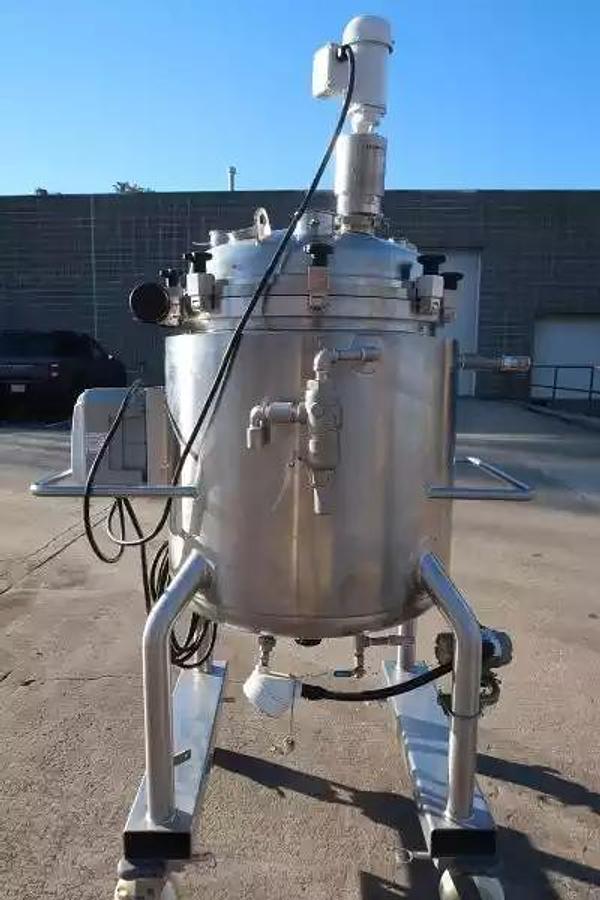
Allegheny Bradford Corporation, headquartered in Bradford, Pennsylvania, produces a broad range of high-purity stainless steel equipment designed for industries where cleanliness and contamination control are critical. Their product line includes sanitary tanks and vessels, jacketed mix tanks, heat exchangers, filtration systems, skid systems, and custom-fabricated stainless steel components. The jacketed mix tank is one of their more recognized product types, available in various capacities such as 160 liters, and constructed from 316 stainless steel for demanding process environments.
Beyond standard catalog items, Allegheny Bradford has built a reputation for custom engineering and fabrication. This means buyers often encounter equipment that was originally built to very specific process requirements, which can actually be an advantage in the used equipment market. A vessel or heat exchanger engineered to pharmaceutical-grade tolerances retains that precision regardless of whether it is purchased directly from the manufacturer or sourced through a used equipment dealer. Buyers searching for used Allegheny Bradford equipment should look for details on tank capacity, jacket configuration, surface finish, and port specifications to confirm the equipment suits their process needs.
What industries use Allegheny Bradford sanitary equipment?
Allegheny Bradford sanitary equipment is most commonly found in the biotechnology and pharmaceutical industries, where strict purity standards and regulatory compliance are non-negotiable. Their stainless steel vessels, heat exchangers, and mixing tanks are designed to meet the cleanliness and traceability requirements of drug manufacturing, bioprocessing, and sterile fluid handling. The equipment is also widely used in food and beverage processing, dairy production, and cosmetics manufacturing, anywhere that product contact surfaces must be free of contamination and easy to clean in place.
The cross-industry applicability of Allegheny Bradford equipment makes used units particularly attractive to buyers across multiple sectors. A jacketed mix tank previously used in a pharmaceutical facility, for example, may be entirely suitable for a food-grade or nutraceutical application, provided it meets the buyer's specific surface finish and material requirements. Buyers should verify the equipment's construction materials, prior use history when available, and surface finish specifications before purchasing to confirm suitability for their intended application.
What materials are used in Allegheny Bradford sanitary equipment construction?
Allegheny Bradford equipment is predominantly constructed from 304 and 316L stainless steel, both of which are standard materials in sanitary and high-purity process industries. 316L stainless steel is the more common choice for pharmaceutical and biotech applications because its lower carbon content and molybdenum addition provide superior corrosion resistance, particularly against chlorides and aggressive cleaning agents. 304 stainless steel is often used in less aggressive environments such as food and beverage or general sanitary processing. Both alloys offer excellent weldability and can be polished to the smooth surface finishes required for sanitary compliance.
For buyers considering used Allegheny Bradford equipment, the material grade is one of the first specifications to confirm. Most listings will identify whether the equipment is 304 or 316 stainless steel, and this distinction matters significantly depending on the intended process. A 316L jacketed vessel, for instance, is better suited to pharmaceutical or high-purity biotech applications than a 304 unit. Inspecting welds, surface finish condition, and any signs of corrosion or pitting is especially important with used equipment, and buyers should request photos or arrange a video or in-person inspection to assess the condition of the product contact surfaces before purchasing.
Is Allegheny Bradford sanitary equipment compliant with 3-A Sanitary Standards and FDA guidelines?
Allegheny Bradford has a well-established history of designing and fabricating equipment to meet or exceed 3-A Sanitary Standards, ASME codes, and FDA guidelines. 3-A Sanitary Standards are a set of criteria developed specifically for equipment used in dairy, food, and pharmaceutical processing, covering material requirements, surface finish specifications, and design geometry to ensure cleanability and hygienic performance. Meeting these standards is a significant factor in why Allegheny Bradford equipment is trusted across regulated industries, and it is a key reason the equipment retains value in the used market.
For buyers purchasing used Allegheny Bradford equipment, it is worth noting that compliance certifications apply to the equipment as it was fabricated and cannot automatically be assumed to carry forward after years of use, modification, or relocation. Buyers operating in regulated environments should evaluate the equipment's current condition, verify that no modifications have been made that would affect compliance, and consult with their quality assurance team or a process engineer before placing the equipment back into a regulated production environment. Contacting Allegheny Bradford directly is also advisable to understand the level of manufacturer support, documentation availability, and parts availability for the specific model and age of equipment being considered.
What surface finish options are typically available for Allegheny Bradford sanitary tanks and vessels?
Surface finish is one of the most critical specifications for sanitary stainless steel equipment, and Allegheny Bradford equipment is typically available with a range of interior and exterior finishes suited to different regulatory and process requirements. Common interior finishes include mechanical polishing to Ra values such as 32 Ra, 20 Ra, or finer electropolished surfaces, which are often required in pharmaceutical and biotech applications. The smoother the finish, the lower the surface roughness, and the easier the vessel is to clean and sterilize. Electropolishing, which removes a thin layer of surface metal through an electrochemical process, produces an exceptionally smooth and passive surface that resists microbial adhesion.
When evaluating used Allegheny Bradford tanks or vessels, the condition of the interior surface finish is one of the most important factors to assess. Over time, surfaces can develop scratches, pitting, or discoloration from cleaning chemicals or process fluids, which may affect cleanability and compliance in regulated applications. Buyers should request detailed photos of the interior surfaces, and ideally arrange an in-person or video inspection to assess finish condition directly. If the finish has degraded, re-polishing or re-electropolishing by a qualified fabricator may be an option, though this adds cost and should be factored into the overall purchase decision.
What should buyers look for when purchasing used Allegheny Bradford sanitary equipment?
Buying used Allegheny Bradford sanitary equipment requires more due diligence than purchasing standard industrial machinery because product contact surfaces, weld quality, and dimensional tolerances all matter in sanitary applications. Key specifications to verify include the stainless steel grade (304 vs. 316L), vessel capacity, jacket configuration and pressure rating, surface finish condition, port sizes and configurations, and any documentation related to the equipment's prior use. Knowing whether the equipment was used in pharmaceutical, food, or dairy production can help a buyer assess whether it is appropriate for their intended application.
Reputable used equipment dealers specializing in sanitary and pharmaceutical process equipment will typically offer inspection options, including in-person visits, video walkthroughs, or photo documentation, to give buyers an accurate picture of the equipment's current condition. Used equipment is sold as-is, which places the responsibility of evaluation squarely on the buyer, so taking full advantage of available inspection options is important. It is also worth contacting Allegheny Bradford directly to ask about parts availability, documentation, and any known service considerations for the specific model being considered, as the age and configuration of the unit can affect long-term supportability.
How does buying used Allegheny Bradford equipment compare to purchasing new sanitary process equipment?
Used Allegheny Bradford equipment offers a practical path to acquiring precision-engineered, high-purity stainless steel process equipment at a fraction of the cost of purchasing a newly fabricated unit. Allegheny Bradford has a strong reputation for build quality, and their equipment is often constructed to pharmaceutical or biotech-grade standards that far exceed what many lower-cost alternatives offer. For buyers who need reliable sanitary process equipment quickly and within a tighter budget, the used market can provide access to well-built vessels, heat exchangers, and mixing tanks that would otherwise require long fabrication lead times and significantly higher capital expenditure.
The trade-off with used equipment is that it comes as-is, without the documentation package, material certifications, and quality records that accompany a freshly fabricated unit. Buyers in regulated industries should factor in the time and cost of any reconditioning, re-certification, or documentation work needed to qualify the equipment for their process. For less regulated applications, such as general food processing or non-sterile mixing, used Allegheny Bradford equipment can often be put to work with minimal additional investment. Selecting a dealer who specializes in sanitary and pharmaceutical process equipment, rather than a general industrial machinery reseller, improves the chances of getting accurate condition information and relevant technical support during the purchasing process.
How is used Allegheny Bradford sanitary equipment typically inspected before purchase?
Reputable used equipment dealers generally offer buyers several inspection options before finalizing a purchase. In-person inspections allow a buyer or their representative to physically examine the equipment, assess surface finish condition, check weld quality, inspect ports and fittings, and verify that the unit matches its listed specifications. For buyers who cannot travel, video inspections or detailed photo documentation are common alternatives, providing a close look at the interior and exterior surfaces, any visible wear, and overall condition. Some equipment may still be installed at the facility where it was last used, in which case an inspection can sometimes be arranged at that location.
It is important to understand that most used equipment dealers do not have the permitting or production infrastructure to run actual process tests on sanitary equipment. A dealer can demonstrate that a mixer agitator turns or that a jacketed vessel holds pressure, but replicating a full pharmaceutical or food-grade production run is not something a reseller can typically do. Buyers should therefore focus inspections on physical condition, material verification, and dimensional confirmation. For higher-value purchases, hiring an independent third-party inspector with sanitary equipment experience is a reasonable step that can provide additional confidence before committing to the purchase.
What are the typical shipping and logistics considerations for used Allegheny Bradford sanitary equipment?
Sanitary stainless steel equipment requires careful handling during transit to protect polished interior surfaces, fittings, and structural integrity. Tanks, vessels, and heat exchangers are typically palletized or crated prior to shipment, with the level of packaging depending on the size, weight, and fragility of the equipment. Larger vessels or skid-mounted systems may require specialized rigging for loading and unloading, which adds to the overall logistics cost. Buyers should ask the dealer specifically about how the equipment will be packaged, what rigging is required, and whether the shipping quote includes all handling costs, so there are no surprises in the total landed cost.
For oversized equipment, freight arrangements often involve flatbed trucking, LTL (less-than-truckload) freight with proper blocking and bracing, or in some cases dedicated transport. The buyer is responsible for having appropriate unloading equipment available at the destination, whether that is a forklift, crane, or loading dock. Discussing these logistics requirements with the dealer before purchase helps avoid delays and damage claims after the fact. Some dealers will coordinate shipping on behalf of the buyer, while others may require the buyer to arrange their own freight carrier. Clarifying these responsibilities upfront is an important part of the purchasing process for any large sanitary process equipment.
What are typical payment terms for purchasing used sanitary process equipment?
Used equipment dealers in the sanitary and pharmaceutical process equipment market generally require full payment prior to shipping. This is standard practice across the industry and reflects the nature of used equipment transactions, where machines are sold as-is and dealers need to confirm funds before releasing inventory. Payment is typically accepted by wire transfer, though some dealers may accept other methods depending on the transaction size and the buyer's relationship with the seller. Buyers should confirm accepted payment methods and any associated processing requirements before finalizing a purchase agreement.
For buyers making a significant capital investment in a large vessel or multi-component system, it is worth asking whether any flexibility exists on payment structure, particularly for repeat customers or buyers with an established relationship with the dealer. While terms are not commonly extended to first-time buyers, it never hurts to ask. Buyers should also factor in all associated costs beyond the equipment price itself, including packaging, rigging, freight, and any reconditioning or compliance work needed after delivery, to arrive at a true total cost of acquisition before committing to the purchase.