Category
Manufacturer
Model
All-Flo
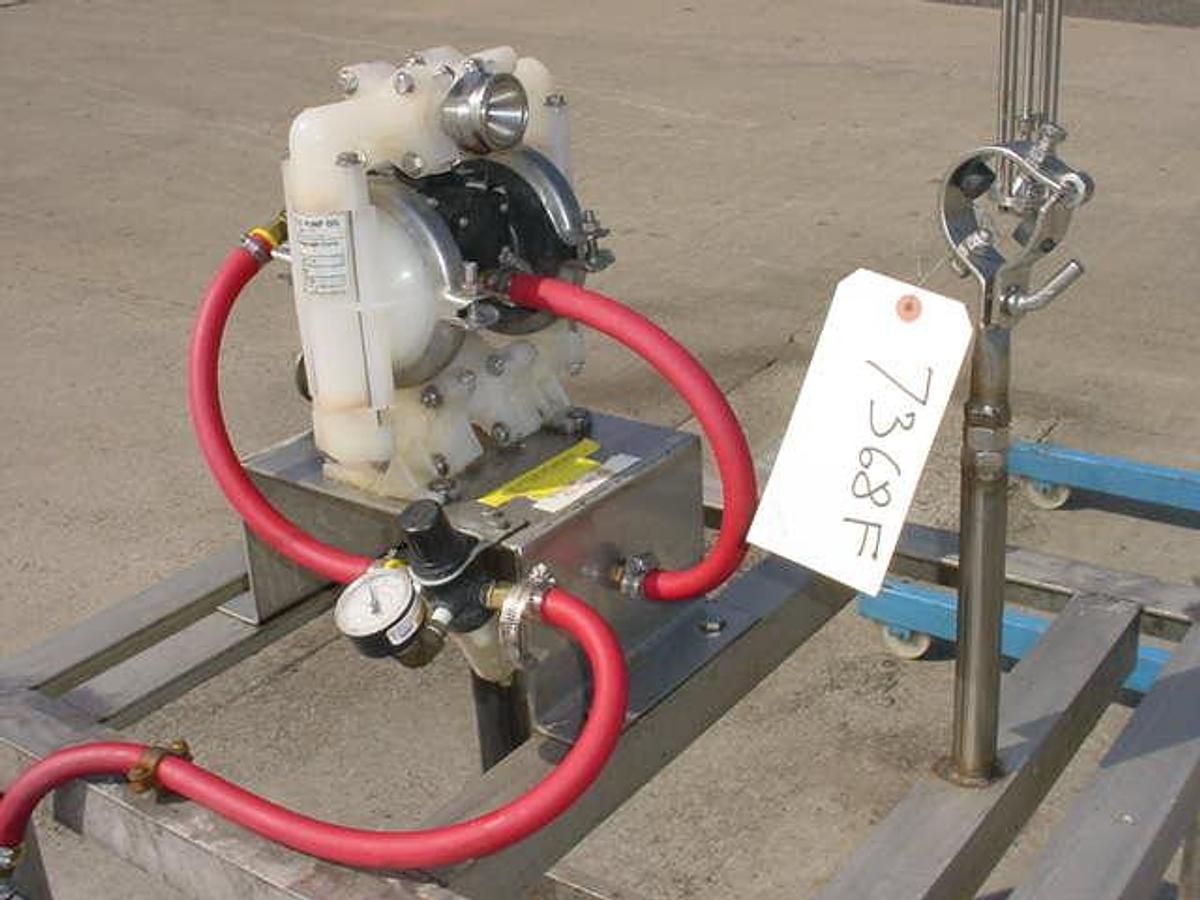
All-Flo focuses on diaphragm pumps used in demanding fluid transfer applications, servicing industries such as chemical processing, food and beverage, and mining. Known for their rugged and reliable pump technology, All-Flo pumps efficiently handle viscous and corrosive liquids.
FAQ:
What are All-Flo diaphragm pumps used for?
All-Flo diaphragm pumps are designed for demanding fluid transfer applications across a range of industries. They are widely used in chemical processing, food and beverage production, mining operations, wastewater treatment, and general industrial manufacturing. Their ability to handle viscous, corrosive, and abrasive liquids without damage to the pump makes them a practical choice wherever standard centrifugal pumps would fail or degrade quickly.
The pumps are particularly valued in applications where the fluid being transferred is aggressive or difficult to manage. Chemical plants rely on them to move acids, solvents, and caustic solutions safely. Food and beverage operations use compatible material configurations to transfer syrups, slurries, and other viscous products. Mining operations depend on them for slurry and tailings transfer where abrasive solids content would destroy other pump types. Because All-Flo pumps are air-operated and have no electric motor in contact with the fluid path, they are also inherently safe for flammable or volatile liquids, which broadens their appeal in hazardous environments.
How do All-Flo air-operated double diaphragm pumps work?
All-Flo pumps operate on the air-operated double diaphragm (AODD) principle, which uses compressed air as the power source rather than electricity. Compressed air alternates between two chambers, pushing each diaphragm outward in sequence. As one diaphragm is pushed forward to discharge fluid, the other pulls back to draw fluid in through the inlet. Ball check valves on the inlet and outlet sides control the direction of flow, creating a steady pumping action even though the mechanism itself is reciprocating.
This design has several practical advantages. The pump can run dry without damage, which is a significant benefit in batch processing or situations where the fluid supply is intermittent. It is self-priming, meaning it can pull fluid up from a lower level without needing to be flooded first. Flow rate is controlled simply by adjusting the incoming air pressure and volume, with no need for variable frequency drives or electrical controls. The absence of rotating parts in contact with the fluid also means that shear-sensitive materials, like certain food products or polymer solutions, can be transferred without degradation.
What materials are All-Flo diaphragm pumps made from?
All-Flo manufactures pump bodies in several materials to cover a broad range of chemical compatibility requirements. Common body materials include polypropylene, PVDF (polyvinylidene fluoride), aluminum, stainless steel, and cast iron. Polypropylene and PVDF are favored for aggressive chemical service because they resist acids, bases, and many solvents. Aluminum and cast iron are typically used in less corrosive applications where cost and mechanical strength are the primary considerations. Stainless steel configurations are common in food-grade and pharmaceutical applications where hygiene and cleanability matter.
Diaphragm material selection is equally important and is often the deciding factor in whether a pump is compatible with a specific fluid. All-Flo pumps are available with diaphragms in PTFE, Santoprene, Buna-N (nitrile), neoprene, and EPDM. PTFE offers the broadest chemical resistance and is frequently specified for highly aggressive chemicals. Santoprene provides a good balance of flexibility and chemical resistance at a lower cost. Buna-N and neoprene are suitable for petroleum-based fluids and many general industrial applications. EPDM is commonly chosen for water-based fluids, mild acids, and applications where ozone or UV exposure is a factor. Matching both the body material and diaphragm material to the specific fluid is essential for reliable long-term performance.
What sizes and flow rates are available for All-Flo diaphragm pumps?
All-Flo produces diaphragm pumps across a range of port sizes, typically from 1/4 inch up to 3 inches. Smaller models in the 1/4-inch to 1/2-inch range are suited for low-flow, precise dosing or transfer applications where space is limited. Mid-range models in the 1-inch to 1.5-inch sizes cover the majority of general industrial transfer needs. Larger 2-inch and 3-inch models are designed for high-volume transfer where moving significant quantities of fluid quickly is the priority.
Flow rates vary considerably depending on the port size, air pressure supplied, and the viscosity of the fluid being pumped. Smaller models may deliver just a few gallons per minute under typical operating conditions, while larger 3-inch models can reach flow rates approaching 265 GPM under optimal air supply conditions. It is worth noting that actual field performance on viscous or abrasive fluids will be lower than the maximum rated flow, so buyers should review the pump curves for the specific model and factor in their actual fluid properties when selecting a size. Used All-Flo pumps are available across this full size range, making it possible to source a unit matched to a specific application without purchasing at full retail pricing.
How does All-Flo compare to other diaphragm pump brands like Wilden or Graco?
All-Flo is generally positioned as a cost-effective alternative to premium AODD pump brands like Wilden and Graco. The fundamental operating principle across all three brands is the same: compressed air drives two diaphragms in alternating strokes, with check valves directing flow. Performance characteristics, available materials, and port size ranges are broadly comparable, which is why All-Flo pumps are frequently considered as a direct substitute in applications where one of the premium brands was originally specified.
The practical difference for most buyers comes down to price and parts availability. All-Flo pumps typically carry a lower price point than Wilden or Graco equivalents, both when purchased and when sourced on the used equipment market. Parts and repair kits for All-Flo pumps are available through industrial distributors, though the parts ecosystem for Wilden, as one of the oldest brands in the AODD space, tends to be more extensively distributed. For buyers sourcing used equipment, All-Flo represents a sensible choice when budget is a constraint and the application does not require the specific certifications or documented service history that might come with a premium brand in a highly regulated industry.
What should I inspect when buying a used All-Flo diaphragm pump?
Buying a used diaphragm pump requires more attention to condition than buying a simple mechanical component, because the diaphragms and check valves are wear items that degrade with use and chemical exposure. The diaphragms themselves should be inspected for cracking, stiffening, or any sign of chemical attack. A diaphragm that has been exposed to an incompatible fluid may appear discolored, swollen, or brittle. Check valve balls and seats should be examined for wear, scoring, or deformation, as worn check valves will cause the pump to lose prime or deliver uneven flow. The pump body should be checked for cracks, chemical etching, or physical damage, particularly around the manifold connections.
Reputable used equipment dealers will typically accommodate in-person inspections or provide detailed video of the machine so buyers can assess condition before committing. It is reasonable to ask for photos or video of the diaphragm chambers opened up, the check valves removed, and the exterior of the pump body. Keep in mind that most used equipment dealers are not set up to run production fluid through a pump for a live performance test, as that would require permitting and production infrastructure beyond what a dealer facility normally has. A thorough visual and mechanical inspection, combined with a review of the pump's apparent service history, is the practical standard for used AODD pump purchases. Buyers should also contact the manufacturer directly to confirm parts availability for the specific model and age of pump they are considering.
Are replacement parts and repair kits available for used All-Flo diaphragm pumps?
Replacement diaphragms, check valve balls, seats, and o-ring kits for All-Flo pumps are available through industrial pump distributors and some online suppliers. Because AODD pumps share a common architecture across many brands, the repair process is well understood and the parts categories are consistent: diaphragms, check valves, air valve components, and wetted-path seals. All-Flo repair kits are typically sold as complete wet-end kits that include all the parts needed to rebuild the fluid side of the pump in one purchase.
Before purchasing a used All-Flo pump, it is advisable to verify parts availability for the specific model in question, as older or discontinued models may have more limited support. Contacting the manufacturer directly is the best way to get accurate information on whether parts are stocked, whether the model is still supported, and what lead times look like. The age of the pump matters here: a current-production model will have full parts support, while a pump that is ten or fifteen years old may require sourcing from specialty suppliers or third-party aftermarket sources. Factoring in the cost and availability of a rebuild kit when evaluating a used pump purchase is a practical step that helps avoid surprises after the equipment arrives.
What is the typical price range for used All-Flo diaphragm pumps?
Pricing for used All-Flo diaphragm pumps varies based on port size, body material, diaphragm material, age, and overall condition. Smaller 1/4-inch to 1/2-inch models in polypropylene or aluminum typically represent the lower end of the price range, while larger 2-inch or 3-inch pumps in stainless steel or PVDF with PTFE diaphragms command significantly higher prices. The used market generally offers meaningful savings compared to buying the same specification pump through a distributor at full list pricing, which is one of the primary reasons buyers turn to used equipment dealers for AODD pumps.
Because these are used machines sold as-is, the condition of the pump directly affects its value. A pump that has been recently rebuilt with fresh diaphragms and check valves will typically be priced higher than one sold in as-removed condition. Buyers should request a clear description of the pump's condition and service history, and factor in the potential cost of a rebuild kit when comparing prices across listings. Asking the seller for specifics on what has been inspected or serviced gives a clearer picture of the true cost of getting the pump into reliable working order. Shipping, rigging, and any required crating should also be confirmed upfront, as these costs can add meaningfully to the total landed price depending on pump size and destination.
How should I select the right All-Flo pump model for my application?
Selecting the right All-Flo pump model starts with defining the fluid properties and transfer requirements. The key parameters are the chemical composition of the fluid (to determine body and diaphragm material compatibility), the required flow rate in gallons per minute, the total head or pressure the pump needs to work against, and the solids content or particle size if the fluid is a slurry or suspension. Viscosity is also important because highly viscous fluids will reduce achievable flow rates compared to water-like fluids at the same air pressure.
Once the fluid compatibility and flow requirements are established, port size selection follows naturally from the flow rate target. All-Flo publishes performance curves for each model that show flow rate versus air pressure, which allows buyers to confirm that a given pump will meet the application requirements at a practical air supply pressure. For used pump purchases, it helps to have these parameters defined before shopping so that any available unit can be quickly evaluated against the application needs. If the pump will be used in a food, pharmaceutical, or other regulated environment, buyers should also verify that the specific material configuration of the used pump meets the applicable standards, since not all configurations are rated for food contact or sanitary service.
What should buyers know about shipping and payment when purchasing a used All-Flo pump?
Used diaphragm pumps are generally compact enough that they can be palletized and shipped via freight carrier without the heavy rigging required for larger industrial equipment. That said, proper packaging matters. A pump that is not adequately secured to a pallet or protected from impact during transit can arrive with damaged manifolds, cracked plastic bodies, or bent connections. Buyers should confirm with the seller how the pump will be packaged, whether crating is available or required, and what the estimated freight cost will be to their location. Understanding the full landed cost before committing to a purchase avoids surprises at delivery.
For payment, most used equipment dealers require full payment prior to shipping. This is standard practice in the used machinery industry, where transactions are typically final once the equipment ships. Some dealers may offer payment terms to established repeat customers, but buyers should not assume this is available without asking. Accepted payment methods vary by dealer but commonly include wire transfer, ACH, and credit card, sometimes with a processing fee for card payments. Confirming payment terms, accepted methods, and the dealer's process for handling any discrepancies between the described and actual condition of the pump is a reasonable step before completing the transaction.