Category
Manufacturer
Model
Aligned Machinery
Aligned Machinery provides packaging and processing machinery for the pharmaceutical and food industries, with a focus on tablet production and capsule filling machines. Their equipment is designed to meet stringent regulatory standards, ensuring precise dosage and packaging solutions.
FAQ:
What types of equipment does Aligned Machinery manufacture?
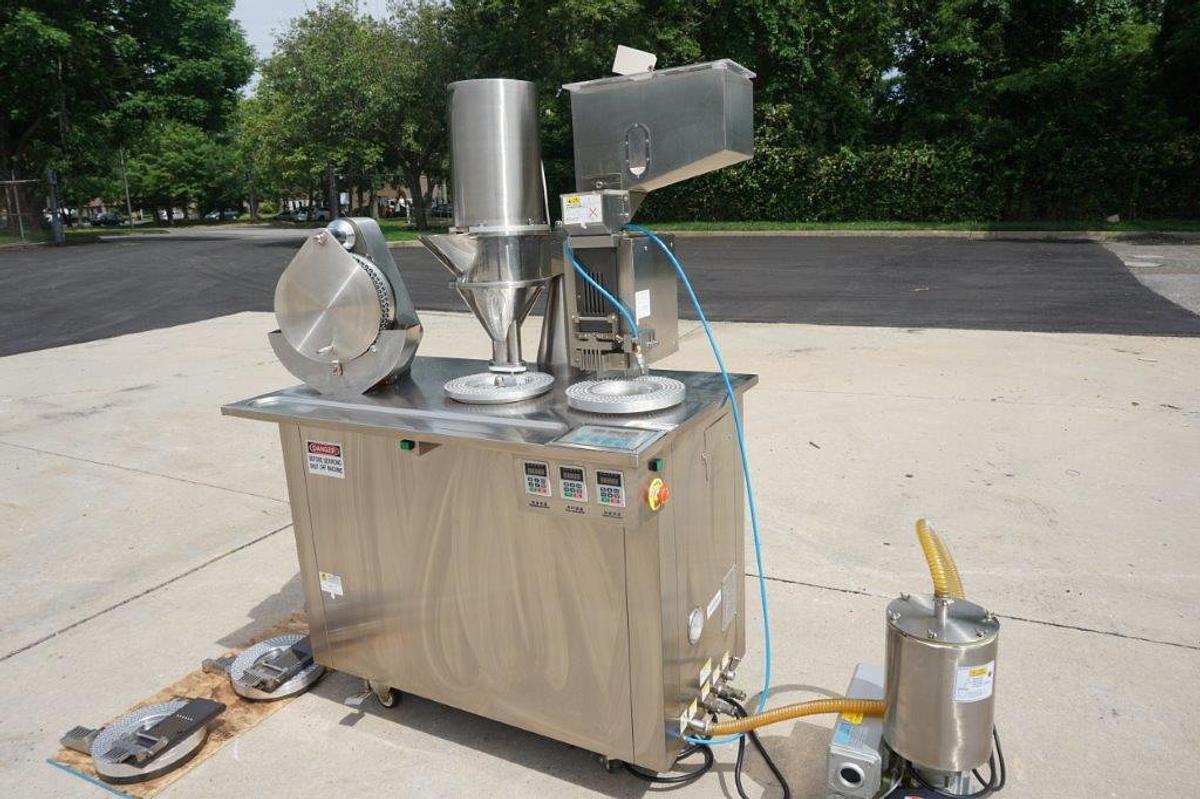
Aligned Machinery specializes in packaging and processing equipment for the pharmaceutical and food industries. Their product line centers on tablet production machinery and capsule filling equipment, designed to meet the precise dosage and packaging requirements that regulated industries demand. A representative example of their equipment is the Semi-Automatic Encapsulator, which accommodates multiple capsule sizes including Size 00, 0, 1, and 2 tooling.
Because Aligned Machinery builds to pharmaceutical-grade standards, their machines are engineered with accuracy and repeatability in mind. This makes them a practical choice for operations that need consistent output and the ability to demonstrate compliance with regulatory bodies. Buyers sourcing used Aligned Machinery equipment should verify that the specific model they are considering matches their capsule size requirements and production volume targets before committing to a purchase.
What industries use Aligned Machinery equipment?
Aligned Machinery equipment is built primarily for the pharmaceutical and food processing industries. In pharmaceutical settings, the machines are used for capsule filling and tablet production, where dosage accuracy and contamination control are non-negotiable. The equipment is designed to align with the stringent regulatory standards these industries operate under, including Good Manufacturing Practice (GMP) guidelines that govern how drug products are produced and packaged.
Food manufacturers also use similar encapsulation and processing equipment for applications like nutraceuticals, dietary supplements, and powdered food products that require precise filling and packaging. Buyers from either sector should confirm that a used machine's configuration, including its tooling sizes and contact-surface materials, is appropriate for their specific product and regulatory environment. Consulting with the equipment dealer about the machine's history and prior use can help assess suitability.
What should I know before buying used pharmaceutical or food processing machinery?
Purchasing used processing or packaging equipment requires more due diligence than buying commodity goods. The buyer carries the responsibility of evaluating the machine's condition, since used equipment is sold as-is. Key areas to assess include mechanical wear on moving parts, the condition of tooling and contact surfaces, calibration history, and whether the machine has been maintained according to manufacturer recommendations. For pharmaceutical equipment specifically, it is also worth asking whether the machine was previously validated and whether any validation documentation is available.
Beyond the machine itself, buyers should factor in the total landed cost, which includes the purchase price, rigging and crating fees, freight charges, and any refurbishment or parts replacement needed to bring the machine to operating condition. Requesting a detailed inspection before purchase, either in person or via video, is one of the most effective ways to avoid surprises. Reputable dealers with a long track record in the pharmaceutical and food equipment space will typically accommodate inspection requests and be transparent about the machine's current state.
Can I inspect used processing equipment before I buy it?
Yes, inspections are a standard part of the used equipment buying process and any reputable dealer should offer them. Buyers can typically choose between an in-person visit, a live video walkthrough, or a recorded video of the machine in its current location. The goal is to get an accurate picture of the equipment's working condition, including visible wear, completeness of components, and any signs of prior damage or repair. For machines still installed at a production facility, the dealer can often coordinate an inspection directly at the plant.
One important limitation to keep in mind is that most used equipment dealers are not set up to run full production tests, since operating a processing line requires permits and infrastructure that a dealer facility typically does not have. This means inspections are generally visual and mechanical rather than a live production run. Buyers who need confirmation of output quality or dosage accuracy may want to budget for a professional mechanical inspection by a third-party technician who specializes in pharmaceutical or food processing equipment.
Does used Aligned Machinery equipment come with a warranty?
Used processing and packaging machinery is almost always sold as-is, without a warranty from the selling dealer. Warranties on industrial equipment are typically issued by the original equipment manufacturer at the time of first sale and do not transfer with subsequent resales. This is standard practice across the used equipment industry and is not specific to any one brand or dealer.
Because there is no warranty protection, the inspection process becomes especially important. Buyers should take full advantage of any inspection opportunity offered by the dealer, ask detailed questions about the machine's service history, and consider consulting directly with Aligned Machinery to understand what parts and technical support may still be available for the specific model and year they are considering. Age and model generation can significantly affect the level of manufacturer support a buyer can realistically expect after purchase.
How does shipping and delivery work for large processing equipment?
Shipping industrial machinery is a logistically involved process that goes well beyond standard freight. Machines need to be properly secured, palletized, or crated to prevent damage in transit, and the level of packaging required will affect the overall shipping cost. Larger or heavier equipment may also require specialized rigging for both loading at the origin and unloading at the destination, which adds to the total cost. Buyers should ask the dealer for a full breakdown of packaging, rigging, and freight charges before finalizing a purchase so there are no surprises on the back end.
Delivery timelines vary depending on the machine's current location, its size, and the freight carrier's schedule. For equipment that is still installed at a production facility, there may also be a decommissioning and removal step that needs to be coordinated before the machine can be shipped. Buyers with tight installation schedules should discuss lead times with the dealer early in the process. Getting clarity on the full landed cost, including all shipping-related expenses, is one of the most practical steps a buyer can take to accurately compare equipment options.
What are typical payment terms for used industrial equipment purchases?
Most used equipment dealers require full payment before a machine is shipped. This is the standard across the industry and reflects the fact that used machinery transactions involve significant logistical coordination once payment is confirmed. Some dealers may extend payment terms to established customers with a prior purchase history, but buyers should not assume this option is available and should ask directly when discussing a transaction.
For buyers who need financing, some third-party equipment financing companies specialize in used industrial machinery and can structure loans or lease arrangements based on the machine's appraised value and the buyer's credit profile. These arrangements are typically handled separately from the dealer and require their own application and approval process. Buyers should factor financing costs into their total cost of ownership analysis, particularly for higher-value pharmaceutical or food processing equipment where the purchase price can be substantial.
What technical specifications should I review when evaluating a used encapsulator or tablet production machine?
For capsule filling equipment like the Aligned Machinery Semi-Automatic Encapsulator, the most critical specifications to review are capsule size compatibility, output capacity (capsules per hour), power requirements, machine dimensions and weight, and the condition of the tooling sets included with the machine. Tooling is often a significant replacement cost, so confirming that the included tooling matches your capsule sizes (such as Size 00, 0, 1, or 2) and is in good condition can meaningfully affect the value of the purchase.
Beyond the core specs, buyers should also ask about the machine's control system, the availability of spare parts for that specific model, and whether the machine includes any documentation such as operator manuals or maintenance logs. For pharmaceutical applications, understanding the materials used in contact parts (typically stainless steel or food-grade plastics) is important for compliance purposes. If the machine will need to be integrated into an existing line, confirming that its footprint, power draw, and output rate are compatible with surrounding equipment is essential before committing to a purchase.
How do I assess the availability of parts and support for an older Aligned Machinery unit?
Parts availability is one of the most practical concerns for buyers of used pharmaceutical or food processing equipment, and it deserves attention before the purchase rather than after. The best starting point is to contact Aligned Machinery directly and ask about parts support for the specific model and production year you are considering. Manufacturers vary widely in how long they support older equipment, and some models may have parts that are no longer stocked or have been superseded by updated components that require modification to fit.
In addition to checking with the manufacturer, buyers can ask the selling dealer whether any spare parts are included with the machine, which is a common practice that adds real value to a used equipment purchase. Third-party parts suppliers and machine rebuilders who specialize in pharmaceutical packaging equipment are another resource worth identifying before you buy. Having a clear picture of the parts supply chain for a specific machine reduces the risk of unexpected downtime after installation, which is a significant concern in production environments where the equipment is central to daily operations.
How do I evaluate the reputation and reliability of a used equipment dealer before making a purchase?
The dealer's track record is one of the most important factors in a used equipment transaction, especially for high-value pharmaceutical or food processing machinery. Buyers should look for dealers who have been in business for a substantial period, specialize in the relevant equipment category, and can provide references from previous customers in similar industries. A dealer who knows pharmaceutical and food processing machinery will be better positioned to accurately describe a machine's condition and help buyers understand what to expect in terms of performance and parts availability.
Practical signals of a reputable dealer include transparency about the machine's history and condition, willingness to accommodate thorough inspections, clear communication about shipping and payment terms, and detailed listings that include actual photos and specifications rather than generic descriptions. Buyers should be cautious of listings with minimal information or dealers who are reluctant to answer specific technical questions. Taking the time to vet the dealer thoroughly is one of the most effective ways to reduce risk in a used equipment purchase, particularly when buying remotely without the ability to physically examine the machine in advance.