Category
Manufacturer
Model
Air-Draulic
Air-Draulic designs and manufactures custom-engineered pneumatic and hydraulic systems for a variety of industries. Their product line includes precision conveyor systems and automated equipment used predominantly in automotive and aerospace manufacturing, supporting businesses in enhancing production efficiency and automation.
FAQ:
What is Air-Draulic equipment and how does it work?
Air-Draulic equipment combines pneumatic air pressure with hydraulic force to perform lifting, pressing, and moving tasks that would require significant manual effort otherwise. The basic principle is straightforward: compressed air is introduced into the system to pre-load or actuate a hydraulic cylinder, which then multiplies that force to achieve the final output. This dual-power mechanism allows the equipment to cycle faster than purely manual hydraulic tools while still delivering the high force output that hydraulics are known for. The result is a class of industrial tools that balances speed, power, and operator ease in a single system.
Air-Draulic as a manufacturer has applied this technology across a range of custom-engineered pneumatic and hydraulic systems, with particular focus on precision conveyor systems and automated equipment used in automotive and aerospace manufacturing. Their machines are designed to support production efficiency and automation at a facility level, going well beyond simple hand tools. Understanding the air-plus-hydraulic working principle is useful when evaluating any used Air-Draulic machine, since the condition of both the pneumatic components and the hydraulic seals will directly affect how the equipment performs after purchase.
What types of Air-Draulic equipment are commonly available on the used market?
Air-Draulic produces a range of custom-engineered pneumatic and hydraulic systems, so the used market can surface a fairly wide variety of equipment depending on what industries have been decommissioning or upgrading their production lines. Common categories include precision conveyor systems, automated assembly equipment, and material handling machines built for automotive and aerospace applications. More general air-hydraulic product categories across the broader industry include floor jacks, shop presses, bottle jacks, transmission jacks, and multi-stage cylinder systems, covering everything from light automotive repair to heavy industrial pressing applications with capacities ranging from roughly 1.5 tons up to 50 tons or more.
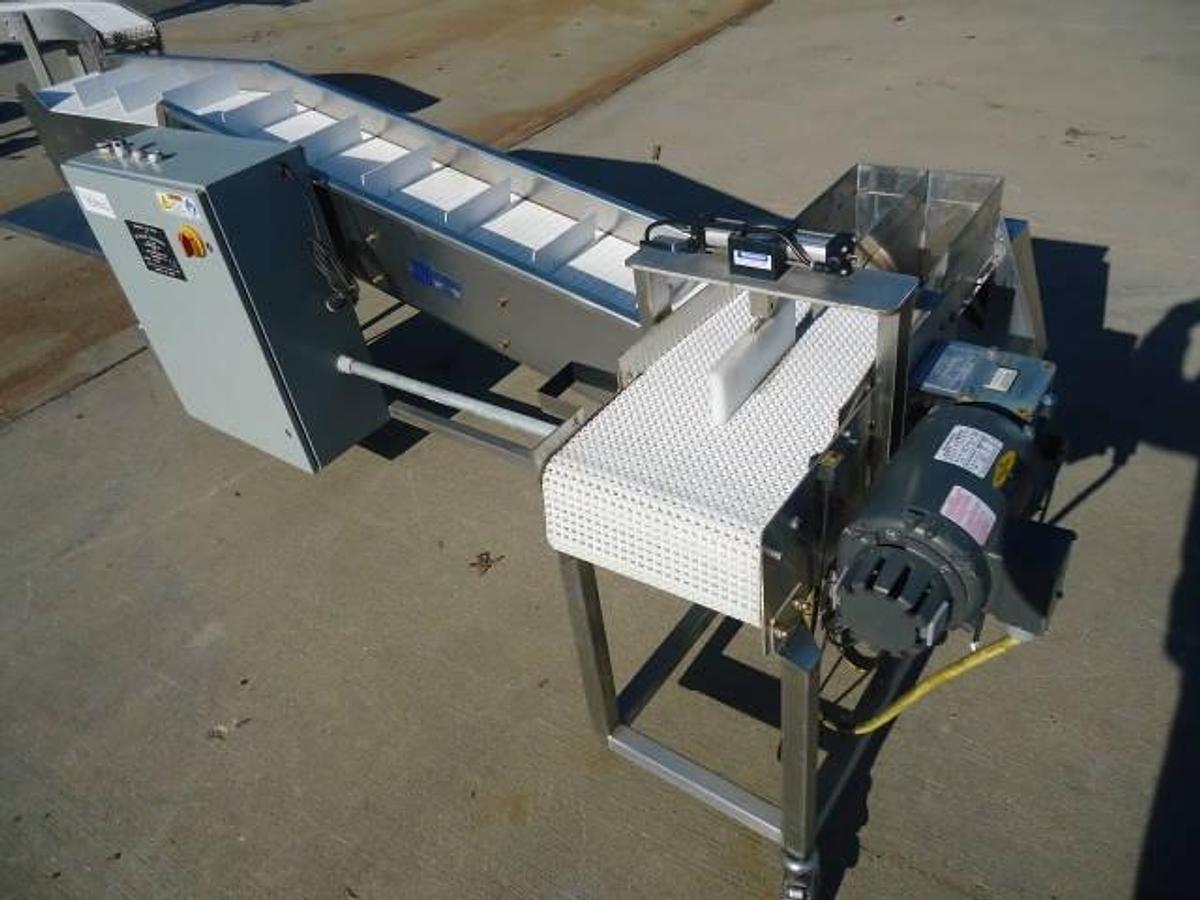
When browsing used Air-Draulic listings, it helps to know what the machine was originally designed to do, since these are often purpose-built or custom-configured systems. For example, an inclined cleated belt conveyor with an automatic dump feature (a specific configuration that has appeared in used equipment inventories) is a very different purchase than a standard press or jack. Buyers should review available specifications carefully and ask dealers for any documentation that describes the machine's intended function, rated capacity, and the industry it came from. That context makes it much easier to evaluate whether a particular used machine fits the application at hand.
What is the difference between Air-Draulic and standard hydraulic equipment?
Standard hydraulic equipment relies entirely on a manually operated pump or an electric-driven pump to build pressure in the hydraulic circuit. This works well but can be slower, especially in applications that require repeated cycling. Air-Draulic systems introduce compressed air as a driving force, which means the operator or the automated system does not have to manually pump the hydraulic fluid to build pressure. The air side of the system does the initial work, and the hydraulic side amplifies that force to achieve the final output. The practical effect is faster cycle times, reduced operator fatigue, and in many automated configurations, the ability to integrate the equipment into a larger production line controlled by pneumatic logic or PLCs.
From a maintenance standpoint, the two-system design does add some complexity. An air-hydraulic machine has air seals, filters, regulators, and fittings in addition to all the hydraulic components. Both sides need to be in good condition for the machine to perform as intended. This is worth keeping in mind when buying used Air-Draulic equipment, since a thorough inspection should cover the condition of the pneumatic circuit as well as the hydraulic circuit. Buyers evaluating used machines should ask whether the air side has been serviced recently and whether there are any visible leaks or worn fittings, in addition to the standard hydraulic checks.
What air compressor PSI is required to operate Air-Draulic equipment?
Most air-hydraulic equipment, including Air-Draulic systems, is designed to operate optimally with a compressed air supply delivering between 90 and 120 PSI. This range happens to align with what most industrial shop compressors produce, which is one reason air-hydraulic tools became so popular in automotive and manufacturing environments where a shop air line is already present. Running the equipment below the minimum recommended PSI will reduce the force output and slow cycle times, and in some cases it can cause the air side of the system to work harder than it should, accelerating wear on seals and valves.
For larger or custom-engineered Air-Draulic systems, the air supply requirements may differ from the standard shop range, particularly for automated conveyor or assembly equipment that was built to a specific customer specification. Buyers of used Air-Draulic machines should always confirm the air supply requirements from the machine's documentation or by consulting with the dealer before assuming a standard shop compressor will be sufficient. Volume (CFM) is just as important as pressure (PSI), since high-cycle automated systems can demand a sustained air flow that a small compressor cannot maintain. Matching the air supply to the machine's actual requirements is a basic step that prevents performance issues after installation.
What load capacity ranges should buyers expect from Air-Draulic equipment?
Load capacity in air-hydraulic equipment varies enormously depending on the type and intended application. On the lighter end, portable air-hydraulic jacks designed for automotive service typically start around 1.5 to 3 tons. Mid-range shop presses and cylinder systems commonly fall in the 10 to 25 ton range, while heavy industrial press systems and custom-engineered automation equipment can reach 50 tons or beyond. Air-Draulic, as a manufacturer focused on custom-engineered systems for automotive and aerospace manufacturing, has produced equipment across a wide portion of that spectrum, so the rated capacity of any specific used machine needs to be verified against the actual application requirements.
When evaluating a used Air-Draulic machine, the rated capacity should be treated as the starting point of the conversation, not the end of it. A machine rated at a certain tonnage when it left the facility that used it may have experienced wear or damage that affects its real-world performance. This is one of the core reasons why a thorough inspection matters so much with used equipment. Buyers should confirm the capacity rating from available documentation and factor in any visible wear on cylinders, seals, or structural components that could affect how close to the rated capacity the machine can safely and reliably operate.
How should a buyer inspect used Air-Draulic equipment before purchasing?
Inspecting used pneumatic and hydraulic equipment requires attention to both the mechanical and fluid systems. On the hydraulic side, buyers should look for signs of fluid leaks around cylinder seals, hose fittings, and valve bodies. Scored or pitted cylinder rods are a common sign of wear and can indicate that seals will need replacement soon after purchase. On the pneumatic side, check air lines, fittings, regulators, and filters for cracks, corrosion, or signs of improper repair. For conveyor or automated systems, the structural frame, belt condition, drive components, and any electrical controls should also be examined. If the machine was used in a production environment, asking about the maintenance history and how recently it was last serviced gives useful context.
Reputable used equipment dealers typically offer in-person inspections, virtual inspections, or video walkthroughs of the machine so buyers can get an accurate picture of its current condition before committing. Some machines may still be installed and operating at the facility where they were used, which makes an in-person inspection especially valuable since the equipment can sometimes be observed running. Keep in mind that most used equipment dealers are not set up to run full production tests, since that requires different permitting and operational infrastructure. The goal of the inspection is to assess the machine's mechanical condition and identify any issues that would need to be addressed after purchase, not to replicate a full production run.
What maintenance does Air-Draulic equipment typically require to stay in good working condition?
Regular maintenance on air-hydraulic equipment generally falls into a few categories. The hydraulic side requires periodic fluid checks and changes, seal inspections, and monitoring of cylinder rods for scoring or corrosion. Hydraulic filters should be replaced on a schedule to prevent contaminated fluid from accelerating wear inside the pump and valves. The pneumatic side needs consistent attention to the air filter and lubricator (if the system uses an in-line oiler), since dry or dirty air is one of the most common causes of premature valve and seal failure in pneumatic systems. Fittings and air lines should be checked for leaks regularly, as even small air leaks reduce system efficiency and increase compressor run time.
For larger Air-Draulic systems such as conveyors or automated assembly equipment, maintenance extends to drive motors, belts or chains, bearings, and any electrical or control components. Lubrication schedules for moving mechanical components are typically specified in the manufacturer's documentation, and following those intervals is important for preserving the machine's service life. Buyers of used Air-Draulic equipment should ask whether any maintenance records are available, since a machine with documented upkeep is generally a lower-risk purchase than one with an unknown service history. Consulting with the manufacturer about parts availability and recommended service intervals for a specific model is also a practical step, particularly for older machines where some components may be harder to source.
Are replacement parts available for used Air-Draulic equipment?
Parts availability for used industrial equipment depends on the age of the machine, the specific model, and whether the manufacturer is still actively supporting that product line. Air-Draulic produces custom-engineered systems, which means some machines were built to specific customer requirements and may use components that are not standard catalog items. For those machines, sourcing replacement parts can require working directly with the manufacturer or finding a qualified hydraulic or pneumatic shop that can fabricate or substitute compatible components. Standard wear items like seals, O-rings, filters, and hydraulic fittings are generally available through industrial supply channels regardless of the machine's age, since these are commodity parts made to standard dimensions.
Before purchasing a used Air-Draulic machine, it is worth contacting the manufacturer to ask about support availability for that specific model. The manufacturer can clarify whether parts are still stocked, whether service documentation is available, and what level of technical support to expect. Age and model can both affect this significantly. A machine that is 10 years old from a manufacturer that has continued producing similar equipment is in a much better position for parts support than a machine that is 25 years old from a discontinued product line. Getting that information upfront helps buyers make a realistic assessment of the total cost of ownership, not just the purchase price.
What should buyers know about shipping and delivery costs for used Air-Draulic equipment?
Shipping costs for used industrial equipment can vary significantly based on the size and weight of the machine, the level of packaging required, and the distance between the seller and the buyer. Smaller air-hydraulic tools may ship on a standard pallet with basic wrapping, while larger conveyor systems or automated equipment typically require custom crating to prevent damage in transit. The cost of that crating is usually passed on to the buyer and should be factored into the total landed cost of the machine. Buyers should ask the dealer specifically what packaging will be used and whether that cost is included in the listed price or quoted separately.
For heavy equipment, loading and unloading may require rigging services, which adds another cost that is easy to overlook when comparing prices. A machine that appears competitively priced may end up costing more than expected once rigging, freight, and crating are accounted for. Asking the dealer for a full landed cost estimate before committing to a purchase is a straightforward way to avoid surprises. It is also worth confirming what equipment the buyer will need on their end to unload the machine safely, since not every facility has a forklift or loading dock capable of handling a large industrial system.
What payment terms are typical when buying used Air-Draulic equipment from a dealer?
The standard practice among used equipment dealers is to require full payment before the machine ships. This applies to most transactions, particularly for first-time buyers. The reasoning is straightforward: once a machine leaves the dealer's facility, verifying its condition becomes the buyer's responsibility, and the dealer's leverage in the transaction effectively ends at that point. Buyers should plan for this expectation and arrange financing or payment in advance if needed. Some dealers may offer payment terms to established customers with whom they have a prior relationship, but this is the exception rather than the rule and typically requires a track record of previous transactions.
For higher-value equipment purchases, buyers sometimes use escrow arrangements or work through industrial equipment financing companies that specialize in machinery purchases. These options can provide some additional protection and flexibility for large transactions. Regardless of payment method, buyers should make sure they have a clear written agreement that specifies the machine being purchased, the agreed price, what inspection rights were exercised, and the shipping terms before any funds are transferred. Keeping that documentation organized is good practice for any used equipment purchase, both for accounting purposes and in case any questions arise after delivery.