Category
Manufacturer
Model
FAQ:
What types of bulk materials can a flexible screw conveyor handle?
Flexible screw conveyors are designed to move a wide range of dry bulk materials, including powders, granules, flakes, pellets, and fibrous or irregular-shaped products. The rotating flexible spiral inside the tube generates enough force to push most free-flowing and semi-free-flowing materials along the conveyor path without needing gravity or air pressure. This makes them a practical choice across food processing, chemical, plastics, and agricultural industries where material types vary considerably from one application to the next.
Materials that tend to work particularly well include flour, sugar, salt, plastic resin pellets, coffee beans, spices, and animal feed. Sticky or highly cohesive materials can sometimes present challenges, as they may pack around the spiral and reduce throughput. When evaluating a used flexible screw conveyor for a specific application, it is worth consulting with the equipment dealer about the material characteristics and whether the tube diameter and spiral design on a particular unit are appropriate for the product being conveyed.
What angles and configurations can a flexible screw conveyor operate at?
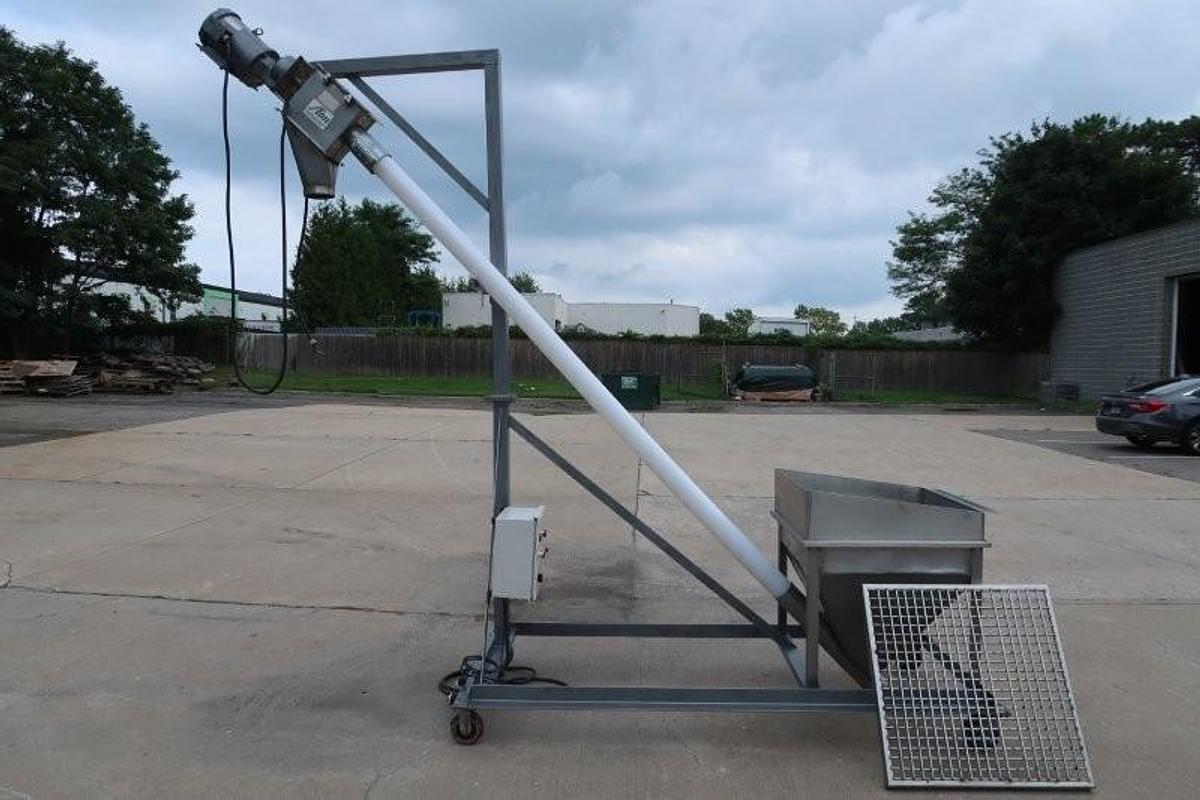
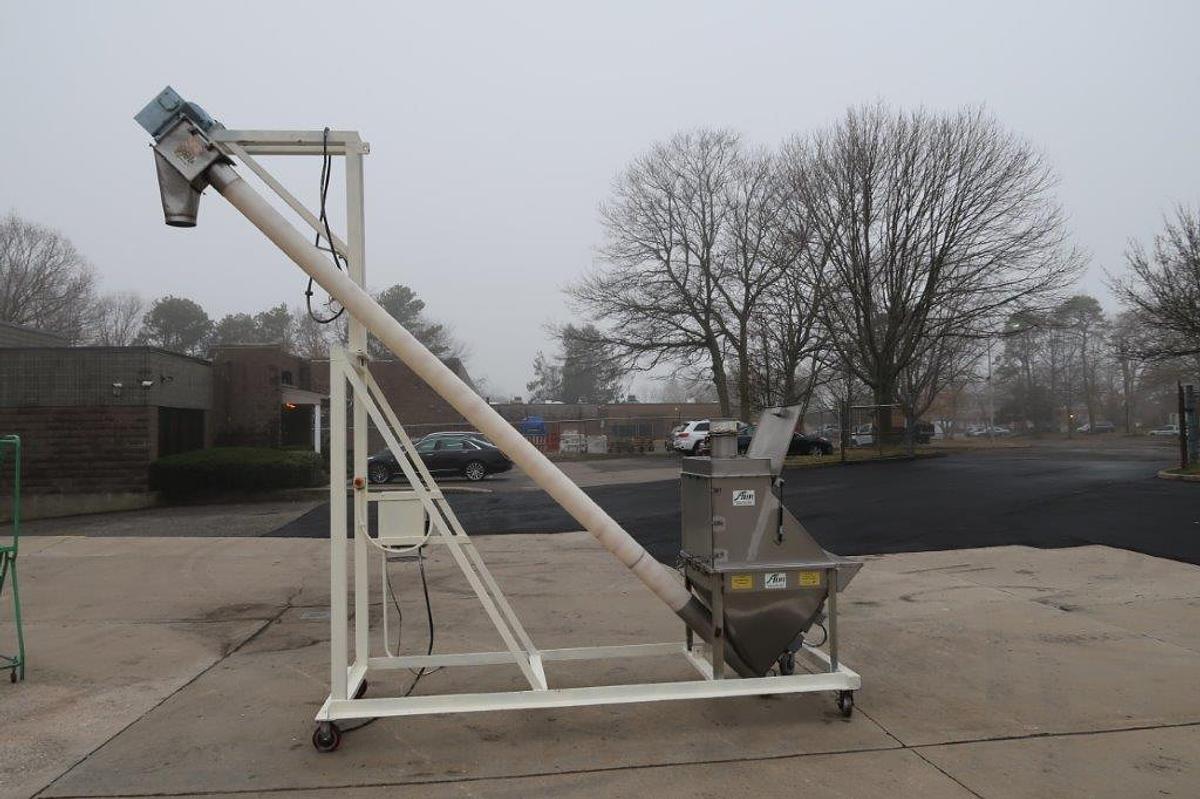
One of the defining advantages of a flexible screw conveyor is its ability to operate across a wide range of angles, from horizontal runs all the way to fully vertical lifts at 90 degrees. The tube housing the spiral can be routed around columns, walls, and other obstacles on a production floor, which is something rigid auger or belt conveyor systems simply cannot do. Inclined configurations are extremely common in industrial settings, and the Aim 6-inch diameter inclined flexible screw conveying system is a good example of how these machines are often deployed to lift material from floor level to elevated hoppers, mixers, or packaging equipment.
The actual angle that works best depends on the material being conveyed. Free-flowing materials like plastic pellets or coarse granules can typically be conveyed at steeper angles without significant loss of efficiency. Fine powders or materials with low bulk density may perform better at shallower inclines. When purchasing a used unit, buyers should confirm the tube length and configuration of the specific machine to make sure it suits the spatial constraints and elevation change required in their facility.
What is a typical conveying capacity range for flexible screw conveyor equipment?
Conveying capacity for flexible screw conveyors varies considerably based on tube diameter, spiral design, motor size, and the bulk density and flow characteristics of the material being handled. Smaller diameter units, such as those in the 3- to 4-inch range, are generally suited to light-duty applications handling a few hundred kilograms per hour. Larger diameter conveyors, including 6-inch models like the Aim unit, can handle significantly higher throughput rates, often reaching several tonnes per hour depending on the material.
It is worth noting that published capacity figures from manufacturers are typically based on ideal conditions with specific test materials. Real-world performance can differ depending on material moisture content, particle size distribution, and the angle of operation. When sourcing a used flexible screw conveyor, buyers should review the specifications of the specific unit and, where possible, discuss the intended application with the dealer to confirm the machine is sized appropriately for the required throughput.
Are flexible screw conveyors suitable for food-grade or pharmaceutical applications?
Flexible screw conveyors are widely used in food processing and pharmaceutical manufacturing, provided the unit is built with the appropriate contact materials. Food-grade and pharmaceutical applications typically require stainless steel contact parts, FDA-compliant tube materials, and smooth interior surfaces that minimize product buildup and allow for thorough cleaning between production runs. These design features are standard on machines built for regulated industries and are an important consideration when evaluating any used conveyor for these applications.
When purchasing a used flexible screw conveyor for a food or pharmaceutical environment, buyers should carefully verify the construction materials of the spiral, tube, and any product-contact components. The dealer should be able to provide details on the machine's specifications and prior use history where available. An in-person or video inspection is strongly recommended to assess the condition of contact surfaces, check for wear or corrosion, and confirm that the unit meets the hygiene standards required for the intended application.
How easy is it to clean a flexible screw conveyor between product runs?
Cleanability is one of the practical strengths of flexible screw conveyor designs. The spiral can typically be removed from the tube relatively quickly, allowing operators to clean both components separately. Stainless steel contact surfaces, where present, are easier to sanitize and are resistant to the cleaning agents used in food and pharmaceutical facilities. For dry applications with non-contaminating materials, a simple purge run or air blow-down may be sufficient to clear residual product before switching to a different material.
The ease of cleaning does depend on the specific design of the unit and the nature of the material being conveyed. Sticky, hygroscopic, or fine powdery materials can adhere to the spiral and tube interior more stubbornly, requiring more thorough disassembly and washing. Buyers purchasing a used flexible screw conveyor should inspect the tube interior and spiral condition closely, as worn or pitted surfaces are harder to clean effectively and may not meet sanitary standards for regulated applications. Asking the dealer for a detailed look at the disassembly process during an inspection is a practical way to gauge cleaning requirements before committing to a purchase.
Can flexible screw conveyors handle fragile or shear-sensitive materials without damaging them?
Flexible screw conveyors are generally considered gentle on bulk materials compared to many other mechanical conveying methods. The rotating spiral moves product through the tube in a relatively controlled manner without the high-impact contact associated with pneumatic conveying or bucket elevators. This makes them a reasonable choice for materials that are moderately fragile, such as coated tablets, breakfast cereals, or certain granular products where breakage or fines generation is a concern.
That said, flexible screw conveyors are not entirely without mechanical action. The spiral does contact the product, and at higher speeds or with particularly delicate materials, some degradation can occur. The degree of product impact depends on spiral speed, tube diameter, fill level, and the physical characteristics of the material itself. Buyers evaluating a used unit for a shear-sensitive application should consider whether the drive motor offers variable speed control, as slowing the spiral down can significantly reduce product damage. Discussing the intended material with the dealer and, if possible, reviewing the machine's prior application history will help determine whether a specific used unit is appropriate.
What power requirements should buyers expect for flexible screw conveyor equipment?
Power requirements for flexible screw conveyors vary based on tube diameter, conveyor length, operating angle, and the bulk density of the material being handled. Smaller units designed for light-duty applications may run on single-phase power with fractional horsepower motors, making them easy to integrate into facilities without dedicated three-phase electrical infrastructure. Larger diameter conveyors handling dense or heavy materials over longer distances typically require three-phase power and motors ranging from 1 to 5 horsepower or more.
When evaluating a used flexible screw conveyor, buyers should confirm the motor specifications and electrical requirements of the specific unit before purchase. This information is particularly important for facilities with limited electrical capacity or those operating in regions with specific voltage and frequency standards. The dealer should be able to provide motor nameplate data or specification sheets for the machine in question. If the existing motor needs to be replaced or the electrical supply modified, factoring those costs into the total acquisition budget is a practical step before finalizing a purchase decision.
What should buyers look for when inspecting a used flexible screw conveyor?
A thorough inspection of a used flexible screw conveyor should cover several key areas. The spiral itself is one of the most important components to evaluate, as wear, deformation, or corrosion can affect conveying efficiency and may require replacement. The tube or housing should be checked for cracks, dents, and interior surface condition, particularly if the unit will be used in a sanitary application. The drive motor, gearbox, and any bearings or seals should also be examined for signs of wear or leakage. Asking the dealer for photos or video of the machine running, if available, can provide additional confidence in the unit's condition.
Used equipment dealers will typically accommodate in-person or video inspections to give buyers an accurate picture of the machine's current state. Some units may still be installed and operational at the facility where they were used, allowing for a more complete assessment. Keep in mind that most dealers do not have the production permits or facilities to run test batches with actual product, so inspections focus on mechanical condition rather than live performance testing. Buyers should ask specific questions about the machine's service history, prior application, and any repairs or modifications that have been made, as this context helps in assessing how much useful life remains in the equipment.
What are typical shipping and logistics considerations when buying a used flexible screw conveyor?
Shipping costs and logistics for used flexible screw conveyor equipment depend on the size and weight of the unit, the distance to the buyer's facility, and the level of packaging or crating required to protect the machine in transit. Smaller portable units may be palletized and shipped via standard freight carriers without significant complexity. Larger or heavier systems may require custom crating and specialized rigging for both loading at the seller's location and unloading at the destination. Buyers should ask the dealer for a detailed breakdown of packaging, rigging, and freight costs to understand the full landed cost of the equipment before committing to a purchase.
It is also worth clarifying who is responsible for arranging freight and whether the dealer works with specific carriers or logistics providers. For buyers receiving large equipment without an overhead crane or forklift on site, arranging appropriate unloading equipment in advance is essential to avoid delays or damage on delivery. Discussing these logistics requirements with the dealer early in the process helps prevent unexpected costs and ensures the machine arrives safely and ready for installation.
What payment terms are typical when purchasing used flexible screw conveyor equipment?
Most used equipment dealers require full payment prior to releasing a machine for shipment. This is standard practice in the industry and applies to buyers purchasing for the first time from a given dealer. The reasoning is straightforward: once a machine leaves the seller's facility, the transaction is effectively complete, and dealers protect themselves by confirming funds before shipment. Payment is typically accepted by wire transfer, though some dealers may accept other methods depending on the transaction size and the buyer's location.
Buyers who have an established purchasing history with a particular dealer may find that credit terms or other arrangements are available, though this varies by dealer and is generally extended on a case-by-case basis. For buyers making a significant investment in used conveyor equipment, taking the time to thoroughly inspect the machine before payment is the most effective way to manage risk. Requesting detailed photos, video walkthroughs, or an in-person visit prior to finalizing payment gives buyers confidence in the condition of the equipment and reduces the likelihood of disputes after the sale.