Category
Manufacturer
Model
Agr-Topwave
Agr-Topwave offers precision agricultural equipment, particularly known for moisture monitoring and crop quality assessment solutions. Their products help optimize agricultural production, ensuring resource efficiency and yield quality.
FAQ:
What is the AGR TopWave bottle gauge machine?
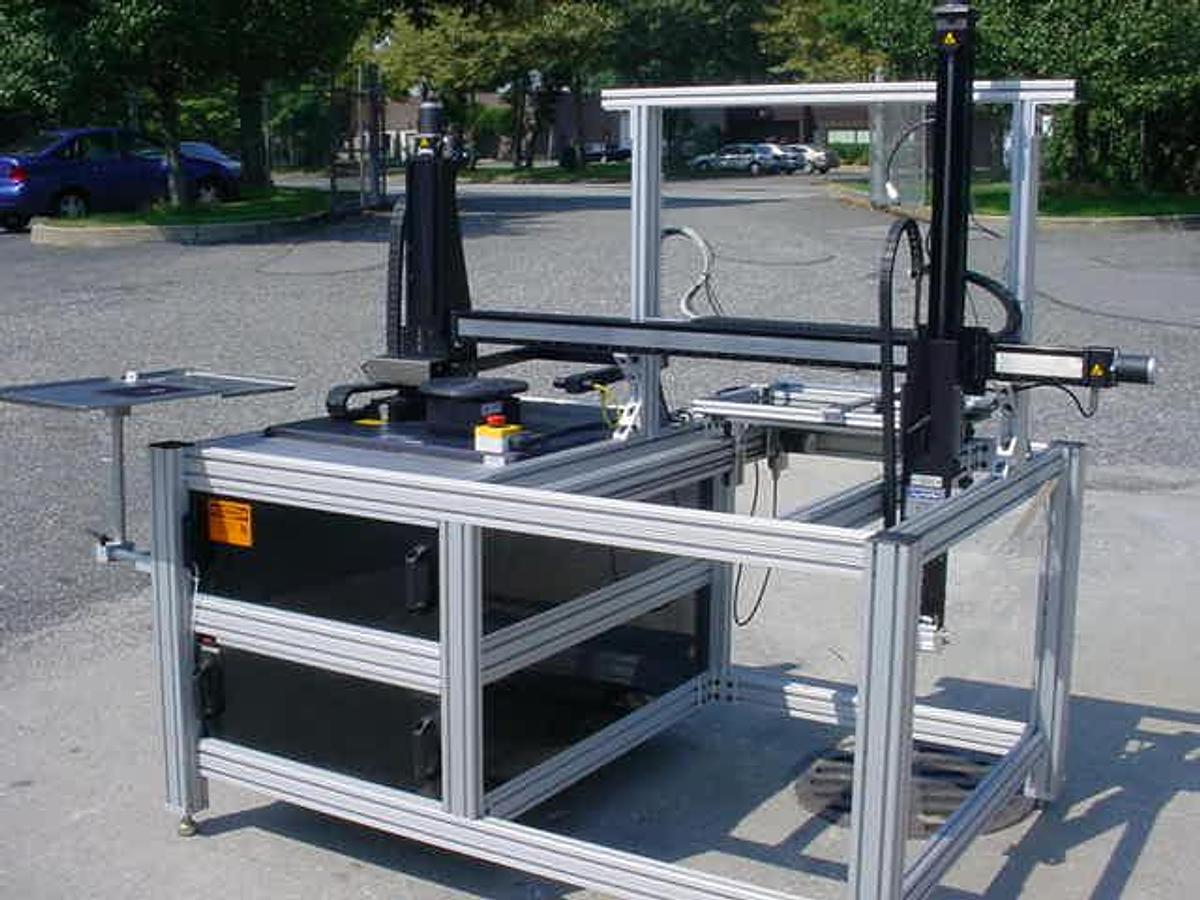
The AGR TopWave is a precision dimensional measurement system manufactured by AGR International, a company with a long track record in quality inspection technology for the glass and PET container manufacturing industry. The machine is designed to measure critical bottle and container dimensions with high accuracy, giving production teams the data they need to maintain consistent quality across manufacturing runs.
The TopWave uses non-contact optical measurement technology, which means containers pass through the system without physical contact during the gauging process. This approach reduces the risk of sample damage and allows the machine to collect dimensional data quickly and reliably. It is used in glass container plants and PET facilities to support quality control programs, and it can be deployed in laboratory settings or near production lines depending on the facility's workflow requirements.
What bottle dimensions and parameters does the AGR TopWave measure?
The AGR TopWave is capable of measuring a wide range of critical container dimensions in a single inspection cycle. Parameters typically include outside diameter, ovality (the difference between maximum and minimum diameter at a given cross-section), overall height, neck finish dimensions, and wall thickness distribution. These measurements cover the key variables that affect how a bottle performs during filling, capping, labeling, and shipping.
Being able to capture multiple parameters simultaneously is one of the practical advantages of a system like the TopWave. Rather than using separate gauges for different dimensions, a single machine pass generates a complete dimensional profile of the container. This is particularly valuable in high-volume glass and PET production environments where sampling speed and data completeness both matter for effective process control.
How does the AGR TopWave non-contact measurement system work?
The TopWave relies on optical sensing technology to capture container dimensions without physically touching the bottle during measurement. Sensors gather data as the container is positioned within the measurement zone, generating precise dimensional readings based on light-based detection methods. Because there is no mechanical contact with the bottle surface, the system avoids the wear and measurement inconsistencies that can develop over time with contact-based gauging equipment.
Non-contact measurement also speeds up the inspection process, since there is no need for slow, careful probe positioning. The system can collect a full set of dimensional data in a fraction of the time required by manual methods. For quality control teams working with glass containers, where surface integrity matters and sample handling can introduce variability, this approach offers a meaningful practical advantage over older measurement techniques.
What industries and applications is the AGR TopWave designed for?
The AGR TopWave is built primarily for the glass container manufacturing industry, where tight dimensional tolerances are critical for downstream performance on filling and packaging lines. It is also used with PET containers, making it relevant to beverage producers, food manufacturers, and pharmaceutical packagers who rely on plastic bottles with consistent dimensional specifications. Any production environment where container quality directly affects line efficiency or product integrity is a potential fit for this type of equipment.
Beyond container manufacturing plants, the TopWave is also used by quality labs that inspect incoming or outgoing container shipments. Beverage companies, for example, may use a system like this to audit glass bottles received from suppliers before committing them to production. The machine's ability to generate detailed dimensional reports makes it useful anywhere that documented quality data is required, whether for internal process control or supplier qualification purposes.
How does the AGR TopWave support statistical process control in container manufacturing?
The TopWave is designed to collect and export dimensional measurement data in formats compatible with statistical process control (SPC) analysis. As containers are measured, the system builds up a dataset that reflects the actual dimensional distribution coming off the production line. Quality engineers can use this data to calculate control limits, identify process drift before it results in out-of-spec production, and track the effect of process adjustments over time.
This data-driven approach to quality management is a significant step up from periodic manual gauging, which captures only a small snapshot of production. With a system like the TopWave feeding continuous dimensional data into an SPC program, manufacturers can detect subtle shifts in forming equipment, mold wear, or temperature variation that would otherwise go unnoticed until defect rates increase. The result is fewer rejected containers, less wasted material, and more predictable line performance.
Can the AGR TopWave be used on a production line or only in a laboratory setting?
AGR TopWave systems are designed to operate in both laboratory and near-line production environments. In a lab configuration, operators bring container samples to the machine for offline measurement, which works well for incoming inspection, mold audits, or periodic quality checks. Near-line deployment places the machine close to the production floor so that samples can be pulled and measured quickly without being transported to a separate quality room, reducing the time between sampling and getting results back to the forming team.
The flexibility to work in either setting makes the TopWave a practical choice for facilities with different quality control workflows. Some plants use it exclusively as a lab instrument, while others integrate it into their production-floor quality stations. When evaluating a used TopWave, it is worth understanding how the previous operator used the machine, as near-line environments can expose equipment to more vibration, temperature variation, and particulate contamination than a controlled lab setting.
What should buyers know when purchasing a used AGR TopWave bottle gauge machine?
Buying a used AGR TopWave requires careful evaluation of the machine's condition, since these are precision optical measurement systems where sensor alignment and calibration state directly affect measurement accuracy. Buyers should request a thorough inspection before committing to a purchase. Reputable used equipment dealers will typically accommodate in-person inspections at their facility or at the plant where the machine is currently located. Video inspections and detailed photo documentation are also commonly available and can give a clear picture of the machine's physical condition and any visible wear.
It is also worth contacting AGR International directly to ask about parts availability and technical support for the specific model and age of the machine being considered. Older models may have limited support resources, which affects long-term serviceability. Since used equipment is sold as-is, buyers carry the responsibility of assessing condition before purchase. Choosing a dealer who specializes in packaging and container industry equipment, and who has a verifiable history of selling this type of machinery, significantly reduces the risk of a problematic transaction.
What types of bottles and containers is the AGR TopWave compatible with?
The AGR TopWave is primarily associated with glass container applications, including bottles used in the beverage, food, and pharmaceutical industries. It handles a range of container sizes and profiles, from small pharmaceutical vials to larger beverage bottles, though the specific size range depends on the model configuration and any tooling or fixtures included with the machine. PET containers are also within the scope of what TopWave systems can measure, making the machine relevant to plastic bottle producers as well.
When evaluating a used TopWave for a specific application, buyers should confirm that the machine's measurement range and any included tooling match the container sizes and neck finishes they plan to inspect. Some configurations are optimized for particular bottle families, and adapting the system to a very different container type may require additional accessories or reconfiguration. Clarifying these details with the seller before purchase avoids compatibility surprises after the machine arrives.
What are the shipping and logistics considerations for a used AGR TopWave machine?
The AGR TopWave is a precision measurement instrument, and its optical components require careful packaging to prevent damage during transit. Shipping costs will vary depending on the level of crating or palletization required to adequately protect the machine, the distance involved, and whether specialized rigging is needed for loading and unloading. Buyers should ask the seller for a detailed breakdown of packaging, rigging, and freight costs before finalizing a purchase, so the full landed cost of the equipment is understood upfront.
For larger or heavier configurations, a forklift or other rigging equipment may be necessary at both the origin and destination, which adds to the logistics cost. Buyers who are not familiar with machinery shipping should work with a freight broker experienced in industrial equipment to ensure the machine is handled correctly. Discussing packaging specifications with the dealer in advance, and confirming who is responsible for any damage that occurs in transit, are both important steps before the machine leaves the seller's facility.
What payment terms are typical when buying a used AGR TopWave from a machinery dealer?
Most used equipment dealers require full payment before a machine is released for shipping. This is standard practice in the used machinery industry and applies to equipment like the AGR TopWave regardless of the purchase price. Some dealers extend payment terms to established customers with a prior transaction history, but first-time buyers should generally expect to pay in full before the machine is loaded and shipped.
Buyers should also factor in the timing of payment relative to the inspection process. It is advisable to complete any inspection, whether in person, by video, or through detailed documentation provided by the dealer, before submitting payment. Once payment is made and the machine ships, the buyer assumes responsibility for the equipment. Understanding the dealer's process for confirming payment receipt and coordinating shipment scheduling is a practical detail worth clarifying early in the purchasing conversation.