Category(1)
Subcategory(1)
Manufacturer(350)
- Agnelli(2)
- Groen(96)
- Lee(82)
- Kaps-All(65)
- Waukesha(52)
- Hobart(33)
- Urschel(33)
- Ross(31)
- Fitzpatrick(29)
- Lightnin(29)
- Silverson(29)
- Patterson Kelley(28)
- Cherry Burrell(25)
- Toresani(23)
- All Fill(22)
- Greerco(21)
- Simplex(21)
- Crepaco(20)
- Hamilton(19)
- Safeline(18)
- Chester Jensen(16)
- Gai(16)
- Stephan(16)
- Inline Filling Systems(15)
- Accutek(14)
- Gemco(14)
- Heat &Amp; Control(14)
- Ika(14)
- Waukesha/Cherry Burrell(14)
- Charlotte(13)
- Day(13)
- Feldmeier(13)
- Stokes(13)
- Kalish(12)
- Littleford(12)
- Sweco(12)
- Walker(12)
- Cleveland Range(11)
- Fristam(11)
- APV(10)
- Axon(10)
- Cleveland(10)
- Cornell Machine Company(10)
- Graco(10)
- Kalix(10)
- King(10)
- Maisa(10)
- Saima(10)
- Wilden(10)
- Colton(9)
- Dci(9)
- Flexicon(9)
- Hinds Bock(9)
- Ima(9)
- Lombi(9)
- Oden(9)
- Swanmatic(9)
- Weldotron(9)
- Automate Technologies(8)
- Capsugel(8)
- Doboy(8)
- Fryma(8)
- Hayssen(8)
- La Parmigiana(8)
- Lakso(8)
- Marion(8)
- Tri-Clover(8)
- Videojet(8)
- Admix(7)
- All-Fill(7)
- Cozzoli(7)
- Cretors(7)
- Cvc(7)
- Enercon(7)
- Hapman(7)
- Jg Machine Works(7)
- Mikro(7)
- Mrm/Elgin(7)
- Mueller(7)
- Surekap(7)
- Vac-U-Max(7)
- Vemag(7)
- Apacks(6)
- Apv Crepaco(6)
- Arde Barinco(6)
- Autobag(6)
- B & G(6)
- Bartelt(6)
- Chemineer(6)
- Circle(6)
- Colborne(6)
- Econocorp(6)
- Ertel(6)
- Filling Equipment Company(6)
- Ishida(6)
- Legion(6)
- Millipore(6)
- Northstar(6)
- Permasan(6)
- Rietz(6)
- Sandpiper(6)
- Star(6)
- Stein(6)
- Vanguard(6)
- A&B Process Systems(5)
- ARO(5)
- Allpax(5)
- Binacchi(5)
- Bivans(5)
- Bock(5)
- Breddo(5)
- Domino(5)
- E-Pak(5)
- Elf(5)
- Federal(5)
- Fmc(5)
- Fogg(5)
- Fulton(5)
- Holmatic(5)
- Jeff Eastey(5)
- Loma(5)
- Lyco(5)
- Market Forge(5)
- Mateer(5)
- Modern Packaging(5)
- Murzan(5)
- New England Machinery(5)
- Nordenmatic(5)
- Osgood(5)
- Packaging Dynamics(5)
- Portable(5)
- Prodo-Pak(5)
- Rheon(5)
- Seydelmann(5)
- Shanklin(5)
- Unipac(5)
- Universal(5)
- Us Bottlers(5)
- 3M(4)
- APV/Gaulin(4)
- Acasi(4)
- Accraply(4)
- Aesus Systems(4)
- American Can Company(4)
- Ams(4)
- Autoprod(4)
- Buflovak(4)
- Dixie(4)
- Explosion Proof&Quot;(4)
- Filamatic(4)
- Geyer(4)
- Greerco/Gifford Wood(4)
- Hoppmann(4)
- Hundom(4)
- Jones(4)
- Lock(4)
- Mateer Burt(4)
- Mrm(4)
- Ohlson(4)
- Omega(4)
- PDC(4)
- Pack West(4)
- Pam(4)
- Per-Fil(4)
- Premier(4)
- Prosys(4)
- Quadrel(4)
- Robbins & Myers(4)
- Sihi(4)
- Sonic(4)
- Spee-Dee(4)
- Sterling(4)
- Thomsen(4)
- Tucs(4)
- Vector(4)
- White Cap(4)
- World Cup(4)
- Aesus(3)
- Aline(3)
- American Can Co.(3)
- American Process Systems(3)
- Ampco(3)
- Beseler(3)
- Biro(3)
- Blentech(3)
- Bridge(3)
- Brothers Legrow(3)
- Chem-Tek(3)
- Clamco(3)
- Daniels Food Equipment(3)
- Edlund(3)
- Erweka(3)
- Expert Industries(3)
- Fortress Technology(3)
- G &A H(3)
- Garvey(3)
- Gast(3)
- Gaulin(3)
- Genmac(3)
- Gifford-Wood(3)
- Goulds(3)
- Gse Scale Systems(3)
- Hassia(3)
- Hughes(3)
- Hytrol(3)
- Imaje(3)
- Italpast(3)
- Iwka(3)
- Kason(3)
- Kemwall(3)
- Koppens(3)
- Labelette(3)
- Loma/Lock(3)
- Manesty(3)
- Mazzoni(3)
- Metica(3)
- Mk Automation(3)
- Modular Packaging(3)
- Norden(3)
- Olsa(3)
- Packwest(3)
- Pamasol(3)
- Patterson(3)
- Peerless(3)
- Pharma Packaging Systems(3)
- Quadro(3)
- Reb(3)
- Sanitank(3)
- Savage Bros.(3)
- Stainless Steel&Quot;(3)
- Univex(3)
- Virtis(3)
- Vitaline(3)
- Volpak(3)
- Will-Flow(3)
- Willflow(3)
- Yamato(3)
- Zanasi(3)
- A&B Process(2)
- APV/Crepaco(2)
- Adept(2)
- Albin(2)
- Alfa Laval(2)
- Alpine(2)
- Amfec(2)
- Amsco(2)
- Anderson(2)
- Autolabe(2)
- Automation Devices(2)
- Axomatic(2)
- Azo Bauermeister(2)
- B. H. Hubbert &Amp; Son(2)
- Baker Perkins(2)
- Balpack(2)
- Becomix(2)
- Bematek(2)
- Bestronic(2)
- Blue M(2)
- Bradford(2)
- Burt(2)
- CCL(2)
- CDA(2)
- Canco(2)
- Capmatic(2)
- Champion(2)
- Chamunda Pharmatech(2)
- Charles Ross & Son(2)
- Clawson Tank Company(2)
- Creative Automation(2)
- Criveller(2)
- Crown(2)
- Damon/Iec(2)
- Deitz(2)
- Demaco(2)
- Dl Tech(2)
- Dominioni(2)
- Donaldson/Torit(2)
- Duriron(2)
- Elanco(2)
- Emerito(2)
- Facchini(2)
- Falcon(2)
- Feed Systems(2)
- Fette(2)
- Foodesign(2)
- Fpec(2)
- Frazier & Son(2)
- Gai/Prospero(2)
- Gei/Mateer(2)
- Ginhong(2)
- Globaltek(2)
- Gram Equipment(2)
- Hamilton/Trinity Industries(2)
- Handtmann(2)
- Hi-Speed(2)
- Hill(2)
- Hockmeyer(2)
- Ital Past(2)
- Jabsco(2)
- Jda(2)
- Kanara Industrial(2)
- Kent(2)
- Ketan(2)
- Key Industries(2)
- Key International(2)
- Key Technology(2)
- Key-Pak(2)
- Kinex(2)
- Kirby Lester(2)
- Kosme(2)
- Krieger(2)
- L.A. Inox (Italy)(2)
- Labeling Technologies(2)
- Leland(2)
- Lfa(2)
- Linde(2)
- Liquid Carbonic(2)
- Lsi(2)
- Mahaffy &Amp; Harder(2)
- Marden Edwards(2)
- Markem-Imaje(2)
- Mastermatic(2)
- Metromatic(2)
- Mixmor(2)
- Morse(2)
- Mpbs(2)
- Multi-Vac(2)
- Multisorb Technologies(2)
- Myers Engineering(2)
- Nash(2)
- National Bulk Equipment(2)
- National Instrument(2)
- National Instrument Company(2)
- New England Machine(2)
- New Way(2)
- Nita(2)
- North Star(2)
- Oakes(2)
- Ocean Packing(2)
- PE(2)
- Pacific(2)
- Packline(2)
- Pama-Roma(2)
- Paul O. Abbe(2)
- Pavan/Toresani(2)
- Pfaudler(2)
- Pharmacia(2)
- Pillar Technologies(2)
- Pitco/Mastermatic(2)
- Ppet(2)
Model(2)
FAQ:
What models of Agnelli ravioli machines are typically available on the used equipment market?
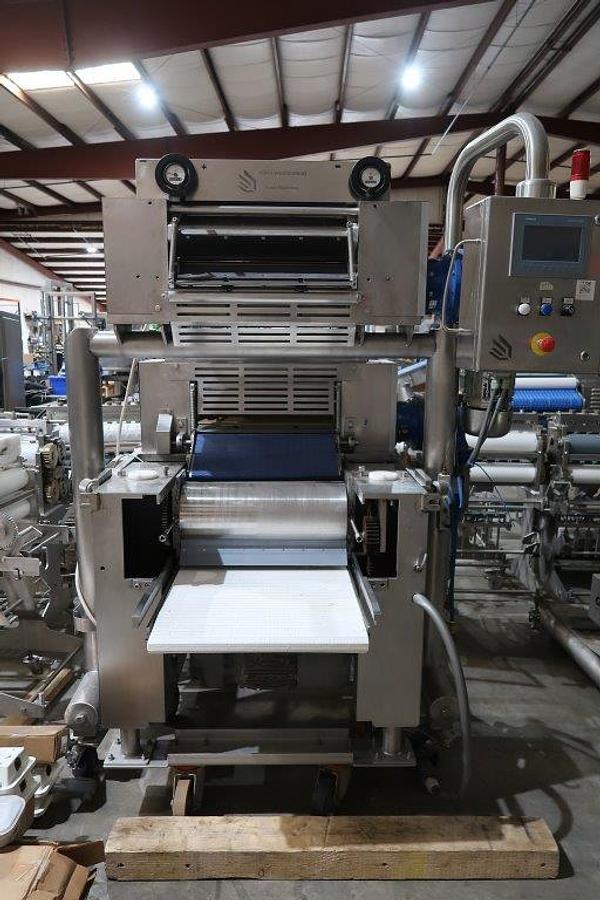
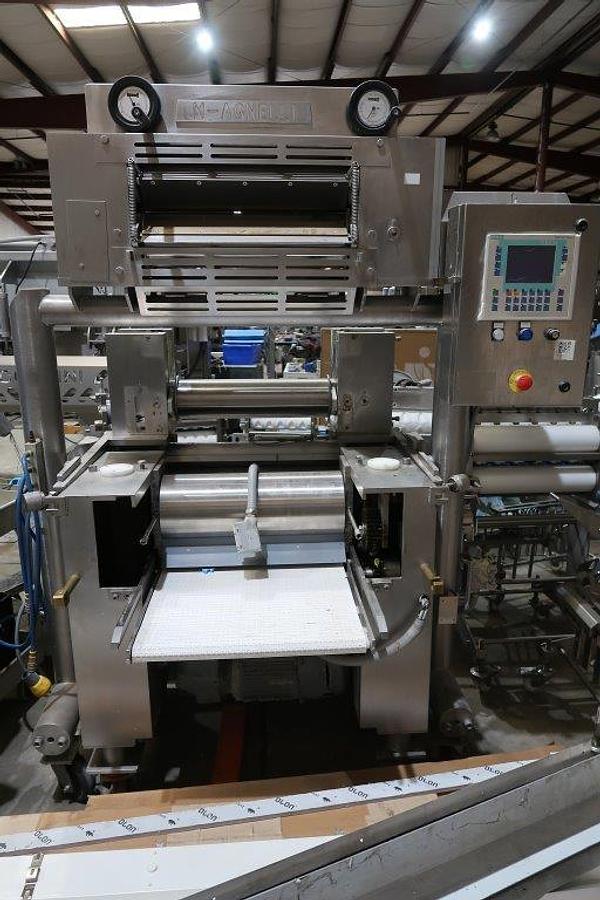
Agnelli produces several ravioli machine models that appear on the used commercial equipment market, with two of the more commonly found being the Agnelli Ravioli Machine (540mm) and the Agnelli Doppia Sfoglia Ravioli Machine. The 540mm model refers to the working width of the pasta sheet, which is a practical indicator of production capacity. The Doppia Sfoglia, which translates roughly to 'double sheet,' is designed to feed two layers of pasta dough simultaneously, automating the process of encasing fillings between sheets. Both are built for commercial or high-volume semi-professional environments.
Because these are used machines, availability changes as units are acquired and sold. Buyers searching for a specific Agnelli model should check with dealers regularly, as inventory turns over. It is also worth asking a dealer whether they have additional Agnelli units that may not yet be listed, since used equipment dealers sometimes acquire machines in batches from food production facilities and list them incrementally.
What is the difference between the Agnelli Ravioli Machine and the Agnelli Doppia Sfoglia model?
The standard Agnelli ravioli machine operates by pressing and cutting pasta dough into individual ravioli pieces using a mold or die system. The operator typically feeds a sheet of dough over a filling tray, then a second sheet is placed on top before the machine crimps and cuts the pieces. The 540mm designation on some models refers to the width of the pasta sheet the machine can accommodate, which directly affects how many ravioli can be produced per pass and per hour.
The Doppia Sfoglia model takes a more automated approach by handling two pasta sheets at once, feeding them through rollers that encase the filling in a single continuous operation. This design reduces manual handling steps and is generally better suited to higher-volume production lines where speed and consistency are priorities. For a pasta manufacturer or restaurant producing large quantities daily, the Doppia Sfoglia configuration can meaningfully increase throughput compared to a single-sheet setup. Both machines reflect Agnelli's focus on producing uniform, presentation-quality ravioli at scale.
What should buyers know about purchasing a used Agnelli ravioli machine versus buying one new from a distributor?
Buying a used Agnelli ravioli machine can offer significant cost savings compared to purchasing through a distributor, but it comes with a different set of considerations. Used machines are sold as-is, meaning there is no manufacturer-backed coverage transferred to the buyer. The condition of the machine depends entirely on how it was maintained during its previous service life, which makes the reputation and transparency of the dealer a critical factor in the decision. Buyers should prioritize dealers who specialize in food processing or pasta equipment, have a verifiable track record, and are willing to provide detailed information about the machine's history and current condition.
One practical advantage of buying used is that Agnelli machines are built to commercial-grade standards using materials like anodized aluminum and stainless steel, which means a well-maintained unit can retain strong functionality for many years. Before committing to a purchase, buyers should request an inspection, either in person or via video, to assess the condition of the dies, rollers, crimping components, and drive mechanisms. Consulting with Agnelli or an authorized service technician about parts availability for a specific model and production year is also a sensible step, since older models may have more limited support.
How durable are Agnelli ravioli machines and what affects their lifespan in commercial use?
Agnelli ravioli machines are built for commercial production environments, and their construction reflects that. The frames and food-contact components are typically made from anodized aluminum or stainless steel, both of which resist corrosion, handle repeated cleaning cycles well, and hold up under continuous use. In a properly maintained commercial kitchen or pasta production facility, these machines can remain functional for well over a decade. The mechanical simplicity of the core ravioli-forming process, which relies on rollers, dies, and crimping mechanisms rather than complex electronics, also contributes to longevity.
That said, lifespan on any used machine is directly tied to its maintenance history. Machines that were regularly cleaned, lubricated per manufacturer specifications, and operated within their designed capacity will be in substantially better condition than those that were neglected or pushed beyond their intended output. When evaluating a used Agnelli unit, buyers should look closely at the condition of the dies and molds, since these are the components most subject to wear, and ask the dealer or previous owner about the machine's maintenance routine. Replacement dies and forming components are sometimes available through Agnelli or third-party pasta equipment suppliers, so confirming parts availability for the specific model is worth doing before purchase.
What types of ravioli shapes and sizes can Agnelli machines produce?
Agnelli ravioli machines are designed around interchangeable die and mold systems, which allows a single machine to produce different ravioli shapes and sizes depending on which tooling is installed. Common formats include square ravioli in various sizes, round ravioli, and rectangular forms like mezzelune. The specific shapes available depend on the model and the dies that come with the machine or are sourced separately. In commercial pasta production, the ability to switch between formats is a meaningful operational advantage, allowing a facility to run different product lines on the same equipment.
The 540mm working width found on some Agnelli models is a reference to the pasta sheet width, which determines how many pieces can be cut per pass. Wider sheets generally allow for higher per-cycle output, particularly for smaller ravioli formats. Buyers purchasing a used machine should confirm which dies and molds are included with the unit, as tooling is sometimes separated from the machine before resale. Additional or replacement dies may be available through Agnelli or compatible pasta equipment suppliers, but availability can vary depending on the model's age.
Are Agnelli ravioli machines designed for commercial use, or are they also suitable for smaller-scale operations?
Agnelli's ravioli machines are engineered primarily for commercial and professional food production environments. The build quality, production capacity, and footprint of models like the 540mm and Doppia Sfoglia are oriented toward restaurants, pasta manufacturers, catering operations, and culinary institutions that need consistent output at volume. These are not countertop hobby machines. They are floor-standing or bench-mounted industrial units that require adequate workspace, proper electrical connections, and operators who are comfortable working with commercial food processing equipment.
For smaller operations, a used Agnelli machine can still be a practical investment if the volume justifies it. A small pasta shop or restaurant producing fresh ravioli daily would benefit from the consistency and speed these machines provide compared to entirely manual production. The key is matching the machine's capacity to actual production needs. Buying a high-throughput commercial unit for very low-volume use is not necessarily a problem from a mechanical standpoint, but it may represent more capital than the application requires. Buyers in that situation should weigh the cost of a used Agnelli unit against their realistic production volumes and the available space in their facility.
What should buyers look for when inspecting a used Agnelli ravioli machine before purchase?
A thorough inspection of a used Agnelli ravioli machine should cover both the mechanical and food-contact components. On the mechanical side, buyers should examine the drive motor, gearbox, and roller assemblies for signs of wear, unusual noise during operation, or visible damage. The crimping and cutting mechanisms should engage cleanly and produce even pressure across the full width of the pasta sheet. Any slipping, uneven crimping, or inconsistent cutting is a sign that components may need adjustment or replacement.
For food-contact components, the dies, molds, and rollers should be free of deep scratches, pitting, or corrosion that could harbor bacteria or affect product quality. Anodized aluminum surfaces should appear intact without flaking or significant abrasion. Buyers should also check that all included tooling matches the machine model and is complete. Used equipment dealers who specialize in food processing machinery will typically offer in-person inspections, video walkthroughs, or photo documentation to help buyers assess condition remotely. If the machine is still installed at a production facility, some dealers can arrange access for a direct inspection, though testing with actual product may not always be possible given the operational and permitting requirements of active production sites.
How does the inspection process work when buying a used Agnelli ravioli machine from a dealer?
Reputable used equipment dealers generally offer buyers several options for inspecting a machine before committing to a purchase. In-person inspections are the most thorough approach, allowing a buyer or their technician to physically examine the machine, check mechanical components, and assess overall condition firsthand. Virtual inspections via video call are a practical alternative for buyers who cannot travel, with the dealer walking through the machine in real time and answering questions as they go. Many dealers also provide detailed photo sets or pre-recorded video documentation of the equipment.
It is worth understanding that most used equipment dealers operate as resellers rather than production facilities, which means they typically cannot run a full pasta production test on the machine. Testing actual product requires food-safe permitting and production infrastructure that a machinery dealer will not have on-site. What a dealer can usually demonstrate is that the machine powers on, that mechanical components move as intended, and that there are no obvious signs of damage or malfunction. If a machine is still installed at the facility where it was used, the dealer may be able to arrange an inspection at that location, where a live production test might be more feasible. Buyers should ask specifically what the inspection will cover so expectations are clear before traveling or making a decision.
What are typical shipping and logistics considerations for a used Agnelli ravioli machine?
Commercial ravioli machines like those made by Agnelli are substantial pieces of equipment, and shipping them requires more planning than a standard parcel delivery. The machine needs to be properly palletized or crated to prevent damage during transit. Basic palletization may be sufficient for some units, while heavier or more complex machines may require custom wooden crating to protect rollers, dies, and frame components. The level of packaging directly affects shipping costs, and buyers should ask the dealer specifically what packaging is included in the quoted price.
For larger machines, loading and unloading may require a forklift or pallet jack, and freight carriers handling heavy equipment will typically deliver to the curb or loading dock rather than inside a facility. If the buyer does not have a loading dock, they may need to arrange a lift-gate service, which adds to the overall cost. Buyers should request a full breakdown of packaging, rigging, freight, and any additional handling fees so they understand the complete landed cost of the machine before finalizing the purchase. International shipping adds further complexity, including customs documentation, import duties, and compliance with the destination country's food equipment regulations, all of which should be clarified with the dealer upfront.
What payment terms do used equipment dealers typically require for commercial pasta machines?
The standard practice among used equipment dealers is to require full payment before a machine is shipped or released to a freight carrier. This applies to most transactions, including commercial pasta and ravioli machines. The reasoning is straightforward: once a large piece of industrial equipment leaves a dealer's facility, recovering it in the event of a payment dispute is costly and complicated. Buyers should plan for this expectation and have financing or funds arranged before finalizing a purchase.
Some dealers extend payment terms to buyers with whom they have an established purchasing history, but this is not common for first-time transactions. Accepted payment methods vary by dealer but often include wire transfer, ACH, or other verifiable forms of payment. Credit card payments may be accepted in some cases, though dealers sometimes apply a processing fee for card transactions on large equipment purchases. Buyers should confirm payment requirements and accepted methods early in the conversation with a dealer, particularly if they are working within a budget approval process that requires lead time.