Category
Manufacturer
Model
Advent
Advent is renowned for their machinery that aids in precision filling and packaging solutions. Primarily supporting the pharmaceutical and beverage sectors, their equipment is designed to maximize efficiency and adherence to high sanitary standards.
FAQ:
What industries is Advent filling and packaging equipment designed for?
Advent filling and packaging equipment is primarily built to serve the pharmaceutical and beverage sectors, where precision, consistency, and strict sanitary standards are non-negotiable. The machines are engineered to meet the hygiene and accuracy requirements that regulated industries demand, making them a practical fit for producers who need reliable output without sacrificing compliance.
Beyond pharmaceuticals and beverages, Advent equipment also finds application in cosmetics, personal care, food production, and contract packaging operations. Many small to mid-size manufacturers and startups are drawn to Advent machinery because the equipment balances affordability with the kind of build quality that holds up in demanding production environments. Buyers sourcing used Advent machines should consider whether the specific model they are evaluating was configured for their target industry, since sanitary fittings, material contact surfaces, and filling mechanisms can vary significantly across product lines.
What types of filling and packaging machines does Advent manufacture?
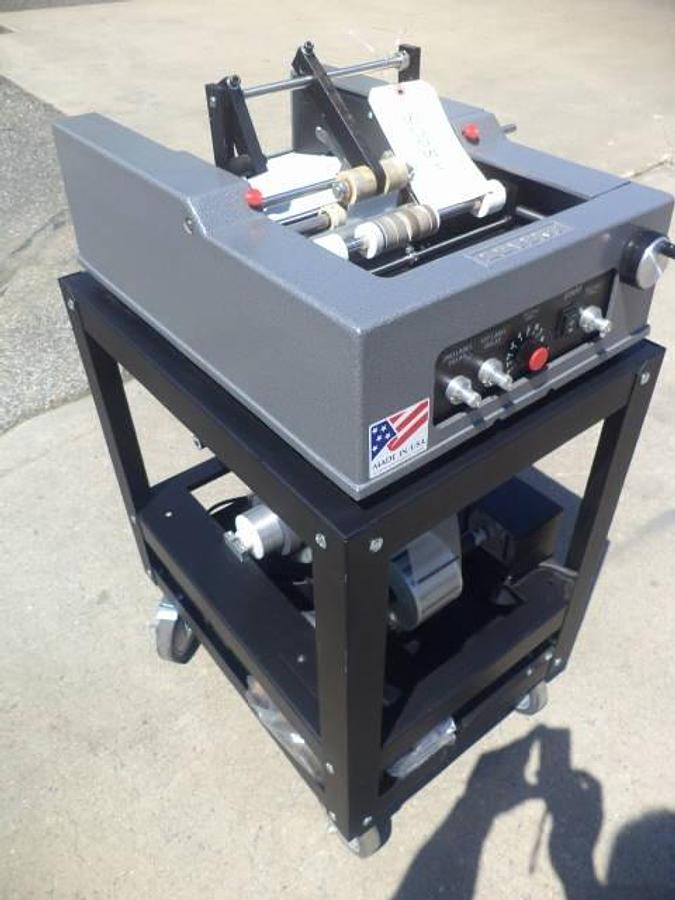
Advent produces a range of filling and packaging machinery that covers several stages of a production line. Their lineup typically includes liquid fillers, piston fillers, auger fillers, powder fillers, capping machines, labeling systems, and semi-automatic options designed for lower-volume or flexible production environments. The Advent 310 Semi-Automatic Pressure Sensitive Labeler is one example of their portable, operator-friendly equipment that suits facilities where versatility and ease of changeover matter.
Many Advent machines are designed with minimal operator training in mind, which is a meaningful advantage for smaller operations or facilities that experience frequent staff turnover. Buyers evaluating used Advent equipment should pay close attention to the specific model and its intended function, since a piston filler configured for thin liquids will perform very differently from an auger filler built for dry powders. Confirming the machine's original application and current mechanical condition during the inspection process helps avoid mismatches between the equipment and the intended production task.
Can Advent filling machines handle viscous or thick liquids like sauces, creams, or gels?
Certain Advent filling machines, particularly piston fillers, are well-suited for handling viscous products such as sauces, creams, gels, and thick pastes. Piston-based filling mechanisms work by drawing product into a cylinder and then pushing a measured volume into each container, which gives them the mechanical force needed to move thicker materials that gravity-fed or overflow fillers cannot handle reliably. The key variable is the specific model and how it was originally configured, including the size of the fill cylinder, the valve type, and whether the machine includes any heating or agitation features to maintain product consistency.
When sourcing used Advent filling equipment for viscous applications, buyers should verify that the product contact parts are compatible with their specific formulation, particularly if the product contains particulates, is highly acidic, or requires temperature control during filling. Asking the dealer for details on the machine's previous application, the materials used in its seals and valves, and whether those components are still in serviceable condition will help determine if the machine is a practical fit. A thorough inspection, either in person or via video, is the most reliable way to assess the current state of the filling mechanism before committing to a purchase.
What filling speeds and output capacities does Advent packaging equipment offer?
Advent filling and packaging equipment spans a fairly wide range of output capacities depending on the model and whether the machine is semi-automatic or fully automatic. Semi-automatic machines, which require an operator to position containers and initiate each fill cycle, typically produce lower throughput and are better suited for short runs, frequent product changeovers, or facilities that are scaling up gradually. Fully automatic Advent systems are designed for higher-volume continuous production and can handle significantly more containers per minute, though the exact figures depend on fill volume, product viscosity, and container type.
Buyers evaluating used Advent equipment should request specific output data for the model in question rather than relying on general category benchmarks. Production speeds listed in manufacturer documentation reflect ideal conditions, and a used machine's actual throughput may differ based on its age, maintenance history, and the condition of timing components, valves, and conveyors. During an inspection, asking the dealer to demonstrate a fill cycle or provide video footage of the machine operating is the most practical way to gauge real-world performance before purchase.
Is Advent filling and packaging equipment suitable for small businesses or startups?
Advent equipment has a reputation for being accessible to smaller operations, and several models in their lineup are specifically designed with ease of use and lower capital investment in mind. Semi-automatic machines like the Advent 310 Semi-Automatic Pressure Sensitive Labeler are portable and straightforward to operate, which makes them a reasonable entry point for startups or small manufacturers that are not yet ready to commit to a fully automated high-speed line. The lower operator training requirements associated with many Advent machines also reduce onboarding friction for facilities with lean staffing.
Purchasing used Advent equipment can lower the barrier to entry even further, since pre-owned machines are available at a fraction of the cost of comparable equipment purchased directly from a manufacturer. That said, small businesses buying used machinery should approach the process carefully. Total cost of ownership matters as much as the purchase price, and factors like spare parts availability, the condition of wear components, and the level of support the manufacturer still provides for older models all affect the long-term value of the investment. Working with a reputable used equipment dealer who specializes in packaging machinery and allows thorough pre-purchase inspections is an important safeguard.
What should buyers know about inspecting used Advent filling equipment before purchasing?
Inspecting used Advent filling and packaging equipment before purchase is one of the most important steps a buyer can take, since used machines are typically sold as-is without the protections that come with purchasing directly from a manufacturer. Reputable used equipment dealers will generally accommodate in-person inspections at their facility, or alternatively provide virtual inspections via live video call or recorded footage of the machine. In some cases, equipment may still be installed and operating at the seller's production facility, which offers an opportunity to see the machine running under real conditions, though even then, testing with the buyer's specific product is rarely possible since production facilities operate under different permitting than equipment dealerships.
During an inspection, buyers should focus on the condition of product contact parts such as valves, seals, nozzles, and fill cylinders, since these components experience the most wear and are critical to fill accuracy and sanitation. Mechanical components including motors, drives, and conveyor systems should also be assessed. It is worth consulting directly with Advent or their authorized service network to understand what parts and technical support are available for the specific model being considered, as older or discontinued models may have limited parts availability. Asking the dealer about the machine's service history, previous application, and any known issues provides additional context that helps buyers make an informed decision.
What is the typical price range for used Advent filling and packaging machines?
Pricing for used Advent filling and packaging equipment varies considerably based on the machine type, model, age, condition, and level of automation. Entry-level semi-automatic machines such as labelers or basic liquid fillers can be found at relatively modest price points, making them accessible for smaller operations or buyers looking to add a single piece of equipment to an existing line. More complex systems, including multi-head fillers, fully automatic lines, or machines with integrated capping and labeling capabilities, command higher prices that reflect their original cost and production capacity.
Beyond the purchase price itself, buyers should factor in the full landed cost of acquiring the equipment, which includes shipping, crating or palletization, rigging fees for heavier machines, and any refurbishment or parts replacement needed to bring the machine to the desired operating condition. Getting a clear breakdown of these costs from the dealer before committing to a purchase prevents surprises and allows for a more accurate comparison across different machines or sellers. Buyers who prioritize total cost of ownership over upfront price alone tend to make better long-term decisions in the used equipment market.
How does shipping and delivery work for used Advent filling and packaging equipment?
Shipping used filling and packaging machinery requires more planning than standard freight because the equipment is often heavy, mechanically sensitive, and susceptible to damage if not properly secured for transit. Dealers typically handle packaging through palletization or custom crating depending on the size and fragility of the machine, and the level of packaging required directly affects shipping costs. Smaller portable units like semi-automatic labelers are generally easier and less expensive to ship than large multi-component filling lines that require heavy-duty rigging for loading and unloading at both ends of the shipment.
Buyers should ask dealers for a full breakdown of packaging, rigging, and freight costs before finalizing a purchase so they understand the complete landed cost of the equipment. For larger machines, rigging fees can be a meaningful expense, particularly if specialized lifting equipment is needed at the delivery site. Transit times vary based on the origin of the equipment, the shipping method selected, and the destination, so buyers working against a production timeline should confirm estimated delivery windows with the dealer early in the process. Coordinating with a freight carrier experienced in industrial machinery is advisable to reduce the risk of damage in transit.
What are the typical payment terms when buying used Advent equipment from a dealer?
Most used equipment dealers require full payment before a machine is released for shipping. This is standard practice in the industry and reflects the nature of the used equipment market, where machines are sold as-is and dealers need to confirm cleared funds before arranging logistics. Payment is typically accepted via wire transfer, though accepted methods can vary by dealer. Buyers should confirm payment requirements and accepted forms of payment early in the purchasing process to avoid delays once a deal is agreed upon.
Some dealers extend payment terms or financing arrangements to repeat customers or buyers with an established relationship, but this is not universal and is generally handled on a case-by-case basis. Buyers who are new to a particular dealer should expect to pay in full upfront. For larger purchases, it is reasonable to ask whether the dealer works with any third-party equipment financing companies, as this can provide more flexibility without requiring the dealer to carry the risk directly. Understanding payment expectations before beginning negotiations helps both parties move through the transaction efficiently.
What level of after-sales support can buyers expect for used Advent filling and packaging equipment?
Support for used Advent equipment depends on several factors, most importantly the age of the machine and whether Advent or their service network still actively supports that particular model. Buyers should contact Advent directly before purchasing a used machine to understand what technical documentation, replacement parts, and service assistance are available for the specific model and vintage they are considering. Older or discontinued models may have limited parts availability, which can affect long-term maintenance costs and the ease of keeping the machine in service. Newer used models that are still within Advent's active product range are more likely to have accessible parts and knowledgeable service technicians.
Used equipment dealers themselves typically do not provide ongoing technical support in the way a manufacturer would, since machines are sold as-is and the dealer's role generally ends once the transaction is complete. That said, dealers who specialize in packaging machinery often have practical knowledge of the equipment they sell and can answer questions about the machine's history, condition, and known quirks. Selecting a dealer with a long track record in the packaging equipment space, rather than a general reseller, increases the likelihood of getting useful pre-purchase guidance and a more accurate representation of the machine's current condition.