Category
Manufacturer
Model
Adamus
FAQ:
What is an Adamus polishing machine and what industries use it?
Adamus polishing machines are professional-grade surface finishing machines designed primarily for stone, marble, granite, and concrete polishing applications. They are widely used in the construction, restoration, and fabrication industries, where consistent, high-quality surface finishes are required across demanding job site conditions. The machines are built to handle the kind of sustained, heavy-duty use that commercial and industrial environments demand, which is why they tend to appear in flooring restoration projects, countertop fabrication shops, and monument work.
Beyond stone and concrete, Adamus machines are also used in applications involving metal surface finishing and general industrial polishing tasks. Their reputation for durability and build quality has made them a preferred choice among professional tradespeople who need a machine that can keep up with high-volume production schedules. Because of this professional focus, Adamus polishing machines are generally not marketed toward home or hobbyist use. Buyers searching for one of these machines are typically experienced operators who already understand the technical requirements of their specific application.
What materials and surfaces can an Adamus polishing machine handle?
Adamus polishing machines are engineered to work across a broad range of hard surfaces. Marble, granite, limestone, travertine, and other natural stones are among the most common materials processed with these machines. They are also used extensively on concrete floors and slabs, particularly in restoration and surface preparation work where achieving a specific gloss level or flatness is critical. The variable speed settings found on many Adamus models allow operators to dial in the right performance for each material, since softer stones require different handling than dense granite or hard concrete.
Some configurations are also suited to metal polishing applications, depending on the tooling and abrasive accessories used. The key factor that makes Adamus machines versatile across these different materials is their compatibility with diamond polishing pads and abrasive discs in various grits. Operators can work through a sequence of grits, from coarse material removal down to fine finishing passes, using the same machine throughout the process. This flexibility across material types and finish levels is one of the main reasons these machines are valued in countertop fabrication, floor restoration, and monument production environments.
What is the Adamus HT Automatic Polishing Machine used for?
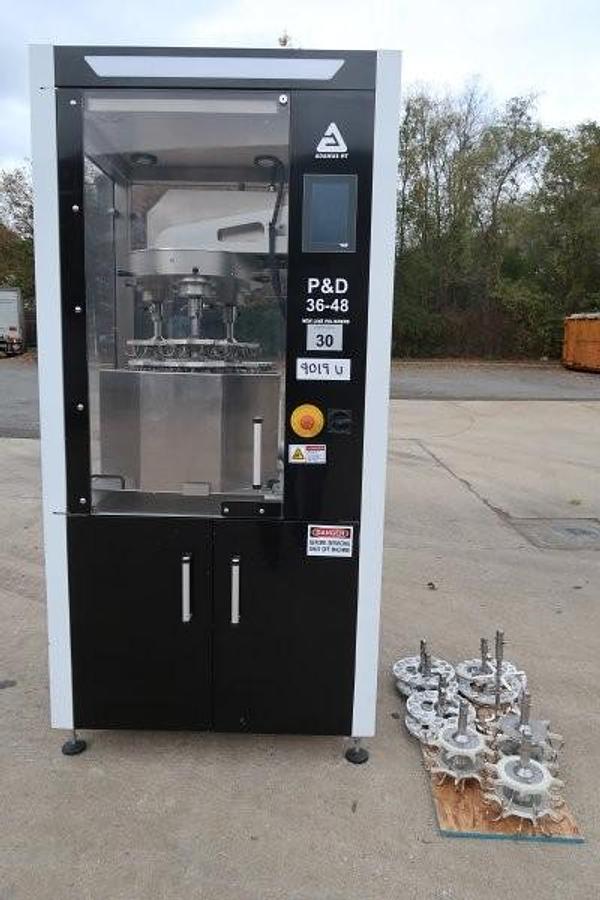
The Adamus HT is an automatic polishing machine specifically designed for pharmaceutical applications. Unlike the stone and concrete polishing machines that Adamus produces for the construction and restoration trades, the HT model serves a completely different industry. In pharmaceutical manufacturing, polishing machines are used to apply a smooth, uniform coating or finish to tablets, which affects both the appearance and the functional properties of the final product. Automatic models like the HT are designed to process tablets consistently and at volume, reducing the variability that comes with manual operations.
Used Adamus HT machines appear on the market when pharmaceutical manufacturers upgrade their equipment lines or consolidate production capacity. Buyers in this space are typically other pharmaceutical companies, contract manufacturers, or companies in adjacent industries such as nutraceuticals or confectionery, where similar tablet finishing processes are used. Because the HT is a specialized piece of process equipment, prospective buyers should pay close attention to the machine's configuration, condition, and compatibility with their existing production setup before purchasing. Consulting with a dealer who has experience placing pharmaceutical equipment is advisable, as the technical requirements for this type of machinery differ significantly from general industrial polishing equipment.
What should buyers look for when evaluating a used Adamus polishing machine?
Evaluating a used Adamus polishing machine requires attention to both mechanical condition and application compatibility. The motor and drive system are the most critical components to assess, since these machines are used in demanding environments where wear accumulates quickly. Buyers should look for signs of overheating, unusual noise during operation, or visible damage to the housing and spindle assembly. The condition of the polishing head, pad driver, and any variable speed controls should also be carefully checked, as these components directly affect the machine's ability to produce a consistent finish.
Beyond mechanical condition, buyers should confirm that the machine's specifications match their intended use. Motor power, speed range, working width, and the type of tooling the machine accepts are all factors that determine whether a particular unit is suitable for a specific application. Requesting detailed photos, a video of the machine running, or arranging an in-person inspection are all reasonable steps before committing to a purchase. Reputable used equipment dealers will typically accommodate these requests. It is also worth contacting the manufacturer directly to understand what level of technical support and parts availability can be expected for the specific model and age of machine being considered.
How does the variable speed feature on Adamus polishing machines affect performance?
Variable speed control is one of the most practically useful features on a professional polishing machine. Different materials respond better at different rotational speeds. Softer stones like marble can be damaged or over-heated by speeds that are perfectly appropriate for hard granite or dense concrete. Having the ability to adjust speed gives operators direct control over heat generation, abrasive aggressiveness, and the quality of the finished surface. On a production floor or job site where multiple material types are processed, this flexibility can eliminate the need for multiple specialized machines.
Speed range also matters when moving through different stages of the polishing process. Coarse grinding passes, which remove more material, are often run at lower speeds to maintain control and prevent gouging. As operators move into finer finishing grits, higher speeds can help achieve the reflective, high-gloss finish that is the goal of most stone polishing work. Adamus machines are recognized in the industry for offering this kind of adjustable performance, which is part of why they are used across such a wide range of applications, from floor restoration to countertop fabrication to monument work.
Are diamond polishing pads and accessories typically included with a used Adamus machine?
Used machinery is generally sold based on what is physically present with the machine at the time of sale, and accessory inclusion varies considerably from one listing to the next. Some sellers will include a set of diamond polishing pads, pad drivers, or other tooling that was used with the machine in production. Others sell the machine alone, without any consumables or accessories. Buyers should ask the dealer specifically what is included in the sale and request a detailed inventory before finalizing a purchase.
Even if accessories are included, diamond polishing pads are consumable items that wear down through use, so their remaining service life should be factored into the overall value assessment. Buyers should also confirm that the included tooling is compatible with their intended applications in terms of grit sequence, pad size, and backing type. Sourcing compatible diamond pads and abrasive accessories for Adamus machines is generally straightforward through stone and concrete tooling suppliers, so the absence of accessories at the time of purchase is not necessarily a dealbreaker. What matters more is that the machine itself is in solid working condition.
What is the typical price range for a used Adamus polishing machine?
Pricing for used Adamus polishing machines varies based on the model, age, condition, and configuration of the specific unit. Entry-level or older models in fair condition can be found at lower price points, while more capable automatic models, specialty units like pharmaceutical tablet polishers, or machines that have been recently serviced tend to command higher prices. Because these are professional and industrial machines rather than consumer products, even used examples represent a meaningful capital investment, and pricing reflects the durability and performance that buyers expect from the brand.
Buyers should factor in more than just the listed machine price when calculating total acquisition cost. Shipping, rigging, and any refurbishment or reconditioning work needed after purchase all contribute to the true landed cost of the equipment. Getting a clear picture of those additional expenses upfront, before committing to a purchase, is an important part of evaluating whether a particular listing represents good value. Comparing multiple listings across different dealers and asking detailed questions about machine history and condition will help buyers make a well-informed decision.
What should buyers understand about inspecting a used polishing machine before purchase?
Inspection is one of the most important steps in buying used industrial equipment, and reputable dealers will typically offer buyers the opportunity to inspect a machine in person, through a live video call, or via detailed video footage of the machine in its current state. The goal of any inspection is to get an accurate picture of the machine's working condition, including how it runs, what wear is visible on key components, and whether there are any signs of damage or deferred maintenance. For machines that are still installed at a production facility, it may be possible to arrange an inspection at the plant where the equipment is currently in use.
Buyers should keep in mind that most used equipment dealers are not set up to run full production tests, since operating production equipment requires different permitting and facility capabilities than a typical dealer will have. What dealers can do is demonstrate that a machine powers on, that the motor and drive system function, and that controls respond as expected. For a more thorough functional assessment, buyers with specific process requirements may want to bring a qualified technician along for an in-person inspection, or consult with the manufacturer about what a proper pre-purchase evaluation of that model should include.
What are the standard payment and shipping expectations when buying a used polishing machine?
Most used equipment dealers require full payment before a machine is released for shipping. This is standard practice in the industry and applies to most buyers unless a dealer has an established relationship with a repeat customer that warrants different terms. Buyers should clarify payment expectations early in the purchasing process to avoid any delays once a deal is agreed upon.
Shipping costs for industrial polishing machines can be significant and depend on the size and weight of the equipment, the distance being shipped, and the level of packaging or crating required to protect the machine in transit. Larger or heavier machines may also require specialized rigging equipment for loading and unloading, which adds to the overall cost. Buyers should ask the dealer for a detailed breakdown of packaging, rigging, and freight charges before finalizing a purchase, so the full landed cost of the machine is understood upfront. Getting this information early prevents surprises and allows for a more accurate comparison between different listings.
How should buyers think about parts availability and manufacturer support for a used Adamus machine?
Parts availability and manufacturer support are practical considerations that can significantly affect the long-term value of a used industrial machine. Adamus produces equipment for both the stone and concrete industries and the pharmaceutical sector, and the level of support available for a specific model depends on factors like the age of the machine, whether that model is still in current production, and the manufacturer's policies around older equipment. Buyers should contact Adamus directly before purchasing to ask specifically about parts availability, service documentation, and technical support for the model they are considering.
For older machines or discontinued models, parts may need to be sourced through third-party suppliers or fabricated by a qualified machinist. This is not unusual for used industrial equipment, but it is worth understanding before committing to a purchase. Choosing a dealer with deep experience in the specific type of equipment being purchased, whether stone finishing machinery or pharmaceutical processing equipment, can also make a difference. An experienced dealer is more likely to have useful knowledge about common maintenance issues, compatible replacement parts, and the realistic service life remaining in a particular machine.