Category
Manufacturer
Model
FAQ:
What is an Actionpac weigh filler packager and what does it do?
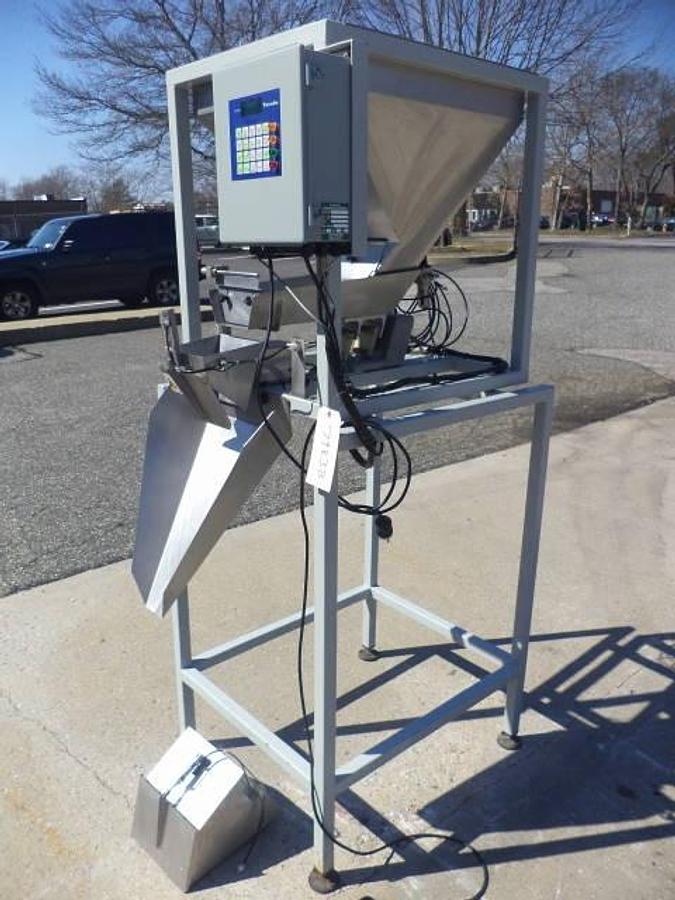
An Actionpac weigh filler packager is an industrial net-weight filling machine designed to accurately measure and dispense a predetermined weight of product into bags or containers. The machine uses a weighing system to control fill quantity, which makes it well-suited for applications where consistent portion weight is critical, such as food production, pet food, seed packaging, hardware components, and agricultural products. The Actionpac ME-1095 is one specific model that has been widely used in production environments handling granular, powdered, and small solid materials.
The core function of the machine is to automate the bagging process by filling each package to a target weight rather than a target volume. This distinction matters because products like seeds, nuts, or granular chemicals can vary in density depending on moisture content or particle size. Net-weight filling compensates for that variability, which reduces giveaway (overfilling) and helps manufacturers stay compliant with weight-on-label regulations. Buyers typically look for these machines when they need reliable throughput, repeatable fill accuracy, and a durable platform that can handle continuous production shifts.
What industries commonly use Actionpac weigh filler packagers?
Actionpac weigh filler packagers have historically found the most use in industries that package dry, free-flowing, or semi-free-flowing products at moderate to high volumes. The food processing sector is one of the most common applications, covering products like dried beans, rice, snack mixes, coffee, flour, and sugar. Pet food manufacturers also rely on this type of equipment for kibble and treat packaging. Beyond food, these machines appear in agricultural seed packaging, lawn and garden product lines, hardware and fastener bagging, and chemical or fertilizer applications.
The common thread across all these industries is the need for consistent fill weights at production-line speeds. Facilities that hand-fill or use volumetric fillers often switch to net-weight filling equipment like the Actionpac when they need tighter weight control or when regulatory requirements demand accurate net weight labeling. The machine's ability to handle a range of bag sizes and product types with relatively straightforward changeover procedures also makes it attractive for contract packagers who run multiple SKUs on a single line.
What should a buyer inspect when evaluating a used Actionpac weigh filler packager?
Buying a used Actionpac weigh filler packager requires a thorough mechanical and electrical inspection before committing to a purchase. Key areas to evaluate include the condition of the load cells and weigh hopper, since these components directly affect fill accuracy and are expensive to replace. The structural frame should be checked for signs of corrosion, especially if the machine was used in a food or chemical environment where washdowns were routine. Drive components, belts, chains, and pneumatic cylinders should be examined for wear, and the control panel should be powered up to verify that all functions respond correctly.
Reputable used equipment dealers will typically accommodate in-person inspections at their facility, or they can provide detailed video walkthroughs and still photographs of the machine in its current state. Some machines may still be located at the production facility where they were last used, which can allow a buyer to see the equipment in a real operating context. Keep in mind that most dealers do not have the permitting or production infrastructure to run actual product through a machine during an inspection, so buyers should focus on mechanical condition, electrical functionality, and the overall state of wear rather than expecting a live production demonstration. Requesting the machine's service history or any available documentation is also worth doing.
Are replacement parts and technical support still available for Actionpac machines?
Parts availability is one of the most important factors to investigate before purchasing any used Actionpac machine. As a brand that is no longer actively manufactured at the same scale it once was, Actionpac equipment can present challenges in sourcing factory-direct components. That said, many of the subsystems used in these machines, including load cells, pneumatic valves, conveyor components, and electrical controls, are often sourced from third-party suppliers whose parts remain widely available in the industrial marketplace. Buyers who are mechanically inclined or who have access to a good industrial parts distributor can often maintain these machines effectively.
Before purchasing, it is worth contacting the manufacturer directly to ask about the level of support they can provide for the specific model and serial number you are considering. Age and model generation can significantly affect what documentation, drawings, and replacement parts are still accessible. Some older models may have no manufacturer support at all, while others may still have parts available through authorized service channels or aftermarket suppliers. Consulting with a machine shop or packaging equipment service technician familiar with net-weight fillers is another practical step, since many mechanical and electrical components can be fabricated or sourced as equivalent replacements even when factory parts are no longer stocked.
What is the typical price range for a used Actionpac weigh filler packager?
Pricing for used Actionpac weigh filler packagers varies considerably depending on the model, age, condition, and included accessories. Entry-level or older units in as-is condition can sometimes be found in the range of a few thousand dollars, while well-maintained machines with more recent controls, updated components, or complete ancillary equipment can command significantly higher prices. The specific model matters too, as some configurations with higher throughput capacity or more sophisticated weighing systems carry a premium over basic single-head units.
Buyers should also factor in costs beyond the purchase price when calculating the true landed cost of the equipment. Freight, rigging, and crating expenses can add a meaningful amount to the final figure, particularly for heavier machines that require specialized loading equipment. If the machine needs electrical upgrades, new load cells, or control system work after purchase, those costs should be estimated before making an offer. Getting a quote from a packaging equipment technician for a post-purchase inspection and any necessary reconditioning is a practical way to budget accurately and avoid surprises after the machine arrives.
What fill weight accuracy and throughput speed can be expected from an Actionpac weigh filler?
Actionpac weigh filler packagers are net-weight machines, meaning they fill to a target weight rather than a target volume. In well-maintained condition, net-weight fillers of this type are generally capable of fill accuracy within a fraction of a percent of the target weight, though actual performance depends heavily on the condition of the load cells, the flow characteristics of the product being filled, and how well the machine has been calibrated. Products that flow consistently and have uniform particle size tend to yield better accuracy than those with irregular shapes or variable bulk density.
Throughput speed, typically measured in bags per minute, depends on the target fill weight, the product's flow rate, and the machine's configuration. Lighter fills cycle faster than heavier ones, and products that flow freely through the fill head will run at higher rates than sticky or sluggish materials. For a used machine, actual throughput may differ from the nameplate or rated specification if components have worn or if the machine has been modified over its service life. Buyers should ask the dealer about the conditions under which the machine was last run and what fill weights and products it was handling, as that context helps set realistic expectations for performance in a new application.
What is the difference between a net-weight filler and a volumetric filler, and why does it matter?
A net-weight filler, like the Actionpac weigh filler packager, dispenses product by weight. The machine uses a scale or load cell system to fill until the target weight is reached, then cuts off the flow. A volumetric filler, by contrast, dispenses a fixed volume of product per cycle, relying on the assumption that product density stays consistent from one fill to the next. For products where density fluctuates, such as agricultural seeds that absorb moisture or granular products with variable particle sizes, volumetric filling can result in packages that are over or under the stated net weight.
The practical importance of this distinction comes down to regulatory compliance, product giveaway, and customer satisfaction. Most packaged goods sold by weight are subject to weights-and-measures regulations that require the actual net weight to meet or exceed what is printed on the label. A net-weight filler provides a direct measurement of what goes into each package, which makes compliance more straightforward. It also reduces giveaway, which is the cost of consistently overfilling packages to avoid being underweight. For high-volume operations, even a small reduction in average overfill per package can translate into significant material savings over time.
How does the shipping and delivery process work for a used Actionpac weigh filler packager?
Shipping a used weigh filler packager requires careful planning to avoid damage in transit. Packaging requirements vary based on the size and weight of the machine, and sellers will typically quote different levels of protection ranging from basic palletization to full custom crating. Heavier or more complex machines may require professional rigging for loading at the origin point and unloading at the destination, and those rigging costs are generally passed on to the buyer. Buyers should request a detailed breakdown of all shipping-related charges, including crating, rigging, freight, and any fuel or liftgate surcharges, to understand the full landed cost before finalizing a purchase.
Most used equipment dealers require full payment before a machine is released for shipment. Transit times depend on the shipping method selected and the distance involved, and freight carriers handling industrial machinery typically move shipments on flatbed or enclosed freight trucks rather than standard parcel services. Buyers are responsible for ensuring they have appropriate unloading equipment at the receiving location, whether that is a forklift, loading dock, or hired rigging crew. Confirming those logistics before the machine ships prevents delays and additional costs on the receiving end.
What questions should a buyer ask a used equipment dealer before purchasing an Actionpac packager?
A few specific questions can significantly reduce the risk of buying used packaging equipment. Start by asking about the machine's service history: how long was it in production, what products did it run, and why was it taken out of service? A machine decommissioned due to a facility closure or product line change is a very different situation from one that was retired because of persistent mechanical problems. Ask whether the machine has been tested or powered up recently, and request video documentation of the machine running under power if an in-person visit is not feasible. Also ask whether any components have been replaced or modified, and whether any documentation such as manuals, wiring diagrams, or parts lists is available.
It is also worth asking the dealer specifically about their experience with packaging and filling equipment, since dealers who specialize in this category will typically have a better understanding of the machine's condition and a more accurate sense of what reconditioning it may need. Ask about inspection options, including whether an in-person visit can be arranged and whether an independent technician can accompany you. Clarify all costs including the machine price, crating, rigging, and freight before agreeing to anything. Payment terms for used equipment typically require full payment prior to shipment, though some dealers may offer terms to established repeat customers.
What should buyers know about the Actionpac ME-1095 model specifically?
The Actionpac ME-1095 is a weigh filler and packager model that has appeared in the used and surplus equipment market, typically offered through dealers who specialize in packaging and processing machinery. As with most used industrial equipment, the condition of any specific ME-1095 unit will reflect its production history, the products it handled, and how well it was maintained during its service life. Buyers should not assume that all units of the same model are in comparable condition, since two machines of the same model can differ substantially based on age, environment, and maintenance practices.
When evaluating a used ME-1095, the same principles that apply to any used net-weight filler apply here. Load cell condition, control system functionality, mechanical wear on fill head components, and the availability of parts for this specific model are all important considerations. Because Actionpac equipment is no longer in active production at the scale it once was, buyers should research parts availability for the ME-1095 before purchasing and consider consulting with a packaging equipment service technician who has experience with this type of machinery. Thorough inspection and realistic budgeting for any necessary reconditioning work will help ensure the machine performs reliably once it is integrated into a production line.