Category
Manufacturer
Model
Action Packaging System
Action Packaging System is known for their automated packaging solutions, focusing on innovative end-of-line systems. Their reliable machinery streamlines packaging operations, offering efficiency improvements across various consumer goods sectors.
FAQ:
What types of machinery does Action Packaging Systems manufacture?
Action Packaging Systems is known primarily for automated end-of-line packaging equipment. Their product line has historically included bagging machines, shrink wrap systems, automatic labelers (including top labelers with integrated conveyors), and other solutions designed to streamline high-volume packaging operations. The company has built a reputation for focusing on practical, reliable machinery rather than overly complex systems, which is one reason their equipment holds up well over years of production use.
The machines are designed to handle a range of packaging formats and film or bag sizes, making them adaptable across different production environments. Buyers looking at used Action Packaging Systems equipment will commonly find labeling systems, bagging lines, and shrink packaging units available on the secondary market, reflecting the broad range of end-of-line applications the brand has historically served.
What industries use Action Packaging Systems equipment?
Action Packaging Systems machinery has found wide adoption across consumer goods sectors where consistent, automated end-of-line packaging is essential. Food processing and food distribution operations are among the most common users, as the equipment handles high-throughput bagging and labeling tasks efficiently. Pharmaceutical packaging lines, personal care product manufacturers, and general industrial goods producers have also relied on this equipment for its dependability in demanding production environments.
The machines tend to perform well in any setting where consistent label placement, reliable bagging, or repeatable shrink wrapping is needed at volume. Because the mechanical design is relatively straightforward compared to some competitors, smaller contract packagers and mid-sized manufacturers have found Action Packaging Systems equipment accessible to operate and maintain without requiring highly specialized technicians on staff.
What should buyers know about purchasing used Action Packaging Systems machinery?
Buying used packaging machinery requires a different level of due diligence than purchasing equipment directly from a manufacturer. Used machines are typically sold as-is, which means the responsibility for evaluating condition falls squarely on the buyer. Selecting a reputable dealer with a long track record of selling industrial packaging equipment is one of the most important steps a buyer can take. A dealer who specializes in packaging machinery will have a better understanding of what to look for in a specific machine and can provide more meaningful information about its history and current condition.
Buyers should request a thorough inspection before committing to a purchase. Many dealers will accommodate in-person visits, virtual walkthroughs, or video captures of the machine running or at rest. It is also worth contacting Action Packaging Systems directly to understand what level of technical support and parts availability exists for a specific model and age of machine, since older units may have more limited manufacturer support. Getting clarity on these factors upfront helps avoid surprises after the machine arrives.
How can buyers inspect a used Action Packaging Systems machine before buying?
Most reputable used equipment dealers will offer at least one form of inspection before a sale is finalized. In-person inspections are the most thorough option and are commonly arranged either at the dealer's facility or, in some cases, directly at the plant where the machine is still in service or has recently been decommissioned. Seeing the machine in its current environment gives the buyer a clear picture of how it has been used and its general state of upkeep.
For buyers who cannot travel, virtual inspections via video call or pre-recorded video walkthroughs are a practical alternative. These can cover the machine's exterior condition, key mechanical components, control panels, and any visible wear points. One important caveat: most equipment dealers are not set up to run full production tests, as that requires different permitting and infrastructure. The goal of any inspection is to get an accurate, honest depiction of the machine's current working order so the buyer can make an informed decision.
What are the maintenance requirements for Action Packaging Systems equipment?
One of the reasons Action Packaging Systems machinery has remained popular on the secondary market is the relatively accessible mechanical design. Many users report that routine maintenance tasks such as cleaning film paths, lubricating drive components, adjusting belt tension, and replacing wear parts can be handled by in-house maintenance staff without requiring specialized outside technicians. This is a meaningful advantage for smaller operations with limited maintenance resources.
That said, the actual maintenance demands of any specific used machine will depend heavily on its age, how it was operated, and how well it was maintained by previous owners. Before purchasing, buyers should ask the dealer for any available documentation, including manuals or service records if they exist. Consulting with Action Packaging Systems about parts availability and recommended service intervals for a particular model is also a smart step, especially for older machines where some components may need to be sourced from third-party suppliers.
Are replacement parts available for older Action Packaging Systems machines?
Parts availability is one of the practical factors buyers of used packaging equipment weigh carefully, and Action Packaging Systems machinery has a reasonable reputation in this regard. Many of the mechanical components used in their equipment are standard industrial parts that can be sourced from multiple suppliers, which reduces dependency on the manufacturer for routine wear items like belts, bearings, and sensors. This is part of why older models continue to attract buyers even years after the machines were built.
For more model-specific or proprietary components, contacting Action Packaging Systems directly is the recommended step. The level of support a manufacturer can provide often depends on the age and specific model of the machine. A dealer specializing in packaging equipment may also have insight into which parts are commonly needed for a given machine and where to source them. Buyers should factor parts availability into their overall cost and feasibility assessment before purchasing any used machine.
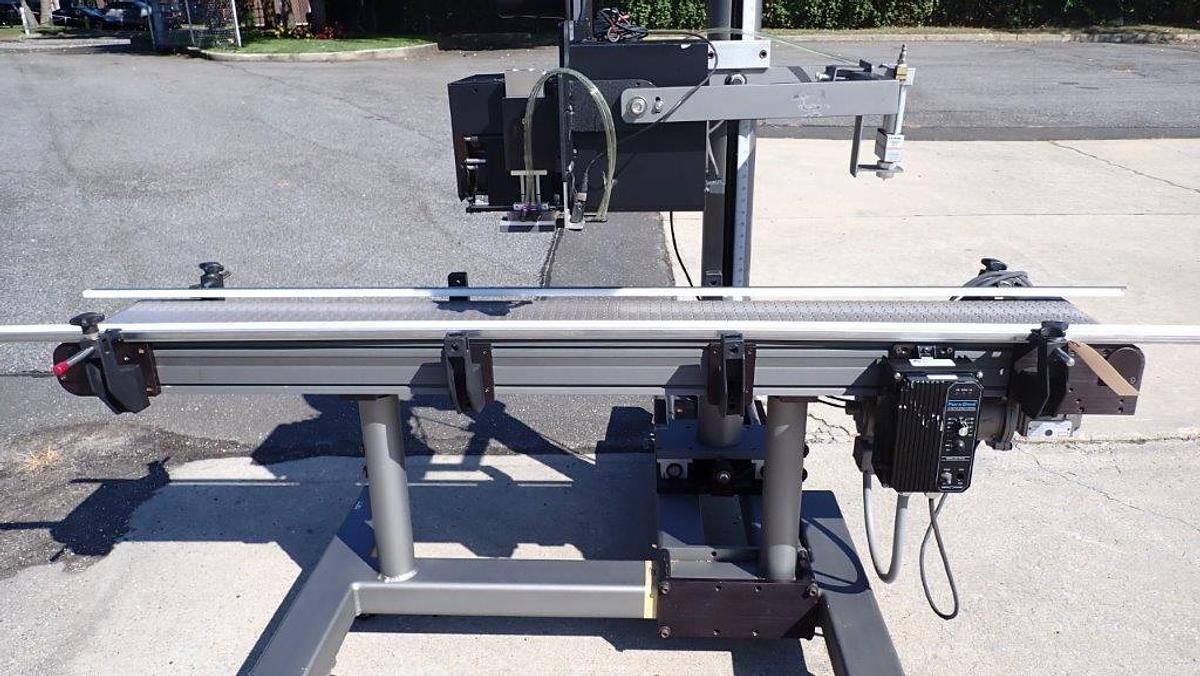
What does an Action Packaging Systems Auto Top Labeler with conveyor do?
An auto top labeler with an integrated conveyor is a piece of end-of-line packaging equipment designed to automatically apply labels to the top surface of products as they move along a conveyor line. The conveyor feeds products through the labeling station at a controlled speed, and the labeling head applies labels with consistent placement and pressure. This type of machine is commonly used for applying product identification labels, price stickers, barcodes, or compliance labels to boxed, bagged, or wrapped products at production speeds that manual labeling cannot match.
For operations running high volumes of labeled products, this kind of automated system reduces labor costs, improves label placement consistency, and minimizes the errors that come with manual application. Used auto top labelers from Action Packaging Systems are sought after because the machines are known for reliable operation and straightforward adjustments when switching between different product sizes or label formats. Buyers should confirm that the specific unit available is compatible with their label stock dimensions and product dimensions before purchasing.
What is the typical price range for used Action Packaging Systems machinery?
Pricing for used Action Packaging Systems equipment varies considerably depending on the type of machine, its age, overall condition, and the level of functionality it retains. Entry-level or older labeling systems can sometimes be found at relatively modest prices, while more complete automated packaging lines or machines with more recent production dates and lower hours will command higher prices. Condition is the single biggest driver of price variation in the used equipment market.
Buyers should also factor in costs beyond the listed price. Shipping, rigging, and crating can add meaningful expense depending on the machine's size and weight and the buyer's location. If the machine requires any reconditioning or parts replacement after delivery, those costs need to be budgeted as well. Getting a clear picture of the full landed cost, including freight and any anticipated servicing, is important before comparing prices across different listings or dealers.
What should buyers expect regarding shipping and delivery of used packaging equipment?
Shipping used industrial machinery is more involved than standard freight. Packaging equipment needs to be properly secured, palletized, or crated before transport to prevent damage in transit. The level of packaging required depends on the machine's size, weight, and fragility, and the associated costs will reflect that. Buyers should ask dealers specifically about how the machine will be prepared for shipment and what those preparation costs include, since this can vary significantly from one dealer to another.
Larger or heavier machines may require professional rigging for loading at the dealer's location and unloading at the destination. Rigging services are typically an added cost on top of freight charges. Buyers are encouraged to request a full breakdown of all shipping-related costs before finalizing a purchase, so the total landed cost of the equipment is clearly understood. Delivery timelines will depend on the carrier, the origin and destination locations, and whether any special handling arrangements need to be coordinated.
What payment terms are typical when buying used packaging machinery?
In the used equipment market, most dealers require full payment before a machine is released for shipping. This is standard practice across the industry and reflects the nature of used equipment transactions, where the machine is typically a one-of-a-kind item that cannot be held indefinitely while payment is arranged. Wire transfers are the most common payment method for larger transactions, though dealers may accept other forms depending on the purchase amount and the buyer's relationship with the dealer.
Some dealers will extend payment terms to repeat customers or buyers with an established purchasing history, but this is the exception rather than the rule for first-time transactions. Buyers should clarify payment expectations early in the negotiation process to avoid delays. Understanding the payment timeline also helps buyers coordinate inspection, shipping arrangements, and internal purchase approvals so the transaction moves forward smoothly once a price is agreed upon.