Category
Subcategory
Manufacturer
Model
Acrison
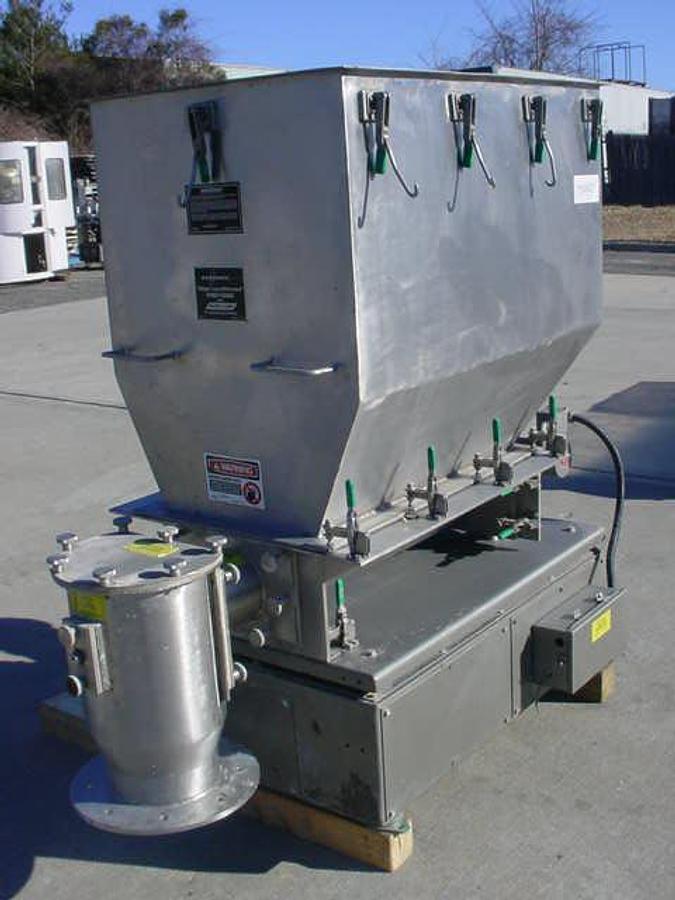
Acrison designs and manufactures bulk handling equipment, with a specialization in feeding and dosing technologies. Serving industries like food processing and pharmaceuticals, their effective feeders ensure accurate ingredient handling and reduce waste.
FAQ:
What types of Acrison feeders and equipment are commonly available on the used market?
Acrison produces a broad range of dry solids metering, feeding, and blending equipment, and most of these product lines show up regularly in the secondary market. The most frequently traded models include the 105, 110, 200, 300, and 400 series feeders, each engineered for different material flow characteristics. The Model 402B weigh feeder, for example, is a gravimetric unit built in stainless steel and well-suited for applications that demand precise, repeatable ingredient delivery. Volumetric feeders from Acrison are also common and tend to be more affordable, while loss-in-weight (gravimetric) models command higher resale prices because of their accuracy.
Beyond standard feeders, Acrison's product catalog covers blenders, agitators, and complete bulk handling systems. Used units may appear as standalone feeders or as part of a larger skid-mounted assembly. Buyers looking for a specific model should check with dealers who specialize in processing and bulk handling equipment, since inventory turns over quickly in this category and availability of any particular model or configuration can change week to week.
What industries use Acrison feeding equipment?
Acrison feeding and dosing equipment serves a wide cross-section of process industries. Food processing is one of the largest application areas, where accurate ingredient handling directly affects product consistency and reduces costly waste. Pharmaceutical manufacturers rely on Acrison feeders for the precise metering of active ingredients and excipients, where dosing accuracy is a regulatory requirement, not just a preference. Chemical manufacturing, plastics compounding, water treatment, and mining operations are also heavy users of Acrison equipment.
The versatility of Acrison's feeder designs is a big reason for this broad adoption. Different models handle everything from fine powders and granules to fibrous or cohesive bulk solids that tend to bridge or rat-hole in standard equipment. Because the equipment was built for demanding production environments, used Acrison feeders often retain significant service life even after years of industrial use, which makes them an attractive option for facilities looking to expand capacity or replace aging equipment without the lead times and cost of purchasing unused machinery.
What is the difference between volumetric and gravimetric Acrison feeders?
Volumetric feeders dispense material based on a set volume per unit of time, typically controlled by auger speed or belt speed. They are mechanically simpler, easier to maintain, and less expensive both to purchase and to operate. The trade-off is that they do not compensate for changes in bulk density caused by moisture variation, particle size shifts, or material compaction. For applications where a close-enough feed rate is acceptable and material properties are consistent, volumetric feeding is a practical and cost-effective choice.
Gravimetric feeders, often called loss-in-weight feeders, continuously measure the actual weight of material being dispensed and adjust the feed rate in real time to hit a precise setpoint. Acrison is particularly well regarded for its gravimetric feeder designs, which are used in pharmaceutical, food, and specialty chemical applications where ingredient accuracy directly affects product quality or compliance. On the used market, gravimetric models typically carry a higher price than comparable volumetric units because of the additional instrumentation and control hardware involved. Buyers should confirm that load cells and controllers are included and functional when evaluating a used gravimetric unit.
How do I determine the correct Acrison feeder model for my application?
Matching a feeder to an application starts with understanding the material being handled. Key parameters include bulk density, particle size and shape, moisture content, flowability, and whether the material is abrasive or corrosive. Acrison designed different model series specifically to address these variables, so a feeder that works well for a free-flowing granule may perform poorly with a cohesive powder. Reviewing Acrison's published model specifications and comparing them against your material's characteristics is a necessary first step.
Beyond material properties, feed rate range, accuracy requirements, and downstream process integration all factor into model selection. Contacting Acrison directly is worth doing even when buying used equipment, since their engineering team can confirm whether a specific model is appropriate for an application and advise on what level of parts and technical support is available for older units. A reputable used equipment dealer specializing in bulk handling or process equipment can also help narrow down options based on what is currently in inventory and what has historically worked in similar applications.
Does used Acrison equipment come with a warranty?
Used equipment is generally sold on an as-is basis, which is standard practice across the secondary machinery market. Unlike purchasing directly from a manufacturer, buying used means there is no manufacturer warranty in place, and most used equipment dealers do not offer warranty coverage. This places the responsibility for due diligence squarely on the buyer, which is why inspection and condition verification are so important before committing to a purchase.
To reduce risk, buyers should prioritize dealers with a long track record in the processing equipment space and a reputation for accurately representing the condition of their inventory. Consulting Acrison directly about a specific model and serial number can give buyers a clearer picture of the support, parts availability, and service documentation they can expect for that unit. The age and specific model of the feeder will affect what Acrison can offer in terms of ongoing technical support, so it is worth making that call before finalizing a purchase.
How do I verify the condition of used Acrison equipment before buying?
Reputable used equipment dealers typically offer in-person inspections, video walkthroughs, or detailed photo documentation so buyers can assess condition before committing. An in-person visit is the most thorough option and gives a buyer the chance to examine wear components, check for corrosion or damage, and review any available maintenance records. In cases where the equipment is still installed at a production facility, the dealer can often coordinate an inspection at the plant, where the feeder may even be running in active service.
For remote buyers, a live video inspection via phone or video call is a reasonable alternative and allows real-time questions about specific components. Keep in mind that most used equipment dealers are not set up to run production tests with actual product, since that requires operational permits and a full process environment. The practical goal of any inspection is to get an accurate picture of the machine's current mechanical condition, the state of wear parts like augers and seals, and whether control components such as load cells or drive electronics are present and intact. Buyers evaluating gravimetric models should pay particular attention to the condition of the weighing system, as that is both the most critical and most costly component to replace.
What is the typical price range for used Acrison feeders?
Pricing on used Acrison feeders varies considerably based on model, size, feeder type, age, and overall condition. Entry-level volumetric models in smaller sizes can sell for a few hundred to a few thousand dollars, while larger or more specialized volumetric units move into the mid-thousands. Gravimetric loss-in-weight feeders occupy the higher end of the price spectrum, often ranging from several thousand dollars up to tens of thousands for larger, more complex configurations, particularly those with intact control systems and load cells.
Stainless steel construction, which is common on food-grade and pharmaceutical-grade Acrison models, also tends to push prices higher than comparable carbon steel units. The overall condition of the feeder, whether it includes original controls and documentation, and how recently it was last in service all influence final pricing. Buyers should factor in shipping, rigging, and any refurbishment costs when evaluating total landed cost, since a lower purchase price can be offset by significant logistics or repair expenses depending on the unit's size and condition.
Are replacement parts and spare components available for used Acrison equipment?
Acrison has maintained production of many of its feeder lines for decades, which generally works in favor of buyers looking for replacement parts. Wear components like auger screws, agitator elements, seals, and drive components are the most commonly needed items and are often available either directly from Acrison or through industrial parts suppliers. However, availability can vary significantly depending on the age and specific model of the unit, and older or discontinued models may require custom fabrication or sourcing from the secondary parts market.
Before purchasing a used Acrison feeder, it is worth contacting Acrison with the model number and serial number to ask directly about parts availability and technical support for that specific unit. This step is often skipped by buyers focused on the initial purchase price, but it can prevent significant downtime costs down the road if critical components become difficult to source. Dealers who specialize in bulk handling equipment may also maintain a stock of common Acrison spare parts or know where to source them, which is another reason to work with specialists rather than general machinery resellers.
Can used Acrison equipment be integrated with existing process control systems?
Acrison feeders, particularly the gravimetric models, are designed with process integration in mind and typically include signal outputs and control interfaces that can communicate with plant-level automation systems. Older units may use analog 4-20mA signals or relay-based controls, while more recent models may support digital communication protocols. The specific integration options depend heavily on the model, the control unit that comes with the feeder, and how the equipment was configured for its previous application.
Buyers planning to integrate a used Acrison feeder into an existing distributed control system or PLC-based setup should review the control documentation for the specific unit being purchased, or consult with Acrison's technical team about compatibility. In some cases, the control module on a used feeder may have been customized or modified from the standard configuration, which can complicate integration. Having a controls engineer evaluate the unit before purchase, or at minimum during commissioning, is a practical step for any application where feed rate accuracy and system communication are critical to the process.
What should buyers know about shipping and logistics for used Acrison equipment?
Acrison feeders range from compact bench-top units to large floor-mounted systems, and shipping requirements vary accordingly. Smaller feeders can often be palletized and shipped via standard freight carriers, while larger units may require custom crating to protect sensitive components like load cells, drive assemblies, and stainless steel surfaces during transit. The level of packaging required directly affects shipping costs, so buyers should ask dealers for a detailed breakdown of palletization or crating charges before agreeing to a purchase price.
Larger or heavier Acrison systems may require professional rigging for both loading at the dealer's facility and unloading at the destination. Rigging costs are typically quoted separately and depend on the weight and configuration of the equipment and the access conditions at both locations. Buyers should request a full landed cost estimate that includes the equipment price, packaging, freight, and any rigging fees to avoid surprises. Most used equipment dealers require payment in full before releasing equipment for shipment, though some may offer terms to established customers with a prior purchasing history.