Category
Manufacturer
Model
Accraply
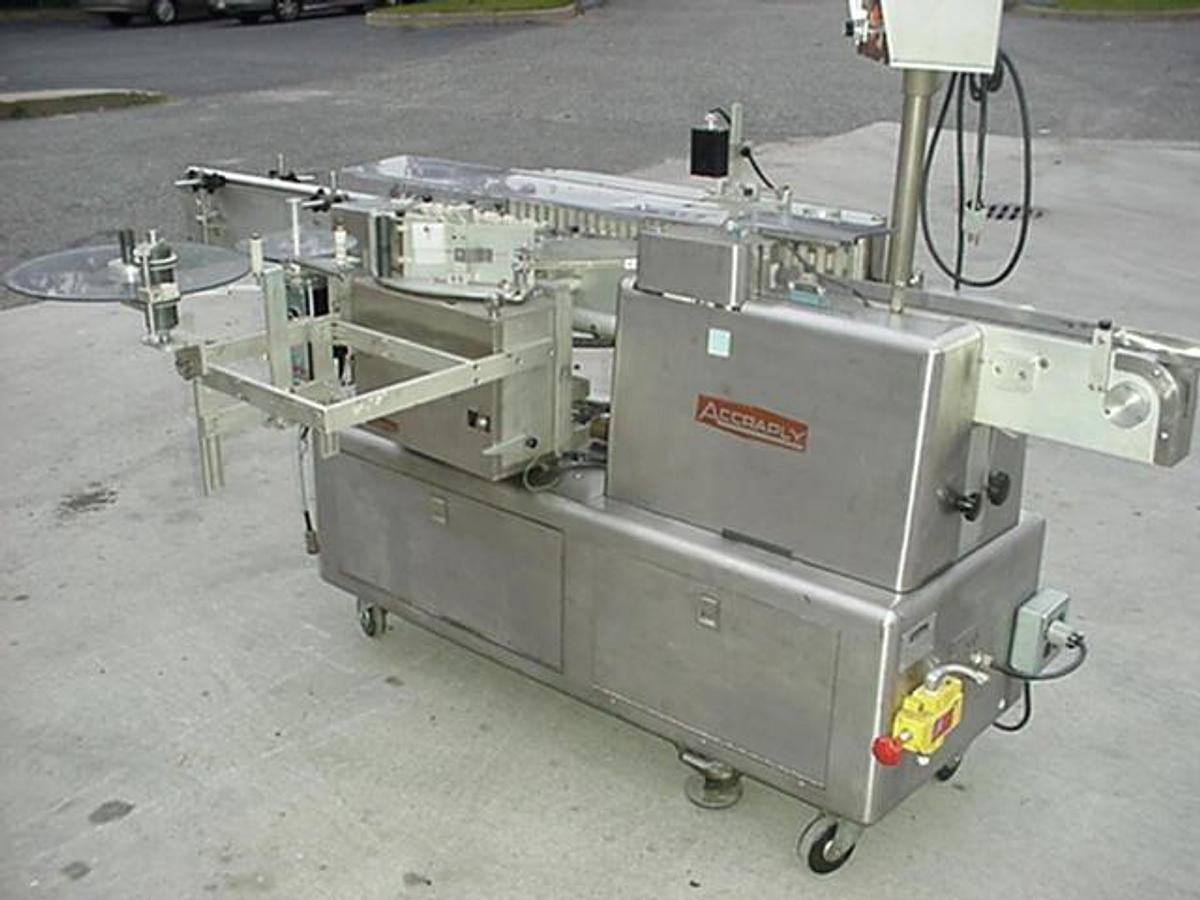
Accraply is renowned for its cutting-edge labeling solutions, serving the food and beverage industry. Their systems are noted for versatility and precision, allowing for efficient application of labels on varying bottle shapes and sizes.
FAQ:
What types of labeling applications is Accraply equipment designed for?
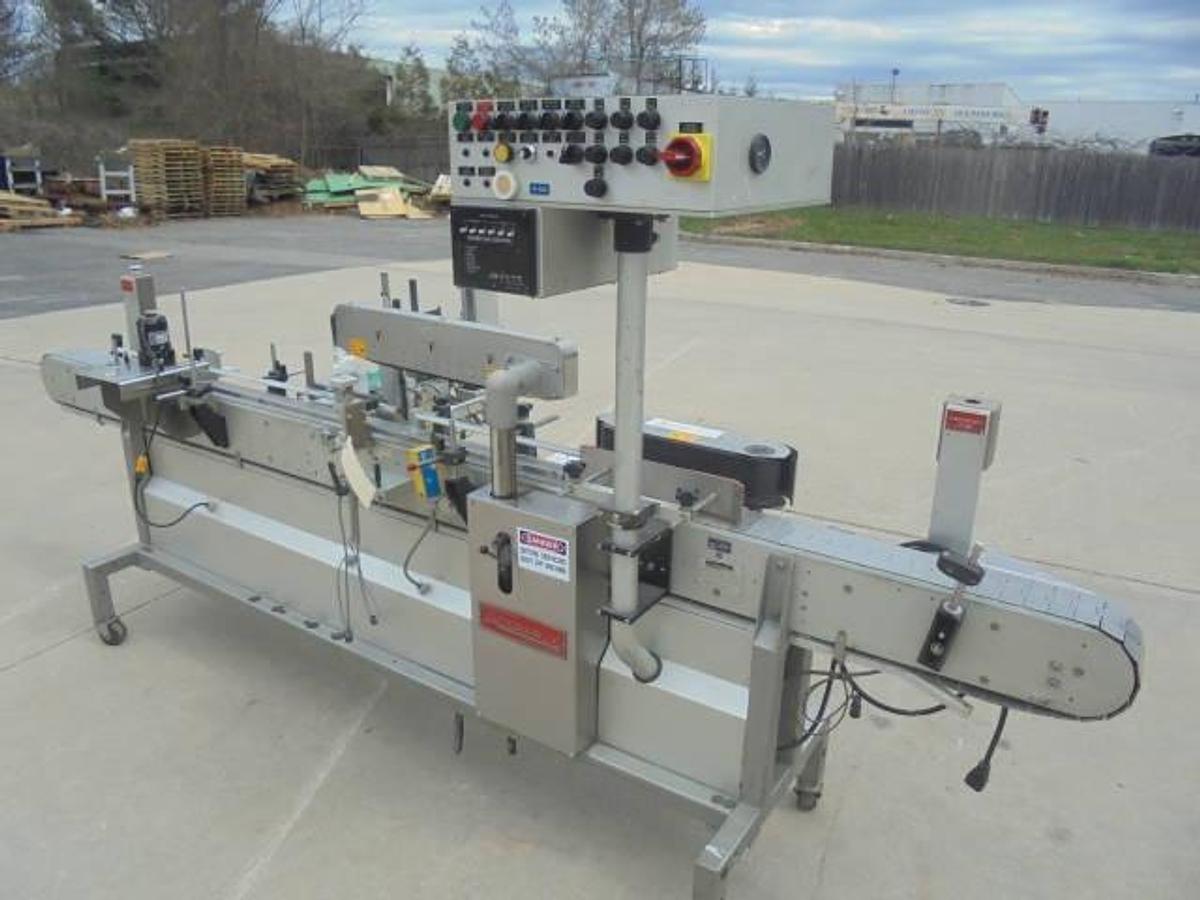
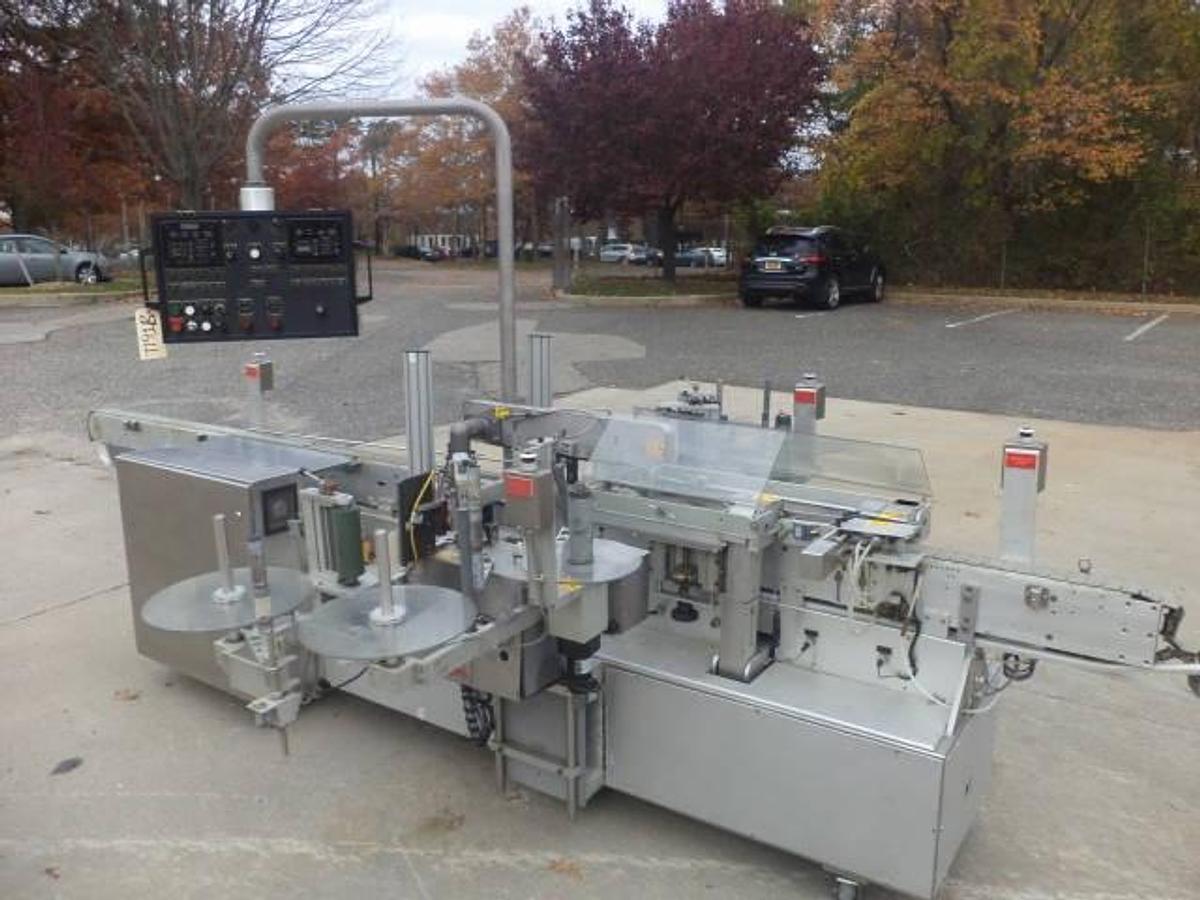
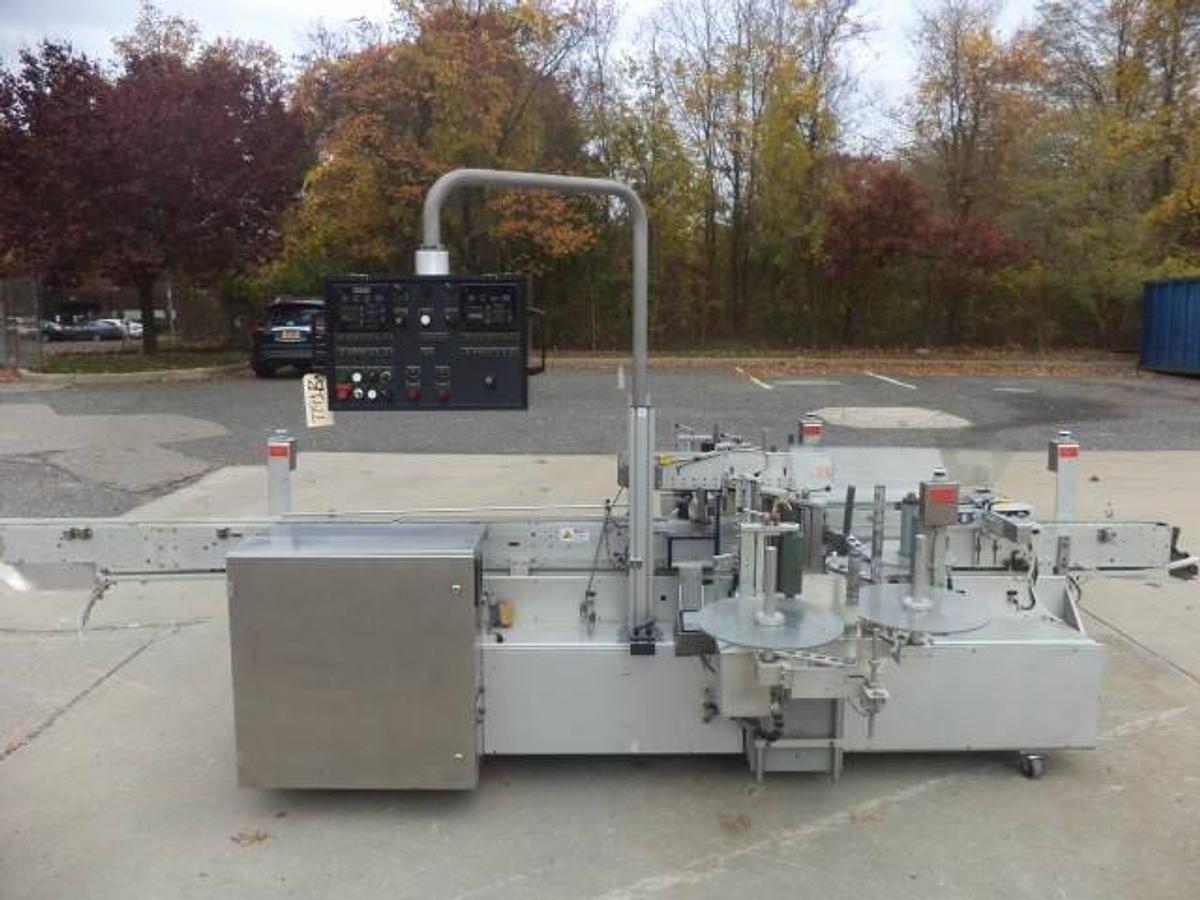
Accraply labeling machines are built to handle a wide range of labeling applications, with particular strength in pressure-sensitive label application. Their equipment covers spot labeling, front and back labeling, and full wrap-around labeling, making them adaptable to many different container formats. Models like the 350PVF handle front and back pressure-sensitive labels simultaneously, while machines like the 350PW are configured for spot or wrap-around application with an integrated coder. This flexibility is a core reason Accraply equipment has remained in demand across multiple decades of production.
Beyond label placement style, Accraply machines are designed to work across varying bottle shapes and sizes without requiring a complete mechanical overhaul between runs. That adaptability makes them a practical choice for production lines that handle multiple SKUs or container profiles. Their systems are particularly well-suited to high-volume environments where label placement accuracy and consistent throughput matter. Buyers evaluating used Accraply equipment should confirm that the specific model they are considering is configured for their label type and container geometry, as different series and model numbers carry different mechanical setups.
What industries commonly use Accraply labeling equipment?
Accraply labeling equipment has a strong presence in the food and beverage industry, where precise, high-speed label application on bottles, jars, and cans is a production necessity. Beverage manufacturers in particular rely on Accraply systems for their ability to apply labels accurately on round containers at consistent speeds. The equipment is also widely used in pharmaceutical manufacturing, where label placement accuracy is subject to regulatory requirements, and in personal care and cosmetics, where presentation quality directly affects retail shelf appeal.
The durability and precision of Accraply machines have made them a common sight in facilities that run demanding production schedules. Because these machines are built for industrial use, they tend to hold up well even after years of continuous operation, which is part of why the used market for Accraply equipment remains active. Buyers from contract packaging operations, private label producers, and mid-size consumer goods manufacturers frequently seek out used Accraply machines as a cost-effective way to add labeling capacity without purchasing brand-new equipment.
What should buyers know about parts availability and technical support for older Accraply models?
Accraply operates under the Barry-Wehmiller Companies portfolio, which affects how parts and technical support are accessed for both current and older models. Prospective buyers of used Accraply equipment should contact the manufacturer directly to understand what level of support is available for the specific model and age of machine they are considering. Parts availability can vary significantly depending on how long ago a model was discontinued, and some older series may have limited factory support while still having an active aftermarket parts supply through third-party vendors.
Before purchasing a used Accraply machine, it is worth researching whether critical wear components, such as label feed rollers, drive belts, sensors, and dispensing heads, are still obtainable. Consulting with a used equipment dealer who specializes in packaging machinery can help buyers get a clearer picture of the support landscape for a given model. Age and model number are the two most important factors in determining long-term maintainability, so buyers should gather that information early in the evaluation process rather than after the purchase is complete.
What is the typical price range for used Accraply labeling machines?
Pricing for used Accraply labeling equipment varies considerably based on model, age, configuration, and overall condition. Entry-level or older pressure-sensitive labelers from Accraply can be found at lower price points, while more capable models with integrated coders, servo-driven systems, or multi-panel labeling capability command higher prices. The 300 Series and 4000 Series machines, for example, tend to reflect higher values on the used market due to their speed capability and mechanical sophistication compared to simpler spot labelers.
Buyers should also factor in costs beyond the purchase price itself. Shipping, rigging, and any reconditioning work needed after delivery can add meaningfully to the total landed cost. Because these are used machines sold as-is, it is advisable to get a thorough inspection done before finalizing a purchase so there are no surprises about the machine's current condition. Requesting detailed photos, video walkthroughs, or arranging an in-person inspection gives buyers the clearest picture of what they are actually getting for the asking price.
How do you inspect a used Accraply labeling machine before buying?
Inspecting a used Accraply labeling machine before purchase is one of the most important steps in the buying process, since these machines are sold as-is without manufacturer backing. Reputable used equipment dealers will typically accommodate in-person inspections, virtual walkthroughs via video call, or can provide detailed video recordings of the machine. If the equipment is still installed at a production facility, it may be possible to arrange a visit where the machine is either running in production or can be powered on for observation. Buyers should look closely at the condition of the label dispensing head, web path components, sensors, drive systems, and any coder or printer integration.
It is worth noting that most used equipment dealers do not have the permitting or infrastructure to run full production trials with actual product, so inspections are generally focused on mechanical and electrical condition rather than live output testing. Buyers should come prepared with specific questions about the machine's history, including how many production hours it has logged, what label formats it was running, and whether any major components have been replaced. For buyers who cannot travel, a thorough video inspection covering all major assemblies is a reasonable alternative, provided the dealer is willing to demonstrate powered operation of the machine's core systems.
Is Accraply equipment compatible with modern PLC and HMI control systems?
Accraply machines produced over the past few decades span a wide range of control system generations. Older models may use relay-based or early programmable logic controller setups, while more recent production runs incorporated modern Allen-Bradley or Siemens PLCs with touchscreen HMI interfaces. The 4000 Series and later 300 Series machines are more likely to have contemporary controls that integrate smoothly with existing plant automation systems, while earlier models may require controls upgrades to meet current facility standards.
Buyers integrating a used Accraply machine into a modern production environment should verify the control platform on the specific unit they are evaluating. If the machine uses an older control architecture, it is worth getting an estimate on the cost of a controls upgrade before finalizing the purchase, since that work can range from a modest investment to a significant one depending on the scope. Electrical compatibility is another related consideration, as voltage and phase requirements must match the buyer's facility. International buyers in particular should confirm these specifications carefully to avoid costly electrical modifications after delivery.
What is the difference between the Accraply 350PW and 350PVF models?
The Accraply 350PW is configured as a pressure-sensitive spot and wrap-around labeler, meaning it applies a single label that either covers a defined spot on a container or wraps around the full circumference. This configuration is common for products like bottles and cans where a single label covers the primary display panel or the entire body. The 350PW models often include an integrated coder, which allows for date codes, lot numbers, or other variable data to be printed directly onto the label during the application process.
The Accraply 350PVF, by contrast, is a front and back labeler, designed to apply two separate labels simultaneously, one to the front panel and one to the back panel of a container. This is a common requirement in the food and beverage industry, where front labels carry brand graphics and back labels carry nutritional or ingredient information. The two models serve different production needs, so buyers should match the model configuration to their specific labeling requirements rather than assuming either machine can be easily converted to the other format without significant mechanical changes.
What production speeds can Accraply labeling machines achieve?
Accraply labeling machines are built for industrial production environments and are capable of handling high throughput demands. Depending on the model and configuration, Accraply equipment can typically label anywhere from several hundred to over a thousand containers per minute. The specific speed a machine achieves in practice depends on factors like container size and shape, label size and material, line integration, and how well the machine has been maintained over its operational life.
When evaluating a used Accraply machine, buyers should ask about the rated speed of the specific model and, where possible, compare that to the actual speeds the machine was running in its previous installation. Machines that were consistently run at or near their maximum rated speed may show more wear on drive components and label handling assemblies than machines used at more moderate production rates. Understanding the production history of the unit helps buyers set realistic expectations for performance after installation and gives them a clearer sense of what maintenance may be needed before the machine returns to full production capacity.
What are the typical shipping and logistics considerations when buying used Accraply equipment?
Shipping used labeling equipment requires careful planning to avoid damage in transit. Accraply machines, depending on the model, can range from moderately sized benchtop-style units to larger floor-standing systems that require proper crating or heavy-duty palletization before transport. Dealers will typically quote shipping costs based on the level of packaging required, the destination, and whether the machine needs to be rigged for loading with a forklift or crane. Buyers should ask for a detailed breakdown of packaging, rigging, and freight costs upfront so they understand the full landed cost before committing to a purchase.
For larger or heavier Accraply models, professional rigging services are often necessary both at the origin point and at the buyer's facility for unloading and placement. This is an added cost that buyers sometimes overlook when budgeting for a used machine purchase. It is also worth confirming with the dealer how the machine will be decommissioned and prepared for shipment, particularly if it is being removed from an active production facility. Proper disassembly and securing of moving parts before crating can make a meaningful difference in the condition of the machine when it arrives.
What payment terms should buyers expect when purchasing used Accraply equipment?
Payment practices in the used industrial equipment market are fairly standardized. Most used equipment dealers require payment in full before a machine is released for shipment. This applies to first-time buyers in particular, as dealers have no prior transaction history to draw on when extending credit. Accepted payment methods typically include wire transfer, though buyers should confirm the specific options a dealer accepts before proceeding. Buyers should also be aware that the purchase price agreed upon is generally for the machine only, with shipping, rigging, and crating billed separately once logistics are arranged.
Some dealers may offer payment terms to repeat customers or buyers with an established relationship, but this is not the norm for one-time transactions. Buyers who are purchasing used Accraply equipment for the first time through a particular dealer should expect to pay in full prior to shipping and plan their cash flow accordingly. It is reasonable to request a detailed invoice that itemizes the machine price separately from any freight or handling charges, which makes it easier to track costs and reconcile the purchase against budget.