Category
Manufacturer
Model
APS
APS provides specialized printing and labeling equipment to the packaging industry, known for their high-speed and precision capabilities. They serve a diverse range of industries, including pharmaceuticals and consumer goods, with their advanced technology, which supports intricate label designs and consistent application on various surfaces. APS’s solutions are crucial for enhancing brand presence and regulatory compliance.
FAQ:
What types of labeling equipment does APS manufacture?
APS produces specialized printing and labeling equipment aimed at the packaging industry, with a focus on high-speed performance and precision application. Their product line includes pressure-sensitive label applicators, shrink sleeve equipment, and tabletop shrink tunnels, among other configurations. APS machines are built to handle intricate label designs and apply them consistently across a variety of container shapes and surface types, which makes them a practical choice for operations running multiple product SKUs.
The equipment is particularly well regarded in industries where label accuracy and regulatory compliance matter most, such as pharmaceuticals and consumer goods. APS systems are designed to support both high-volume production environments and more moderate throughput settings, giving buyers flexibility depending on their operational scale. When shopping for used APS equipment, it is worth identifying the specific model and configuration to confirm it matches your container type, label material, and production speed requirements.
What industries use APS labeling machines?
APS labeling equipment serves a broad range of industries, but it is most commonly found in pharmaceutical manufacturing, consumer goods packaging, food and beverage production, and cosmetics. In pharmaceutical settings, APS machines are valued for their ability to apply labels with the precision required for regulatory compliance, including accurate placement of lot numbers, expiration dates, and dosage information. Consumer goods and cosmetics manufacturers rely on APS equipment for consistent, high-quality label application that supports brand presentation on retail shelves.
Food and beverage producers also use APS labeling systems, particularly for high-speed lines where throughput and label registration accuracy are critical. Industrial product manufacturers round out the customer base, using APS machines for durable labeling on components and finished goods. Because used APS equipment retains this cross-industry versatility, buyers from virtually any product manufacturing background can find a configuration that fits their needs, provided they verify compatibility with their specific container geometry and label format before purchasing.
What should buyers look for when evaluating used APS labeling equipment?
When evaluating a used APS labeling machine, the most important factors are mechanical condition, labeling speed (typically measured in labels per minute), and compatibility with your existing containers and label stock. Buyers should ask for detailed photos or video of the machine in its current state, paying close attention to the applicator head, drive belts, sensors, and any print components if the unit includes a print-and-apply function. Signs of excessive wear on contact surfaces or damaged sensors can translate directly into label misregistration and downtime after purchase.
Beyond the machine itself, it is worth consulting APS or an authorized service provider to understand parts availability for the specific model and age of the equipment. Older models may have limited support from the manufacturer, which affects long-term maintenance costs. Buyers should also factor in changeover capability, since one of APS's recognized strengths is ease of adjustment between different product SKUs. A machine that has been well maintained and retains its original changeover tooling will deliver significantly more value than one missing components, even if the base price is lower.
How fast do APS labeling machines typically run?
APS labeling equipment is known for high-speed performance, and throughput varies considerably depending on the specific model, label size, and container type. Tabletop and entry-level configurations generally handle lower volumes suitable for smaller production runs, while inline and fully automated APS systems are built for high-speed production environments that can process hundreds of containers per minute. The actual labels-per-minute rate for any given machine depends on label length, application method (pressure-sensitive, shrink sleeve, etc.), and how the machine is integrated into the broader packaging line.
When purchasing used APS equipment, buyers should ask the seller for the rated speed of the specific model and, if possible, request a video inspection showing the machine running at or near that speed. Keep in mind that used machines may have experienced wear that affects top-end throughput, so understanding the machine's current operating condition is just as important as knowing its rated capacity. If the machine is still installed at a production facility, an in-person or virtual inspection while it is running product can provide the most accurate picture of real-world performance.
What label types and materials are compatible with APS labeling equipment?
APS labeling systems are designed to work with a range of label formats and materials, most commonly pressure-sensitive labels on paper or film substrates. Depending on the model, APS equipment can also accommodate shrink sleeve labels, which require a shrink tunnel to activate the sleeve around the container. The tabletop shrink tunnel, for example, is specifically designed to apply heat evenly across shrink sleeve labels on bottles, jars, and similar containers. Label width, liner type, and roll diameter specifications vary by machine model, so buyers should confirm these parameters match their existing label stock.
Material compatibility is a practical consideration that goes beyond just label type. Some APS machines are optimized for smooth, rigid containers, while others can handle tapered, curved, or flexible packaging. Buyers sourcing used APS equipment should provide the seller with details about their container dimensions and label material so the seller can help identify whether a specific machine is a good fit. Reviewing the machine's original documentation or spec sheet, when available, is the most reliable way to confirm material and format compatibility before committing to a purchase.
Can APS labeling equipment handle both automatic and semi-automatic operation?
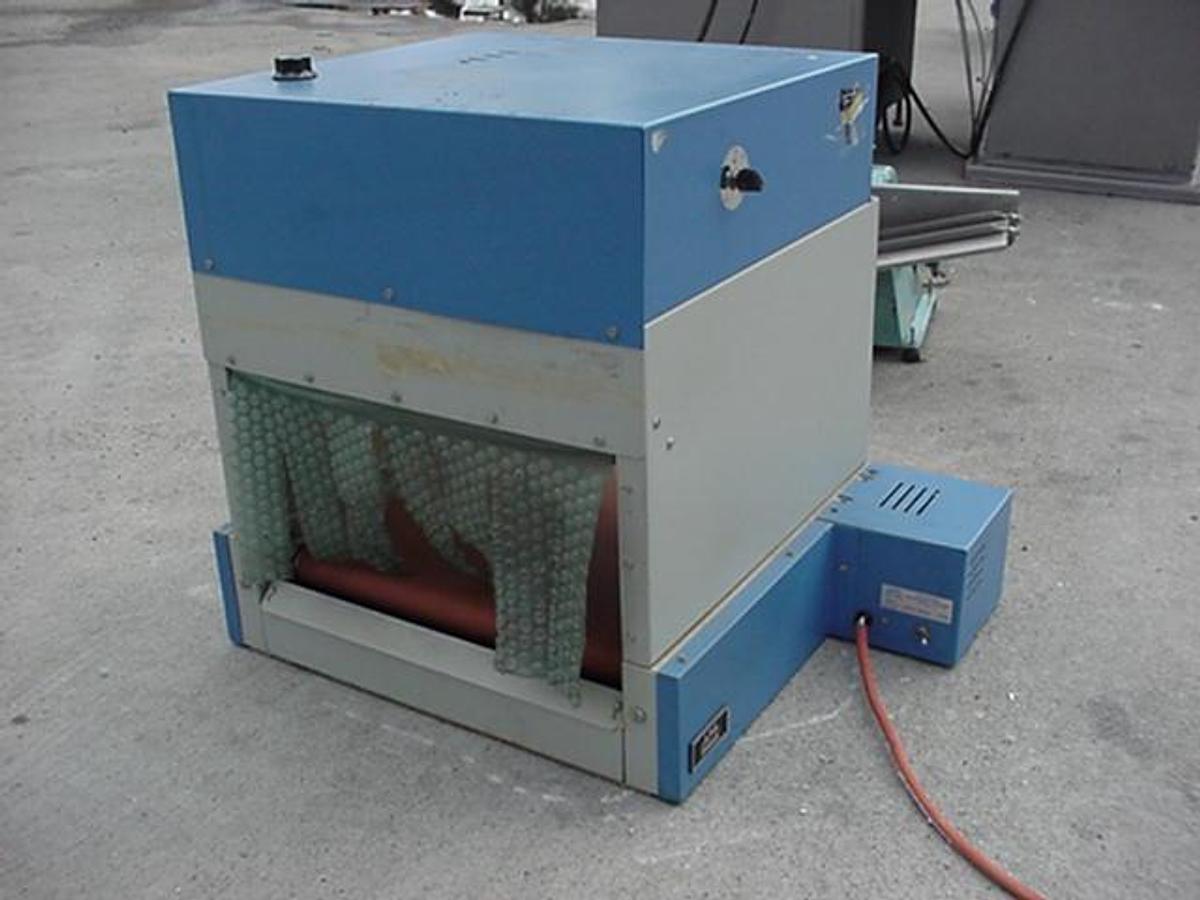
APS offers equipment across a spectrum of automation levels. Fully automatic inline systems are designed to integrate directly into a production line, where containers are fed, labeled, and discharged without operator intervention beyond setup and monitoring. Semi-automatic configurations typically require an operator to place containers manually or trigger the labeling cycle, making them better suited for lower-volume runs or businesses that need flexibility without committing to full line integration. Tabletop models, like the APS tabletop shrink tunnel, fall into the semi-automatic category and are a common choice for smaller operations or secondary packaging tasks.
For buyers considering used APS equipment, the automation level of a machine directly affects how it fits into an existing workflow. A fully automatic machine requires compatible conveyor infeed and outfeed systems, as well as adequate floor space and electrical infrastructure. A semi-automatic unit is generally easier to install and reposition. When evaluating a used machine, confirm whether all automation components, including sensors, conveyors, and control panels, are present and functional, since missing parts on an automated system can be costly to replace after the fact.
What is the typical price range for used APS labeling equipment?
Pricing for used APS labeling equipment varies widely based on machine type, age, condition, and configuration. Tabletop and semi-automatic units tend to be priced lower than fully automated inline systems, and simpler label applicators cost less than integrated print-and-apply systems. Entry-level used tabletop shrink tunnels and basic applicators can often be found in the low thousands of dollars, while high-speed automated lines with multiple applicator heads and integrated controls can run significantly higher. The condition of the machine, including hours of use and maintenance history, has a major influence on where a specific unit falls within that range.
Buyers should also account for total landed cost when budgeting for used APS equipment. Shipping, rigging, and any required crating or palletization add to the purchase price, particularly for heavier inline machines that require specialized loading and unloading equipment. Installation, electrical work, and any replacement parts needed to bring the machine to full working order should also be factored in. Getting a clear picture of all these costs upfront helps avoid surprises and allows for a more accurate comparison between different machines and sellers.
How does buying used APS labeling equipment compare to purchasing other brands?
APS has a recognized reputation in the packaging industry for building durable, high-precision labeling equipment, which tends to hold its value reasonably well on the used market. Compared to some other labeling equipment brands, APS machines are frequently noted for their changeover flexibility, meaning operators can switch between different product sizes and label formats without excessive downtime. This is a meaningful advantage for manufacturers with varied product lines, and it carries over to the used market since a well-maintained APS machine retains that adaptability.
That said, the used equipment market requires buyers to evaluate each machine on its own merits rather than relying solely on brand reputation. Two used APS machines of the same model can be in very different condition depending on how they were maintained and how hard they were run. Buyers comparing used APS equipment to other brands should focus on factors like parts availability from the manufacturer, the complexity of the control system, and the availability of technical support for that specific model and age. A slightly older APS machine in excellent condition will often outperform a newer competitor's machine that has been poorly maintained.
What should buyers know about inspecting used APS labeling equipment before purchase?
Inspecting used labeling equipment before purchase is one of the most important steps a buyer can take to avoid costly surprises. Reputable used equipment dealers typically offer inspection options that include in-person visits, virtual walkthroughs, or detailed video captures of the machine. For APS equipment still installed at a production facility, it may be possible to arrange an inspection while the machine is running, which gives the best real-world view of its operating condition. Buyers should use the inspection to check for worn applicator components, damaged sensors, frayed wiring, and the overall condition of the frame and drive systems.
Keep in mind that most used equipment dealers are not set up to run production-level tests with actual product, since that requires different permitting and operational infrastructure. The goal of the inspection is to get an accurate picture of the machine's mechanical and electrical condition, not a full production trial. Buyers who are not familiar with the technical details of labeling equipment may want to bring in a qualified technician or request that the dealer provide documentation of any recent service or repairs. Contacting APS directly about the specific model being considered can also help buyers understand what level of manufacturer support and parts availability to expect.
What are the shipping and payment considerations when buying used APS labeling equipment?
Shipping costs for used APS labeling equipment depend on the size and weight of the machine, the distance it needs to travel, and the level of packaging required to protect it in transit. Smaller tabletop units can often be palletized and shipped via standard freight carriers, while larger inline systems may require custom crating and heavy-duty rigging for loading and unloading at both ends. Buyers should ask the seller for a detailed breakdown of packaging, rigging, and freight costs before finalizing a purchase, since these expenses can add meaningfully to the total cost of acquiring the equipment.
On the payment side, most used equipment dealers require full payment prior to shipping. Some dealers extend terms to repeat customers, but this is not standard practice for first-time buyers. Wire transfer is the most common payment method for used machinery transactions. Buyers should confirm all payment terms, shipping responsibilities, and any conditions of sale in writing before sending funds. Understanding exactly what is included with the machine, such as tooling, manuals, and spare parts, should also be clarified upfront to avoid any misunderstanding once the equipment arrives.