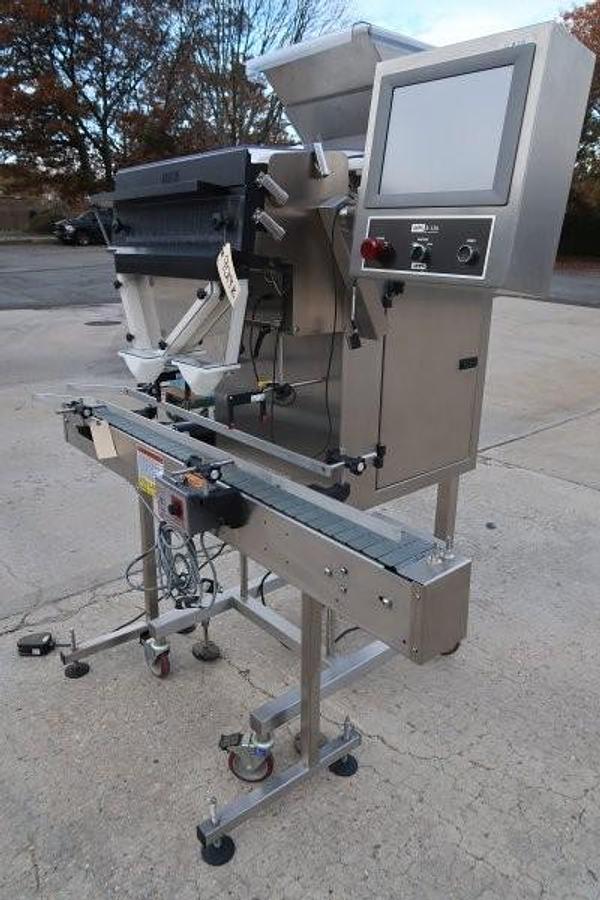
Category
Manufacturer
Model
APPS
FAQ:
What is an APPS tablet and capsule counter and how does it work?
APPS stands for Automated Pharmacy Prescription Systems, and the brand produces electronic counting machines designed to automate the process of counting tablets and capsules for dispensing. Rather than relying on manual counting methods that are prone to human error, an APPS counter uses sensor-based technology to detect and tally individual tablets or capsules as they pass through the counting channels. The machine feeds product through a series of lanes, where optical or infrared sensors register each piece and stop the flow once the preset count is reached.
This kind of automation is particularly valuable in high-volume dispensing environments like independent pharmacies, hospital pharmacies, compounding facilities, and veterinary dispensaries. The core benefit is accuracy. Manual counting, even by experienced pharmacy technicians, introduces errors that can have real consequences for patients. Electronic counters like the APPS models reduce that risk significantly, with accuracy rates commonly cited at 99.9% across a broad range of tablet and capsule shapes and sizes. The machines are also faster than hand counting, which helps reduce wait times and lets staff focus on other tasks.
What is the APPS R-12K tablet and capsule counter?
The APPS R-12K is a twelve-lane electronic tablet and capsule counter. The twelve-lane configuration is what sets it apart from single or dual-lane counters, as it allows the machine to process product across multiple parallel channels simultaneously. This significantly increases throughput compared to simpler counters, making it well-suited for operations that need to fill prescriptions quickly or handle large batch counts with minimal downtime.
In a used equipment context, the R-12K is a sought-after model because its multi-lane design offers production-level capacity without requiring the footprint of a full industrial filling line. Buyers typically look at this model when they need a step up from basic counters but are not ready to invest in high-end automated filling equipment. As with any used pharmaceutical machine, prospective buyers should inspect the sensor channels carefully, check for wear on the counting trays, and confirm that all twelve lanes are functioning as expected before purchase.
What should buyers look for when purchasing a used APPS tablet capsule counter?
Buying a used APPS counter requires a more hands-on evaluation than purchasing new equipment, because the machine's history, maintenance record, and current condition all affect how reliably it will perform. The most important areas to inspect are the counting channels and sensors. Dust, residue from previous products, or physical damage to the sensor array can all affect counting accuracy. Buyers should also check the condition of the feed trays, the hopper, and any removable components that are subject to wear from regular use.
Beyond the physical inspection, it is worth asking the seller about the machine's service history and what products it was used to count. Some tablet shapes or coatings leave residue that is difficult to clean thoroughly, which matters for cross-contamination prevention. Reputable used equipment dealers will typically offer in-person inspections, virtual walkthroughs, or video documentation of the machine operating so that buyers can assess its current working condition before committing to a purchase. Consulting with the APPS manufacturer directly is also a smart step, since they can advise on parts availability and support for the specific model and age of machine being considered.
What types of tablets and capsules can an APPS counter handle?
APPS counters are designed to work with a wide variety of tablet and capsule forms, including round tablets, oval tablets, caplets, hard gelatin capsules, and softgels. The adjustability of the counting channels is a key feature, as different product geometries require different channel widths and feed rates to count accurately without jamming or double-feeding. Most APPS models allow operators to configure these settings to match the specific product being dispensed.
That said, there are practical limits. Very small tablets, unusually shaped products, or items that tend to clump together can present challenges for any electronic counter. Softgels, for example, require careful handling because their surface can cause them to stick together or feed inconsistently. When evaluating a used APPS counter for a specific application, it is worth confirming with the seller or manufacturer whether the model in question has been tested or used with similar product types. Some facilities also run test batches during an inspection to verify that the machine handles their specific tablets or capsules correctly.
What counting speed and capacity does the APPS R-12K offer?
The APPS R-12K's twelve-lane design allows it to count tablets and capsules at a substantially higher rate than single or dual-lane counters. Multi-lane counters of this type are generally capable of processing thousands of tablets per minute, depending on the size and shape of the product being counted and the speed settings selected by the operator. The actual throughput in a given facility will depend on how the machine is configured and the characteristics of the specific tablets or capsules being run.
For buyers comparing used counters, lane count is one of the most meaningful indicators of capacity. A twelve-lane machine like the R-12K is positioned toward the higher end of pharmacy-grade counters and is appropriate for operations with meaningful daily prescription volumes. Smaller operations filling a handful of prescriptions per day may find a simpler counter sufficient, while busier pharmacies or batch-dispensing facilities will benefit from the R-12K's ability to handle higher throughput without slowing down the workflow. Buyers should ask sellers about the speed settings available on a specific used unit and, where possible, observe the machine running during an inspection.
Does an APPS tablet capsule counter require calibration, and how often?
Like most electronic counting equipment used in pharmaceutical dispensing, APPS counters benefit from periodic calibration to maintain counting accuracy. Calibration involves verifying that the sensors are correctly detecting individual tablets or capsules and that the machine's count matches the actual number of pieces dispensed. In practice, calibration frequency depends on how heavily the machine is used, what types of products run through it, and the standards required by the facility's quality system.
For facilities operating under GMP (Good Manufacturing Practice) guidelines or subject to pharmacy board regulations, calibration records are often a compliance requirement. Operators typically calibrate after any significant maintenance, after changing the product being counted, or at regular intervals defined by their internal SOPs. When purchasing a used APPS counter, buyers should factor in calibration as part of the startup process. Even a machine in excellent mechanical condition should be calibrated before being put into production use, since sensor sensitivity and mechanical tolerances can shift over time or during transport.
Is an APPS tablet capsule counter suitable for small independent pharmacies?
APPS counters have historically been marketed as a cost-effective automation solution for independent pharmacies, and that positioning holds true in the used equipment market as well. A used APPS counter can bring electronic counting accuracy to a small pharmacy at a fraction of the cost of purchasing equivalent equipment at full retail price. For an independent pharmacy filling dozens to hundreds of prescriptions per day, even a modest improvement in counting speed and accuracy can meaningfully reduce labor time and dispensing errors.
The R-12K's twelve-lane design may represent more capacity than a very low-volume operation needs, but it is not exclusively an industrial machine. Many independent pharmacies benefit from having headroom in their equipment capacity, particularly if they anticipate growth or handle batch fills for long-term care facilities or mail-order dispensing. Buyers from smaller operations should weigh the machine's footprint, power requirements, and cleaning demands against their actual workflow before purchasing. A reputable used equipment dealer can help assess whether a specific model is a practical fit for the buyer's volume and space constraints.
How important is cross-contamination prevention in a tablet capsule counter, and what features address it?
Cross-contamination is a serious concern in any multi-drug dispensing environment. If residue from one medication remains in the counting channels when a different drug is run through the machine, there is a risk that trace amounts of the first drug end up in the second prescription. For patients with allergies or sensitivities, this can be a genuine safety issue. Regulatory bodies and pharmacy accreditation organizations treat cross-contamination controls as a core component of dispensing quality.
Features that help address this include removable counting trays, smooth channel surfaces that are easy to wipe down, and dust-free channel designs that minimize the accumulation of tablet fragments and powder. When evaluating a used APPS counter, buyers should inspect the counting channels closely for residue or staining that may indicate the machine was not cleaned consistently in its previous use. Removable and washable components are particularly valuable in this context because they allow thorough cleaning between drug changeovers. Buyers should also confirm with the manufacturer whether replacement trays or channel components are available for the specific model, since worn or damaged parts may need to be replaced to restore proper cleaning performance.
What is the typical price range for a used APPS tablet capsule counter?
Pricing for used APPS tablet and capsule counters varies based on the model, the number of counting lanes, the age of the machine, and its overall condition. Entry-level single or dual-lane used counters tend to be available at lower price points, while multi-lane models like the R-12K command higher prices because of their increased capacity and the complexity of their sensor systems. In general, used pharmaceutical counting equipment sells at a significant discount compared to purchasing equivalent equipment through a manufacturer or authorized distributor.
Buyers should also account for the total landed cost of the equipment, not just the list price. Shipping costs for a machine of this type will depend on its weight, dimensions, and the level of packaging or crating required to protect it in transit. Larger or heavier machines may also require rigging equipment for loading and unloading, which adds to the overall cost. Asking the seller for a complete breakdown of packaging, freight, and any rigging fees before finalizing a purchase helps avoid surprises and allows for an accurate comparison between different machines or sellers.
What should buyers know about inspecting a used APPS counter before purchase?
Reputable used equipment dealers typically offer several inspection options: in-person visits, live video calls where the machine is demonstrated, or recorded video showing the unit operating. The goal of any inspection is to get an accurate picture of the machine's current working condition, including the state of the sensors, the feed mechanism, the counting channels, and the control interface. Buyers should ask to see the machine powered on and cycling through a count if possible, since this reveals issues that a static inspection might miss.
It is worth keeping in mind that most used equipment dealers are not licensed pharmaceutical manufacturers, so they will not be able to run actual drug product through the machine during an inspection. Demonstrations typically use substitute materials like candy-coated tablets or similar items to show that the counting mechanism is functioning. Some machines being sold are still in active production at the seller's client facility, in which case an inspection can sometimes be arranged at the production site where the machine is running with actual product. Buyers should ask about this possibility when evaluating machines that are listed as currently in use, as it provides the most realistic view of how the equipment performs in a real dispensing environment.