Category
Manufacturer
Model
FAQ:
What is an AMK mixer extruder and what is it used for?
An AMK mixer extruder is a heavy-duty industrial machine that combines intensive mixing and extrusion into a single unit. The mixing chamber uses sigma-style or similar rotor arms to knead, shear, and compound materials under controlled temperature and pressure conditions. Once the batch is thoroughly mixed, the extruder section forces the material out through a die, making it ready for downstream processing or shaping. AMK is a German-origin brand with a long history in industrial mixing technology, particularly associated with rubber, tire manufacturing, and high-viscosity material processing.
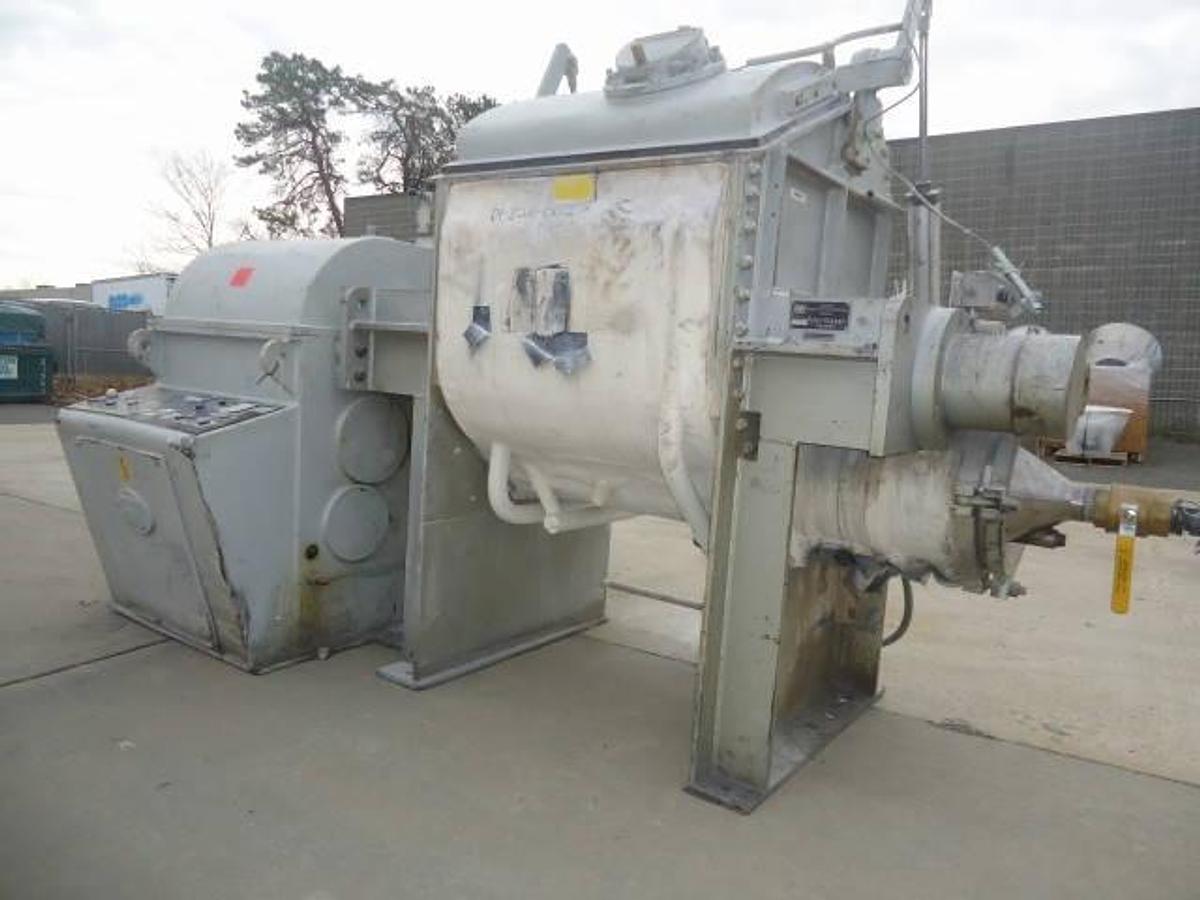
These machines are found across a wide range of industries including rubber compounding, plastics processing, adhesives, sealants, pharmaceuticals, and certain food manufacturing applications. The jacketed bowl design seen on many AMK units, such as the 120-gallon double sigma arm mixer-extruder, allows for precise temperature control during mixing, which is critical when working with heat-sensitive or thermally activated materials. The combination of mixing and extrusion in one machine reduces handling steps, improves batch consistency, and increases throughput compared to running separate mixing and extrusion equipment.
What industries commonly use AMK mixer extruders?
AMK mixer extruders are most closely associated with the rubber and tire manufacturing industry, where they are used to compound raw rubber with fillers, plasticizers, and curing agents before the material is shaped into components. Beyond rubber, these machines are widely used in the plastics industry for compounding specialty resins, masterbatches, and filled compounds. Adhesive and sealant manufacturers rely on them for processing high-viscosity formulations that require intensive shearing to achieve uniform dispersion of ingredients.
Pharmaceutical and chemical processors use sigma arm mixer-extruders for granulation, wet massing, and the production of pastes or gels. In food processing, similar machines handle products like chewing gum bases, confectionery compounds, and dough-like materials, though buyers sourcing units for food applications should verify that the specific machine meets FDA or food-grade material standards before purchase. The versatility of the AMK design, particularly models with jacketed bowls for temperature control, makes them suitable for any application where precise, repeatable mixing of dense or viscous materials is required.
What should buyers look for when evaluating a used AMK mixer extruder?
Several technical specifications deserve close attention when evaluating a used AMK mixer extruder. Mixing chamber volume, expressed in gallons or liters, determines batch size capacity. The 120-gallon double sigma arm configuration, for example, is suited to medium-to-large production runs. Rotor speed in RPM, motor power in kilowatts, and the temperature range supported by the jacket system are all performance indicators that should match the buyer's process requirements. The condition of the sigma arms, seals, and the extruder screw or ram are mechanical points that directly affect mixing quality and machine longevity.
Beyond specifications, buyers should examine the overall mechanical condition of the machine, including the gearbox, drive system, and any instrumentation or control panels. Asking the seller for detailed photos, video, or arranging an in-person or virtual inspection is strongly recommended before committing to a purchase. Since these are used machines sold as-is, buyers carry the responsibility for assessing condition. Consulting with the manufacturer or a qualified technician about parts availability for the specific model and serial number is also a smart step, as older AMK units may have limited support for certain components.
What capacity options are available for AMK mixer extruders?
AMK mixer extruders have been manufactured across a broad range of capacities to suit different production scales. Smaller laboratory or pilot-scale units may have chamber volumes of just a few liters, while large production models can exceed several hundred liters or, in the case of the 120-gallon double sigma arm unit, roughly 454 liters of working volume. The 120-gallon size represents a substantial production-scale machine capable of handling large batch weights depending on the bulk density of the material being processed.
When selecting capacity, buyers should consider not just the gross chamber volume but the working fill factor, which for sigma arm mixers typically runs between 55% and 75% of total chamber volume. This means a 120-gallon machine does not process a full 120 gallons of material per batch. Cycle time, discharge method, and the physical footprint of the machine are additional capacity-related factors. Used machines available on the market span a wide range of sizes, so buyers with specific throughput targets should calculate their required batch size and cycle frequency before narrowing down their search.
What materials can be processed in an AMK mixer extruder?
AMK mixer extruders are engineered to handle dense, viscous, and often abrasive materials that would overwhelm lighter mixing equipment. In the rubber industry, they process natural and synthetic rubber compounds combined with carbon black, silica, oils, and curing packages. Plastics processors use them for filled compounds, thermoplastic elastomers, and specialty blends requiring intensive dispersive mixing. Adhesive manufacturers process hot-melt adhesives, pressure-sensitive formulations, and structural sealants in these machines.
Other materials commonly processed include ceramic pastes, carbon electrode pastes, pigment concentrates, pharmaceutical granulations, and food-grade compounds like gum bases and confectionery masses. The jacketed bowl found on many AMK units is particularly valuable for materials that require heating to reduce viscosity or cooling to prevent thermal degradation during mixing. Buyers should confirm that the wetted surfaces of a specific used machine, including the bowl lining, sigma arms, and extruder components, are made from materials compatible with their intended product, especially for food, pharmaceutical, or chemically aggressive applications.
What power and electrical requirements does an AMK mixer extruder typically need?
AMK mixer extruders are industrial machines that draw significant electrical power, and buyers need to verify that their facility can support the machine's requirements before purchase. Motor power on production-scale units commonly ranges from 30 kW to well over 200 kW depending on the chamber volume and rotor configuration. A 120-gallon sigma arm mixer-extruder will typically fall toward the higher end of that range given the torque required to process dense rubber or plastic compounds. Voltage configurations vary by the country of manufacture and the era of production, with common options including 460V/60Hz for North American installations and 380V or 400V/50Hz for European-spec machines.
Buyers importing used AMK equipment from Europe or other regions should factor in the cost of electrical conversion or the use of a frequency converter to match local power standards. In addition to main drive power, the machine may require separate electrical connections for heating elements in the jacket system, control panels, and auxiliary drives. Getting the full electrical schematic from the seller, if available, helps facility engineers plan the installation correctly. Confirming these details upfront avoids costly surprises after the machine arrives on-site.
How available are spare parts and technical support for used AMK mixer extruders?
Parts availability is one of the most important long-term considerations when buying a used AMK mixer extruder, and it varies significantly by model age and configuration. AMK has gone through ownership and corporate changes over the decades, which can affect the availability of factory-direct support and documentation for older machines. Buyers should contact the manufacturer or their current authorized service network directly to ask about parts support for the specific model and serial number they are considering. This conversation should happen before purchase, not after.
For older or discontinued models, third-party machining and fabrication are often viable paths for wear parts like sigma arms, seals, and extruder components, since many of these parts can be reverse-engineered from drawings or physical samples. Gearbox rebuilds, electrical control upgrades, and hydraulic system repairs can generally be handled by specialized industrial service providers regardless of the original equipment manufacturer. Buyers should budget for at least a thorough inspection and likely some degree of refurbishment when acquiring a used machine, and they should ask the selling dealer about the known history of the equipment, any recent repairs, and what documentation is available.
What should buyers expect from the inspection process when purchasing a used AMK mixer extruder?
Reputable used equipment dealers typically offer buyers the option to inspect machines in person, via live video call, or through detailed video recordings of the equipment. The goal of any inspection is to get an accurate picture of the machine's current mechanical condition, the state of wear components, and whether all major systems are present and intact. For an AMK mixer extruder, key inspection points include the condition of the sigma rotor arms, the integrity of the mixing bowl and jacket, the extruder discharge mechanism, the gearbox, and the control system. Buyers should ask specifically about any known repairs, missing components, or damage.
It is worth understanding that most used equipment dealers do not have active production facilities, so running a full production test with actual product is generally not possible at the dealer's location. Some machines may still be installed at a manufacturing plant where they were in service, in which case an inspection at that facility, either in person or remotely, may be arranged between the dealer and the plant owner. Even in those cases, testing with the buyer's specific material formulation is rarely feasible. Buyers who need process validation should plan to conduct their own trials after installation, ideally with input from a process engineer familiar with sigma arm mixing technology.
What are typical price ranges for used AMK mixer extruders?
Pricing for used AMK mixer extruders varies widely based on capacity, age, mechanical condition, included accessories, and current market demand. Smaller pilot-scale units may be available for tens of thousands of dollars, while large production-scale machines in good working condition, such as a 120-gallon double sigma arm mixer-extruder with a jacketed bowl, can command prices well into the six-figure range. The inclusion of original controls, documentation, and recently serviced components all push prices higher, while machines sold for parts or in unknown condition will be priced lower to reflect the added risk.
Buyers should also account for costs beyond the listed machine price. Rigging and loading at the seller's location, freight to the destination facility, unloading, installation, and any electrical or mechanical refurbishment needed to bring the machine into service can add substantially to the total landed cost. Requesting a complete cost breakdown from the dealer before agreeing to a purchase helps avoid budget surprises. Comparing prices across multiple listings for similar machines is useful context, but condition differences between units make direct price comparisons less straightforward than they might appear.
What are the shipping and payment considerations when buying a used AMK mixer extruder?
Used AMK mixer extruders are large, heavy machines that require professional rigging for safe loading and unloading. Depending on the size of the unit, a forklift may be sufficient for smaller models, but larger machines often require a crane or specialized rigging crew. The machine should be properly secured, blocked, and crated or wrapped to prevent damage during transit. Freight costs depend on the distance, the shipping method (flatbed truck, container, air freight for smaller components), and the level of packaging required. Buyers should request a detailed shipping quote that covers rigging at origin, freight, and any required unloading equipment at the destination.
On the payment side, most used equipment dealers require payment in full before a machine is released for shipping. Some dealers may extend terms to established repeat customers, but this is not standard practice for first-time transactions. Wire transfer is the most common payment method for transactions of this size. Buyers should confirm all payment terms, shipping responsibilities, and what happens if damage occurs in transit before finalizing a purchase. Getting everything in writing, including a clear description of the machine's condition at the time of sale, protects both parties and reduces the potential for disputes.