Category
Manufacturer
Model
A.B. Sealer
A.B. Sealer is recognized for their advanced sealing equipment, particularly catering to the packaging industry. They provide both manual and automated sealing machines which are praised for their durability and dependability in high-volume production settings.
FAQ:
What types of A.B. Sealer equipment are available on the used market?
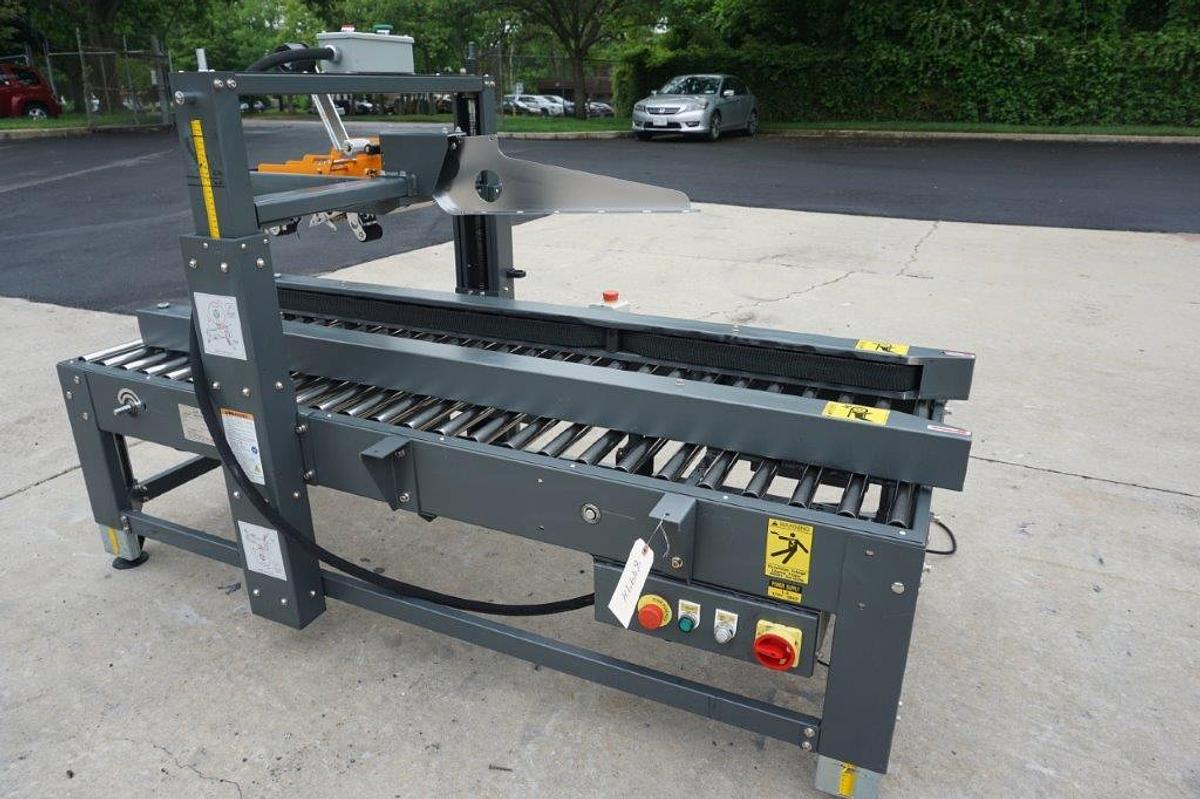
A.B. Sealer produces a range of packaging equipment that spans both manual and automated configurations. The most commonly available models on the used market include continuous band sealers, impulse heat sealers, and case sealers with extended bed designs. Each type is built for a different production context. Band sealers work well for high-volume continuous runs, while impulse sealers are better suited for lower-volume or intermittent sealing tasks. Case sealers, like the A.B. Case Sealer with Extended Bed, are designed specifically for sealing corrugated boxes in distribution and fulfillment environments.
When shopping for used A.B. Sealer equipment, it helps to know which model category fits your application before reaching out to a dealer. The brand has built a reputation in the packaging industry for durability and consistent output, which is part of why these machines retain value and continue to circulate on the secondary market long after their initial deployment. Used units can range from lightly used machines pulled from low-volume facilities to heavily cycled equipment from industrial production lines, so understanding the machine's history is an important part of the evaluation process.
What industries commonly use A.B. Sealer machines?
A.B. Sealer equipment is used across a broad range of industries where packaging integrity matters. Food processing and food packaging operations rely on these machines to seal bags and pouches containing dry goods, frozen products, and snack items. Pharmaceutical and nutraceutical manufacturers use them for sealing product pouches where contamination prevention is critical. Industrial and manufacturing facilities also use A.B. Sealer equipment for sealing parts, hardware, and other non-food items in poly bags or laminated pouches.
The versatility of A.B. Sealer machines is one of the reasons they appear frequently on the used equipment market. A machine that was originally purchased for a food packaging line might be perfectly suitable for a pharmaceutical operation or a contract packager with different product types. Buyers evaluating used units should consider whether the machine's prior use in a particular industry creates any contamination or compliance concerns for their own application, and inspect accordingly before finalizing a purchase.
What materials can A.B. Sealer equipment seal?
A.B. Sealer machines are designed to work with a wide variety of flexible packaging materials. Polyethylene (PE) and polypropylene (PP) films are among the most common substrates these machines handle, and they are found in everything from retail food bags to industrial poly bags. Many models are also compatible with laminated films, foil pouches, and co-extruded materials that require precise temperature control to achieve a clean, consistent seal without burning or delaminating the material.
The specific materials a given machine can handle will depend on the model and its temperature range settings. Continuous band sealers typically offer adjustable temperature and speed controls, which gives operators flexibility across different film thicknesses and material types. When purchasing a used A.B. Sealer machine, buyers should verify that the unit's temperature range and belt speed are compatible with the materials they plan to run. Consulting the manufacturer's documentation or reaching out to the manufacturer directly for guidance on material compatibility is a practical step, particularly for older models where specifications may not be readily available online.
How do I evaluate the condition of a used A.B. Sealer machine before buying?
Evaluating a used sealing machine requires looking at both the mechanical components and the wear items that directly affect seal quality. Key areas to inspect include the heating elements, sealing bands or wires, Teflon-coated belts, drive rollers, and temperature control systems. These are the parts that experience the most wear in daily operation, and their condition will tell you a lot about how hard the machine was run and how well it was maintained. Visible damage to belts, uneven wear on rollers, or signs of heat damage around the sealing area are red flags worth discussing with the seller.
Reputable used equipment dealers will typically offer in-person inspections, video walkthroughs, or photo documentation of machines prior to sale. Some machines may still be installed and running at the facility where they were used, which allows for a more thorough assessment of the equipment in an operational context. Keep in mind that most equipment dealers are not set up for full production testing, as running actual product requires different permitting and facilities. The goal of any pre-purchase inspection is to get an accurate picture of the machine's current mechanical condition and identify any components that may need attention before putting it back into service.
Are A.B. Sealer machines suitable for small businesses as well as large industrial operations?
A.B. Sealer has built equipment across a wide spectrum of production scales. Smaller impulse heat sealers and entry-level band sealers from the brand are well-suited for small businesses, co-packers, and startups that need reliable sealing without the footprint or power requirements of heavy industrial machinery. These machines are often noted for straightforward operation and low maintenance demands, which makes them practical for facilities without dedicated maintenance staff.
Larger automated models and extended-bed case sealers are designed for higher-volume production environments where throughput and consistency are the primary concerns. On the used market, small businesses can sometimes access mid-range or higher-capacity A.B. Sealer equipment at prices that would be out of reach if purchasing comparable equipment outright. This makes the secondary market an attractive option for growing operations that need more capacity than entry-level equipment provides but are not yet ready to invest in high-end industrial machinery at full price.
What should I know about replacement parts and long-term support for used A.B. Sealer equipment?
Parts availability is one of the most practical considerations when buying any used packaging machine. For A.B. Sealer equipment, commonly replaced components include heating elements, Teflon sealing belts, sealing wires, drive belts, and temperature controllers. Many of these are standard consumable parts that can be sourced through the manufacturer or through industrial parts suppliers, depending on the age and model of the machine. Before committing to a purchase, it is worth contacting the manufacturer directly to confirm whether parts are still available for the specific model you are considering, since older or discontinued models may have limited support.
The manufacturer's level of technical support can also vary based on the age of the equipment. Newer models within A.B. Sealer's current lineup are more likely to have readily available documentation, parts, and service support than machines that have been out of production for many years. Asking the dealer for the model number and year of manufacture before the sale gives buyers the opportunity to do this research in advance. A machine that is mechanically sound but has no viable parts supply chain can become a costly problem down the road, so this step is worth taking seriously.
What does the process of buying used A.B. Sealer equipment from a dealer typically look like?
The process generally starts with identifying a machine that fits your production requirements and reaching out to the dealer for more details on the unit's condition, specifications, and history. Dealers who specialize in packaging and sealing equipment will typically have more relevant knowledge about A.B. Sealer machines than general industrial equipment resellers, which makes the conversation more productive. From there, buyers can request an inspection, either in person or via video, to assess the machine's condition before moving forward.
Once a buyer is satisfied with the inspection and agrees on a price, most used equipment dealers require payment in full before the machine ships. This is standard practice in the industry. After payment is confirmed, the dealer arranges packaging, rigging if needed, and freight shipping. Buyers should ask for a full breakdown of these costs upfront, since crating, rigging, and freight can add meaningfully to the total landed cost of the equipment. Choosing a dealer with a long track record in the packaging equipment space reduces the risk that comes with buying used machinery and helps ensure the transaction goes smoothly from inspection through delivery.
How does shipping work for used A.B. Sealer equipment, and what costs should I expect?
Shipping costs for used sealing equipment depend on the size and weight of the machine, the distance it needs to travel, and the level of packaging or crating required to protect it in transit. Smaller band sealers and impulse sealers can often be palletized and shipped via standard LTL freight at relatively modest cost. Larger machines, such as case sealers with extended bed configurations, may require custom crating and heavier-duty rigging for safe loading and unloading, which adds to the overall cost.
Buyers should ask the dealer specifically about how the machine will be packaged, what rigging equipment is needed for loading, and whether the buyer's facility requires any special unloading arrangements. Getting a full landed cost estimate before finalizing the purchase prevents surprises at delivery. For large or heavy machines, it may also be worth confirming whether the buyer's facility has a loading dock, forklift access, or other equipment needed to receive the shipment safely. These logistics details are worth sorting out early in the process.
What is the typical price range for used A.B. Sealer machines?
Pricing for used A.B. Sealer equipment varies considerably based on the model, age, condition, and configuration of the machine. Smaller manual or semi-automatic sealers tend to be priced lower than fully automated systems or case sealers with extended beds and additional features. A basic used band sealer in good working condition might be available for a few hundred to a couple thousand dollars, while larger or more capable models can run significantly higher depending on the market and the machine's condition.
Because these are used machines sold as-is, the price should reflect the actual condition of the equipment rather than a fixed percentage off the cost of a comparable machine. Buyers should compare listings carefully and factor in the cost of any parts that may need replacement, as well as shipping and rigging costs, to arrive at a true total cost of acquisition. Working with a dealer who specializes in packaging equipment tends to result in more accurate pricing and a clearer picture of what the machine is actually worth relative to its condition.
How do I know if a used A.B. Sealer machine is compatible with my existing packaging line?
Compatibility depends on several factors: the physical footprint of the machine, its electrical requirements, the speed at which it operates, and whether it can handle the bag or case sizes your line produces. A.B. Sealer machines come in different configurations, and a unit that worked well in one facility may require adjustments or modifications to integrate smoothly into a different production environment. Gathering the full specifications of the machine before purchase, including dimensions, power requirements, sealing width, and speed range, is the right starting point.
For case sealers specifically, bed height and conveyor speed need to align with upstream and downstream equipment in the line. For bag sealers, the maximum bag width and film thickness range need to match the products being packaged. If you are unsure whether a specific model will work with your setup, it is worth consulting with someone who has direct experience with that machine type, whether that is the equipment dealer, a packaging engineer, or the manufacturer's technical team. Used equipment dealers who focus on packaging machinery can often provide guidance based on the machine's known specifications and their experience placing similar equipment in comparable operations.